


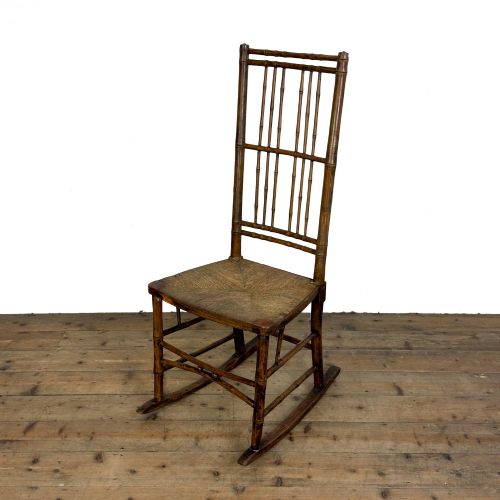
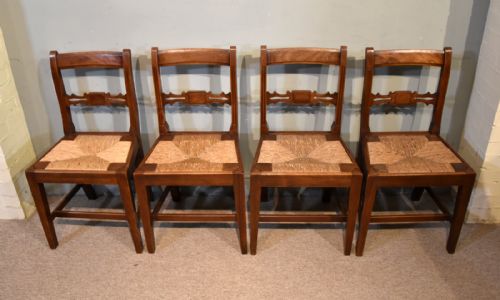
Wooden Rush Seated Chairs
Wooden rush seated chairs bring texture and vernacular character to an interior, spanning sturdy country ladderbacks and refined Arts and Crafts designs.
Wooden Rush Seated Chairs
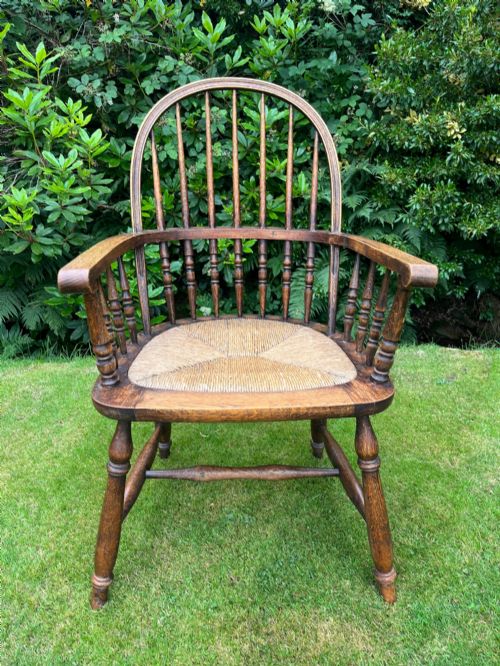
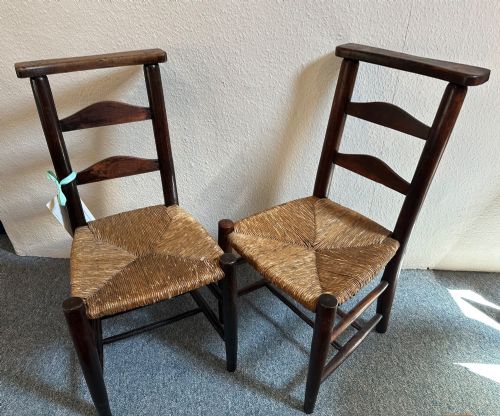
Wooden rush seated chairs encompass a diverse group of domestic seating united by woven vegetative cord seats and timber frames. When searching for wooden rush seated chairs, buyers encounter everything from humble farmhouse single chairs to architect-designed pieces from the Arts and Crafts movement.
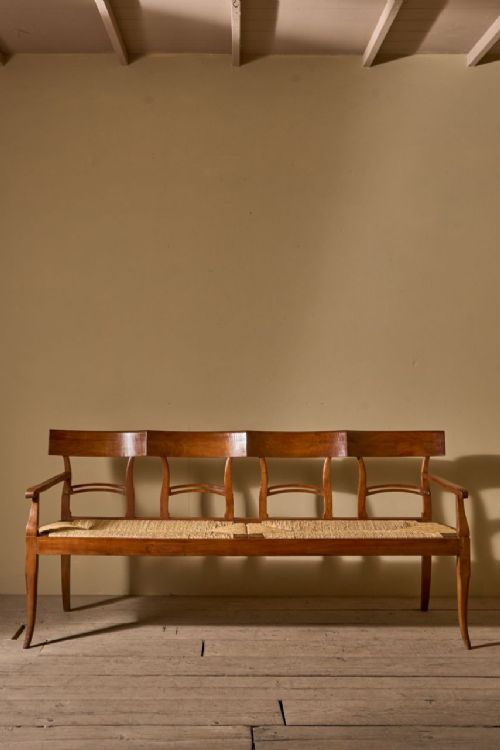
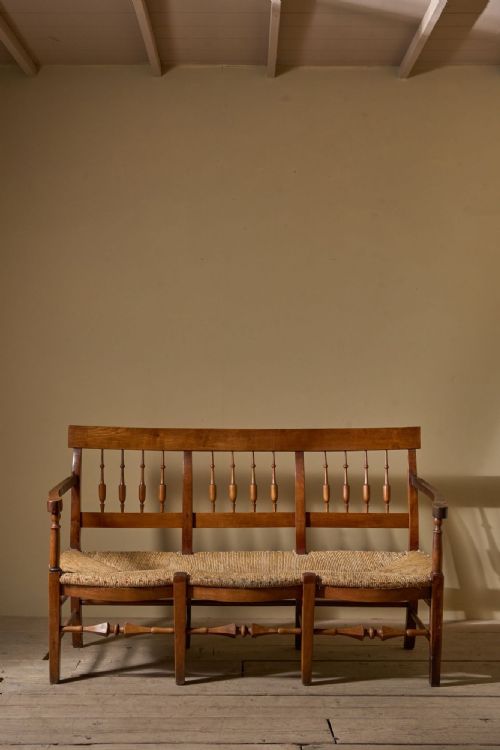
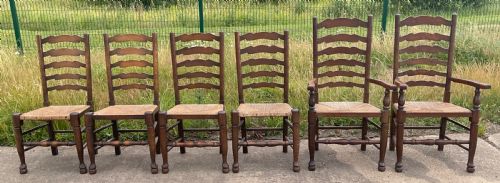
The selections span centuries, incorporating Georgian country elm examples alongside Victorian spindlebacks and twentieth-century ladderback dining sets. Forms range from simple side chairs and carvers to benches, rocking chairs, and high chairs.
Originating largely from British and European regional traditions, these pieces reflect local vernacular woodworking methods. English country styles and Arts and Crafts interpretations dominate the grouping.
How They Were Made
Frames rely on native hardwoods such as ash, elm, beech, oak, and fruitwood, often turned on a pole lathe or joined with pegged mortise and tenon construction. Timber selection depended on regional availability, utilising tough woods like ash for flexible spindles and elm for durable seats.
The characteristic seats are hand-woven using twisted river rush around a sturdy wooden framework. This traditional technique creates a resilient, supportive surface that yields slightly to the sitter over time.
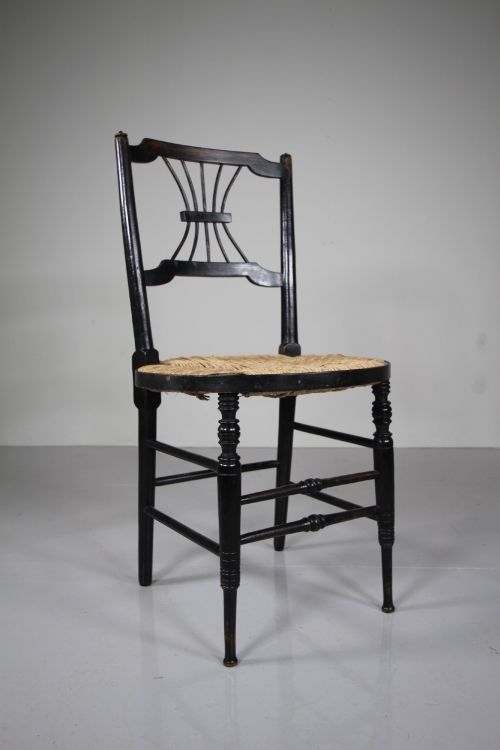
Surface treatments vary from natural waxed finishes highlighting the grain to ebonised wood and painted ash surfaces. Some specialist workshop pieces incorporate bamboo-turned framework or carved decorative details.
Listings feature timbers including oak, ash, elm, beech, fruitwood, and ebonised wood alongside traditional rush.
What Varies in Quality
The integrity of the woven rush surface dictates much of the utility and longevity of the seating. Tightly twisted, uniform cordage properly secured to the frame represents superior craftsmanship compared to loose or deteriorated weaving.
Timber selection and structural joinery distinguish workshop output from mass production. Well-turned spindles, balanced proportions, and tight historical joints separate exceptional regional vernacular pieces from lesser examples.
Provenance and documented attribution to notable designers or specific commissions elevate certain pieces well beyond standard domestic furniture. Marked institutional pieces or identifiable workshop outputs carry distinct historical weight.
William Morris·Philip Webb·Philip Clissett·Morris And Co·E W Godwin
The Wooden Rush Seated Chairs Glossary
- Rush
- A wetland plant material twisted into cord to form durable, flexible chair seats. This traditional seating medium requires skilled hand-weaving to tension correctly across the wooden frame.
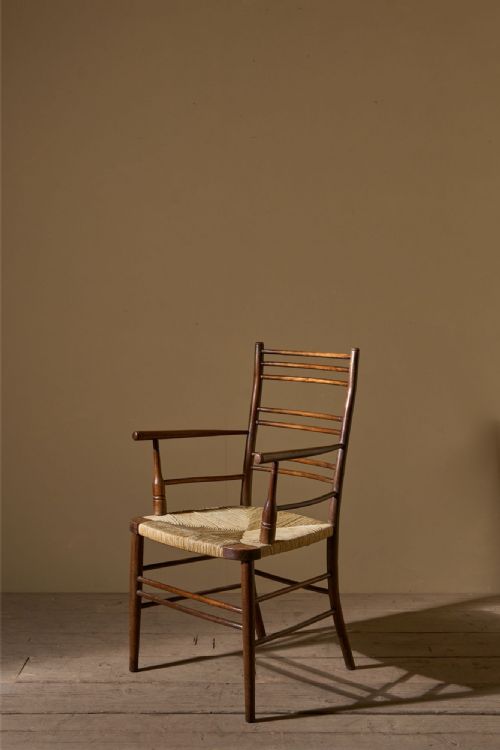
- Ladderback
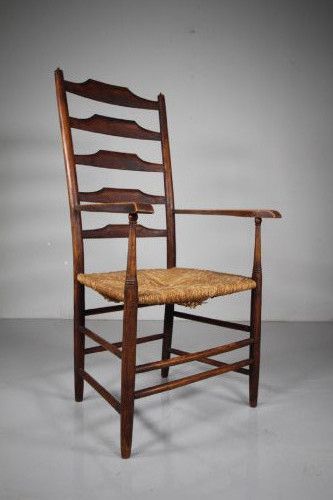
- A chair design featuring horizontal slats between the rear upright posts. This regional form appears frequently in English country and Arts and Crafts seating.
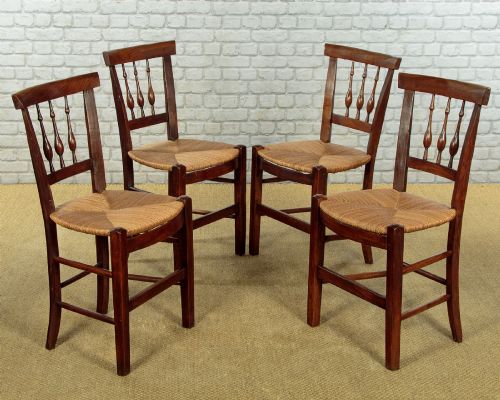
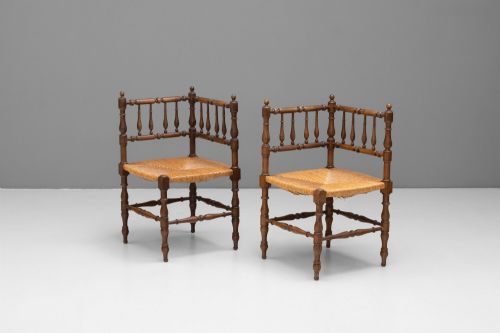
- Spindleback
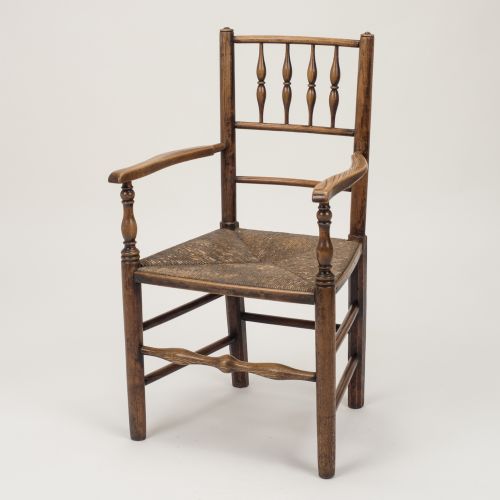
- Seating characterised by numerous thin turned wooden rods supporting the backrest. These slender members provide robust support with minimal visual weight.
- Ebonised
- Timber treated with a chemical stain or finish to imitate ebony. This dark, formal surface treatment gained popularity during the Victorian and Aesthetic periods.
- Vernacular
- Architecture and furniture rooted in local traditions, materials, and needs rather than high-style academic design. These regional pieces reflect the practical habits of rural makers.
Wooden Rush Seated Chairs: Frequently Asked Questions
How do I care for a rush seat?
Keep rush seated chairs away from excessive moisture and direct heat sources, which can make the dried plant material brittle. Dust regularly with a soft brush and avoid sitting on them with sharp objects that might snag the woven cords.
Occasional light conditioning can help maintain the flexibility of the natural fibres. Ensure the humidity in the room remains stable to prevent the timber frame and the rush from expanding or contracting sharply.
Are these chairs comfortable for daily dining?
Many of these pieces were built precisely for daily domestic use around farmhouse tables. The woven rush yields slightly to the body, offering a surprisingly forgiving surface during long meals.
Armchairs and ladderbacks with angled back rails provide ergonomic support suited to relaxation. Adding custom loose cushions can further increase comfort without altering the historic frame.
How can I date an ash ladderback?
Turned details, proportions, and the method of joint construction offer primary clues to the era of manufacture. Early examples often display hand-turned irregularities and wider rails compared to later Victorian reproductions.
Examine the wear patterns on the feet and rungs for evidence of age. The patina of the timber and the tightness of the joinery also indicate whether a piece originates from the eighteenth, nineteenth, or twentieth century.
What is an Arts and Crafts Sussex chair?
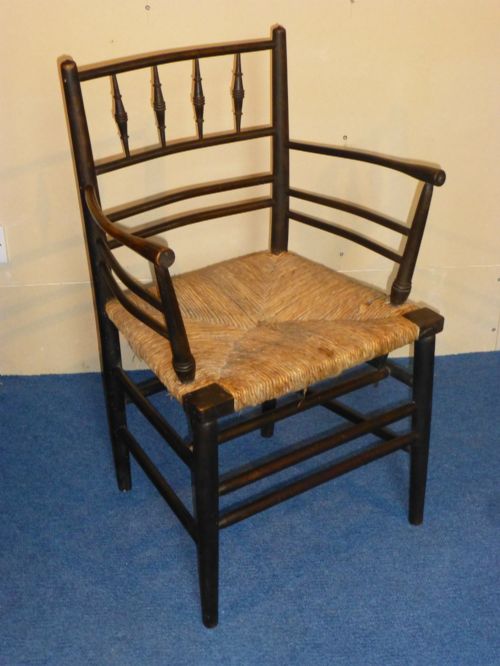
The Sussex chair is a lightweight, ebonised or natural wood seating design inspired by traditional nineteenth-century rural prototypes. Popularised by Morris and Co, these chairs feature slender turned spindles and rush seats.
They combine rustic utility with refined aesthetic principles, making them versatile additions to both period and modern interiors. Many carry distinctive maker stamps or attribution marks from their originating workshops.