
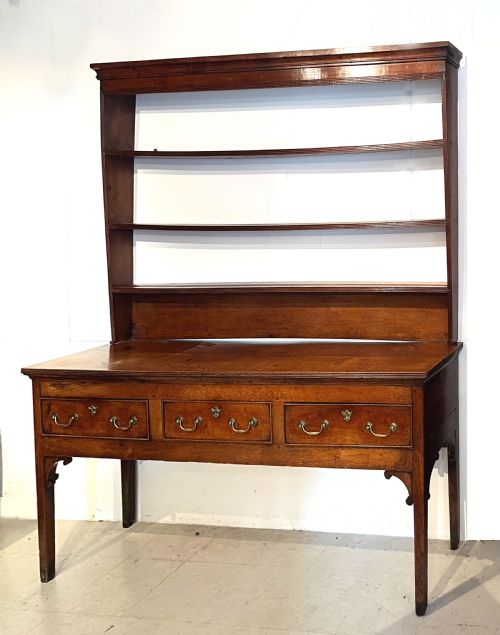


Wooden Plate Display Shelf
A wooden plate display shelf keeps kitchen crockery upright and orderly against a wall, bringing warmth and practicality to any room.
Wooden Plate Display Shelf
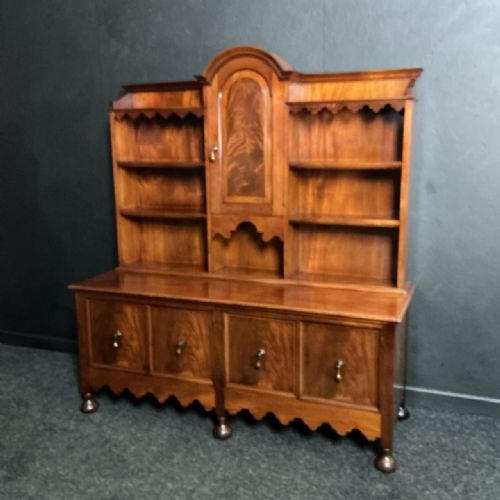
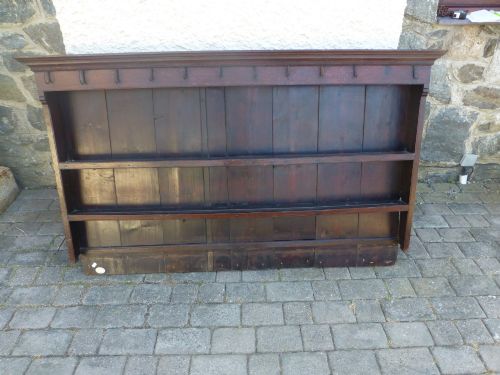
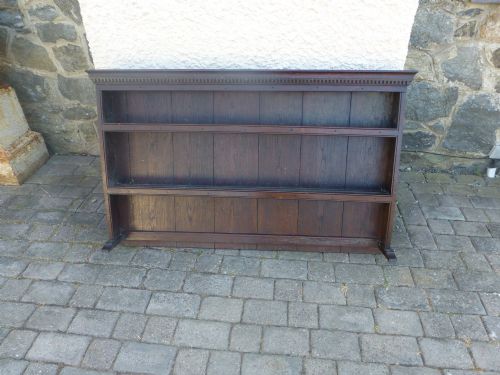
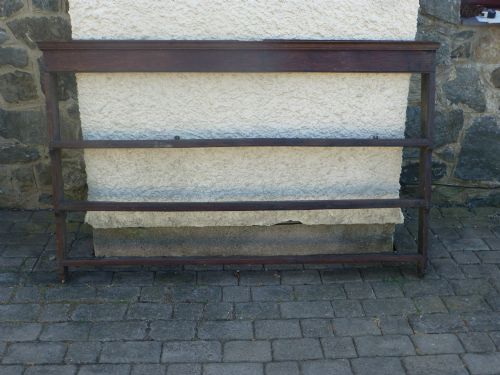
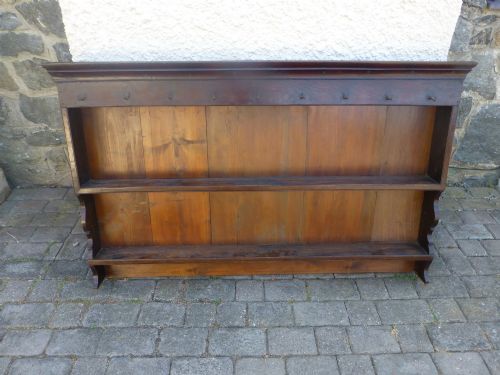
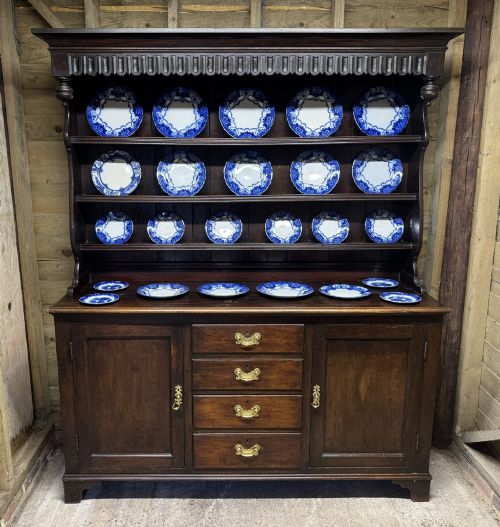
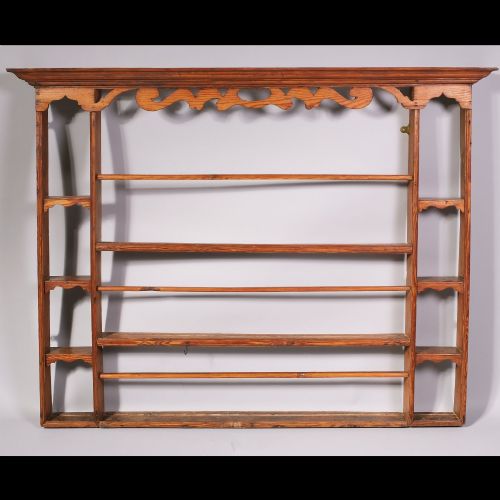
A wooden plate display shelf is designed primarily to hold and exhibit ceramic plates, platters and bowls within domestic spaces. These pieces range from simple wall-mounted racks to substantial dresser tops and two-part floor dressers.
Most examples found here date from the eighteenth and nineteenth centuries, spanning Georgian, Edwardian and country vernacular styles. Oak and pine dominate the selection, often taking the form of open wall shelves or delft racks.
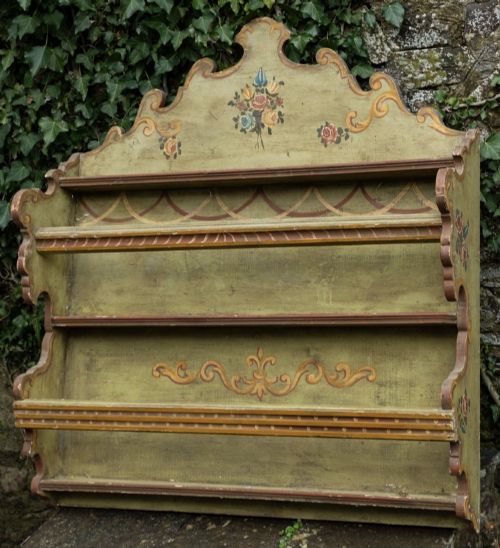
Some configurations incorporate small cupboards, drawers or architectural details such as Corinthian columns. Others offer slim profiles suited to cottage kitchens or display decorative hand-painted surfaces.
Materials and construction methods
Makers relied heavily on solid native timbers such as oak, pine and mahogany, occasionally employing walnut, cherry or painted wood finishes. Planks were joined using traditional methods to support the weight of heavy earthenware and china.
Surface treatments vary from polished mahogany and flame veneers to historic painted finishes in pigments like Little Greene Pompeian Ash. Decorative elements include hand-carved motifs and marquetry inlay work.
Recorded styles range from Georgian country vernacular and Arts and Crafts to decorative Edwardian painted furniture.
Assessing quality in construction
Quality rests upon the selection of timber, the integrity of the joints and the retention of original surfaces. Superior examples display thoughtful proportions and careful timber matching across the backboards and plate rails.
The presence of period details, such as carved mouldings, columns or fine marquetry, elevates a piece beyond standard utilitarian workshop production. Original patination and untouched historic paint finishes also contribute significantly to character.
The Wooden Plate Display Shelf Glossary
- Delft rack
- An open wooden wall shelf specifically constructed with grooved plate rails and protective front retainer bars to display delftware and ceramic plates safely.
- Welsh dresser
- A large kitchen furniture form featuring a plate rack superstructure mounted atop a base cabinet or set of drawers.
- Marquetry
- Decorative veneer work created by fitting small pieces of contrasting wood into patterns to adorn flat surfaces.
- Cornice
- The ornamental moulded projection that crowns the top of a wall shelf or dresser superstructure.
Wooden Plate Display Shelf: Frequently Asked Questions
How are these shelves mounted to walls?
Most hanging racks feature sturdy integrated backboards with fixing points designed to bear the considerable weight of timber and ceramics.
Professional installation into solid wall studs or masonry is recommended to ensure stability.
Can these racks support heavy dinnerware?
Traditional oak and pine plate racks were built precisely for everyday utility, easily supporting heavy earthenware plates and platters.
Deep grooves and sturdy wooden retainers keep items from slipping forward during daily use.
How do I distinguish eighteenth-century pieces?
Eighteenth-century examples often display hand-sawn board marks, pegged joints and timbers with deep natural patination built up over generations.
Construction details and regional vernacular styles provide strong clues to their exact era.
Where should I place a hanging shelf?
These shelves suit kitchens, dining rooms and hallways where crockery or decorative collections can be viewed clearly.
Ensure placement avoids excessive direct sunlight and major heat sources to protect the antique wood.