


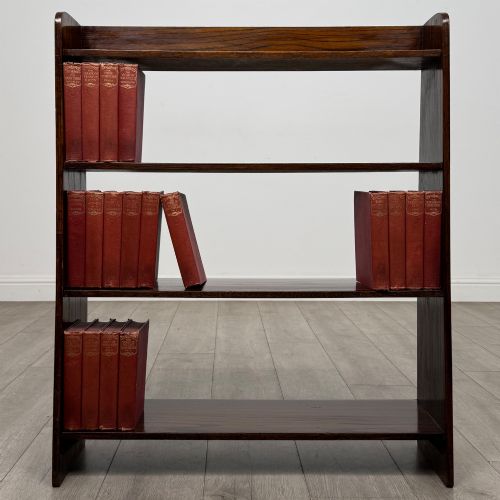
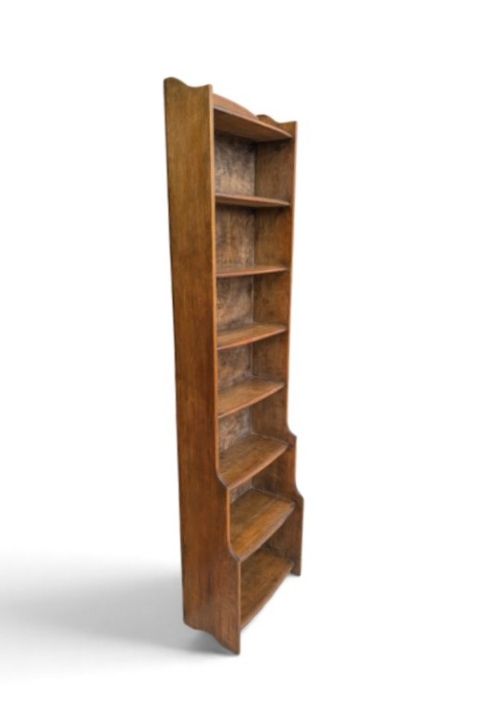
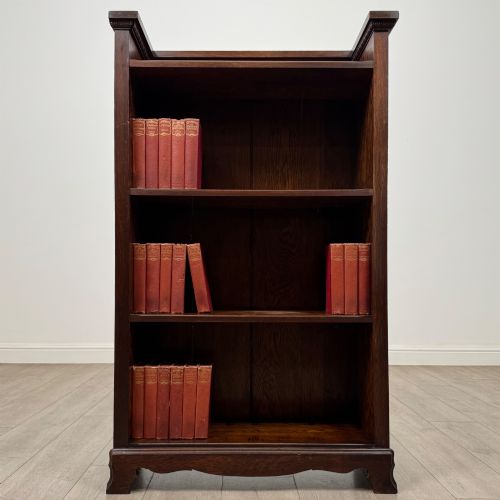
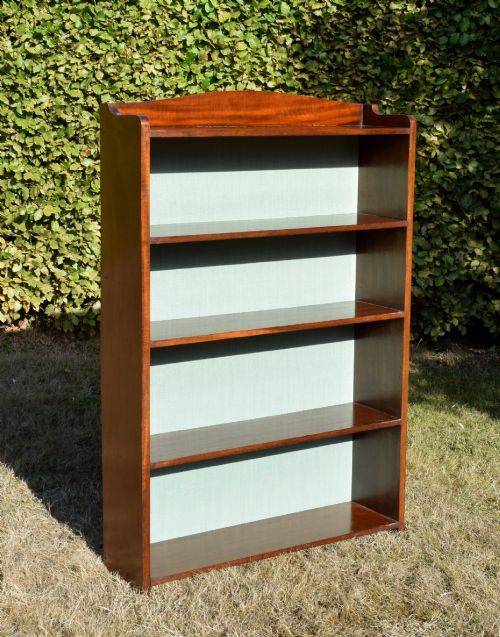

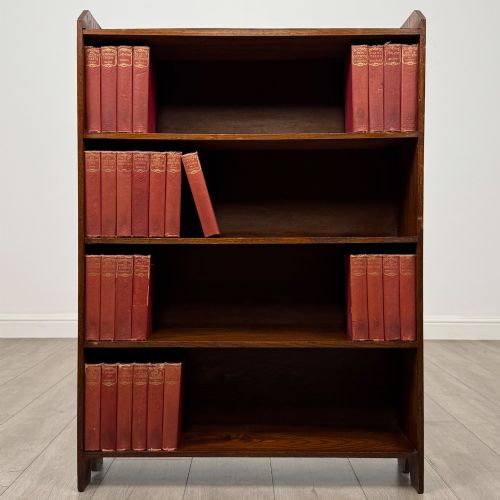
Wooden Open Book Stand
A wooden open book stand offers a practical home for daily volumes, combining accessible shelving with straightforward period construction.
Wooden Open Book Stand
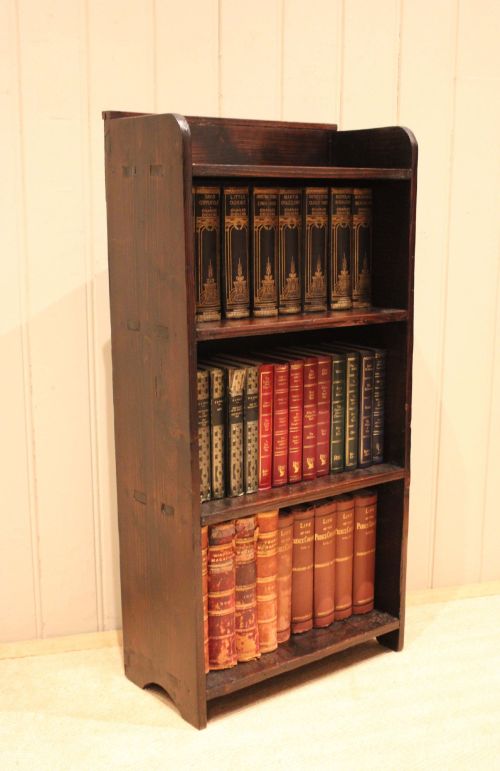
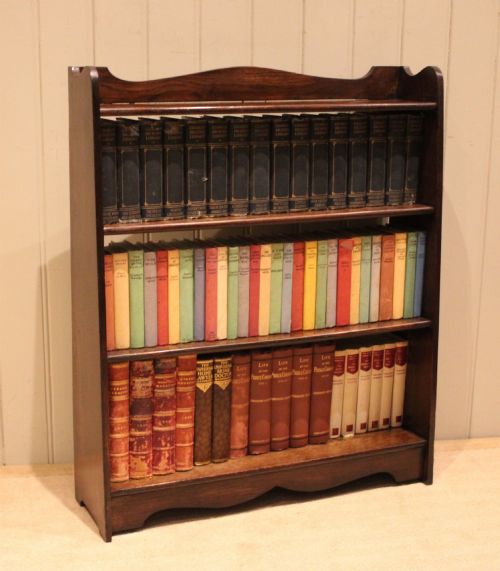
A wooden open book stand primarily encompasses open bookcases, book troughs, and shelf units designed for accessible storage. When searching for a wooden open book stand, buyers encounter pieces ranging from compact Edwardian oak furniture to larger Victorian mahogany models.
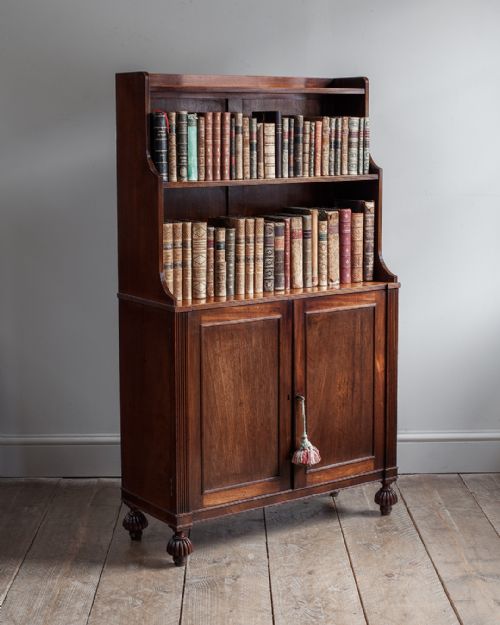
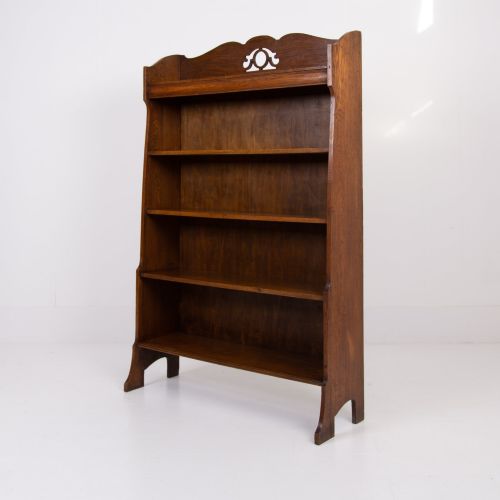
The selection leans heavily toward early twentieth-century oak and mahogany pieces alongside nineteenth-century examples. Forms vary from simple standing shelves and waterfall bookcases to slope-shelf fireside troughs.
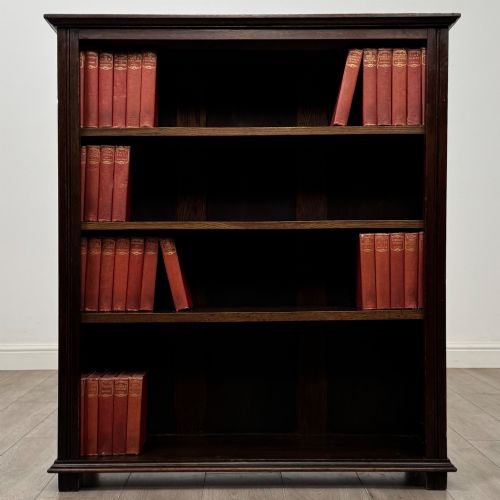
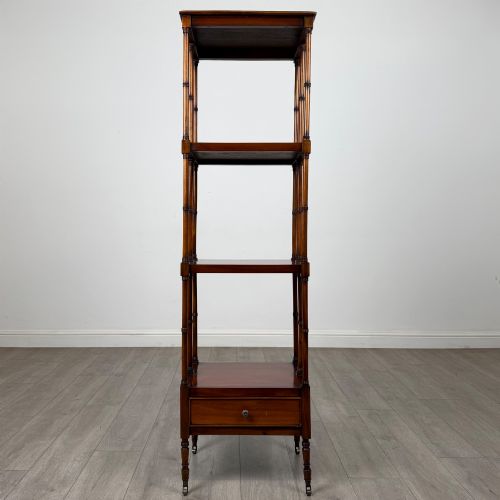
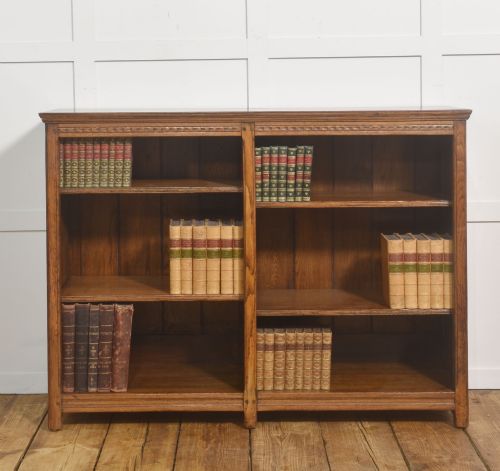
Makers utilised various formats, including adjustable shelving and tiered whatnot structures. Pieces emerge from Edwardian, Victorian, and Regency periods, reflecting domestic needs for library and parlour storage.
Factors influencing quality
The choice of timber grain and the precision of joinery separate standard utility pieces from finer examples. Superior specimens feature well-figured oak or mahogany with clean, durable joints that withstand heavy book weights.
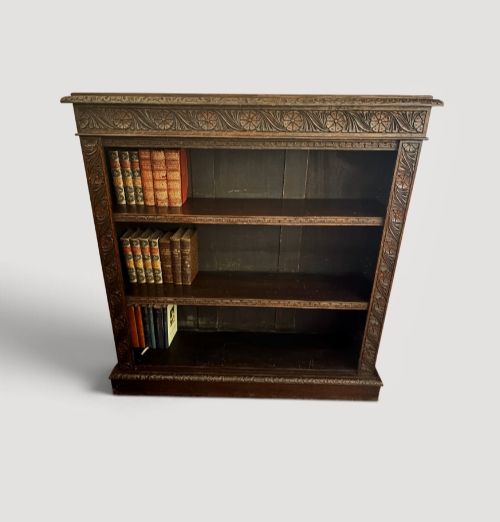
Functional adaptability also defines the upper tier, particularly units with smoothly operating adjustable shelves. The integration of hand-carved elements or decorative cut-outs elevates the craftsmanship beyond basic commercial production.
Current listings feature pieces spanning the Victorian, Edwardian, and Regency eras, constructed primarily from oak, mahogany, and pine.
The Wooden Open Book Stand Glossary
- Waterfall bookcase
- A tiered shelving unit where each upper shelf is narrower than the one below, stepping back in a cascading profile. This form maximises stability while displaying book spines clearly.
- Book trough
- A low, open receptacle designed to hold books upright in a V-shaped or sloping trough. These often sat beside firesides for immediate reading access.
- Whatnot
- An open-tiered piece of furniture with multiple shelves supported by vertical posts, used for displaying books and ornaments. Examples range from simple three-tier stands to elaborate corner units.
- Adjustable shelf
- A movable bookshelf resting on movable supports or ratchets to alter shelf heights. This mechanism allowed libraries to accommodate varying book sizes.
Wooden Open Book Stand: Frequently Asked Questions
Where should I place a wooden open book stand?
These open stands suit living rooms, studies, and hallways where books require frequent access. Their open backs and compact footprints allow them to sit flush against walls or partition spaces without dominating the room.
Keep timber furniture away from direct heat sources and strong sunlight to prevent the wood from drying or fading over time. Regular placement adjustments help maintain even exposure across the finish.
How do I adjust the shelves?
Many period bookcases utilise wooden support ratchets, brass pins, or slotted vertical battens inside the cabinet walls. Lifting the shelf slightly allows the support lugs to disengage from their current slots.
Reposition the shelf supports carefully to the desired height level and ensure all four corners sit evenly before loading books. Forcing a tight shelf can damage the interior veneer or support grooves.
Can these stands support heavy books?
Solid oak and mahogany construction provides substantial weight capacity for standard hardback collections and reference volumes. Thicker shelves resist sagging better than thin pine or maple boards over long periods.
Distribute heavy folio volumes across lower shelves to maintain a stable centre of gravity. Avoid overloading single shelves beyond their natural timber span capability.
How do I clean the wood surface?
Dust the timber regularly with a dry, soft cloth to prevent particulate buildup in carved details and joints. Periodic application of a quality beeswax polish feeds the grain and preserves the patina.
Avoid silicone-based sprays and excessive moisture, which can degrade antique French polish or waxed finishes. Wipe spills immediately using a damp cloth followed by instant drying.