



Wooden Music Chest
A wooden music chest provides a dedicated home for sheet music and mechanical tunes, combining refined cabinetry with practical domestic storage.
Wooden Music Chest
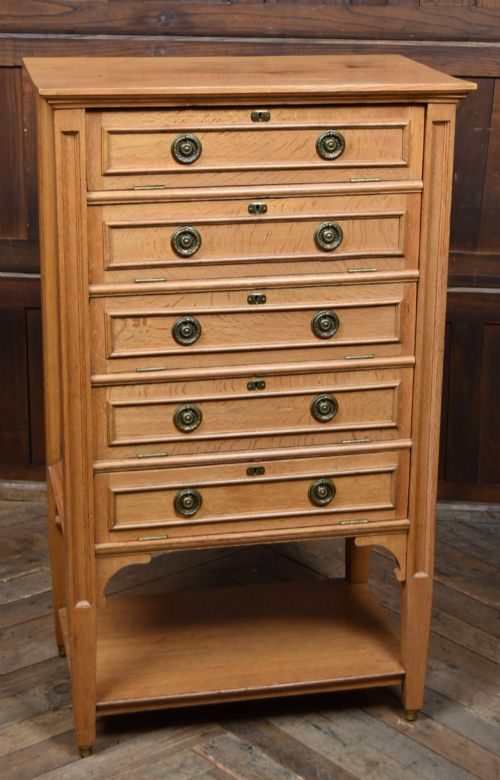
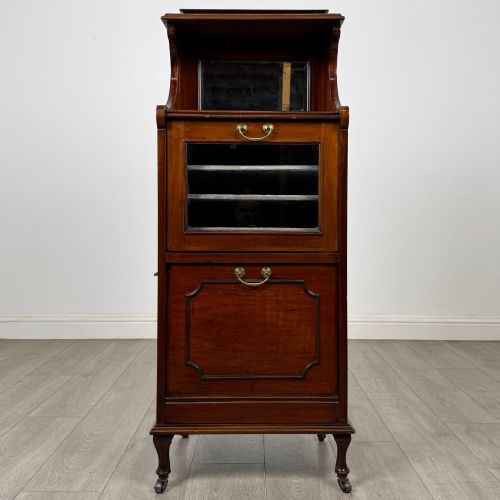
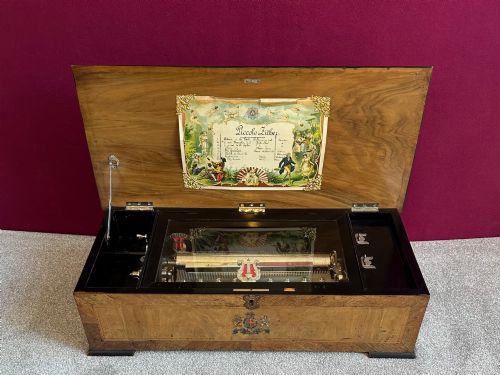
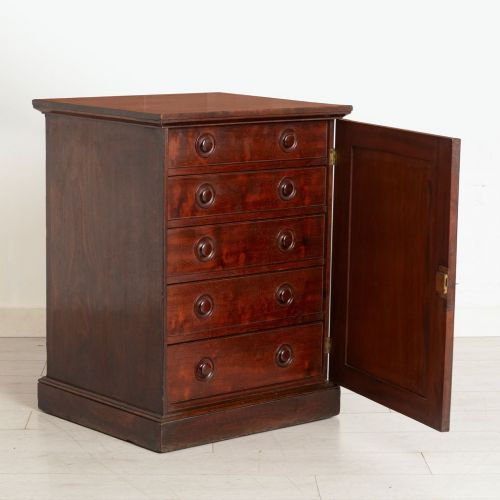
A wooden music chest gathers diverse forms from the Victorian and Edwardian eras, spanning vertical filing cabinets for sheet music and table-top musical boxes. You will frequently meet mahogany and walnut music cabinets featuring drop-front drawers or internal shelves alongside Swiss cylinder musical boxes.
The selection extends from plain oak filing drawers to inlaid Edwardian specimens and French Art Nouveau creations. Pieces range across the nineteenth and twentieth centuries, taking the shape of folio cabinets and musician's storage units.
How they were made
Constructed primarily in mahogany, walnut, oak, and rosewood, these cabinets and boxes rely on solid hardwoods and veneered surfaces. Brass hardware, glass panels, and steel components appear on musical movements and drop handles.
Cabinetmakers utilised marquetry inlay and ebonised detailing to decorate surfaces, whilst Swiss mechanisms employed pinned cylinders, steel combs, and occasionally visible bells to produce mechanical sound.
Some Victorian music boxes offer bells in view so you can watch tiny hammers strike in time with the tune.
What varies in quality
Quality rests in the precision of the cabinet joinery, the crispness of any mahogany or marquetry inlay, and the complexity of the internal mechanism in musical boxes. Superior pieces display carefully selected wood grain, well-fitted drawers, and rich acoustic resonance.
The sophistication of the design dictates the distinction between standard utilitarian filing pieces and elaborate decorative furniture, such as Arts and Crafts or Chippendale revival interpretations.
Nicole Freres
The Wooden Music Chest Glossary
- Cylinder
- A pinned brass barrel rotated by a spring-driven motor to pluck the teeth of a tuned steel comb in a mechanical music box.
- Marquetry
- Decorative veneer work forming pictures or geometric patterns using various coloured woods applied to the carcase of a cabinet.
- Folio cabinet
- A tall piece of furniture designed with wide, shallow shelves or drawers for holding large sheets of paper or musical scores.
- Comb
- A flat piece of tuned steel with multiple teeth that vibrate when struck by the pins on a revolving musical cylinder.
Wooden Music Chest: Frequently Asked Questions
What is a wooden music chest used for?
These pieces were built to store sheet music, folios, and scores in a dedicated domestic cabinet. Many examples also incorporate mechanical musical box movements designed for home entertainment.
Today, they serve equally well as versatile filing furniture or accent tables in a living space.
How do I date an Edwardian music cabinet?
Edwardian pieces typically date from between nineteen hundred and nineteen ten, often showing lighter mahogany timbers and inlaid decoration. Stylistic clues include Edwardian Chippendale revival motifs or Arts and Crafts influences.
Victorian predecessors generally display darker woods, heavier proportions, and more ornate carving or marquetry.
How do Swiss musical boxes work?
A wound spring turns a brass cylinder set with tiny metal pins that pluck individual teeth on a tuned steel comb. Each pin placement corresponds to a specific musical note.
Complex models feature multiple airs, interchangeable cylinders, or visible bells struck by miniature hammers.
Are music cabinets suitable for modern storage?
The shallow drawers and vertical compartments make these cabinets ideal for organising papers, documents, and craft materials. Their compact footprints allow them to fit easily into studies, hallways, and living rooms.
Retaining their original internal divisions helps keep modern items neatly separated.