



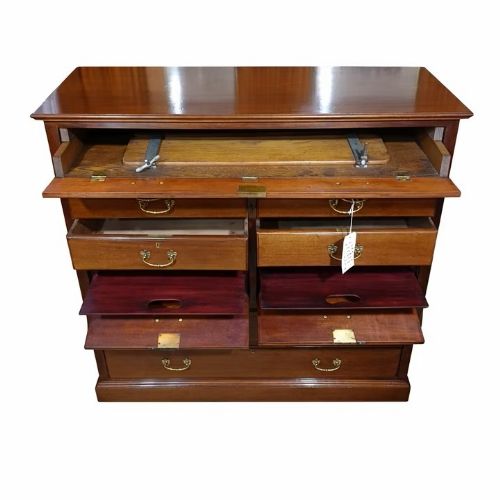


Wooden Military Drawers
These wooden military drawers offer portable practicality with brass-bound precision, built for officers on the move during the nineteenth and early twentieth centuries.
Wooden Military Drawers
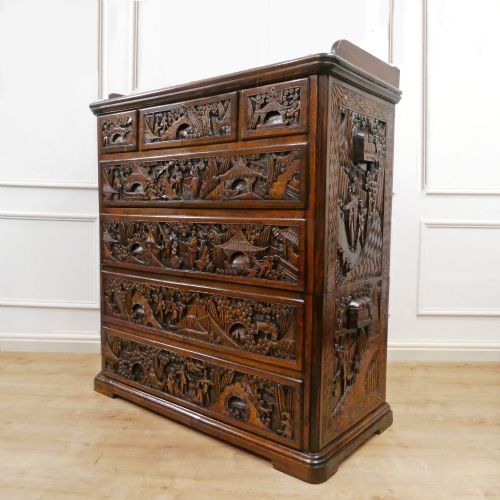
When you search for wooden military drawers, you are looking at robust portable furniture designed for campaign use by officers in the field. These pieces span the nineteenth century and the Edwardian and George V periods, featuring distinctive brass hardware and sectional construction.
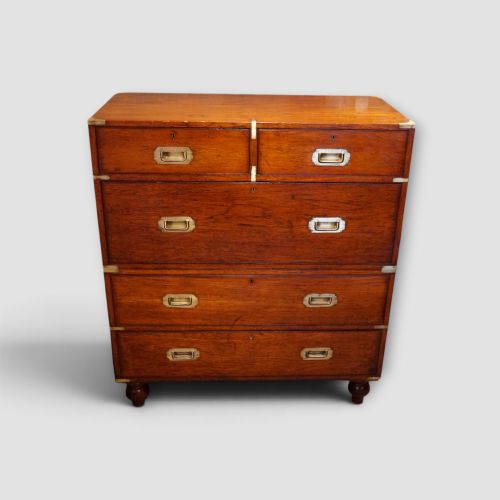
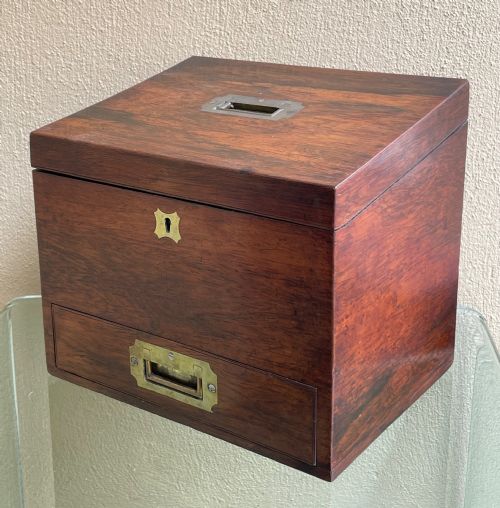
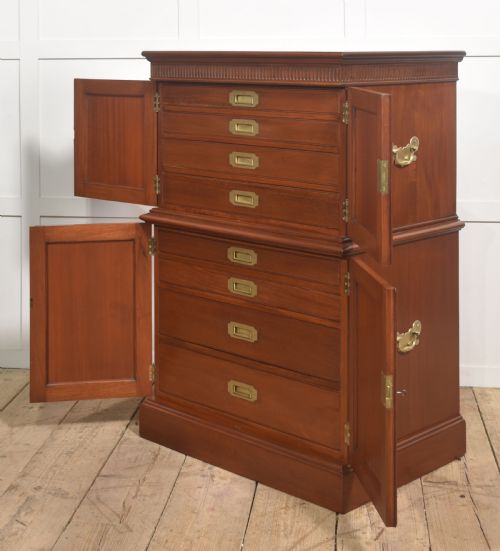
The most common form on this page is the campaign chest of drawers, often built in two or more stacking sections for ease of transport. Alongside these chests, you will encounter writing slopes, collectors cabinets, serving cabinets, bedside cabinets, and miniature chests.
Origins vary from English workshops to Anglo-Indian production, utilising timber suited to travel. Each form maintains the strict utility required for military life while offering fine cabinetmaking.
How they were made
Construction relies on dense, durable timbers such as mahogany, teak, camphor wood, padouk, yew wood, pitch pine, walnut, and ebonised wood. These woods withstand climatic shifts and the rigours of transport.
Brass binding protects vulnerable corners and edges, while recessed brass flush handles prevent snagging during transit. Drawers often incorporate secret compartments, writing surfaces, and secretaire drawers for secure correspondence.
Wooden Military Drawers Retail Price Guide 2026
Typical asking prices for wooden military drawers among the pieces listed under this phrase on Sellingantiques today, from the lower quarter to the upper quarter. They describe what is for sale here now, not the wider market.
Listings feature periods from the nineteenth century through Edwardian times and the 1930s, using timbers including camphor wood, teak, and yew wood.
What varies in quality
The standard of a piece rests on the selection of timber and the precision of its brass mounts. Superior examples exhibit tightly fitted sectional carcases where stacking parts align seamlessly.
Internal engineering distinguishes finer pieces, particularly secret drawers, fitted writing interiors, and the quality of dovetail joinery. The choice of secondary woods and the condition of the original leather inserts also influence the overall standard.
The Wooden Military Drawers Glossary
- Campaign chest
- A sectional chest of drawers designed to separate into parts for easy transport during military operations. These units typically feature brass corners and inset handles.
- Secretaire
- A cabinet or chest featuring a pull-out drawer with a fitted writing surface and small interior compartments. This provides a compact desk space within a standard chest.
- Flush handle
- A metal handle set into a recess so it does not protrude beyond the surface of the wood. This design prevents damage and catches during transit.
- Brass bound
- Reinforcement of edges and corners with brass strips and brackets to protect the timber from heavy impact. It is a defining characteristic of campaign furniture.
- Padouk
- A heavy tropical hardwood with a reddish hue used for durable furniture construction. Its stability makes it well suited to campaign pieces.
Wooden Military Drawers: Frequently Asked Questions
Why are campaign chests made in sections?
Sectional construction allowed officers to pack, transport, and reassemble their heavy belongings during frequent relocations. Each tier stacked securely upon the next for travel.
This modular design also made hauling the furniture through difficult terrain and narrow ship hatches manageable for baggage handlers.
How do I spot a secretaire drawer?
A secretaire drawer looks like a standard deep drawer from the outside, but the front folds down or pulls forward on hinges. This reveals a writing surface and small pigeonholes or secret drawers inside.
Officers used these drop-front compartments for drafting correspondence and storing documents securely in camp.
What woods were used for military furniture?
Cabinetmakers selected dense, stable hardwoods that could endure extreme climates without warping excessively. Mahogany, teak, camphor wood, and padouk appear frequently in these pieces.
Camphor wood offered the added benefit of natural insect repellency, making it popular for trunks and chests travelling through tropical regions.
How do I distinguish 19th-century pieces from later ones?
Nineteenth-century examples often display hand-cut dovetails, distinct timber ageing, and specific brass casting techniques typical of Victorian workshops. Edwardian and later pieces from the twentieth century show slight shifts in proportion and construction methods.
Examining the secondary woods inside the drawers helps confirm the period of manufacture.