

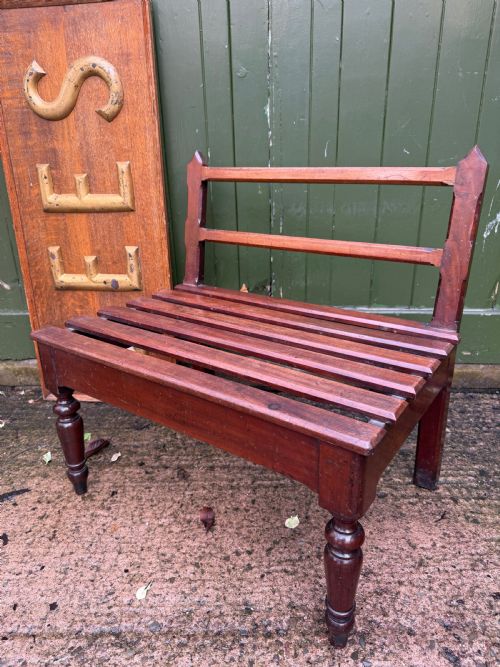


Wooden Luggage Bench
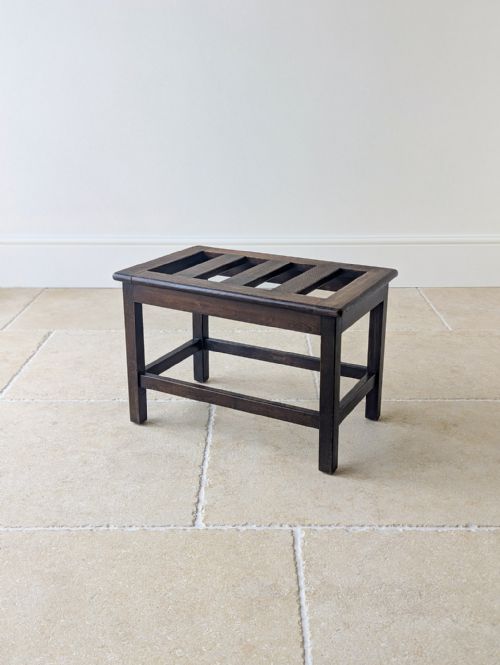
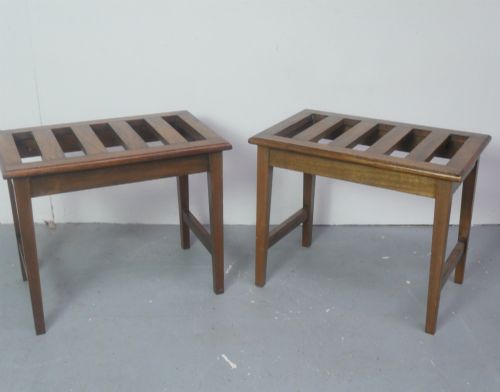
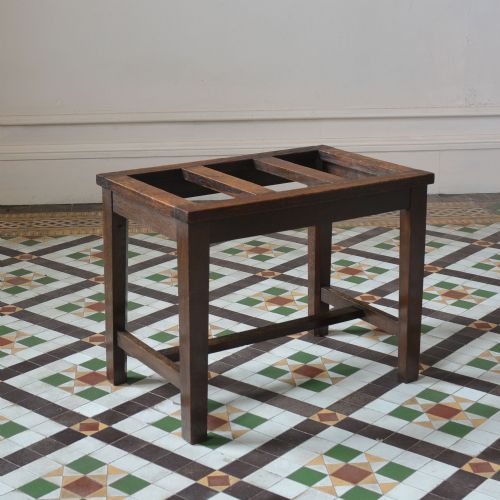
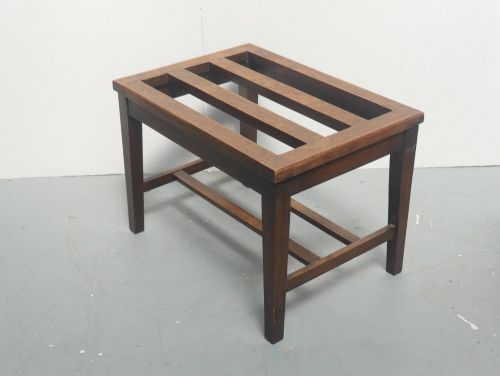
These practical wooden luggage bench pieces provide a sturdy surface for cases and guests.
Wooden Luggage Bench
A wooden luggage bench serves as a practical stand for cases and overnight bags in guest bedrooms. When you search for a wooden luggage bench, you encounter sturdy stands designed for domestic and hospitality use.
The pieces on this page span the Victorian and Edwardian periods up to the mid-twentieth century. Oak and mahogany examples appear frequently alongside walnut, ash, beech, yew wood, and painted pine.
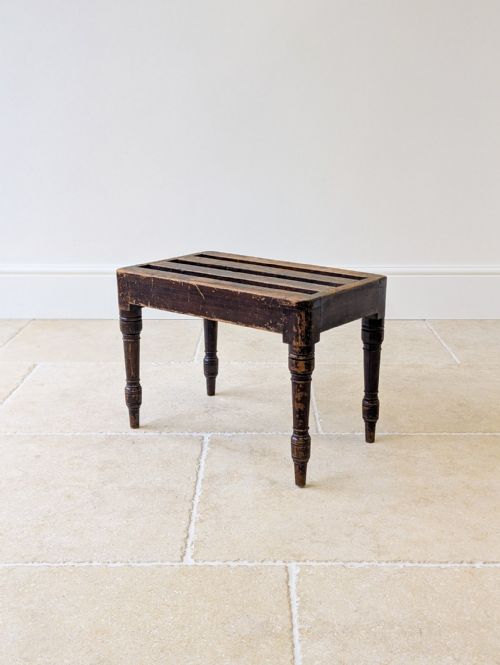
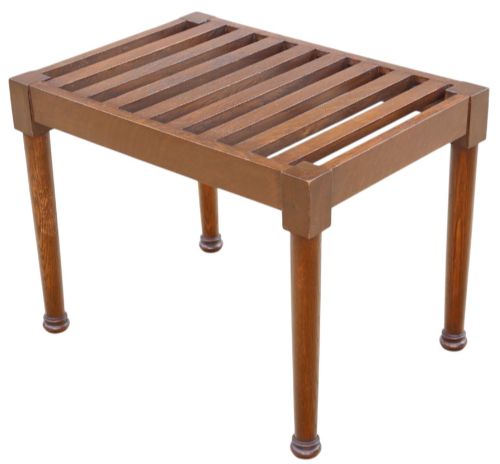
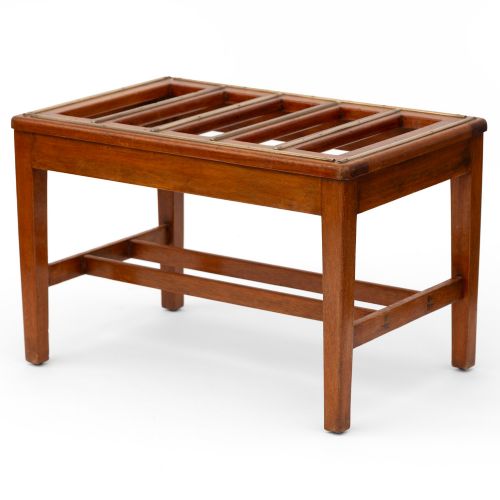
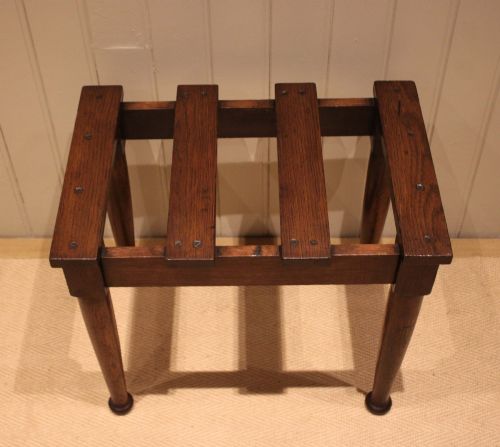
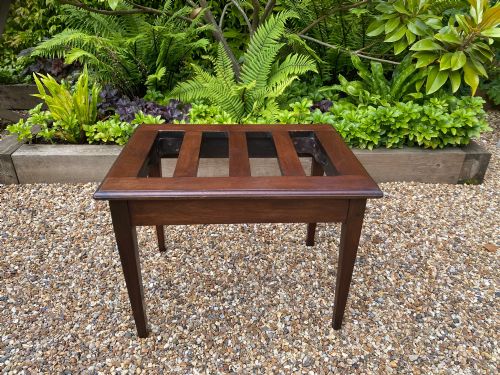
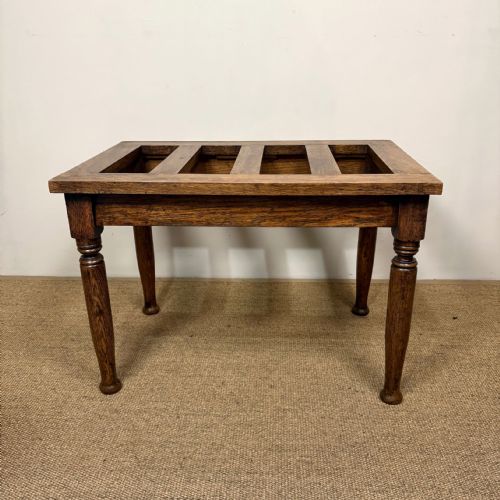
Most items take the form of traditional luggage stands and racks with slatted tops. Certain pieces include lower shelves or raised rear supports for added utility.
Materials and construction
Cabinet makers built these stands from hardwoods like oak, mahogany, and walnut to withstand the weight of heavy travel trunks. Turned legs and framed supports provide stability under frequent loading.
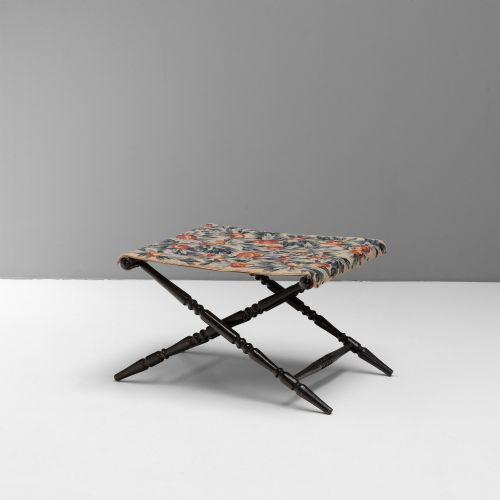
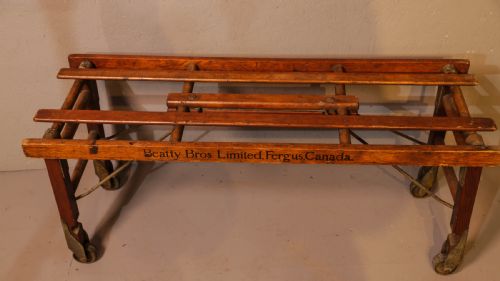
Webbing, straps, or wooden slats form the upper surface where luggage rests. Brass or iron hardware occasionally appears on hinges, brackets, and maker plaques.
Materials represented include brass, iron, beech, ash, yew wood, and painted pine alongside traditional hardwoods.
Assessing quality and build
Superior examples show denser hardwoods and substantial timber scantlings rather than lighter framing. Carved details, raised rear upstands, and polished finishes indicate higher workshop standards.
Original maker stamps or hotel provenance elevate certain pieces above standard domestic utility items. Condition depends on the tightness of joints and the preservation of the original wooden or webbed surfaces.
Beatty Bros Fergus Canada·Brown & Lamont·Waring & Gillow
The Wooden Luggage Bench Glossary
- Luggage stand
- A low wooden bench or rack designed to hold travel bags off the floor. These pieces typically feature slatted tops and four legs.
- Upstand
- A raised barrier at the rear of a stand. This feature prevents cases from marking walls.
- Edwardian
- A period spanning the early twentieth century up to the First World War. Furniture from this era often utilises lighter oak timbers.
- Victorian
- The nineteenth-century period associated with the reign of Queen Victoria. Pieces from this era frequently employ heavy mahogany, walnut, or ash.
Wooden Luggage Bench: Frequently Asked Questions
How were luggage benches used originally?
Hotels and large country houses placed these stands in guest bedrooms so visitors could unpack without bending to the floor. Porters set heavy leather trunks directly onto the sturdy wooden frames.
Today, they serve a similar purpose in domestic guest rooms or function as extra seating and low display surfaces.
How do I distinguish Victorian from Edwardian stands?
Victorian stands often utilise heavier timbers like mahogany, ash, or walnut with deeper proportions. They tend to have a darker, more substantial presence.
Edwardian examples frequently employ brighter oak, sometimes featuring simpler lines or carved details typical of the early twentieth century.
Can these stands support heavy modern luggage?
Solid hardwood construction and braced frames allow these pieces to hold significant weight. They were originally built for heavy canvas and leather travel trunks.
Checking the joints and webbing ensures the stand remains stable for daily use in a modern home.
Where should I place a luggage bench at home?
Bedrooms remain the natural home for these stands, offering a convenient surface for overnight bags. They also fit well in entrance halls and boot rooms.
Some owners use them in bathrooms to hold folded towels or extra linens.