
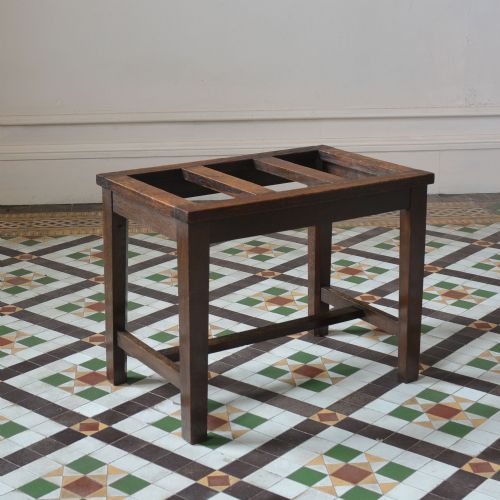
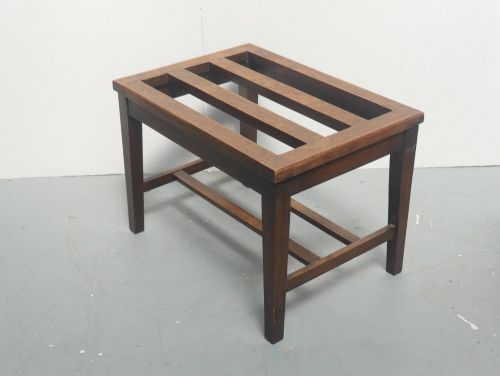
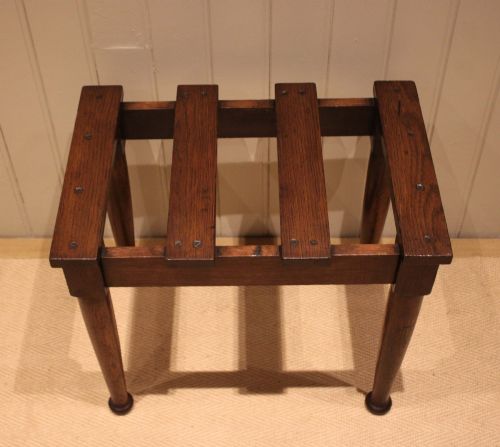
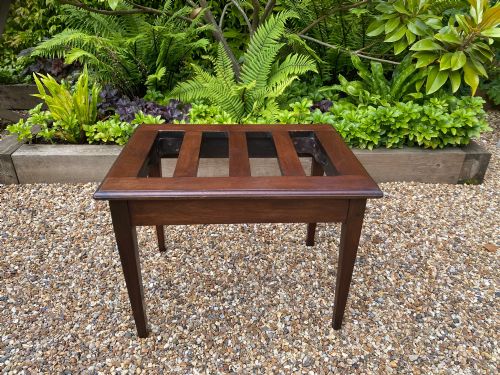


Edwardian Slatted Luggage Rack
An Edwardian slatted luggage rack is a practical piece of period furniture designed to hold guest cases, offering sturdy oak or mahogany construction for the home.
Edwardian Slatted Luggage Rack
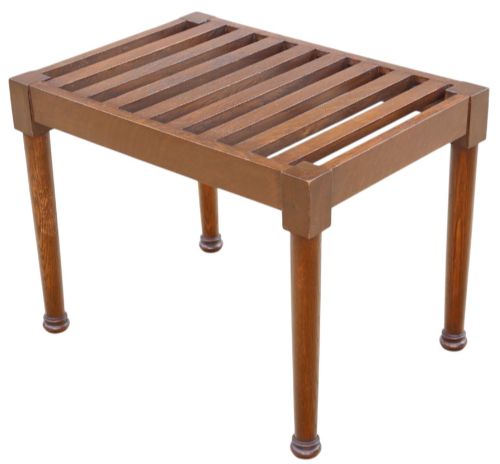
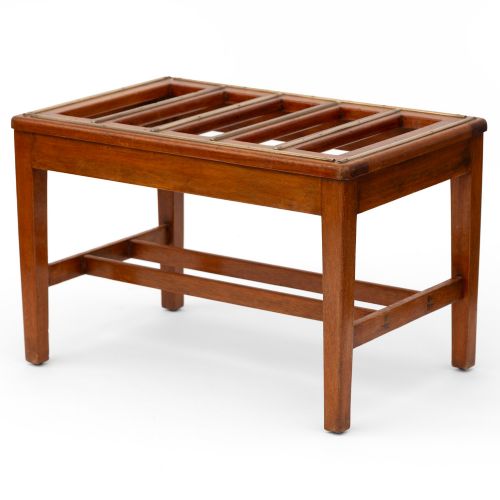
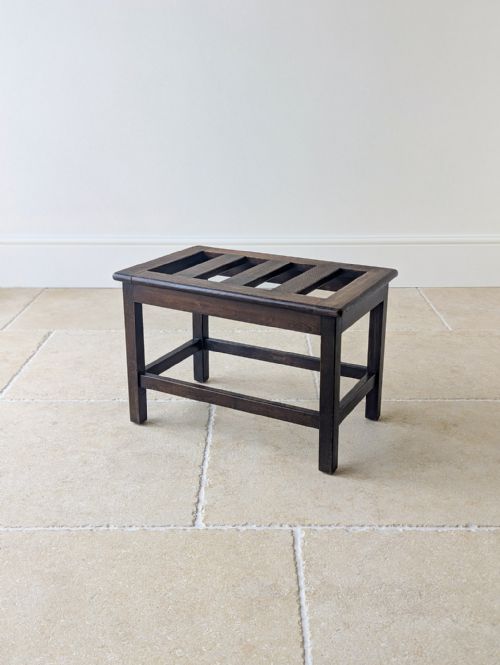
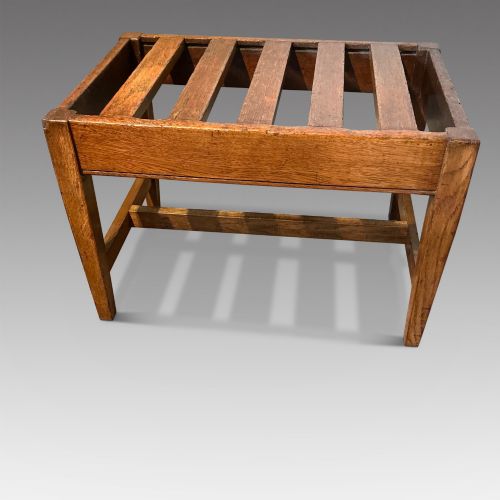
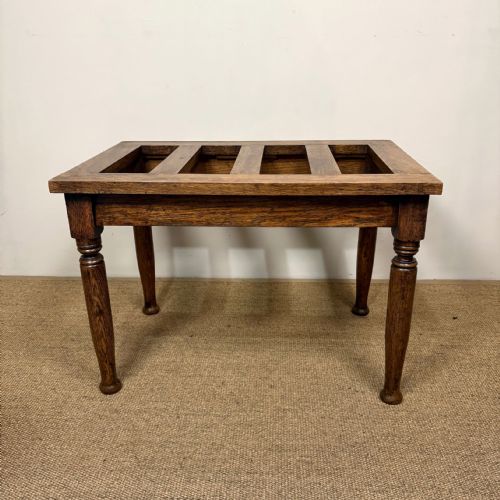
An edwardian slatted luggage rack is a functional item designed to hold bags and cases off the floor in a bedroom or guest room. You will most frequently encounter oak and mahogany examples dating from the Edwardian era and the late nineteenth century.
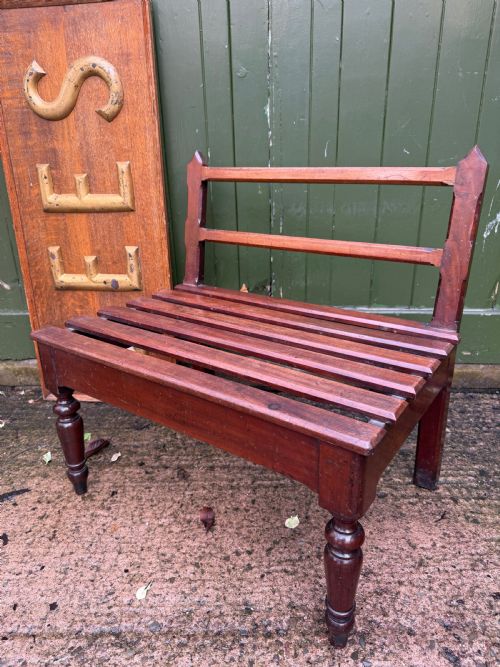
These pieces typically take the form of stands with slatted wooden tops, occasionally featuring a raised rear upstand or folding legs. The selection spans straightforward utility items alongside pieces with hotel provenance.
Originating largely from British workshops and country house settings, these stands reflect the domestic hospitality habits of the period. Their enduring appeal lies in providing a genuine period solution for modern guest rooms.
Materials and construction
The primary woods utilised in these pieces are oak and mahogany, complemented by occasional examples in ash, pine, and painted surfaces. Joinery methods of the period ensure sturdy frames capable of supporting heavy leather luggage.
Slats are fixed across the top to form the main support platform, sometimes accompanied by brass fittings or iron structural elements. Polished finishes highlight the natural grain of the timber used in their creation.
Some former West End hotel guests certainly tested these sturdy oak slats to their absolute limit.
Markers of quality
Quality in these racks is determined by the choice of timber, such as substantial solid oak or rich mahogany, rather than simpler painted pine. The presence of thoughtful details, like a raised and raked rear upstand support or polished hotel provenance, elevates a piece above standard utility items.
Proportions also dictate the grade of the stand, with deeper dimensions and superior joinery distinguishing finer examples from ordinary workshop output.
Waring & Gillow
The Edwardian Slatted Luggage Rack Glossary
- Upstand
- A raised barrier at the rear of the luggage stand. This feature prevents cases from sliding backward against the wall.
- Slatted
- Constructed with narrow strips of wood spaced evenly across the top. This design reduces weight while maintaining strength for heavy bags.
- Provenance
- The documented history or origin of a piece. Items with hotel or country house backgrounds carry notable provenance.
- Luggage stand
- A low freestanding frame designed to hold travel cases at a convenient height. They were standard fixtures in period bedrooms.
Edwardian Slatted Luggage Rack: Frequently Asked Questions
What is a luggage rack used for today?
These racks serve effectively in guest bedrooms to hold suitcases at a convenient height, keeping bags off the floor.
They also function well in bathrooms for stacking towels or in hallways as distinctive accent furniture.
How do I date an oak luggage stand?
Dating relies on examining the timber grain, construction techniques, and stylistic clues such as a raised rear upstand.
Comparing the piece to documented Edwardian and nineteenth-century examples helps confirm its period of origin.
Are these racks sturdy enough for modern suitcases?
Solid wood construction from the Victorian and Edwardian periods provides inherent strength and durability.
Most original stands easily support modern travel bags without structural strain.
What wood types are most common?
Oak and mahogany appear most frequently among the surviving pieces from this era.
Alternative materials like ash, pine, and painted surfaces also occur occasionally.