
Wooden Library Shelves
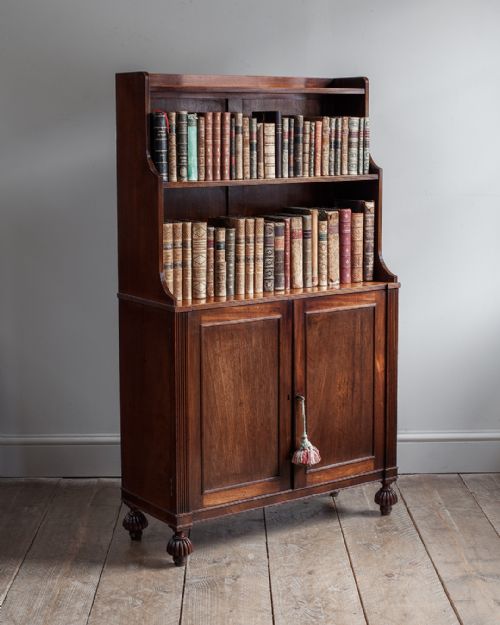
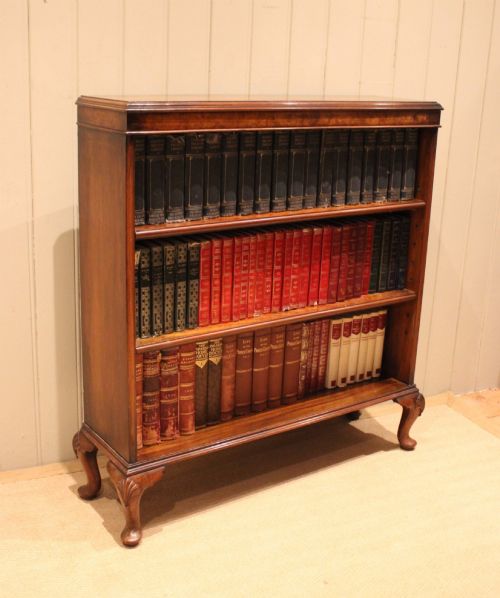
Wooden library shelves organise books in style, drawing on decades of mahogany and oak craftsmanship from the Victorian and Edwardian eras.
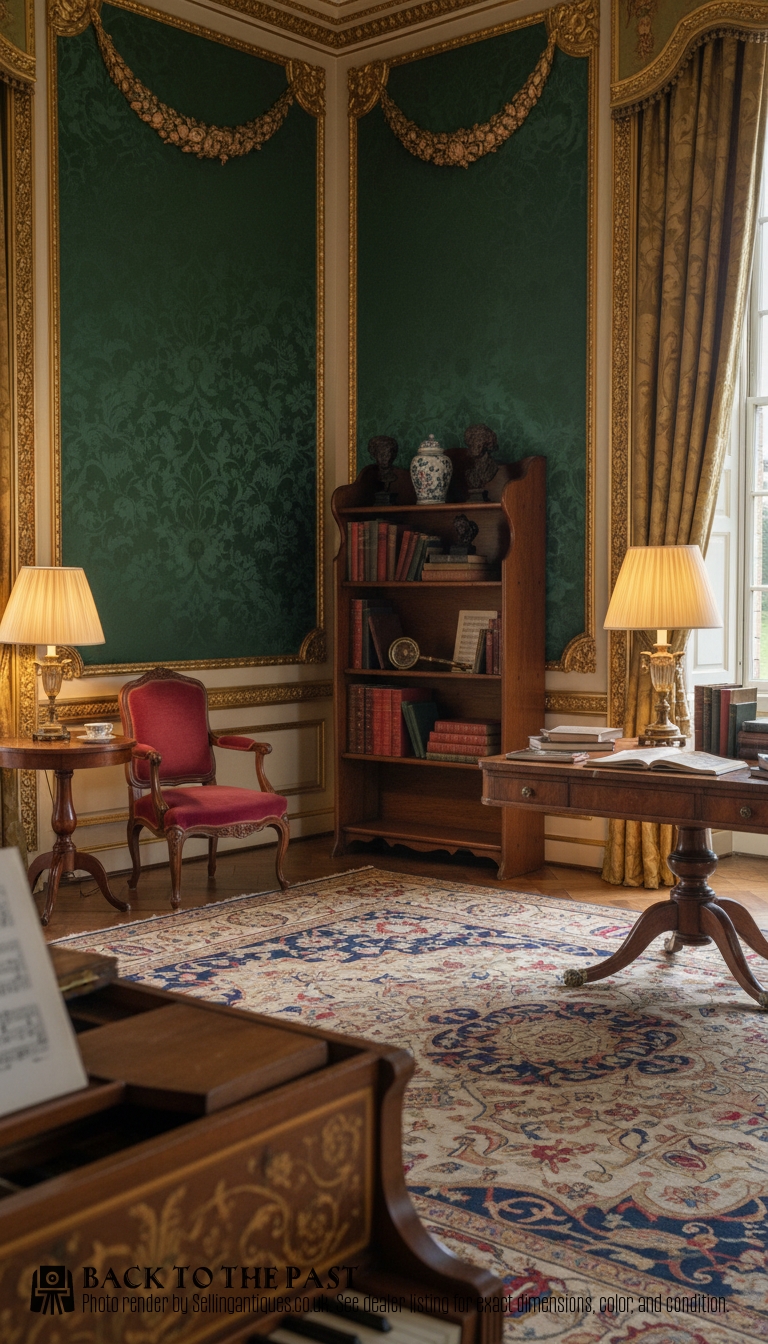
Wooden Library Shelves
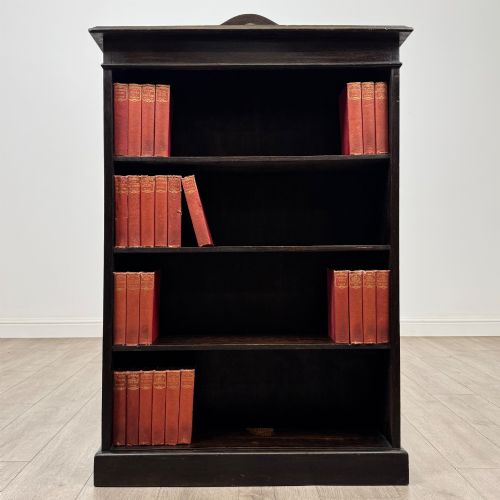
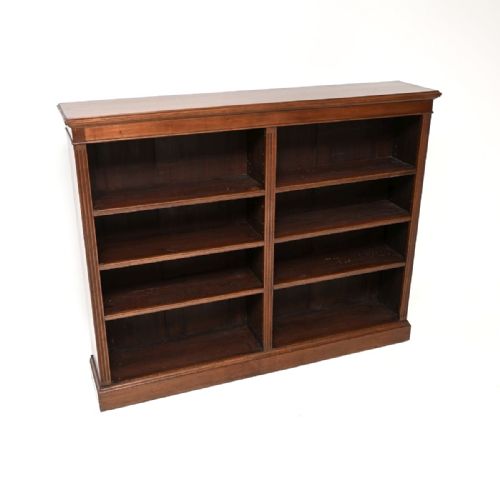
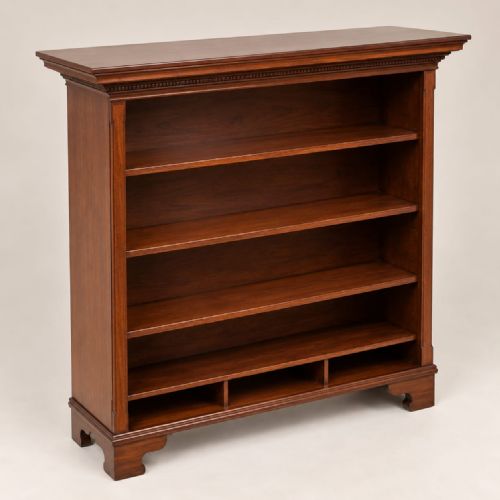
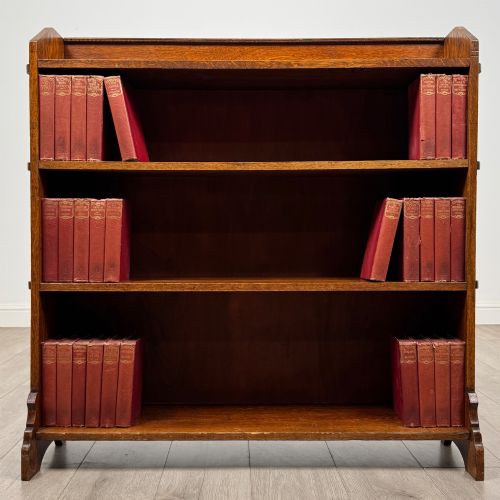
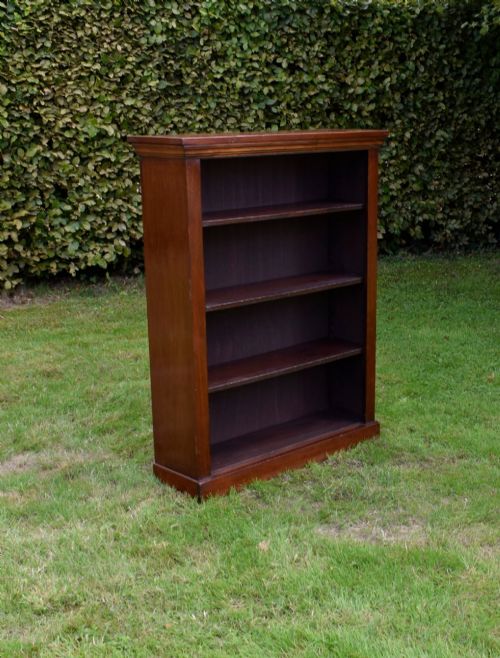
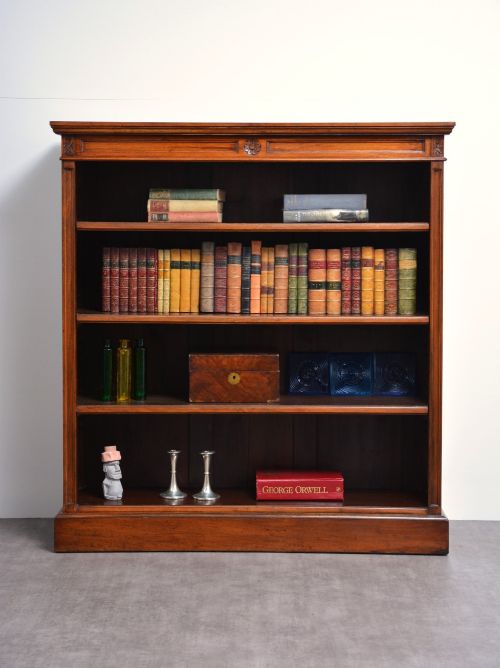
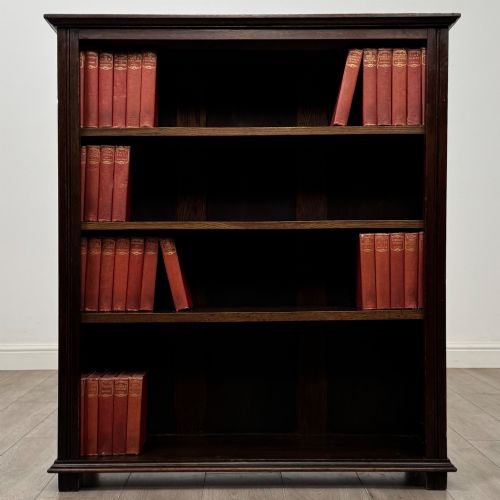
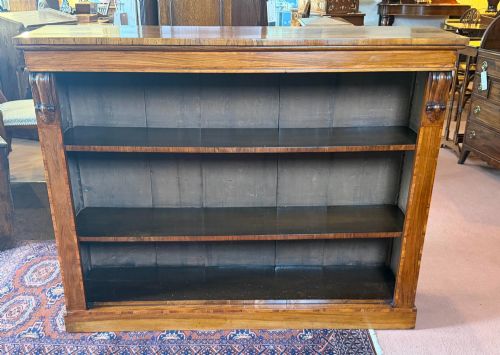
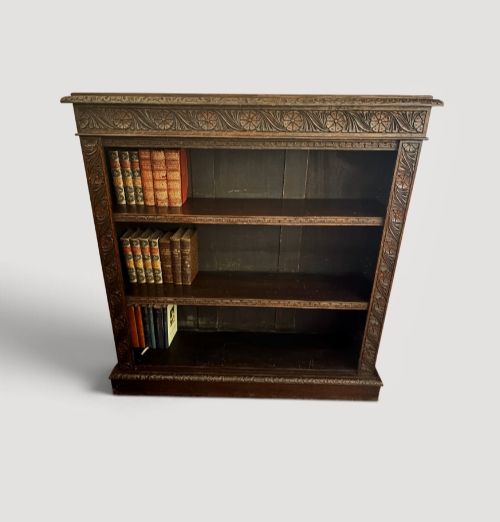
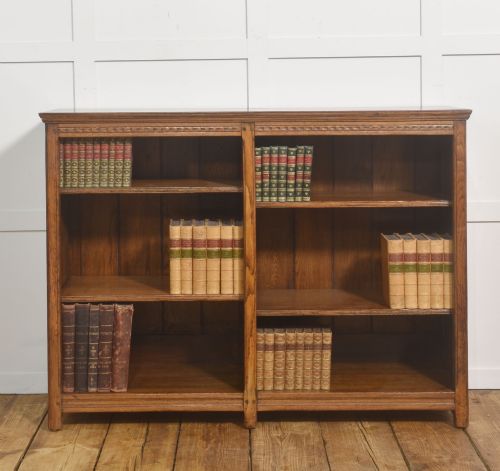
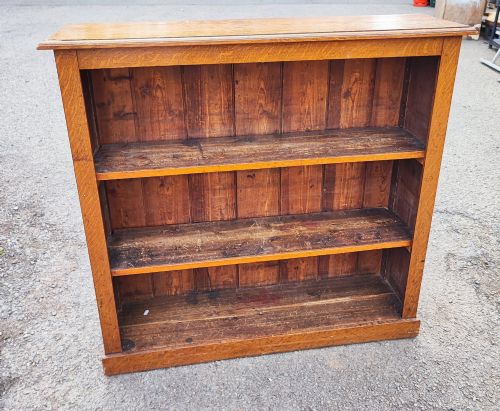
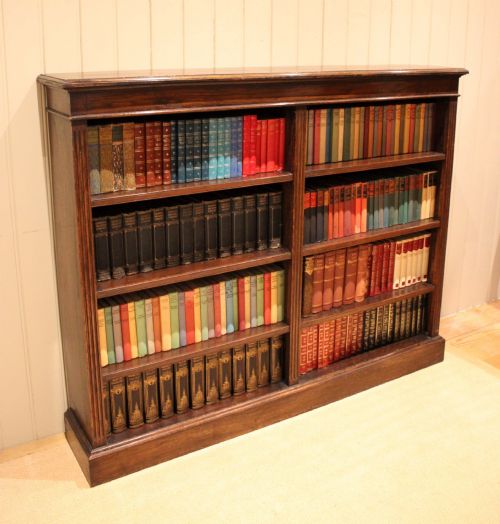
Wooden library shelves encompass open bookcases, adjustable shelving units and stacking bookcases designed to house collections in domestic and institutional settings. When searching for wooden library shelves, buyers encounter pieces primarily originating from the nineteenth and early twentieth centuries, spanning Victorian, Edwardian and Arts and Crafts periods.
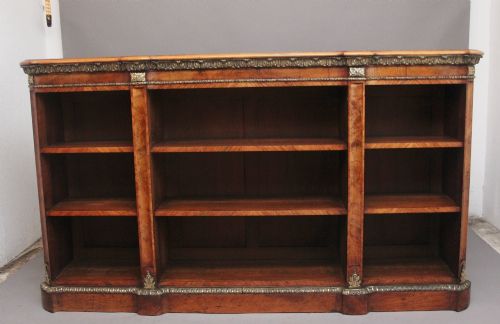
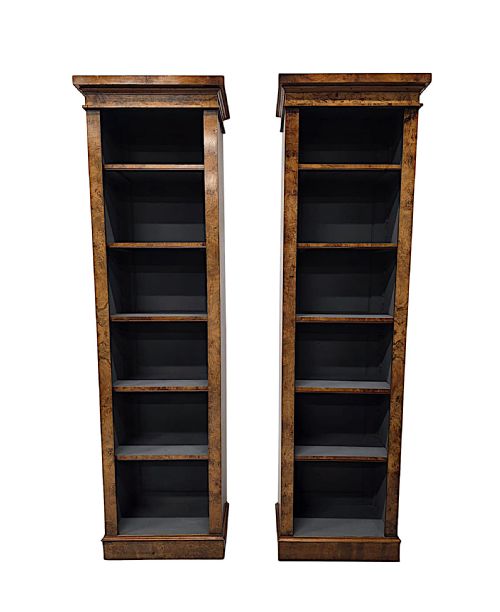
The format typically manifests as an open bookcase allowing immediate access to volumes, often featuring adjustable shelves supported by timber ratchets or brass pins. Examples range from slim burr walnut proportions to large breakfront configurations in solid mahogany or golden oak.
How they were made
Cabinet makers utilised dense hardwoods such as mahogany, oak and walnut, frequently applying figured veneers like burr walnut to prominent surfaces. Carved ornament, ormolu mounts and linear mouldings defined the decorative vocabulary of Victorian and Edwardian workshops.
Construction methods prioritised utility through adjustable shelving mechanisms, solid timber carcases and occasional industrial iron or brass brackets. French polishing or wax finishes sealed the grain, highlighting the natural colour and figure of the timber.
Listings feature timbers including mahogany, oak, walnut, burr walnut, pine and brass across the Victorian and Edwardian eras.
What varies in quality
Quality rests in the selection of timber figure, the crispness of carved detail and the integrity of the structural joinery. Pieces featuring figured burr walnut or substantial breakfront mahogany frames demonstrate higher ambition than standard utility shelving.
The sophistication of the adjustable shelf mechanism and the retention of original brass hardware or ormolu embellishments distinguish standard commercial productions from superior commissions by notable makers.
Johnstone and Jeanes
The Wooden Library Shelves Glossary
- Open bookcase
- A piece of furniture designed for book storage featuring unglazed fronts that provide direct access to the volumes inside. These units frequently incorporate adjustable shelving.
- Breakfront
- A cabinet design where the central section projects forward from the flanking wings, creating visual depth and architectural presence. This configuration appears on larger library bookcases.
- Burr walnut
- A prized timber veneer harvested from the warted growths of walnut trees, displaying intricate swirling grain patterns. It was favoured for high-status nineteenth-century cabinetry.
- Ormolu
- Gilded bronze ornamentation applied to furniture as mounts and decorative accents, often seen on nineteenth-century walnut library pieces.
- Adjustable shelves
- Internal horizontal boards resting on movable supports that allow the vertical spacing to be altered for different book sizes.
Wooden Library Shelves: Frequently Asked Questions
How do I adjust the shelves?
Most period open bookcases utilise wooden tooth racks, brass studs or metal pins inserted into vertical pilasters inside the carcase. Lifting the shelf allows the supporting pegs to be repositioned into alternative slots.
Ensure the shelf is cleared of books before attempting adjustment to prevent strain on the timber supports and interior lining.
Are these shelves suitable for heavy books?
Solid mahogany and oak examples constructed in the nineteenth century possess sufficient structural strength to support substantial volumes. Adjustable pine or hardwood boards distribute weight effectively across internal supports.
Overloading very long shelves can cause slight bowing over decades, so heavier folios are best placed on shorter or reinforced tiers.
How should I care for the timber?
Maintain the finish by applying natural beeswax sparingly and buffing with a soft cloth to nourish the wood grain. Avoid placing bookcases near direct heat sources or strong sunlight to prevent timber shrinkage and veneer lifting.
Dust regularly using a dry cloth rather than aerosol polishes that can build up residue over time.
How do I date a wooden bookcase?
Examine the timber species, construction joints, backboards and hardware style to determine the likely era of manufacture. Victorian and Edwardian pieces often display characteristic proportions, moulding profiles and maker signatures.
Machine-sawn backboards and standardised brass screws typically indicate late nineteenth or early twentieth-century production.