
Wooden Kneehole Desk
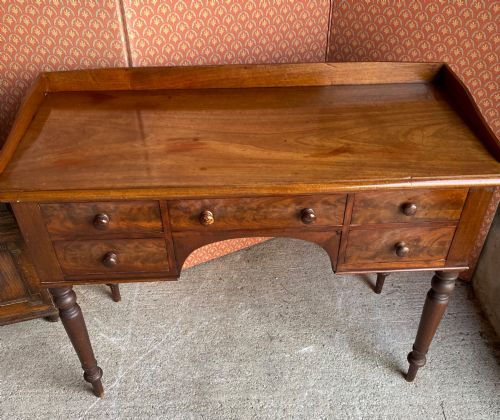
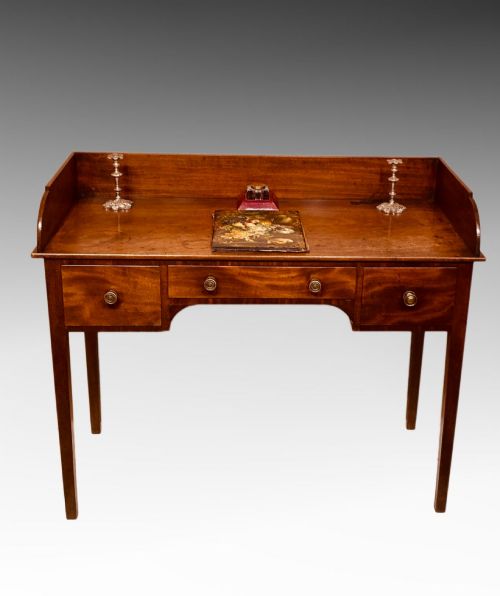
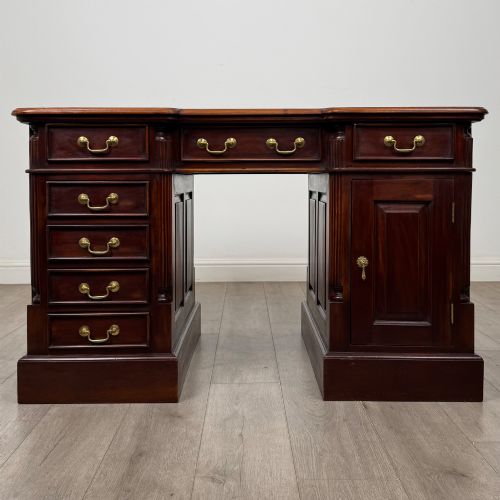
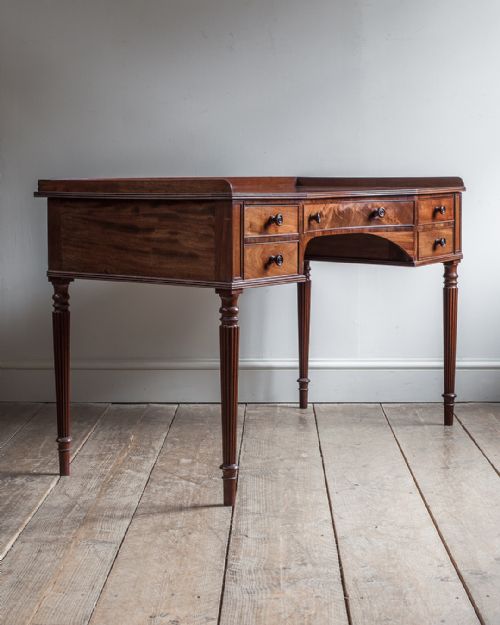
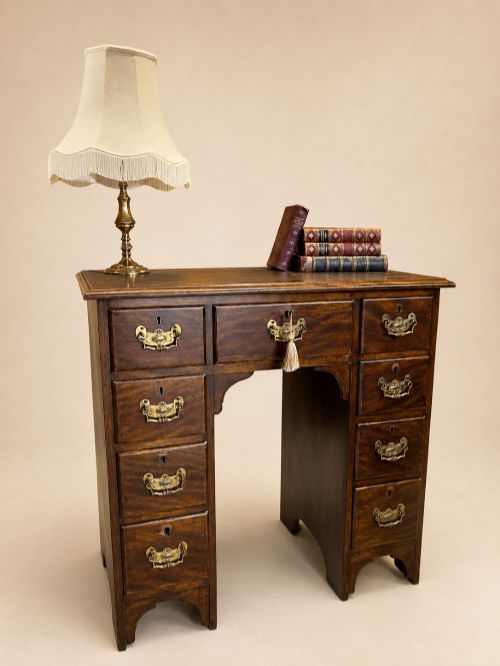
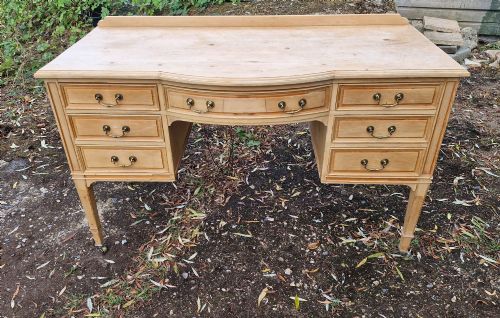
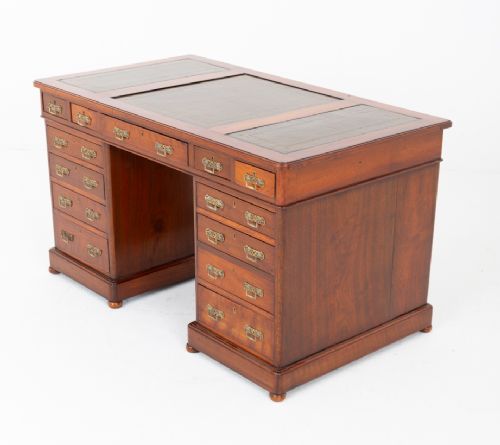
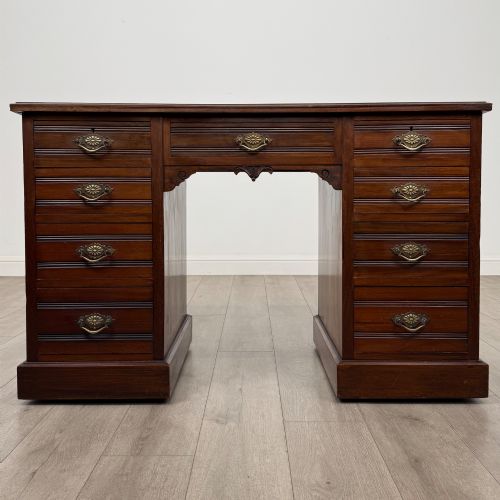
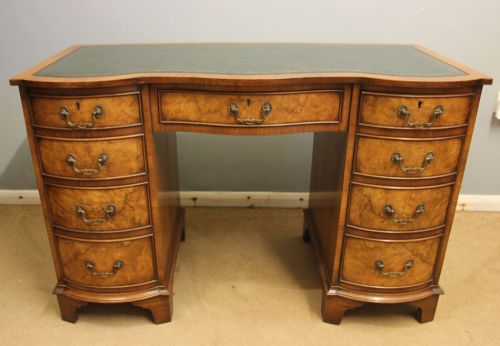
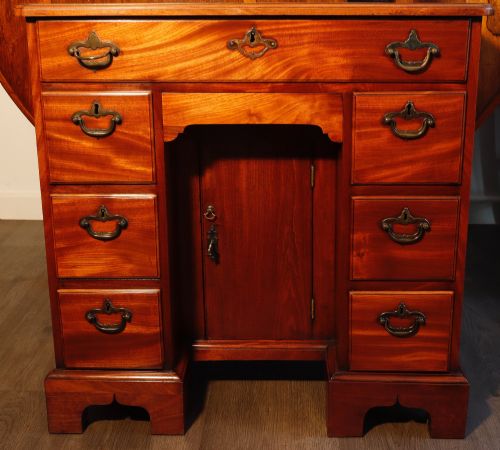
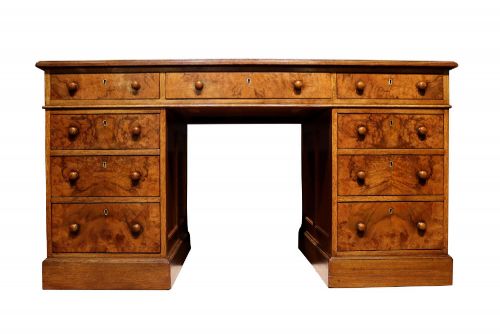
A wooden kneehole desk provides a compact writing station featuring a central recess beneath a bank of drawers.
Wooden Kneehole Desk
A wooden kneehole desk serves as a compact writing station, offering a central recess beneath a series of drawers. Buyers encounter examples spanning the Georgian, Victorian, Regency and Edwardian periods.
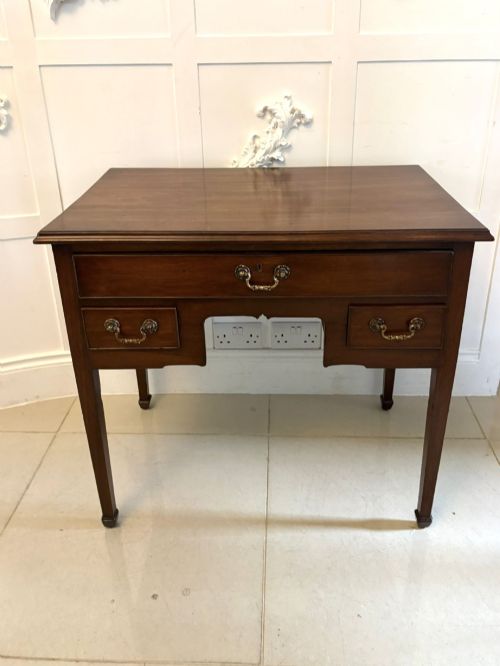
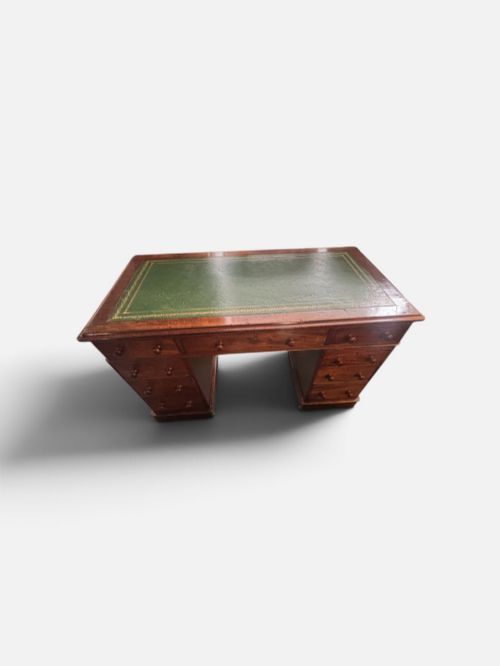
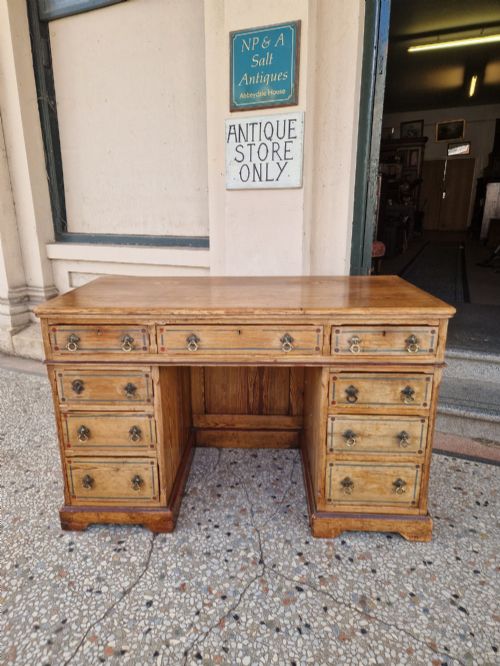
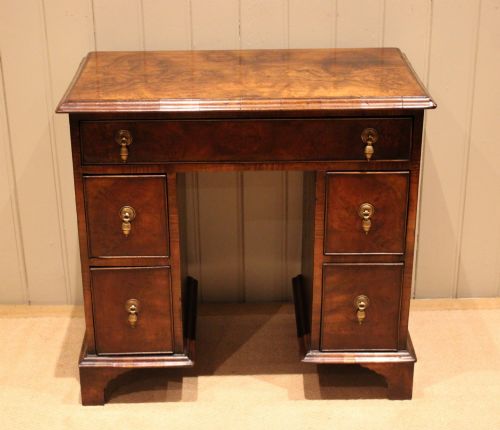
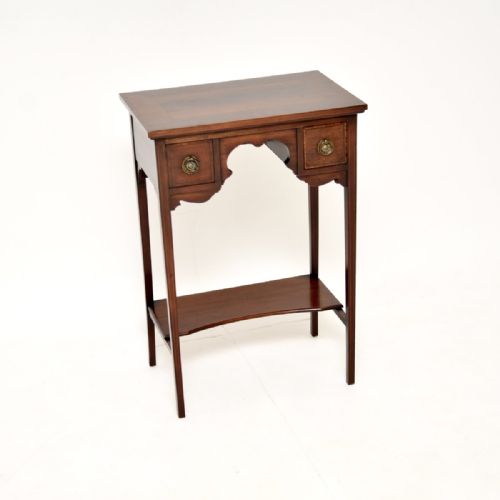
The form typically comprises a pedestal configuration or a lowboy structure featuring fitted drawer arrangements. Mahogany and walnut dominate the construction, accompanied by occasional variations in oak, pine and satin birch.
These pieces function primarily as writing tables or dressing furniture, originating from workshops across the eighteenth and nineteenth centuries. The layout balances storage capacity with a manageable footprint for domestic interiors.
Materials and construction methods
Cabinetmakers utilised dense timbers such as mahogany and walnut, frequently selecting burr veneers for decorative drawer fronts and top surfaces. Secondary woods like pine appear in internal drawer framing and structural carcasing.
Brass hardware, including drop handles and escutcheons, fastens to drawer faces alongside inset tooled leather writing surfaces. Joinery relies on traditional techniques to house multiple small drawers around the central recess.
Listings feature wooden kneehole desks constructed from mahogany, burr walnut, oak, satin birch and pine, spanning the Georgian to Edwardian periods.
Distinctions in quality and execution
Superior examples display careful timber selection, utilising well-figured mahogany or matched burr walnut veneers across the primary facades. Grain alignment and the integration of secondary woods indicate the level of care taken in the workshop.
Refined execution appears in the handling of internal drawer linings, dovetail joints and the retention of original brass furniture. The cohesion of proportions between the central kneehole and the flanking pedestals defines the overall balance of the piece.
Heal & Sons·Johnstone & Jeanes·Étienne Kohlmann
The Wooden Kneehole Desk Glossary
- Kneehole
- A recessed space beneath the central section of a desk or dressing table designed to accommodate the legs of a seated user. This layout allows for banks of drawers to flank the sitter on both sides.
- Pedestal desk
- A heavy writing table supported by two vertical pillars of drawers rather than four distinct legs. Each pedestal contains multiple stacked compartments.
- Lowboy
- A small eighteenth-century table featuring one or more rows of drawers beneath the work surface. These pieces frequently function as dressing tables or side tables.
- Escutcheon
- A protective plate surrounding the keyhole of a drawer or cabinet door. They are commonly cast in brass and match the primary hardware.
- Dovetail
- A traditional joint formed by interlocking wedge-shaped fingers used to secure drawer corners. Fine joinery displays numerous tight pins and tails.
Wooden Kneehole Desk: Frequently Asked Questions
What is a wooden kneehole desk?
A wooden kneehole desk is a form of writing furniture featuring a central recess for the legs, flanked by columns of small drawers. These pieces provide surface workspace while incorporating structured storage beneath.
Craftsmen built them primarily in mahogany, walnut and oak during the eighteenth and nineteenth centuries. Their compact footprint made them suitable for domestic studies and bedrooms.
How do I date a wooden kneehole desk?
Dating relies on examining timber choices, construction techniques and stylistic details such as bracket feet or inlaid stringing. Georgian and Victorian examples exhibit distinct changes in hardware and secondary woods over time.
Interior elements like hand-cut dovetails and lining timbers offer further clues to the period of manufacture. Comparing the overall proportions against known period designs helps confirm the era.
Where were these desks placed?
Historical interiors utilised these desks in private libraries, drawing rooms and bedrooms as multi-purpose writing or dressing surfaces. Their finished backs occasionally allowed them to sit away from the wall.
Modern placement benefits from their modest scale, fitting easily into home offices or living spaces. They function well as standalone writing stations or occasional console tables.
How do I care for the wood surface?
Maintaining the finish involves keeping the timber away from direct heat sources and strong sunlight to prevent veneer drying. Regular dusting with a soft dry cloth preserves the polished surface.
Occasional application of appropriate wax feeds the antique wood without building up heavy residues. Leather inserts require careful cleaning with specialised saddle soaps rather than general household liquids.