
Wooden Kitchen Dining Table
A wooden kitchen dining table anchors the room with sturdy utility, bringing warmth and enduring character to daily meals.
Wooden Kitchen Dining Table
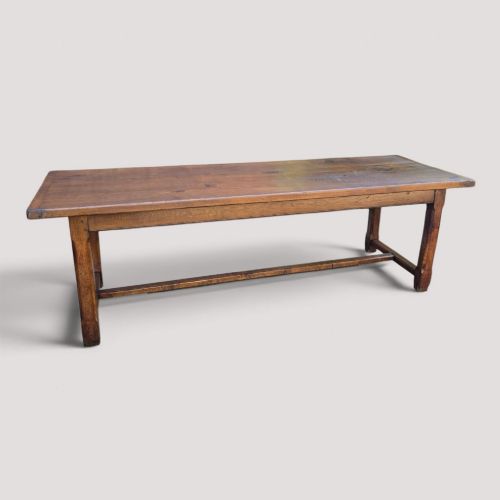
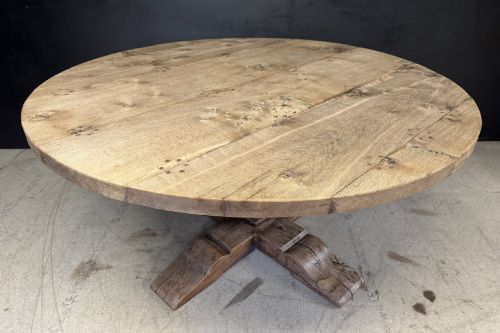
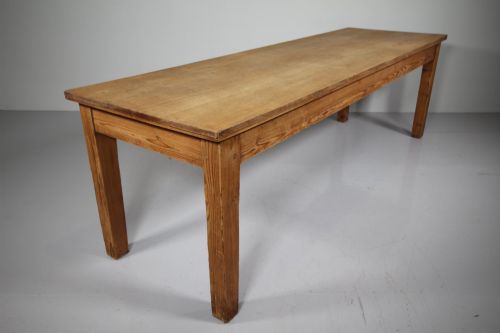
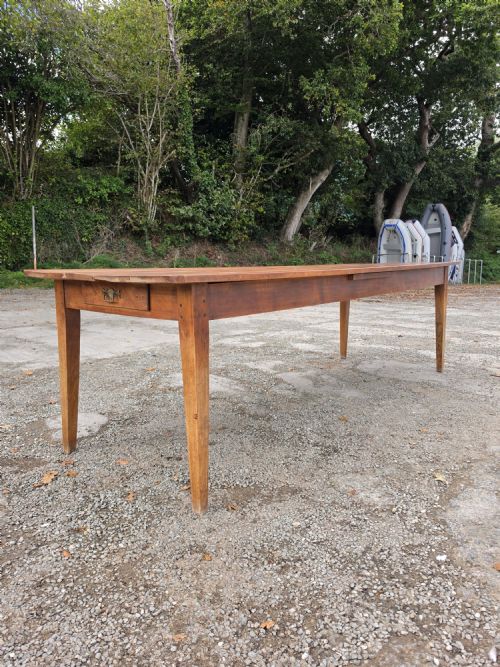
A wooden kitchen dining table serves as the central hub of domestic life, designed for heavy daily use and enduring gatherings. When searching for a wooden kitchen dining table, buyers encounter a diverse range of regional farmhouse, refectory, and draw-leaf formats.
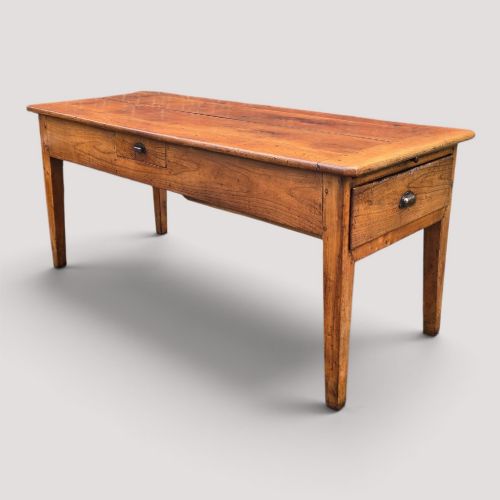
The selections span centuries of British, French, and broader European craftsmanship, stretching from late eighteenth-century origins through Victorian and Edwardian eras up to the nineteen-twenties. Oak and pine dominate the offerings, appearing alongside fruitwood, elm, walnut, beech, and satin birch.
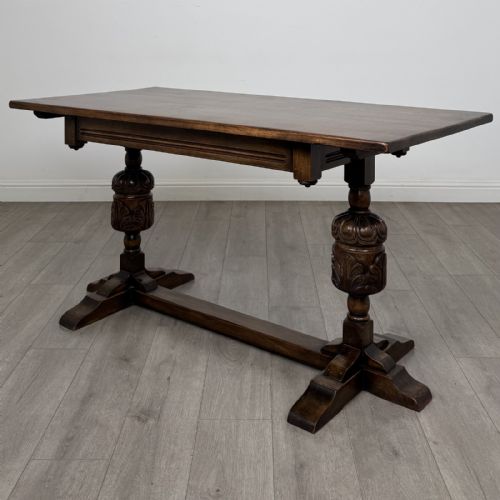
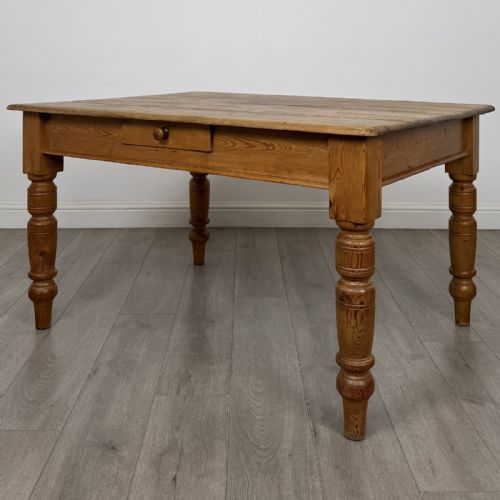
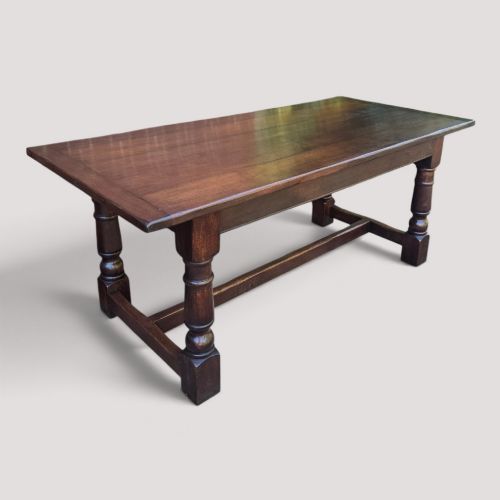
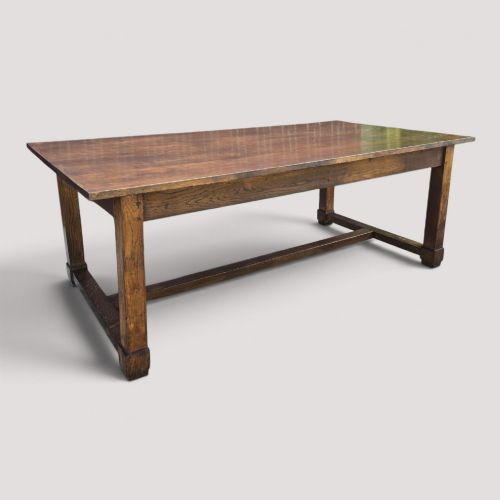
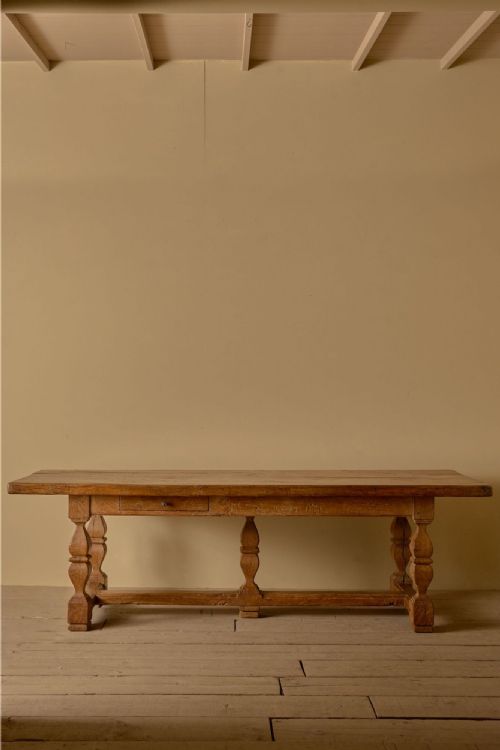
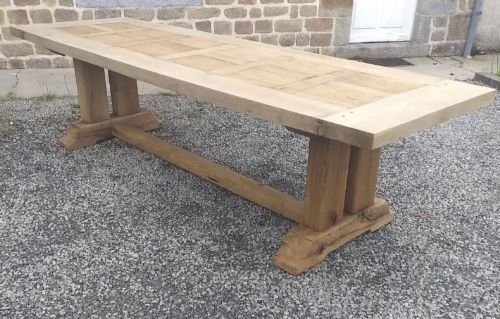
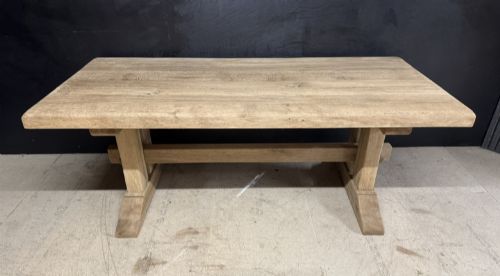
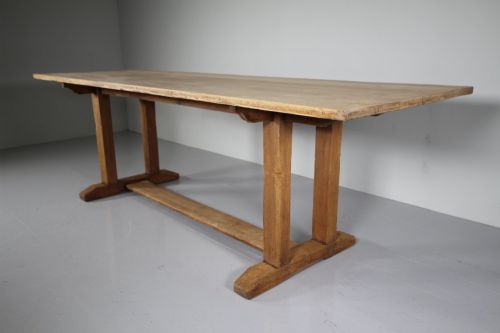
Most pieces lean towards rustic farmhouse, French provincial, or Jacobean revival styles, often featuring extendable leaves or trestle ends. Buyers will frequently find refectory formats and heavy harvest tables suited for seating larger groups.
Materials and construction methods
Makers relied heavily on domestic and imported hardwoods and softwoods like solid oak, pitch pine, and fruitwood to build surfaces capable of withstanding constant daily friction. Joinery prioritised practical strength, utilising sturdy pegged joints, tapered legs, bobbin turnings, and shaped trestle ends.
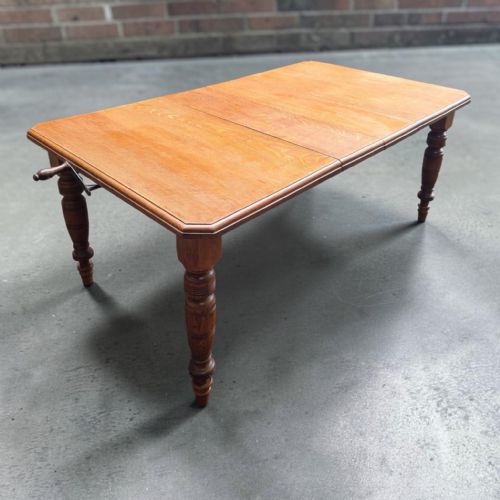
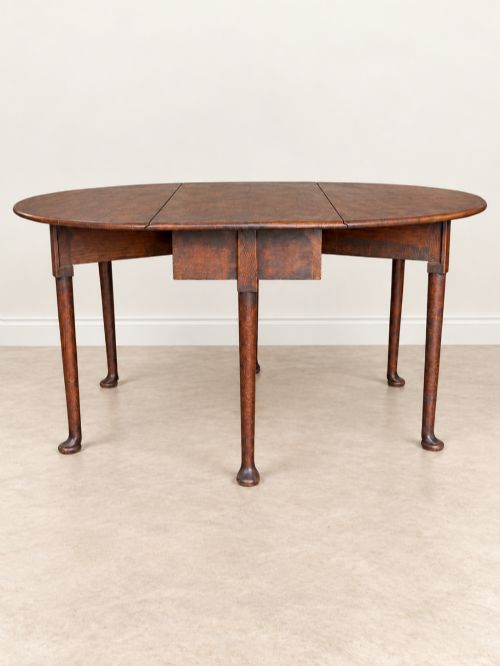
Many examples incorporate clever mechanical extensions such as draw leaves or drop leaves, allowing the surface area to expand easily for guests. Surfaces were often finished with wax or left with natural patinas accrued through decades of household service.
Listings feature items spanning the eighteenth century through the Edwardian era and the nineteen-twenties, constructed in oak, pine, elm, and fruitwood.
Distinctions in construction and character
Quality rests upon the selection of timber and the integrity of the structural frame, where dense old-growth oak or mature fruitwood provides superior resilience over softer pine alternatives. The sophistication of the joinery and the retention of an honest, untouched surface patina elevate certain examples above standard utility pieces.
Proportion and stability define the finer specimens, ensuring that large refectory or harvest tables remain rigid across expansive spans without relying on excessive modern reinforcement. Original mechanisms on extendable leaves also separate straightforward utilitarian designs from more ambitious workshop productions.
The Wooden Kitchen Dining Table Glossary
- Refectory table
- A long, narrow dining table historically used in monastic dining halls, typically featuring substantial legs connected by a low stretcher. These pieces provide generous seating along both flanks.
- Draw-leaf table
- An extendable table equipped with two hidden leaves beneath the main top that pull out from either end to lengthen the surface. This mechanism allows the table to expand without removing the central cloth.
- Drop-leaf table
- A table featuring a fixed central section and hinged flaps on either side that fold down when not in use. It offers a space-saving footprint in compact rooms.
- Harvest table
- A long, narrow utilitarian table traditionally utilised during seasonal agricultural gatherings. They frequently employ pine or fruitwood and offer light, portable frames.
- Bobbin leg
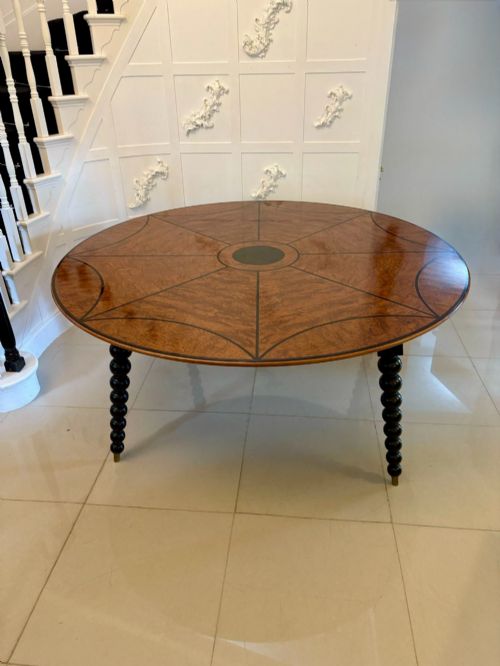
- A turned furniture leg shaped to resemble a series of wooden bobbins or spools stacked end to end. This decorative turning style appears frequently on nineteenth-century seating and tables.
Wooden Kitchen Dining Table: Frequently Asked Questions
How do I choose the right size?
Measure your dining space carefully, allowing ample clearance around all sides of the table for chairs to pull out comfortably. Consider whether you need an extendable model to accommodate guests on special occasions.
Keep in mind the placement of table legs, such as trestle ends or tapered supports, which influence how many chairs can fit neatly underneath.
Are these tables suitable for daily use?
These pieces were built specifically for everyday domestic life, utilising resilient timbers like oak, pine, and elm that handle regular activity with ease. Their existing wear and patina often make them forgiving of minor daily knocks.
Applying appropriate protective waxes helps maintain the timber against moisture and heat from daily meals without spoiling the historical surface.
How do I care for an antique wood surface?
Clean the surface regularly with a soft, dry cloth to remove dust and grit that might scratch the timber over time. Avoid harsh chemical cleaners and excessive water, opting instead for traditional beeswax feeds to preserve the lustre.
Using placemats and coasters protects the historic finish from hot dishes and condensation rings during family meals.
How can I tell the period of a table?
Examine the timber species, tool marks left by early saws, and the style of the legs, such as Jacobean revival turnings or Edwardian tapered supports. Construction methods like hand-cut joints offer strong clues regarding the era of manufacture.
Comparing the hardware and extension mechanisms against known historical formats helps narrow down the decades between the eighteenth and twentieth centuries.