
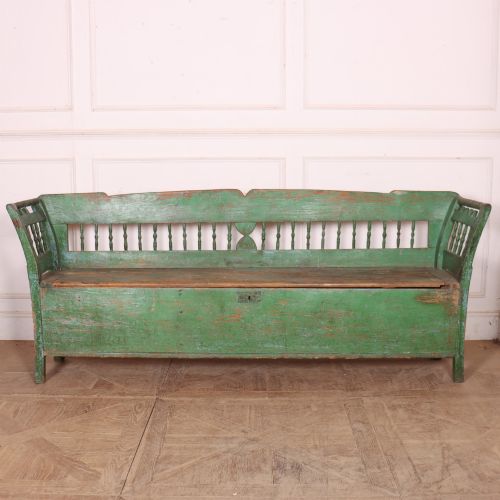
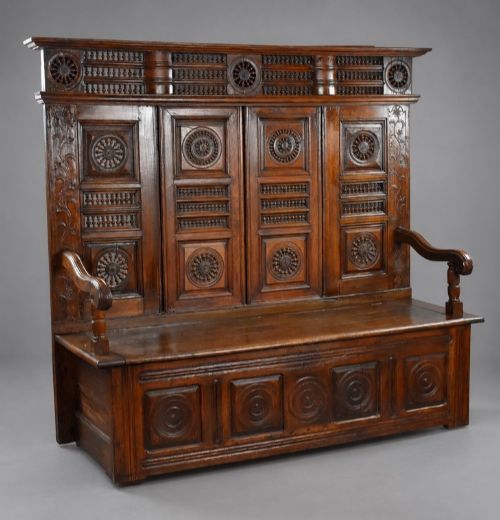
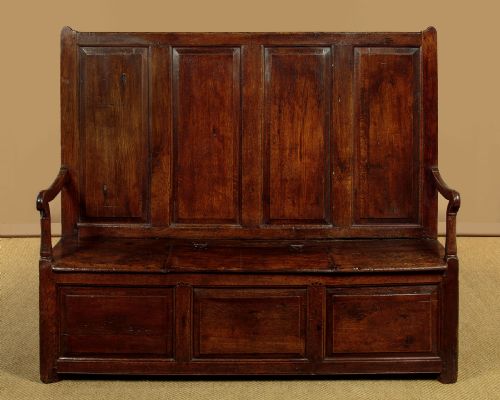
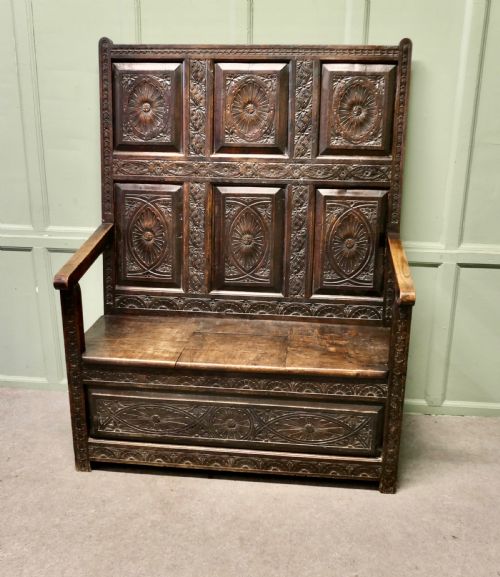


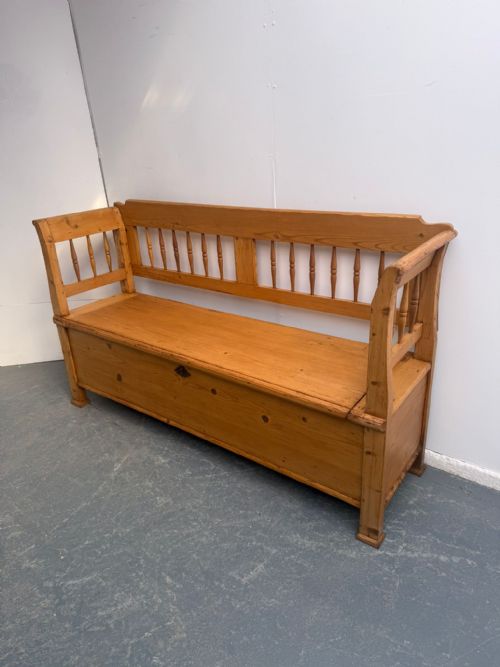

Wooden Hall Coffer Bench
A wooden hall coffer bench provides deep seat storage and sturdy hallway seating, shaped by centuries of country and vernacular carpentry.
Wooden Hall Coffer Bench
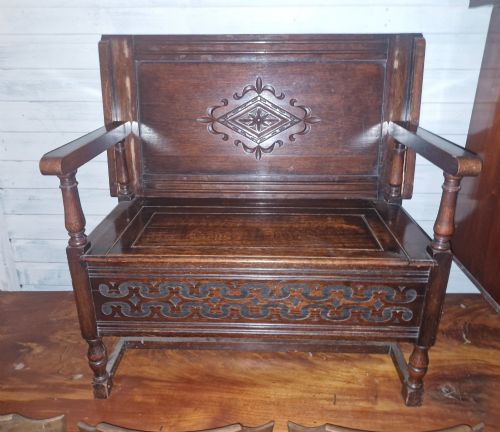
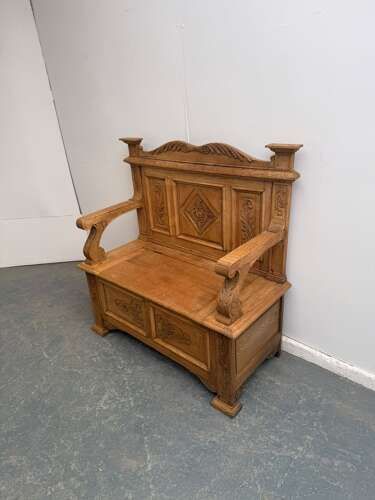
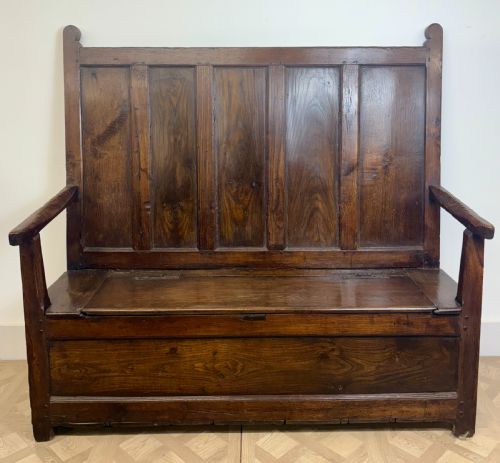
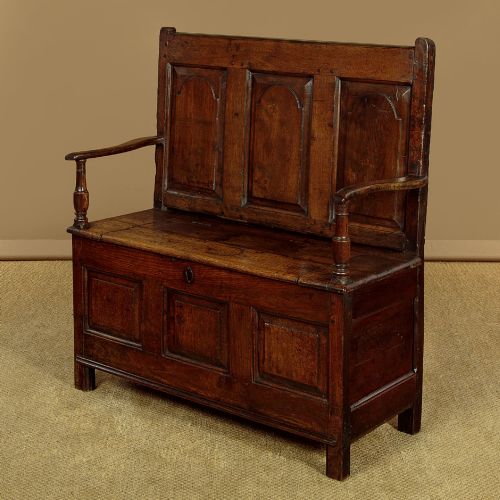
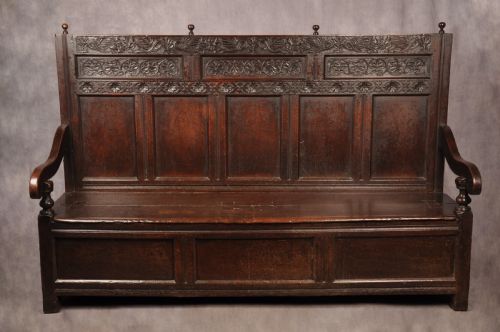
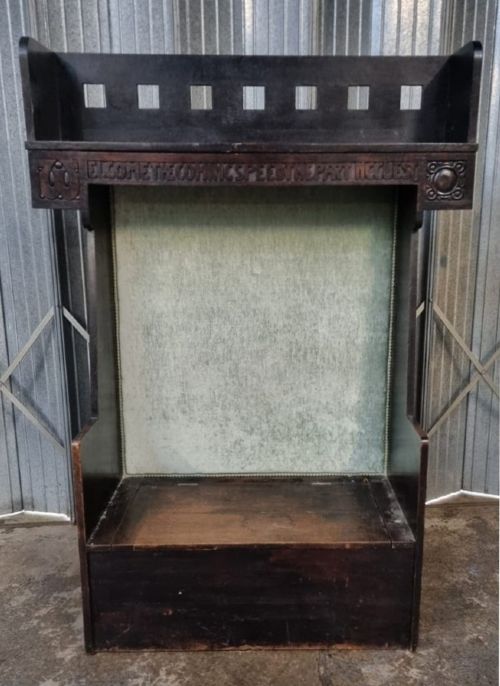
A wooden hall coffer bench combines a seat with a concealed box compartment, historically designed to keep draughts at bay and store household textiles. The pieces grouped under this phrase take several overlapping forms, including traditional high-backed settles, box settles, monks benches with fold-over tops, and simpler hall seats with lift-up lids. Most examples found here are substantial oak items, alongside pine, elm, ash, walnut, mahogany, and exotic hardwoods.
The timeline stretches from the seventeenth century through the Georgian and Victorian eras up to the early twentieth century. Seventeenth-century and eighteenth-century pieces often display panelled construction and regional vernacular traits from England, Wales, Scotland, and France, while later examples frequently incorporate Revival styles such as Jacobean, Gothic, and Renaissance movements. Continental European variants, including Hungarian pine benches and Austrian farmhouse seating, also appear alongside Chinese and oriental carved pieces.
How they were made
The construction of a wooden hall coffer bench relies heavily on solid native timbers, chiefly oak, joined with pegged mortise and tenon joints to withstand heavy daily use. Secondary woods such as ash and elm appear in structural or provincial framing, whilst pine serves in painted or domestic continental storage benches.
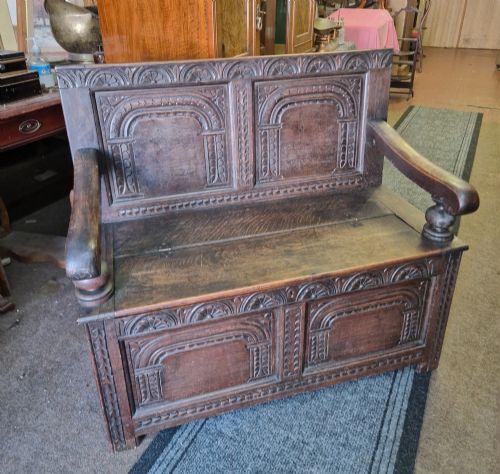
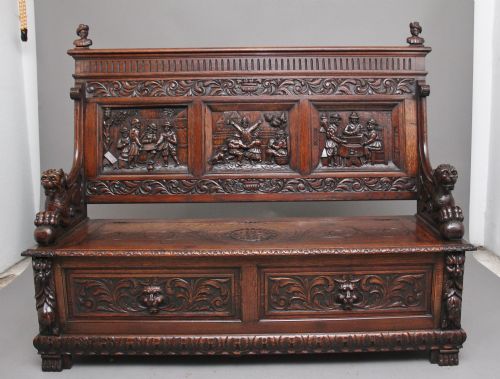
Surface finishes range from traditional wax polishes that highlight the natural grain of waxed oak to historic black paint and applied decorative pigments. Carving is executed directly into the solid wood panels, utilising geometric strapwork, linenfold patterns, figural motifs like the Green Man, and regional armorial or floral reliefs.
Listings span from the 17th century through the Georgian and Victorian eras, utilising oak, pine, elm, walnut, and iron.
What varies in quality
Quality in a wooden hall coffer bench lies in the integrity of the original timber and the depth of hand-carved detail. Early seventeenth-century and eighteenth-century examples command attention through authentic panelled construction, untouched patination, and minimal structural alteration over centuries of domestic service.
Later Victorian revival pieces derive their distinction from the ambition of their decorative scheme, such as baronial high backs and intricate figural carving. The thickness of the seat boards, the stability of the box compartment floor, and the survival of original hinges and lid mechanisms further separate standard utilitarian seating from finer regional works.
The Wooden Hall Coffer Bench Glossary
- Settle
- A wooden bench with a high solid back, solid wooden arms, and a box seat base designed to block cold draughts in entrance halls.
- Coffer
- A large wooden chest or box used primarily for storage, which forms the bench base in many traditional hall seating forms.
- Monks bench
- A multifunctional furniture form featuring a hinged top that converts the backrest into a table surface above a box seat.
- Panelling
- Framework constructed from fitted wooden stiles and rails holding thinner floating panels, common on the backs of early settles.
- Vernacular
- Furniture made by local regional craftsmen using traditional methods and native timbers rather than following strict classical academic designs.
Wooden Hall Coffer Bench: Frequently Asked Questions
What is a wooden hall coffer bench used for?
These pieces serve as both a practical hallway seat and a concealed storage chest for boots, blankets, and household items. The high back also helps block cold draughts near an entrance.
Historically placed in the main living spaces or halls of country houses and farmhouses, they kept everyday items out of sight while offering sturdy seating.
How do I tell an 18th-century settle from a Victorian revival piece?
Eighteenth-century pieces typically show authentic hand-carved tool marks, pegged joinery, and natural timber patination developed over generations of use. The construction methods reflect regional vernacular carpentry of the period.
Victorian revival pieces often feature heavier, deeper machine-assisted carving and distinct stylistic revivals such as Jacobean or Gothic motifs applied to traditional box frame forms.
Are these benches comfortable to sit on?
Most traditional wooden hall coffer benches feature upright wooden backs and solid plank seats designed for posture and durability rather than lounging. They were originally made for short periods of sitting near doorways.
Many owners add loose fabric cushions or squab pads to the seat base to make them more comfortable for daily use in modern hallways.
What wood are most hall coffer benches made from?
Oak is the predominant timber found in these pieces, valued for its strength, durability, and rich grain when waxed or polished over centuries. Elm and ash also appear in provincial framing.
Pine is frequently found in continental European farmhouse benches, whilst occasional examples utilise walnut, mahogany, or exotic Chinese hardwoods.