




Wooden Gong Stand
These wooden gong stand pieces deliver the striking presence of Victorian and Edwardian dining rooms straight into modern halls.
Wooden Gong Stand
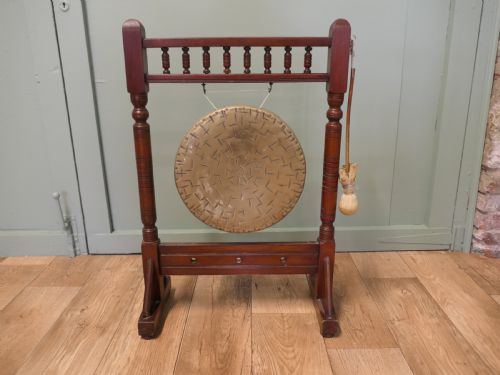
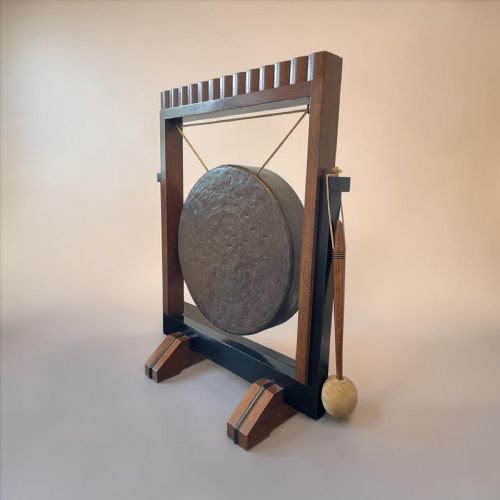
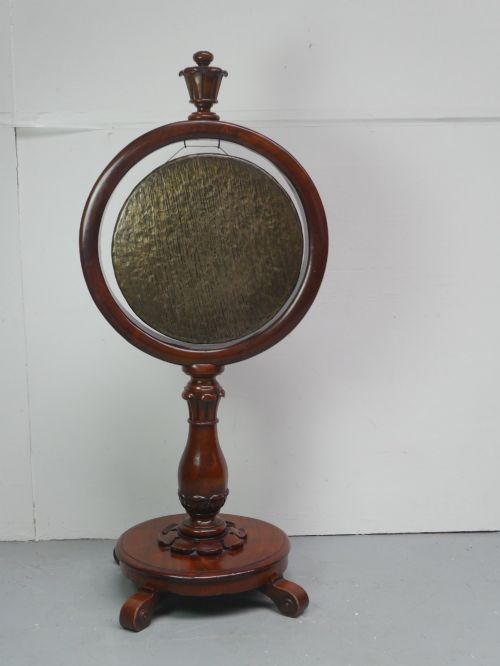
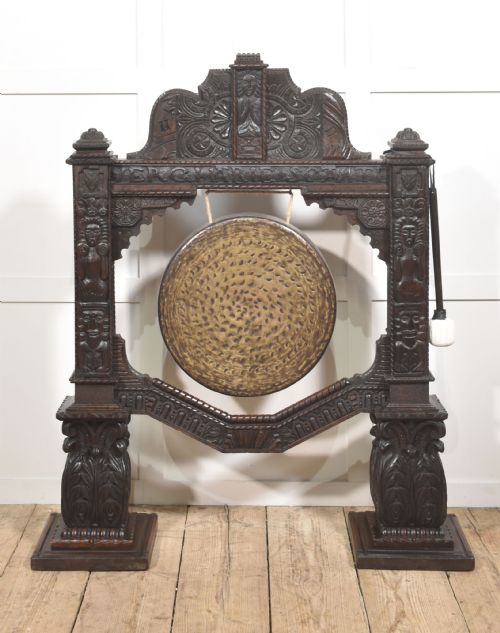
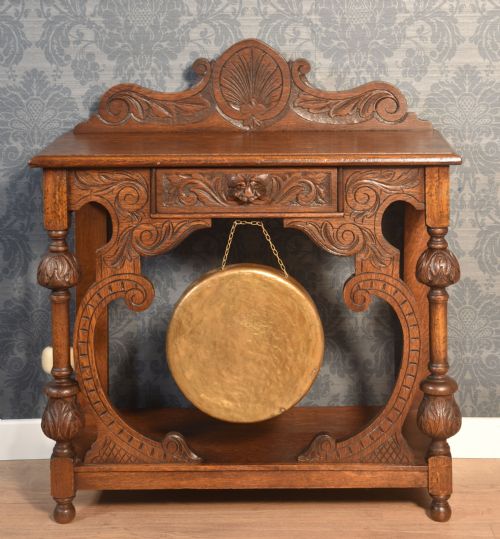
When you search for a wooden gong stand, you encounter floor-standing and table pieces designed to suspend a brass or bronze bell for summoning guests. These items originate predominantly from the nineteenth century, the Edwardian era, and the nineteen-thirties, with styles spanning Gothic Revival, Arts and Crafts, and Chinese Export.
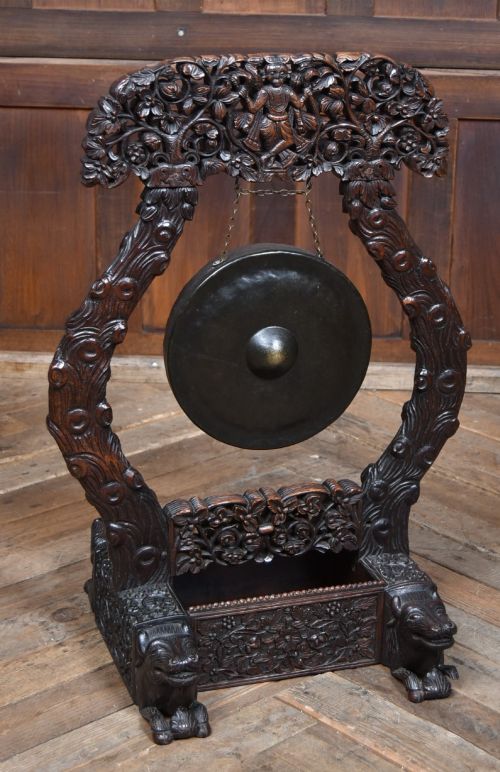
The inventory on this page ranges from monumental carved oak examples to Chinese dragon-carved floor-standing gongs and compact table gongs. You also find hall tables and tea ceremony gongs fitted with brass bells and cord suspension.
Makers drew on diverse design vocabularies, creating Anglo-Indian, Chinoiserie, and Art Deco interpretations alongside traditional British oak and mahogany frames. These pieces served practical household functions in large country houses before becoming decorative focal points.
How they were made
Craftsmen utilised sturdy timbers such as oak, mahogany, walnut, teak, and hard-wearing hardwoods to build the structural frames that support heavy metal bells. Carved ornamentation often defined the wooden uprights and bases, employing deep relief techniques seen in Gothic Revival and Chinese export traditions.
Sound production relied on cast brass and bronze bells, suspended from the wooden frames using durable cord. Glass elements occasionally complemented the metalwork on specific pieces.
Some dragons carved into these stands look like they are guarding the dinner hour with fierce determination.
What varies in quality
The distinction between standard and superior pieces rests in the ambition of the carving and the integrity of the timber framing. Monumental examples with intricate hand-carved dragon motifs or architectural Gothic Revival details represent a more substantial investment of artisan labour than plain framed versions.
Proportion and material pairing also dictate standing value, particularly where dense hardwoods like walnut or mahogany meet well-cast bronze and brass bells. The harmony between the carved wooden support and the suspended bell determines the overall visual weight.
The Wooden Gong Stand Glossary
- Gothic Revival
- An architectural and decorative style drawing inspiration from medieval forms, frequently characterised by pointed arches and heavy oak construction.
- Arts and Crafts
- A design movement valuing traditional craftsmanship, simple lines, and visible construction methods over mass-produced ornamentation.
- Chinoiserie
- European decorative style reflecting Chinese artistic influences, often featuring intricate carved dragons and oriental motifs.
- Dinner Gong
- A suspended metal bell struck with a mallet to announce meals in large country houses.
Wooden Gong Stand: Frequently Asked Questions
What is a wooden gong stand?
A wooden gong stand is a structural frame built from materials like oak, mahogany, or teak to hold a suspended brass or bronze bell. These items were traditionally placed in country house halls or dining rooms to summon occupants.
Today, they function primarily as decorative architectural statements that retain their original striking capability.
How do I date a wooden gong stand?
Dating relies on identifying the stylistic markers of the woodwork, such as heavy Gothic Revival carvings or clean Arts and Crafts lines. Victorian and Edwardian pieces often exhibit distinct timber choices and joint construction methods characteristic of their decade.
Examining the casting of the brass bell and the wear on the suspension cord also aids in placing the piece within the nineteenth or early twentieth century.
Where were wooden gong stands used?
These pieces found their place in the entrance halls and dining rooms of large country houses and sizeable domestic residences. Their primary purpose was to project sound clearly across multiple rooms to announce dinner.
In modern settings, they occupy similar entrance spaces where their carved wooden frames act as striking focal points.
How do I care for a wooden gong stand?
Maintenance involves gentle dusting of the carved wooden frame and applying appropriate wax to nourish hardwoods like oak and mahogany. The brass or bronze bell benefits from occasional cleaning to preserve its metallic lustre without disturbing the patination.
Checking the strength of the suspension cord ensures the heavy bell remains secure within its wooden cradle.