
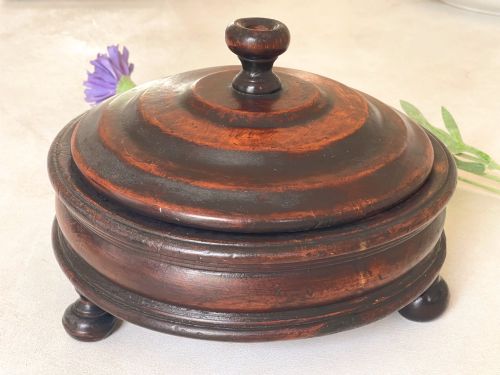
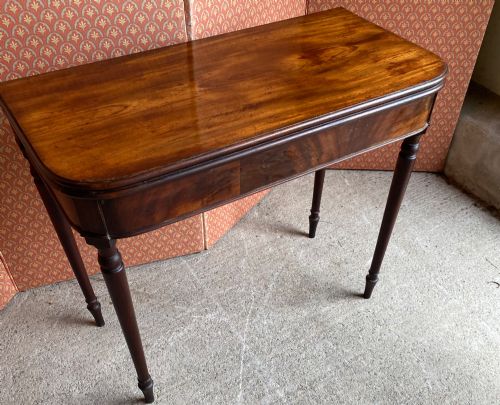
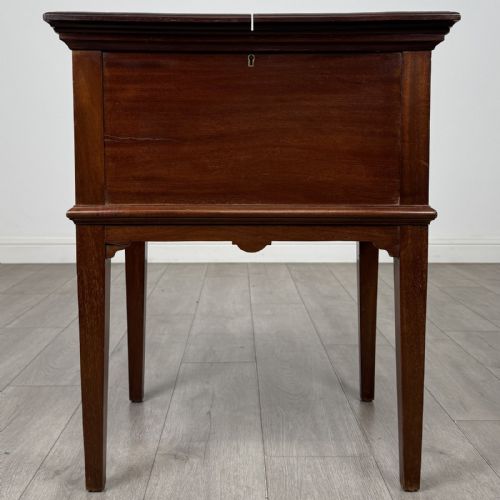
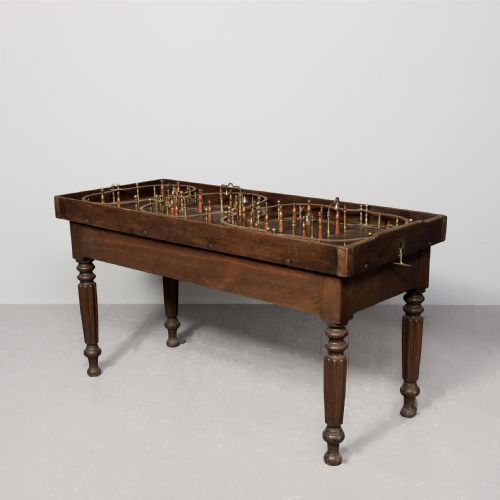


Wooden Gaming Table
A wooden gaming table is a dual-purpose piece designed for evening entertainment, combining domestic elegance with hidden compartments for cards, chess, and backgammon.
Wooden Gaming Table
When you search for a wooden gaming table, you encounter a variety of forms designed primarily for leisure, including folding card tables, chess tops, and occasional tables. The pieces span periods from the eighteenth century through to the Edwardian era, reflecting changing domestic habits.
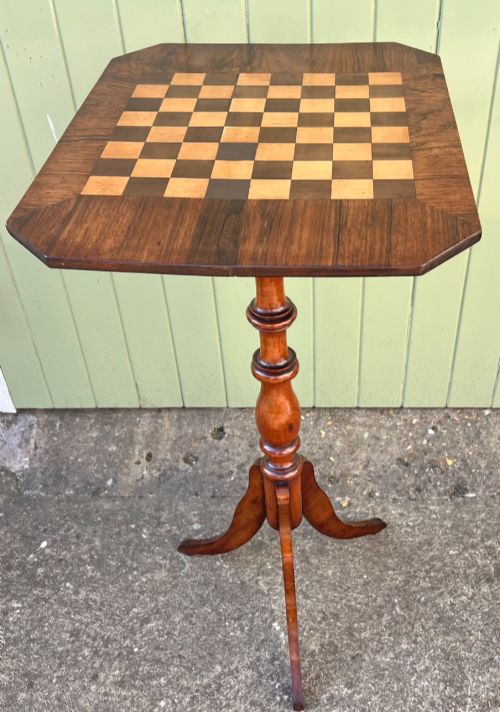
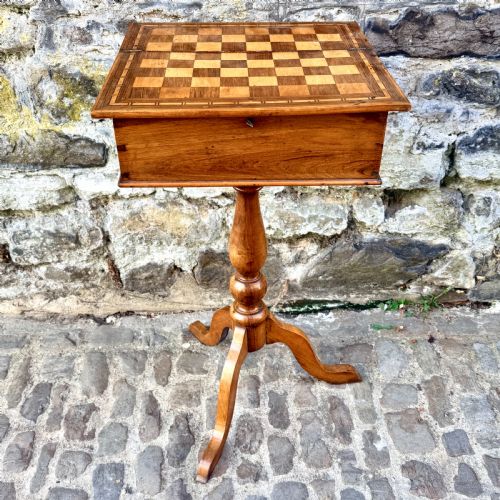
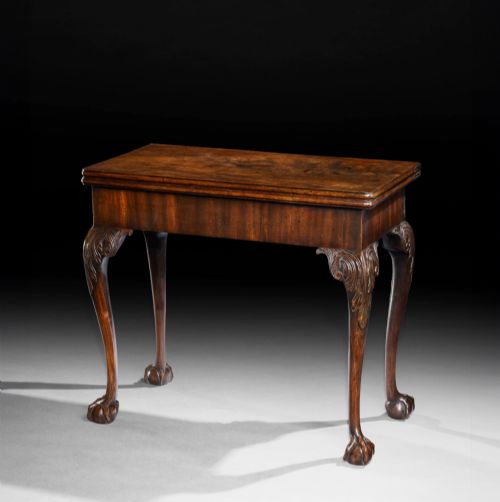
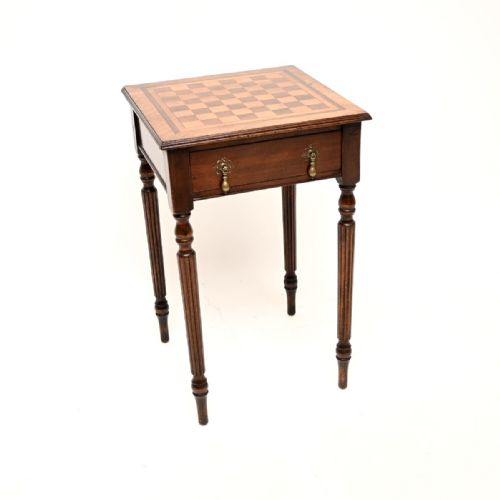
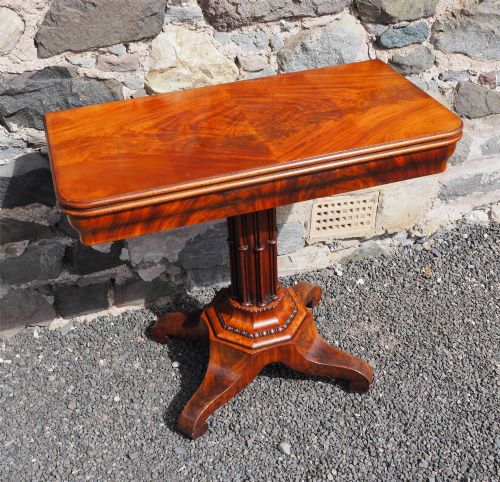
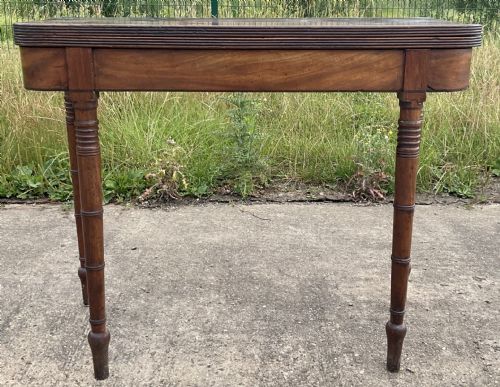
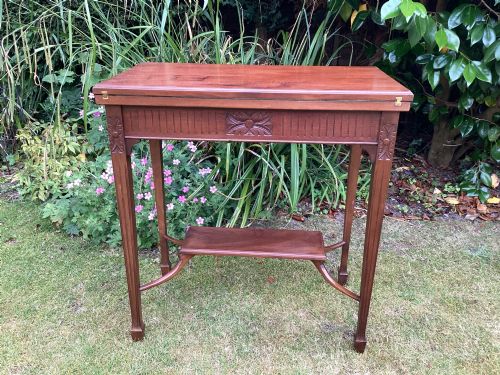
The version you are most likely to meet on this page is the nineteenth-century mahogany or rosewood fold-over card table. These examples often feature swivelling tops that conceal baize-lined playing surfaces or intricate inlaid chess boards beneath.
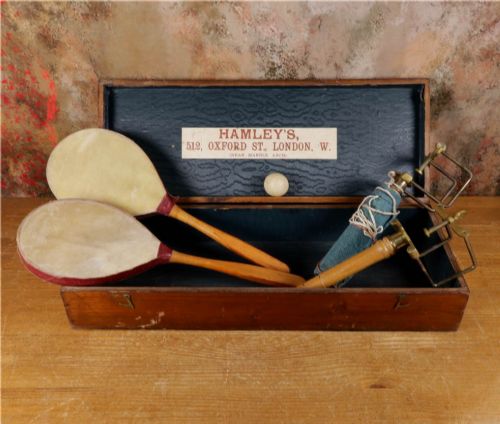
Beyond standard card tables, the selection includes specialised items such as bagatelle tables, oak skittles sets, and French beech game blocks. These functional objects demonstrate the broad scope of historical parlour amusements.
How they were made
Cabinetmakers utilised dense timbers such as mahogany, walnut, and rosewood to construct stable frames that could endure regular folding and unfolding. Finer examples incorporate decorative veneers like satinwood and kingwood, complemented by intricate boxwood inlay for chess boards.
Structural ingenuity defines the mechanism of these tables, employing concertina actions, pivoting leaves, and hidden compartments. Joinery techniques had to remain robust to support the weight of heavy timber tops while maintaining smooth operation over centuries.
Listings feature woods including mahogany, walnut, rosewood, and oak across styles spanning the Georgian, Regency, and Victorian periods.
What varies in quality
The standard of a wooden gaming table depends heavily on the crispness of its timber figure and the precision of its marquetry or inlay. Superior pieces exhibit seamless joints when closed and maintain absolute rigidity in their legs when the top is extended for play.
Integration of secondary functions marks the distinction between standard production and master craftsmanship. Tables that incorporate well-fitted internal wells, secret compartments, and original hardware retain a stronger integrity than those with later alterations.
Giles Grendey·William Trotter·Gillow·Jaques & Hamleys
The Wooden Gaming Table Glossary
- Concertina action
- An expanding frame mechanism that allows a card table to pull out evenly from all four sides when opened. This intricate design provides unobstructed legroom for seated players.
- Fold-over top
- A hinged wooden surface that doubles the footprint of a table when unfolded for play. It often rests on a swing leg or a pivoting frieze drawer.
- Marquetry
- The art of applying decorative veneer pieces to a structural surface to form intricate pictures or geometric patterns. It appears frequently on French and Victorian gaming tops.
- Baize
- A coarse woollen fabric traditionally used to line the playing surface of card and gaming tables. It provides a soft, non-slip texture for shuffling cards and moving counters.
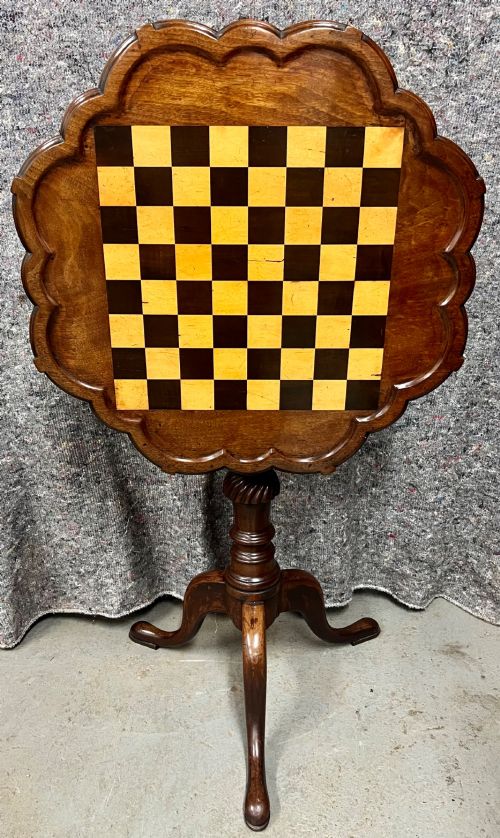
- Tripod table
- A small freestanding table supported by a central pillar resting on three spreading feet. These often incorporate fixed or tilt-top chess boards.
Wooden Gaming Table: Frequently Asked Questions
What is a concertina action table?
A concertina action table expands using a complex hinged frame that pulls out evenly on all sides, supporting the unfolded top without sagging.
This mechanism requires skilled carpentry and allows players to sit comfortably without hitting central pedestal legs.
How were dual-purpose tables used?
These tables served as everyday side or tea tables during the day and were unfolded in the evening for card games and chess.
Secret compartments often stored playing pieces, counters, and decks securely within the frame.
What woods are most common?
Mahogany, walnut, and rosewood dominate the construction of these tables due to their durability and rich grain patterns.
Decorative accents frequently utilise boxwood and satinwood for contrasting inlay work.
How do I care for the timber?
Keep wooden tables away from direct sunlight and stable humidity environments to prevent the timber and veneers from warping.
Regular dusting with a dry cloth maintains the finish without needing heavy polishes.