
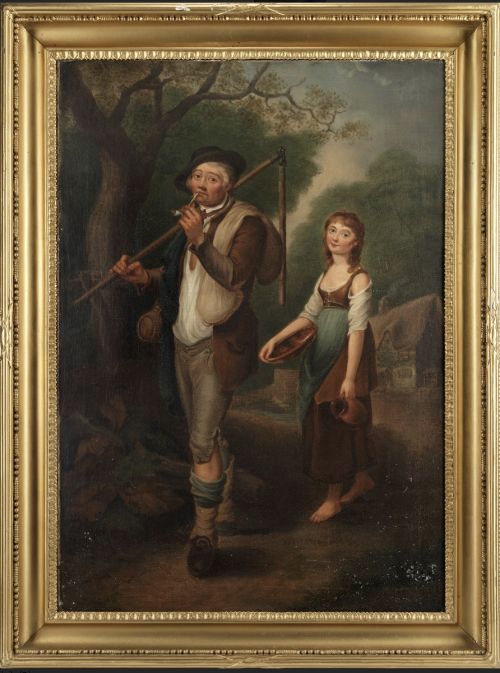
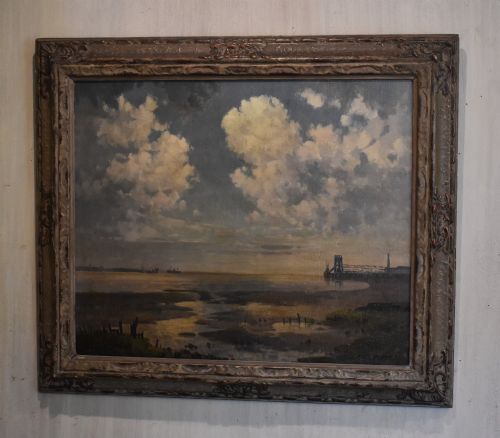


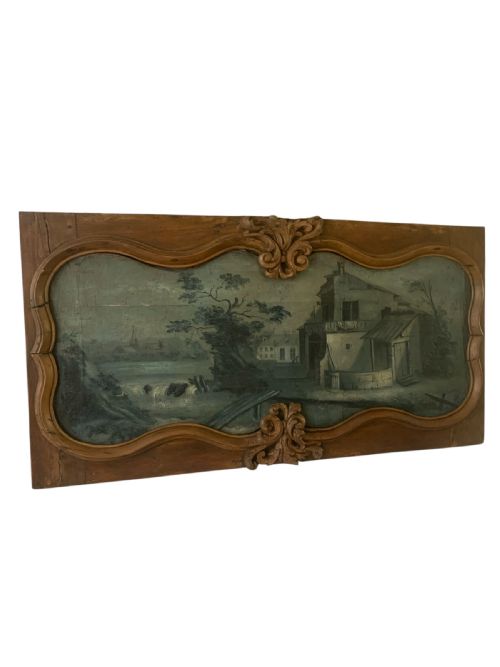


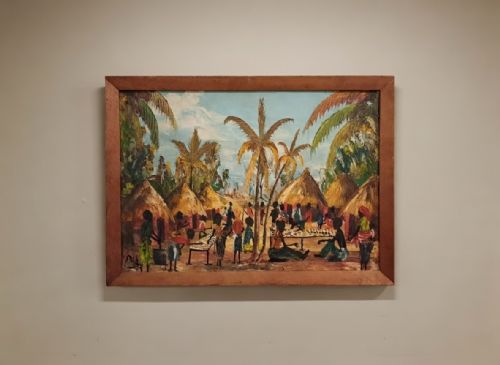

Wooden Framed Oil Landscape
A wooden framed oil landscape brings the quiet shift of weather and countryside directly onto the wall inside a sturdy timber border.
Wooden Framed Oil Landscape
A wooden framed oil landscape presents pastoral views, marine scenes, and rural vistas captured in oil paint across centuries. These works range from Georgian and nineteenth-century topographical views to mid-century impressionist experiments on canvas and panel.
The selections available here span British and continental scenes, including naive folk art interpretations and polished academic compositions. Buyers encounter works attributed to known regional artists alongside unsigned period pieces carrying the distinct marks of their era.
Materials and Construction
Artists painted primarily with oil pigments applied to woven canvas, prepared wood panels, or solid board supports. Canvas works sometimes received later conservation treatments, such as being laid down onto board for structural stability.
The supporting frames consist of carved or moulded wood, occasionally retaining gilt finishes or period paint schemes that complement the depth of the painted surface.
Listings feature works spanning the eighteenth, nineteenth, and twentieth centuries, executed on wood, canvas, and board.
Distinctions in Execution
Quality rests in the handling of light, brushwork confidence, and the harmony between the painted scene and its timber enclosure. Superior examples demonstrate a deliberate command of perspective and atmospheric tone rather than mechanical repetition.
The integrity of the surface materials also dictates distinction, noting how well the oil medium has aged on its canvas or wooden support without excessive cracking or unsympathetic restoration.
Thomas Barker of Bath·Clive Browne·Hubert Wellington·Edward Matthew Elliott·Raymond Picque·Gustave De Bréanski·John Constable·Robert Macaulay Stevenson·Emanuele Cappello·Ernest Higgins Rigg·John Falconar Slater·A. Michaelis·Albert de Belleroche·Kershaw Schofield·Joseph Vickers de Ville·Charles McAuley·Maud Raphael Jones
The Wooden Framed Oil Landscape Glossary
- Oil paint
- A slow-drying medium made by mixing pigments with oils such as linseed, allowing artists to build rich layers and subtle gradations of tone.
- Wood panel
- A rigid wooden board utilised as a painting support instead of fabric canvas, common in earlier and smaller format works.
- Canvas
- A heavy woven fabric stretched across a wooden stretcher frame to serve as the foundational surface for oil paintings.
- Topographical painting
- An artwork depicting a specific, recognisable real-world location with an emphasis on accurate geography and local detail.
- Naïve art
- Work created by self-taught painters, characterised by a direct perspective and simplified proportions that prioritise narrative charm over strict academic rules.
Wooden Framed Oil Landscape: Frequently Asked Questions
How do I date an old painting?
Dating relies on examining the stretcher construction, nail types, canvas weave, and the specific composition style typical of the period. Pigment analysis and framing characteristics offer additional clues regarding the era of creation.
Written inscriptions, signatures, or exhibition labels on the reverse of the panel or canvas provide definitive chronological markers when preserved intact.
What is the difference between canvas and panel?
Canvas consists of woven fabric stretched tightly over a wooden frame, offering slight give and a textured surface for brushwork. Wood panel provides a completely rigid, smooth foundation that reacts differently to environmental humidity changes.
Artists chose panels for smaller, detailed outdoor sketches, while larger exhibition pieces traditionally required the expansive surface area of stretched canvas.
How should I hang and light oil paintings?
Oil paintings require placement away from direct sunlight, heating vents, and damp walls to prevent canvas warping, paint cracking, or mould growth. Stable indoor humidity and temperature preserve the integrity of both the artwork and its wooden frame.
Directional picture lights using low-heat LED bulbs illuminate the subtle textures and dark pigments of oil landscapes without exposing the delicate surface to harmful ultraviolet rays.
Are wooden frames original to the paintings?
Frames are frequently replaced over centuries due to damage, shifting interior tastes, or the desire to match a specific period aesthetic. Some frames remain original to the canvas, evidenced by matching wear patterns and historical framing techniques.
A period-appropriate replacement frame can enhance the visual weight of an oil landscape just as effectively as a surviving original enclosure.