





Wooden Folding Card Table
A wooden folding card table turns a quiet corner into an evening's entertainment, unfolding to reveal a baize-lined surface for cards, chess, or backgammon.
Wooden Folding Card Table
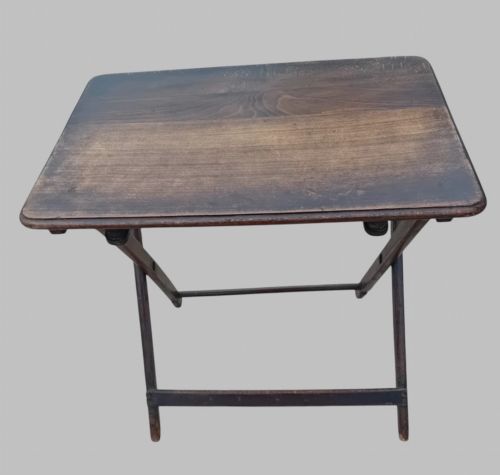
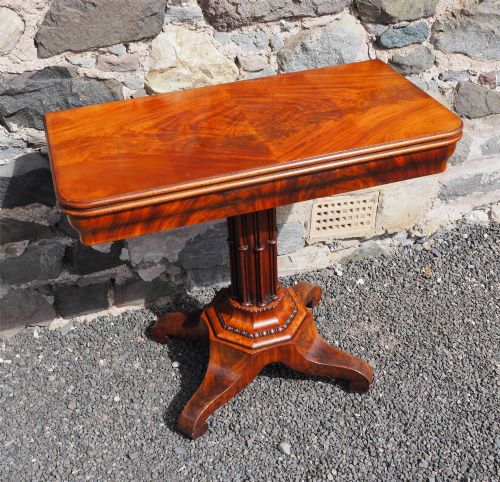
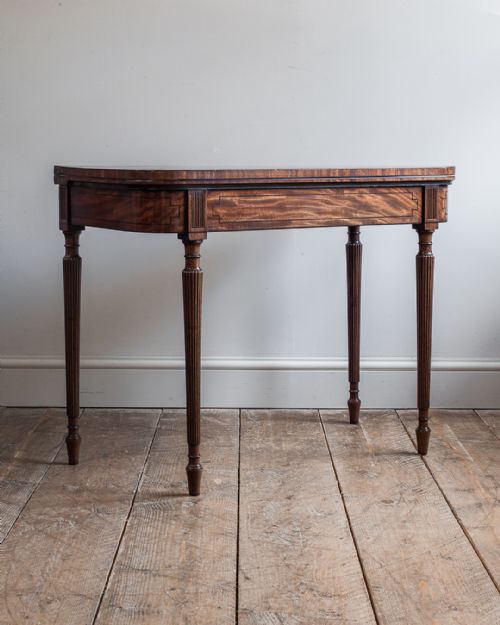
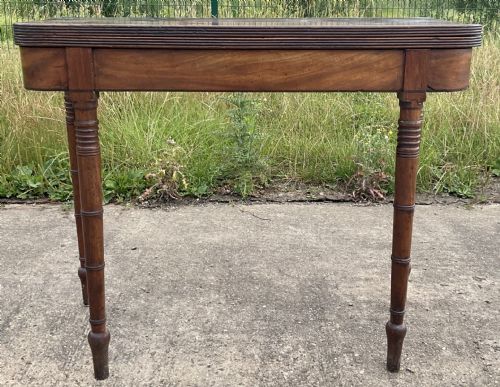
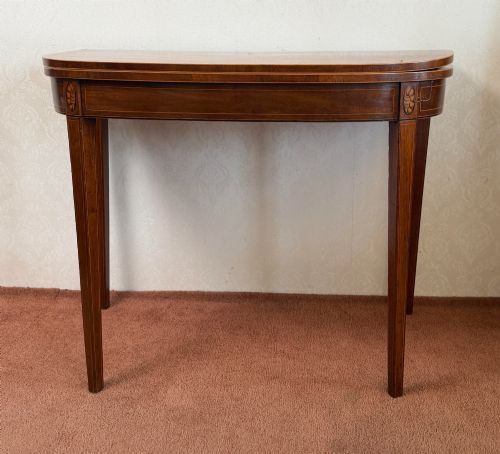
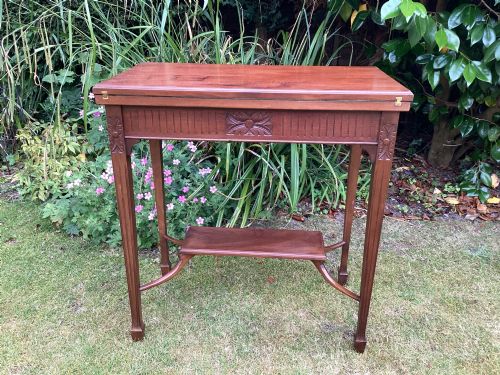
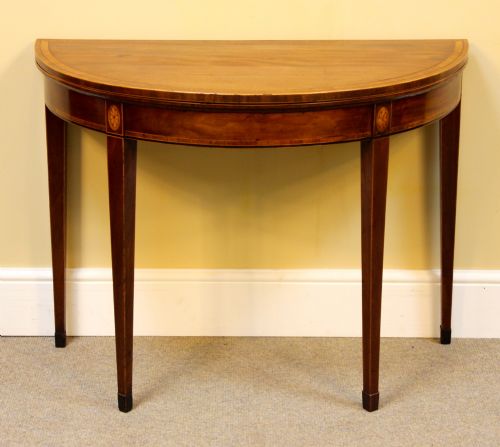
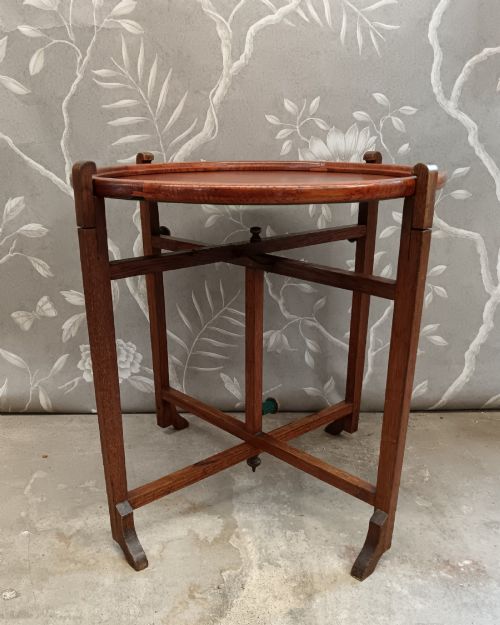
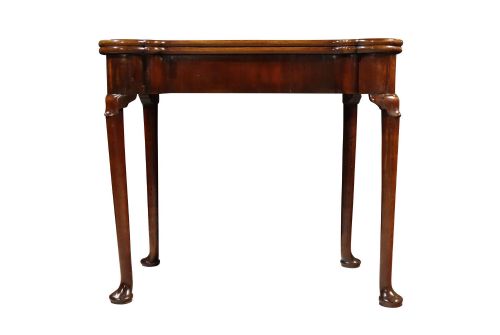
A wooden folding card table is designed with a hinged top that swivels, folds, or opens via a concertina action to double its surface area when required for play. When searching for a wooden folding card table, buyers encounter forms spanning the eighteenth, nineteenth, and early twentieth centuries, with Georgian and Regency examples appearing frequently alongside later Victorian and Edwardian iterations.
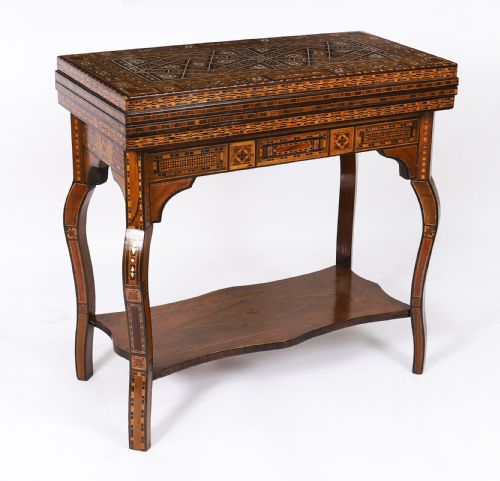
The silhouettes range from straightforward D-shaped and demi-lune foldover tops to elaborate tables incorporating dished gaming wells, internal compartments, and reversible surfaces for chess or backgammon. Many pieces serve a dual purpose as tea tables or occasional side tables when closed, sitting compactly against a wall until evening.
Origins stretch across classic English cabinet-making traditions through to continental Levantine inlaid work and utilitarian campaign pieces from the twentieth century. Elm, oak, and beech appear alongside finer cabinet woods, reflecting the varied domestic settings these tables originally inhabited.
Materials and construction
Makers relied heavily on dense tropical hardwoods like mahogany and rosewood, chosen for their stability and capacity to take a sharp edge or smooth turn at the hinge line. Walnut and red walnut feature prominently in earlier pieces, whilst satinwood, boxwood, and fruitwood provide contrasting stringing and geometric inlay across borders and friezes.
The folding mechanism requires precise joinery to ensure the leaves meet flush and the weight distributes evenly when open. Concertina actions and swivel tops demand rigorous tolerances from the carpenter so that the pivoting leaf locks securely into position without straining the pivot pins or knuckle joints.
Wooden Folding Card Table Retail Price Guide 2026
Typical asking prices for wooden folding card table among the pieces listed under this phrase on Sellingantiques today, from the lower quarter to the upper quarter. They describe what is for sale here now, not the wider market.
Listings feature mahogany, walnut, rosewood, and satinwood across periods from the eighteenth century to the twentieth.
Factors of distinction
The choice of timber grain governs visual distinction, with figured flame mahogany and richly patinated rosewood marking out superior workshop output. Subtle touches such as finely executed hand-painted decoration, precise boxwood stringing, and well-matched veneers elevate a piece beyond standard domestic utility.
Structural integrity in the hinge mechanisms and the alignment of the foldover surfaces determine everyday success. Tables that remain level when open and display crisp, unrounded carving on the legs or apron demonstrate the sustained skill of the original maker.
Giles Grendey·William Trotter
The Wooden Folding Card Table Glossary
- Concertina action
- An expanding frame mechanism that pulls outward to support the opened leaf of a card table, leaving all four legs at the corners when extended.
- Demi-lune
- A half-moon shape used for table tops and frames, allowing the closed piece to sit flat against a wall.
- Baize
- A coarse woollen felt material traditionally used to line the playing surface of gaming tables to deaden the sound of dice and protect card surfaces.
- Foldover
- A hinged top design where the upper leaf swings open and rests upon a swinging leg or extended frame to create a larger flat surface.
Wooden Folding Card Table: Frequently Asked Questions
How do I spot a true gaming table?
Look for internal compartments beneath the foldover leaf designed to hold counters, dice, or cards. These hidden wells indicate that the piece was built specifically for play rather than general dining.
Examine the upper surfaces for remnants of baize or felt lining set into recessed wooden wells. Even if the fabric has been replaced, the rebate in the timber reveals the original gaming purpose.
Can I use these tables for dining?
Most wooden folding card tables are built with delicate leg structures and clever folding mechanisms that lack the heavy bracing required for daily family meals. Using them for heavy daily dining can strain the pivot hinges and warp the top leaves.
They function admirably as occasional serving surfaces or lamp tables when closed. For dining, stick to dedicated tea or side tables unless the piece specifically notes a sturdy pedestal base.
How do I tell Regency from Georgian pieces?
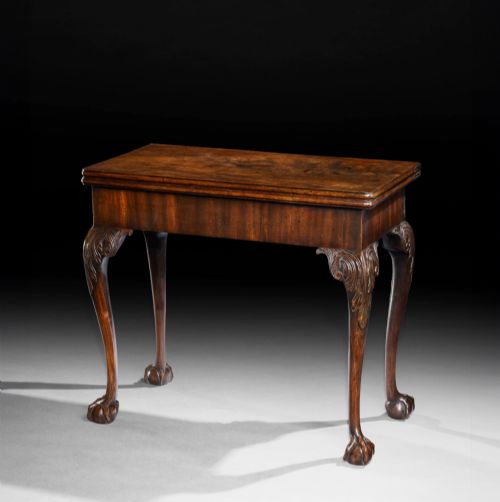
Georgian tables tend to feature richer mahogany with subtle carved mahogany details, ball and claw feet, or straight square legs influenced by Chippendale and Sheraton designs. Proportions are often solid and architectural.
Regency examples lean towards classical revival motifs, featuring brass inlay, pedestal bases with sabre legs, and darker rosewood veneers. The lines become sharper and more overtly inspired by ancient Roman and Greek forms.
How do I care for the polished wood?
Keep these pieces away from direct sunlight and strong heat sources like radiators to prevent the veneers from drying out and lifting from the carcase. Use dry microfiber cloths for dusting rather than silicone sprays.
Apply a light coat of quality beeswax periodically to nourish the aged timber and maintain the soft sheen. Avoid placing damp glasses directly on the polished surface to prevent water rings.