


Wooden Farmhouse Desk Chair
These wooden farmhouse desk chairs are sturdy country seating pieces that bring character and history into a working study.
Wooden Farmhouse Desk Chair
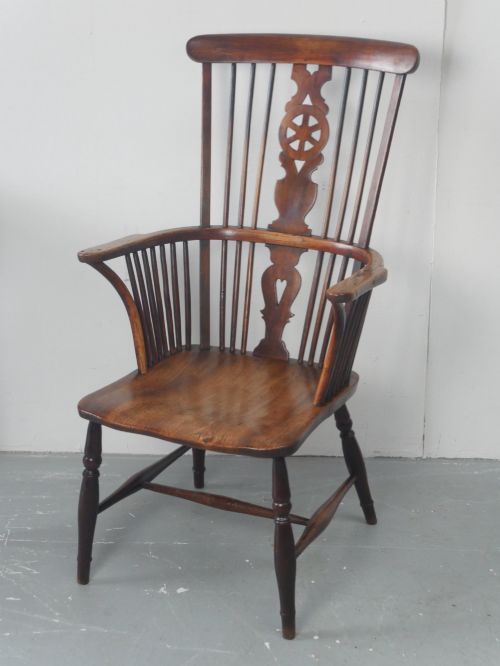
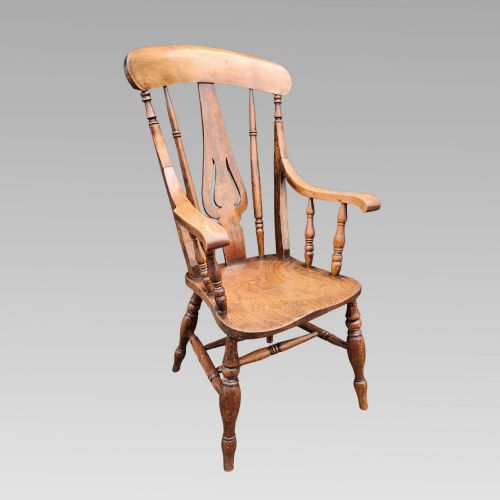
A wooden farmhouse desk chair is a practical country seating option suited for domestic tasks, drawing upon regional vernacular traditions. These pieces appear primarily as Windsor armchairs from the nineteenth century, including Victorian examples spanning the eighteen-fifties to the eighteen-nineties.
Most examples combine sturdy timbers for the seat and frame, utilising elm for comfort alongside beech, fruitwood, and ash. The forms range from standard armchairs to larger proportions, occasionally featuring spindle and lyre back designs or woven cane panels.
How they were made
Maker construction relies on traditional bodging techniques where turned legs and spindles fit directly into a thick, solid elm saddle seat. Craftsmen shaped domestic hardwoods like beech and fruitwood using local tools to build durable frames capable of enduring daily farm use.
Combination woods appear frequently, pairing resilient elm seats with contrasting timbers for spindles and steam-bent back bows. Certain Victorian iterations incorporate carved details or cane weaving into the backrest, reflecting regional decorative preferences of the period.
Listings feature nineteenth-century styles including Victorian Country and English Country, utilising elm, beech, oak, ash, fruitwood, and cane.
What varies in quality
Quality rests heavily on the timber selection and the sculptural depth of the saddle seat, where thicker, well-figured elm commands greater presence. The balance of the turning on the legs and the grace of the steam-bent bow determine the visual harmony of each armchair.
The integrity of the original joints and the survival of natural patination across mixed woods define the standing of individual examples. Lesser pieces show coarser timber grading or heavy replacement parts that disrupt the unified appearance of the chair.
The Wooden Farmhouse Desk Chair Glossary
- Windsor armchair
- A chair built with a thick wooden saddle seat into which the legs, back spindles, and crest piece are separately inserted. This construction method creates a sturdy, open frame typical of country seating.
- Saddle seat
- A wooden seat base carved into a concave, contoured shape resembling a horse saddle for user comfort. This feature is commonly worked from solid elm.
- Spindle
- A slender, rounded wooden rod turned on a lathe to form the vertical supports of a chair back. Spindles distribute weight and provide back support.
- Cane weave
- A mesh material woven from peeled rattan strips, utilised to form decorative or supportive panels within chair backs. This technique adds texture to wooden frames.
Wooden Farmhouse Desk Chair: Frequently Asked Questions
What is a wooden farmhouse desk chair?
These pieces are nineteenth-century country seating forms, primarily constructed as sturdy Windsor armchairs featuring solid wood seats and turned spindles.
They were originally built for practical domestic tasks and adapt easily to modern writing desks or studies.
How do I date these chairs?
Dating relies on observing construction characteristics, timber choices, and stylistic markers such as Victorian country turning patterns.
Nineteenth-century examples often display tool marks and patination that distinguish them from later revival pieces.
Are these chairs comfortable for working?
The sculpted elm saddle seats provide natural ergonomic contouring designed for extended daily sitting.
Their sturdy armrest construction and supportive spindle backs offer a solid posture for desk work.
What woods were used?
Maker workshops utilised mixed British hardwoods, pairing resilient elm for seats with beech, fruitwood, ash, or oak for frames.
This combination of regional timbers ensured both structural strength and visual contrast.