


Wooden Drinks Tantalus
A wooden drinks tantalus secures your finest spirits behind a locking brass bar, combining ingenious Victorian security with striking table presence.
Wooden Drinks Tantalus
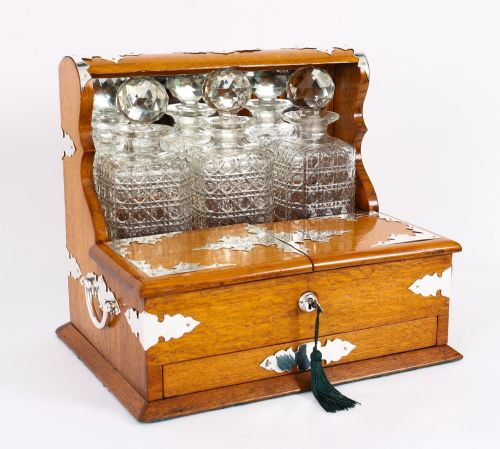
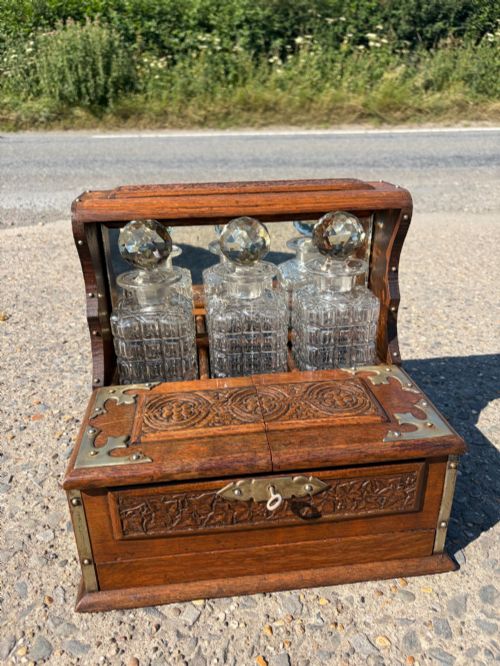
A wooden drinks tantalus is a specialised locking cabinet designed to hold decanters securely while displaying their contents. When searching for a wooden drinks tantalus, buyers encounter various configurations, from single-bottle cased items to elaborate three-bottle setups paired with games compendiums or humidor sections. Most examples on this page date from the Victorian and late Victorian periods, utilising sturdy timbers and fitted interiors.
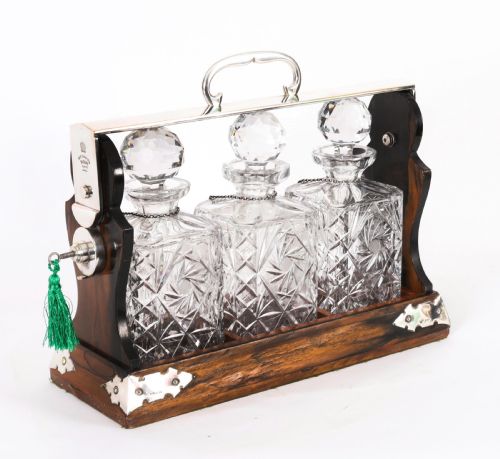
These pieces function primarily as after-dinner barware, originally intended to keep household staff or guests from helping themselves to the master's whiskey, gin, or brandy. The core mechanism involves a sliding or pivoting metal bar that drops over the decanter stoppers, held fast by a working lock and key. Beyond standard tantalus cabinets, related forms in the evidence include decanter boxes, liquor caves, and spirit cask sets.
Materials and construction
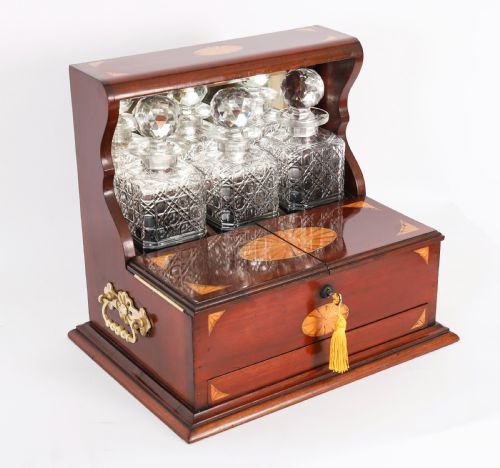
Makers built these cabinets using dense hardwoods such as oak, pollard oak, blonde oak, mahogany, coromandel, and satinwood, often accentuating the grain with marquetry stringing or brass mounts. The timber frames house fitted interiors designed to cradle heavy glassware snugly, preventing movement during use or transit.
The locking mechanism relies on brass rods and plates integrated into the wooden framework, engaging with the stoppers of cut glass or crystal decanters. Many pieces incorporate mirrored glass backs, metal hardware, and silver plated details that reflect the cut glass bottles within the display.
Invented deliberately to frustrate thirsty guests, the tantalus is named after the Greek mythological figure doomed to eternal temptation.
Factors of distinction
The distinction between ordinary and exceptional examples rests upon the ambition of the design and the integration of extra functions, such as built-in games compendiums, dry bars, or humidor compartments. Elaborate marquetry, choice timber selections like pollard oak or coromandel, and heavier brass mountings elevate certain pieces above standard production models.
The quality of the glassware and the precision of the locking mechanism further separate the tiers. Original cut glass or crystal decanters matching the exact contours of the wooden frame indicate a higher grade of manufacture than later replacement bottles.
Betjemann’s
The Wooden Drinks Tantalus Glossary
- Tantalus
- A locking device and cabinet that holds decanters by their stoppers so the contents remain visible but physically inaccessible without the key.
- Decanter Box
- A fully enclosed wooden case designed to hold spirit bottles without the external locking bar of a traditional tantalus.
- Cave a Liquer
- A French liquor cabinet, often associated with Napoleon III styles, fitted with glassware and internal partitions for portable entertaining.
- Games Compendium
- A multi-use box containing equipment for various parlor games, frequently built into the base or sides of late nineteenth-century tantalus units.
- Marquetry Stringing
- Inlaid lines of contrasting wood used to decorate the exterior surfaces of cabinet doors and lids.
Wooden Drinks Tantalus: Frequently Asked Questions
What is a wooden drinks tantalus?
A wooden drinks tantalus is a locking barware cabinet designed to display decanters while preventing unauthorized access to the liquor inside.
The metal locking mechanism engages the decanter stoppers when the cabinet is closed and secured with a key.
How did people use a tantalus?
Victorian hosts placed them in dining rooms or studies to serve after-dinner spirits while keeping the expensive contents under lock and key.
Servants or guests could admire the whiskey and brandy, but only the holder of the key could pour a drink.
How do I date a tantalus?
Dating relies on timber choices, brass hardware styles, and construction markers that point to Victorian, Edwardian, or Georgian eras.
Late nineteenth-century examples often feature heavy oak frames, brass mounts, and specialised compartments for games.
Are the decanters usually original?
Many pieces retain their matched cut glass or crystal decanters, though replacements occur frequently due to breakage over the decades.
Checking whether the stopper shapes fit snugly beneath the locking bar helps determine if the bottles belong to the cabinet.