




Wooden Drinks Box
A wooden drinks box is a historic container designed to secure and present wine, spirits and decanters for the table or parlour.
Wooden Drinks Box
When you search for a wooden drinks box, you encounter pieces designed to store and secure bottles and decanters. The items on this page span several centuries, with particular strength in Georgian and Victorian examples.
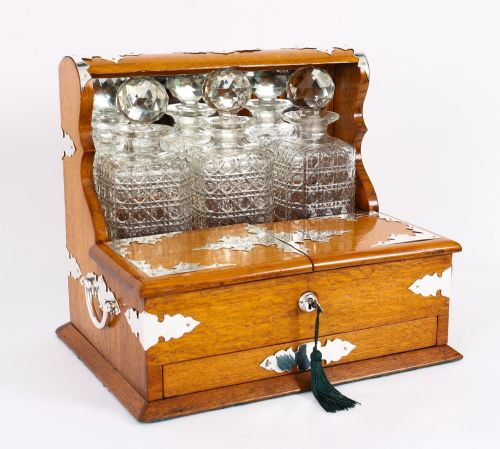
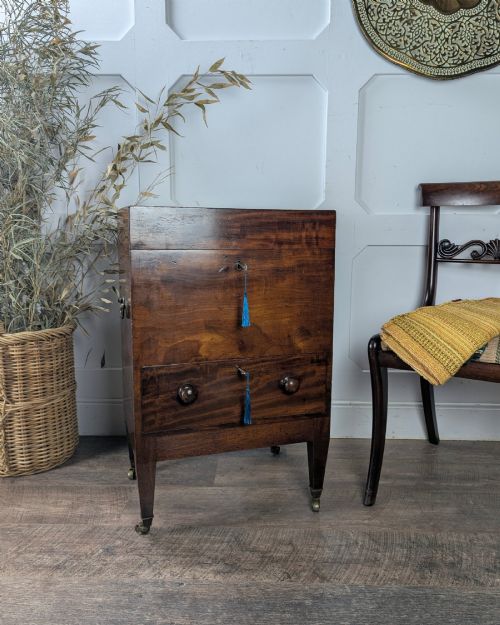
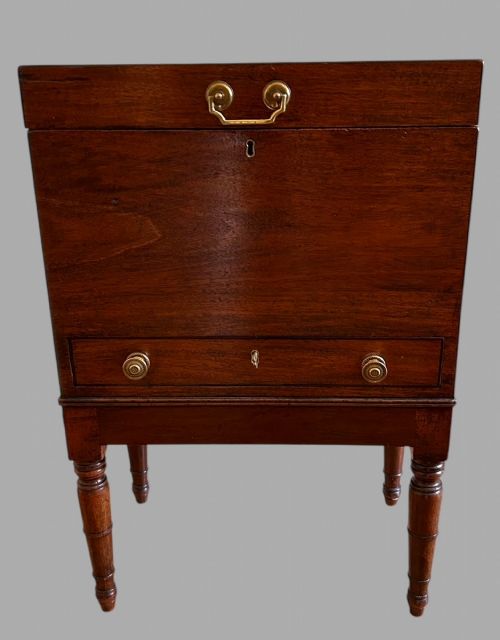
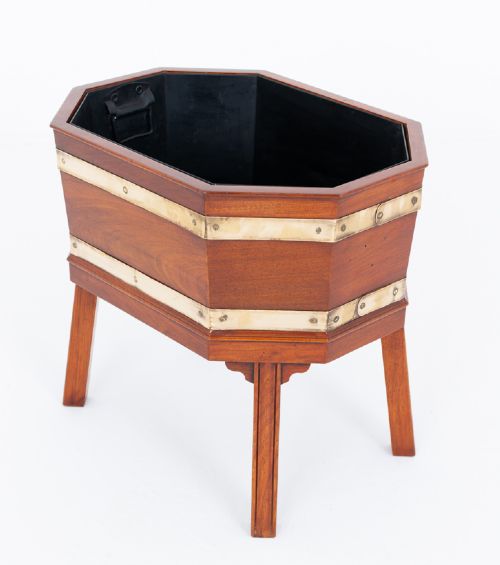
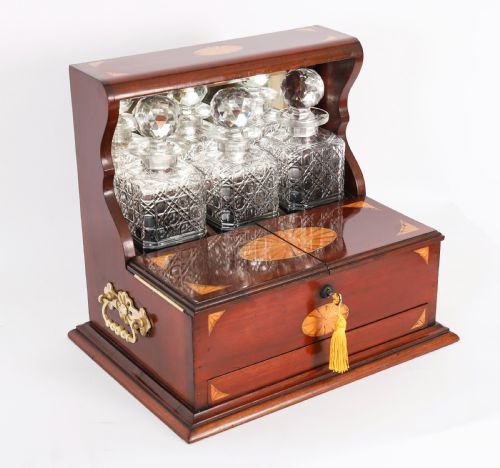
The most common forms you meet are cellarettes, wine coolers and tantalus sets. These range from heavy mahogany floor-standing cellarettes to oak table-top decanter boxes fitted with glass bottles and games compartments.
How they were made
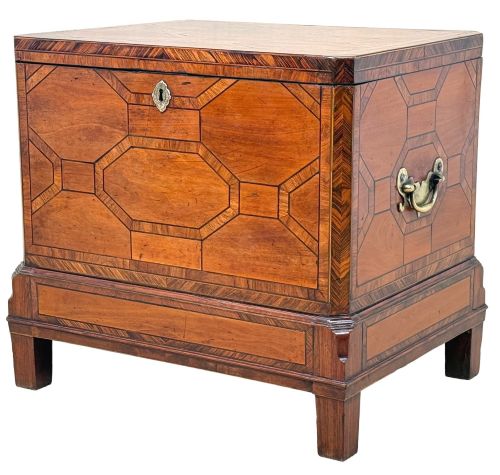
Cabinet makers utilised dense hardwoods such as mahogany, oak and satinwood for the primary carcases, often incorporating kingwood and marquetry stringing for decoration. These timbers provided the structural strength required to support heavy liquid contents and lead glass vessels.
Mounts, handles and locking mechanisms were fashioned from brass and ormolu, while internal fittings frequently included cut glass decanters and silver plate. Carpenters joined these elements with precise internal dividers to protect glassware during transit and storage.
Some Victorian gentlemen locked their whisky away in combination tantalus boxes, ensuring that even the most determined butler stayed sober.
What varies in quality
The distinction between standard examples and top-tier pieces rests on the choice of timber and the sophistication of the internal mechanism. Finer items exhibit choice mahogany veneers, intricate satinwood inlay and robust brass locking assemblies that secure the decanters.
Exhibition pieces often incorporate complex multi-use interiors, combining spirit storage with games compendiums and humidors. The crispness of the cabinet work and the weight of the fitted cut crystal reveal the standing of the original maker.
Gillows of Lancaster and London·Whytock & Reid·Withers
The Wooden Drinks Box Glossary
- Cellarette
- A lockable container or cabinet designed to hold wine bottles and decanters near the dining table. They frequently appear in Georgian and Regency dining rooms.
- Tantalus
- A locking drink cabinet that holds decanters upright in a wooden frame while displaying the contents through an open bar. The mechanism prevents unauthorised access until a key is turned.
- Sarcophagus
- A monumental cabinet shape featuring a domed or sloping lid atop a rectangular base. Regency wine coolers often adopted this architectural silhouette.
- Compendium
- A fitted box containing equipment for multiple parlour games alongside the primary drinks storage. These multi-functional pieces date largely to the later Victorian era.
- Ormolu
- Gilded bronze mounts applied to cabinet work for decorative emphasis. This French technique appears on select Regency and nineteenth century pieces.
Wooden Drinks Box: Frequently Asked Questions
What is the difference between a cellarette and a tantalus?
A cellarette is a fully enclosed box or chest designed to store wine bottles securely out of sight. They are typically solid in construction and date from the Georgian and Regency periods.
A tantalus exposes the decanters through an open wooden framework that locks them in place. This later Victorian invention allowed hosts to display their crystal while restricting access to the contents.
How were these boxes used in period homes?
These containers kept expensive wines and spirits close to the dining room or drawing room table without requiring frequent trips to the cellar. Servants used them to present drinks to guests during long evening meals.
Many examples also served as portable bars for the parlour, incorporating games compendiums and cigar storage to entertain visitors long after the dinner dishes were cleared away.
How do I date a mahogany drinks box?
Georgian and Regency examples rely on architectural proportions, such as sarcophagus shapes, plain polished mahogany surfaces, and tapered legs or brass paw feet. Their construction prioritises simple timber grains and heavy brass carrying handles.
Victorian and Edwardian versions often feature oak or pollard oak instead of mahogany, combined with mechanical locking bars, marquetry stringing, and fitted cut glass decanters designed for parlour display.
Are the decanters usually original to the box?
Many surviving tantalus boxes retain their original set of matched cut crystal decanters, shaped specifically to fit the internal wooden base channels and locking bars. Cut glass quality often mirrors the standard of the cabinet work itself.
Due to centuries of use, some decanters are later replacements that match the period style of the outer case. Examining the base wear helps determine if the glass has belonged to the box for its entire history.