
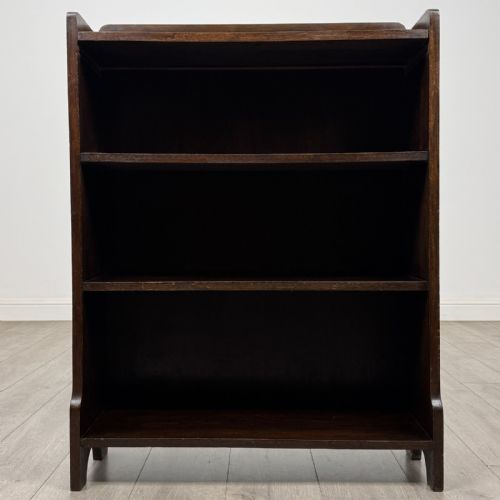
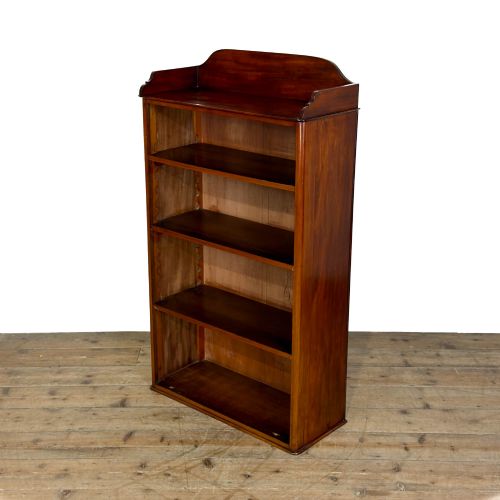
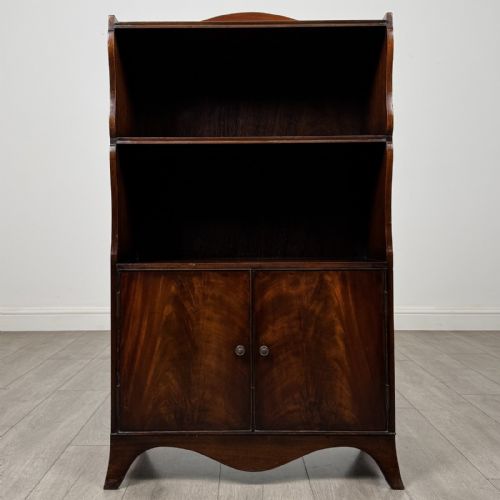
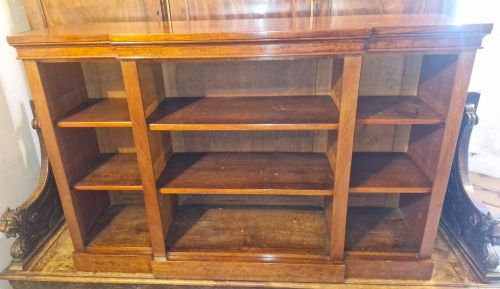
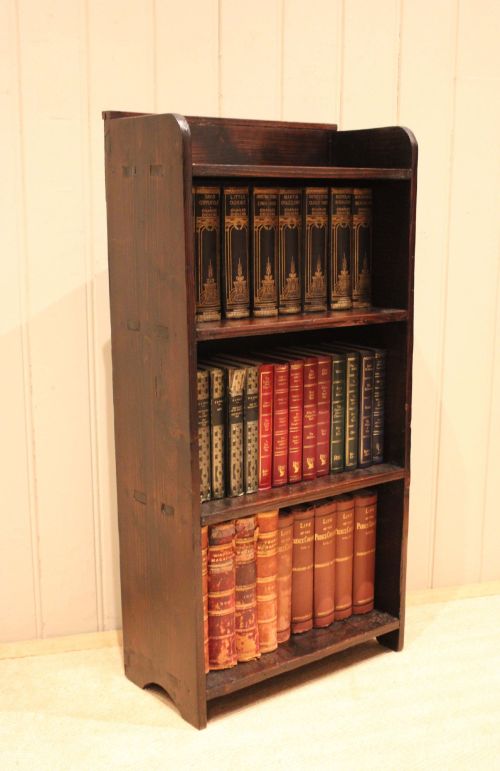
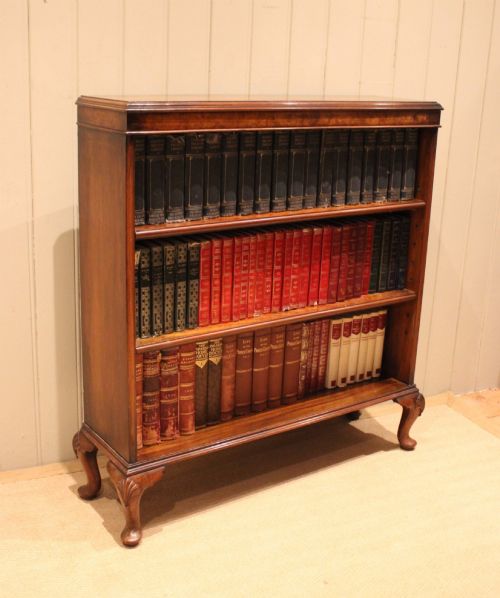
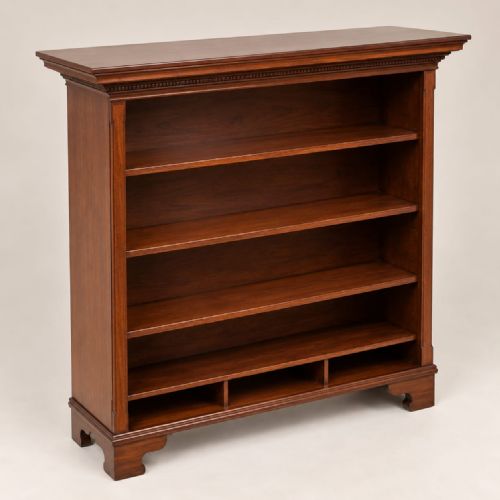

Wooden Display Shelving Unit
A wooden display shelving unit brings open storage and horizontal surface space into a room, drawn largely from nineteenth and early twentieth century workshops.
Wooden Display Shelving Unit
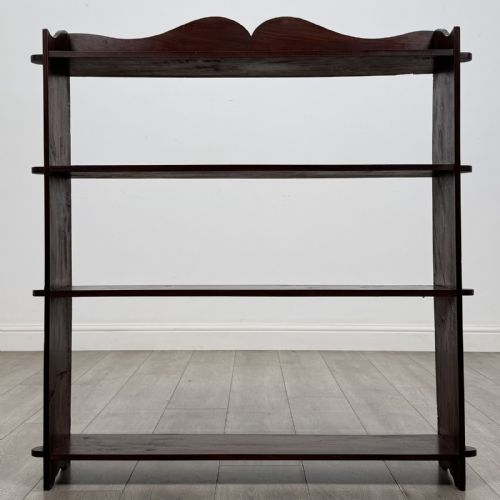
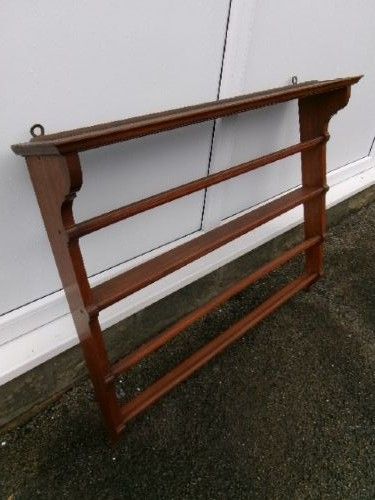
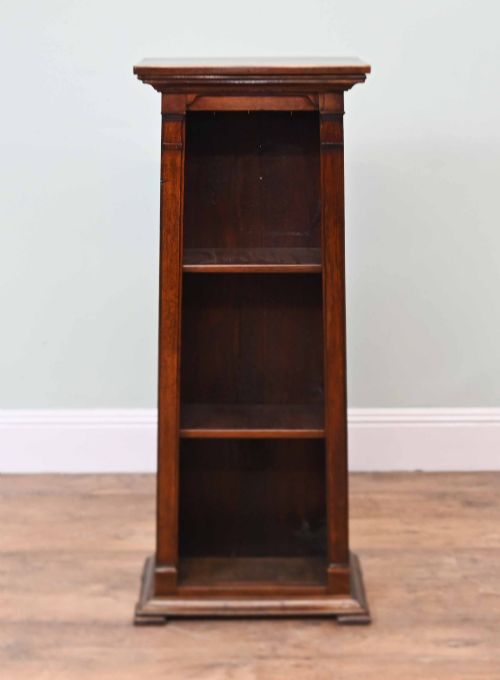
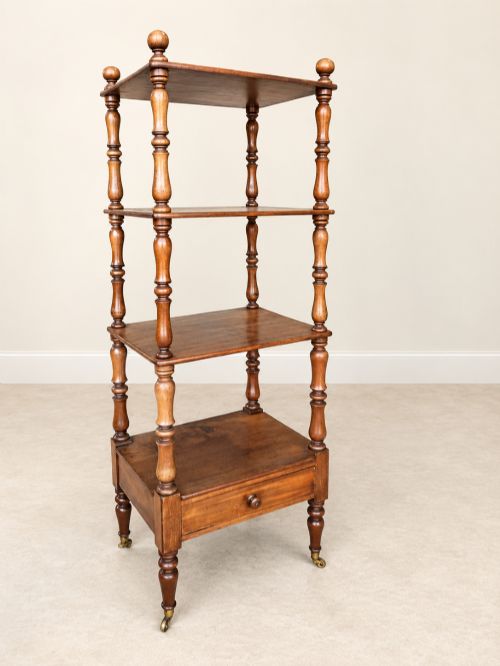
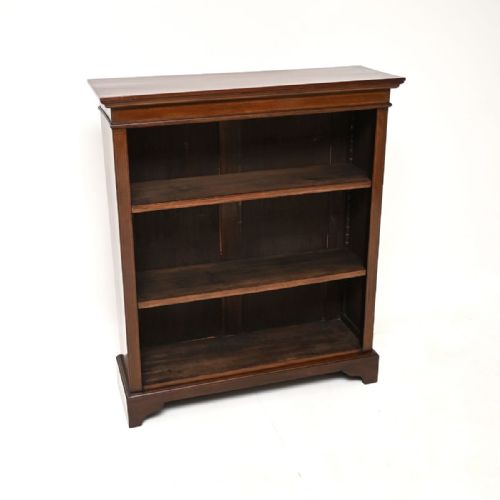
A wooden display shelving unit comprises open bookcases, hanging shelves, whatnots, and etageres designed to hold books and decorative objects. The forms span the Victorian, Edwardian, and Art Deco periods, encompassing both compact rustic pine pieces and large mahogany library furniture.
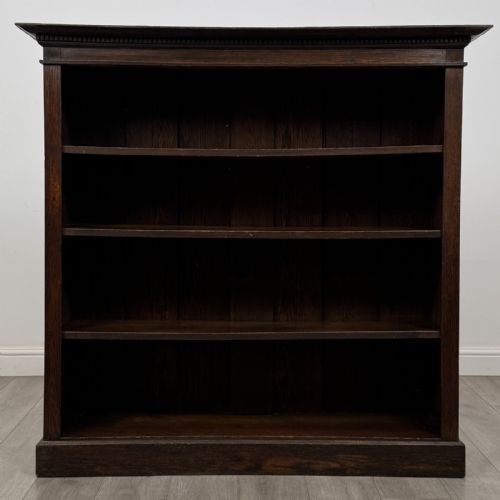
Buyers will most frequently encounter open bookcases in oak and mahogany, often fitted with adjustable shelves or set upon brass castors. These functional items reflect the domestic storage needs of the nineteenth and early twentieth centuries.
How they were made
Cabinet makers utilised solid timbers such as mahogany, oak, walnut, pine, and teak, frequently selecting burr walnut veneers for decorative surfaces. Joinery methods included sturdy panel construction and fitted shelving supports.
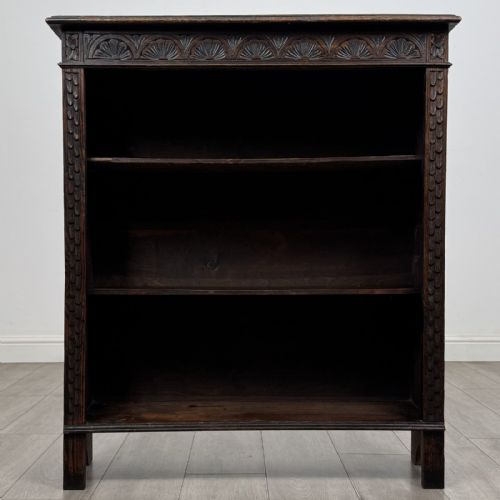
Surface ornamentation relied on natural wood grain, inlay work, and carved details. Brass castors and hardware were commonly added to heavier floor-standing bookcases to aid movement.
What varies in quality
Quality rests upon the selection of timber and the precision of the cabinet work, distinguishing simple utility furniture from finely figured showpieces. Finely grained mahogany, burr walnut, and golden oak indicate a higher grade of manufacture.
Proportion and decorative restraint separate standard items from superior examples. Pieces with balanced proportions, refined inlay, and well-integrated adjustable shelving systems represent the upper tier of the range.
Heals
The Wooden Display Shelving Unit Glossary
- Waterfall bookcase
- A set of open shelves that steps back progressively from bottom to top, creating a cascading profile. These pieces date frequently to the Victorian and Edwardian eras.
- Open bookcase
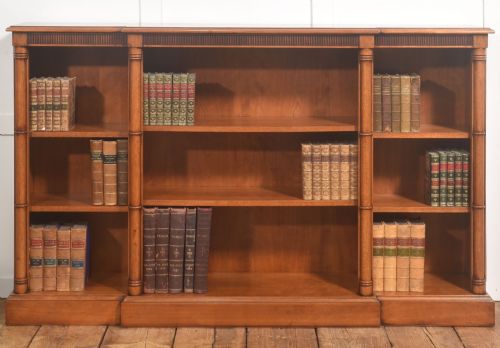
- A bookcase lacking doors, designed for immediate access to books and objects. Such units appear widely in oak, mahogany, and walnut.
- Etagere
- A set of open shelves used for displaying ornaments and small objects. They often feature slender upright supports and multiple tiers.
- Whatnot
- A multi-tiered piece of freestanding furniture used for the display of bric-a-brac. These units date primarily from the nineteenth century.
- Inlay
- A decorative technique where contrasting woods or materials are set into the surface of a piece. Edwardian mahogany pieces frequently utilise this method.
Wooden Display Shelving Unit: Frequently Asked Questions
Where should I place a wooden display shelving unit?
These units suit studies, living rooms, and hallways where books or decorative items need accessible placement. Freestanding open bookcases function well against flat walls, while smaller wall shelves utilise vertical space in compact areas.
Heavier timber pieces require stable flooring and sufficient clearance from direct heat sources to protect the wood. Positioning them away from strong direct sunlight preserves the tone of mahogany and walnut surfaces.
How do I adjust the shelves?
Many nineteenth and twentieth century bookcases feature internal wooden or metal supports that allow shelves to be repositioned at different heights. Lifting the shelf slightly usually releases it from the retaining slots.
Care is required when shifting older timbers to avoid damaging the interior veneered surfaces or shelf edges. Ensuring the shelf sits level on all four supports prevents sagging under the weight of books.
How do I distinguish Edwardian oak from Victorian oak?
Victorian oak furniture often displays darker finishes and heavier, more robust carved ornamentation. The proportions tend to be substantial and imposing.
Edwardian oak pieces, particularly those from around 1900 to 1910, frequently exhibit lighter golden tones and simpler lines. They reflect a shift towards brighter domestic interiors and more restrained decoration.
What is the difference between a whatnot and an etagere?
A whatnot is traditionally a multi-shelved freestanding unit intended for general display and storage in nineteenth-century rooms. It often includes small enclosed cupboards at the base.
An etagere is typically lighter and more decorative, featuring open tiers supported by slender uprights. It serves primarily to display ornaments rather than hold heavy volumes.