
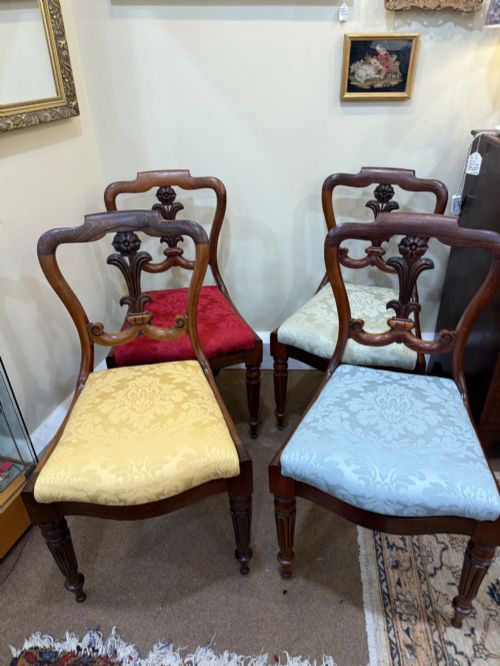
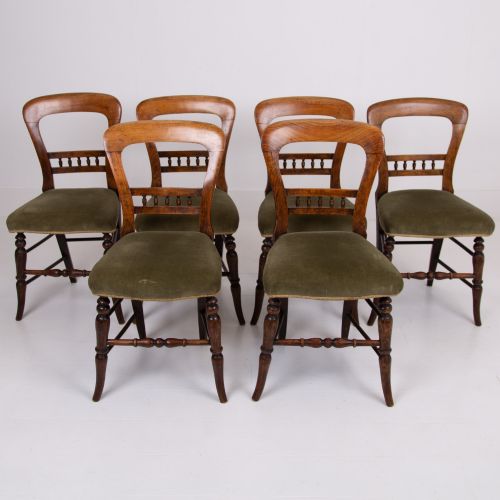
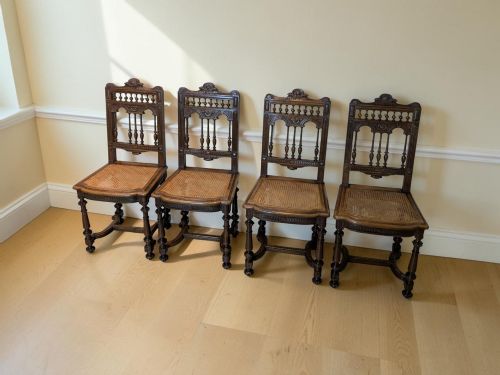
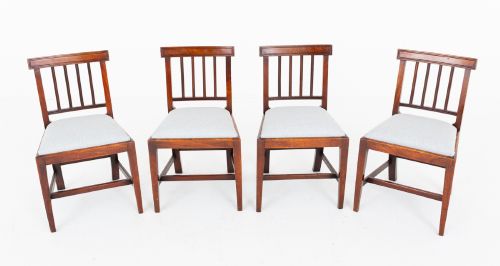
Wooden Dining Set
A wooden dining set brings people together around timber grown, seasoned and joined centuries ago.
Wooden Dining Set
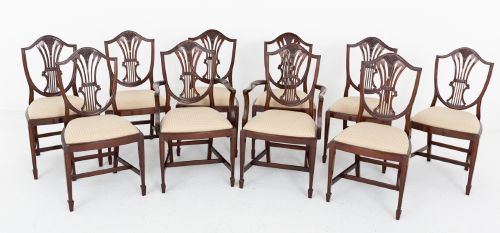
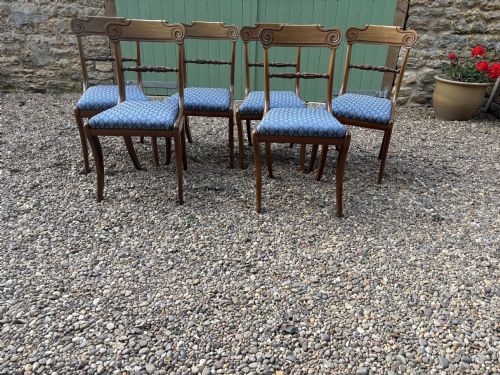
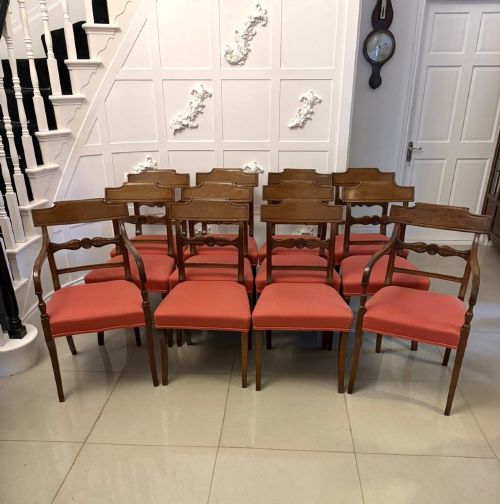
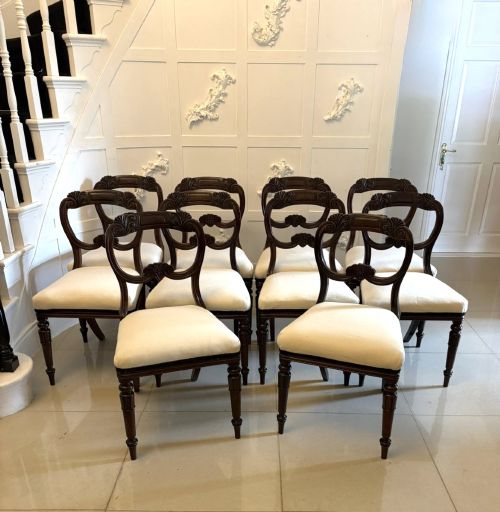
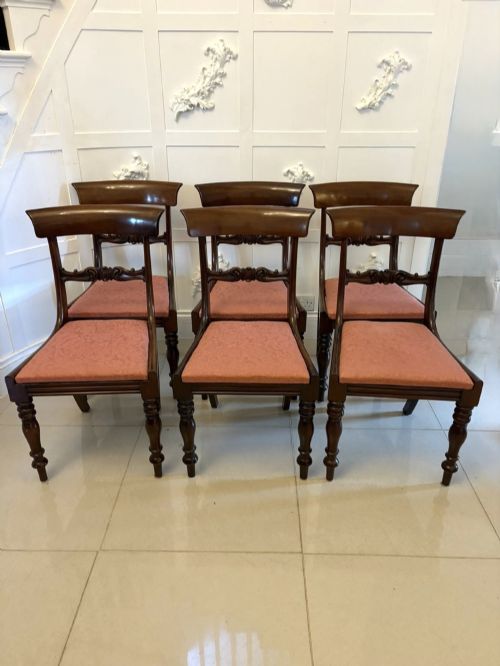
A wooden dining set gathers chairs and tables forged from timber across eras spanning the Georgian, Regency, Victorian and Edwardian periods.
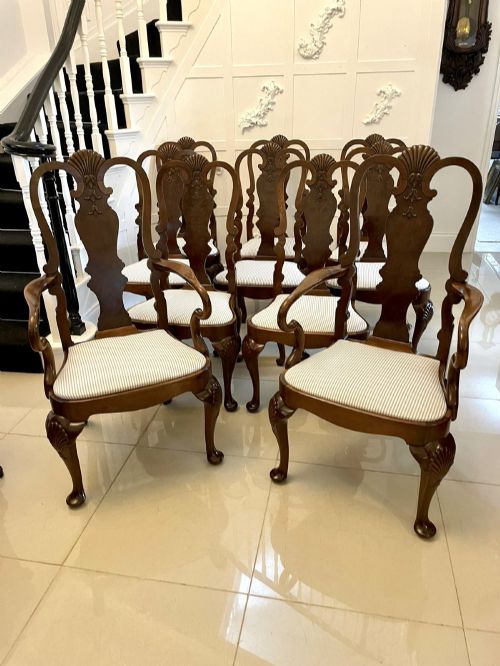
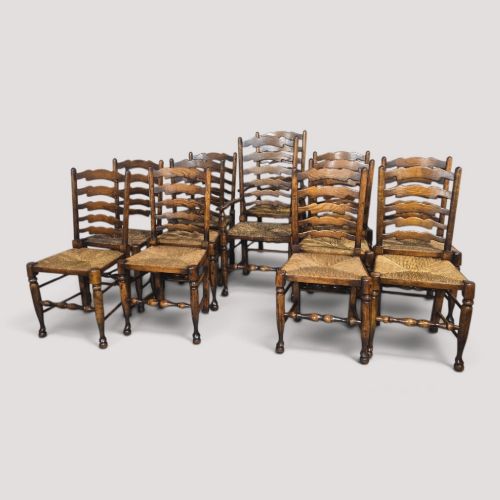
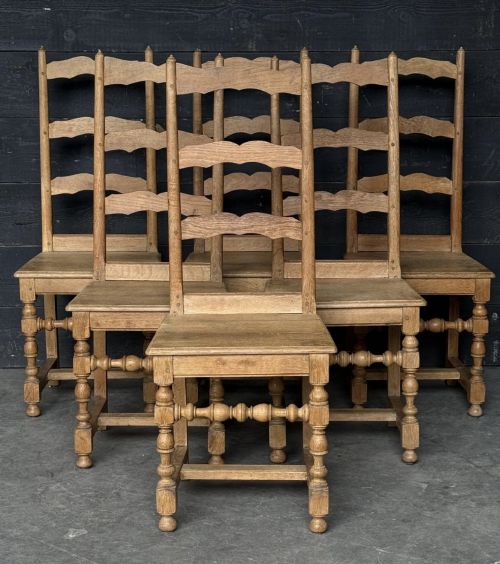
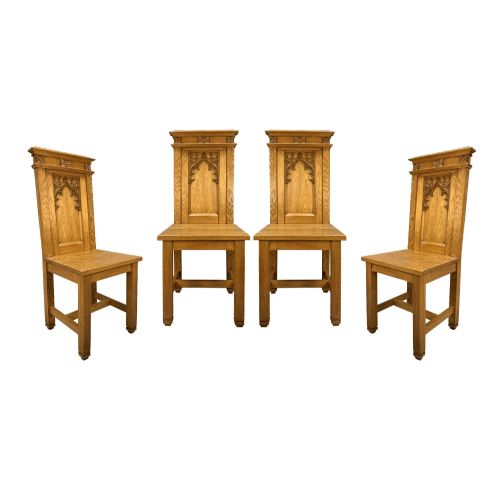
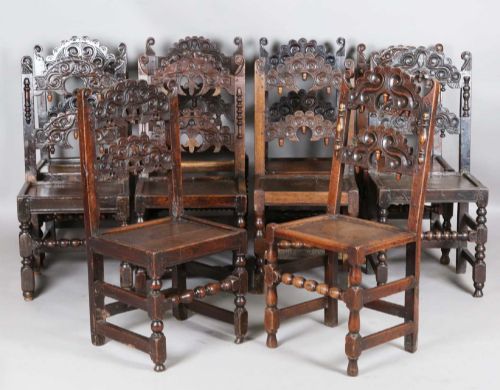
The buyer encounters sets ranging from modest oak farmhouse chairs and Windsor kitchen seating to grand mahogany dining chairs with carved backs.
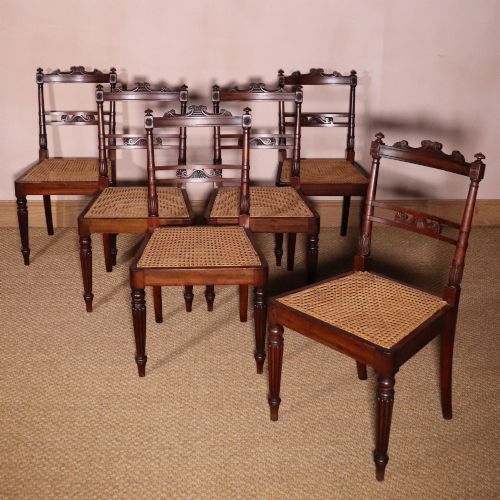
Many listings comprise matched groups of chairs, sometimes accompanied by a dining table, built in woods such as mahogany, oak, elm and walnut.
Materials and construction
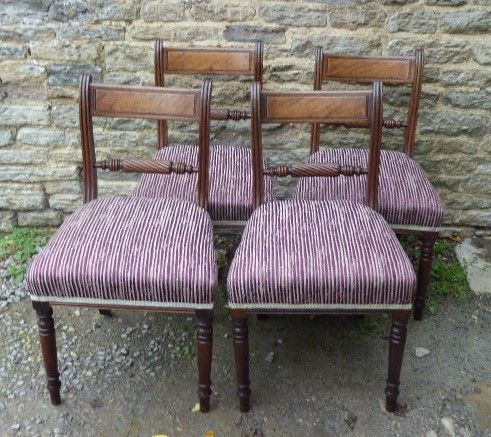
Cabinet makers utilised dense hardwoods like mahogany, oak, walnut and gonçalo alves, alongside regional timbers such as elm, ash and beech for country seating.
Joints were dowelled, tenoned or pinned by hand, while decorative elements relied on carving, turned legs, pierced splats and flame mahogany veneers.
Seating portions frequently integrated fabric upholstery, velvet, brass accents or traditional timber seats like penny seats.
Listings span multiple centuries, incorporating 17th century oak alongside Georgian mahogany and 1920s farmhouse chairs.
Gradation of manufacture
Execution depends on the depth of hand-carved detail on the backs and rails, distinguishing finely sculpted Regency or Victorian pieces from simpler country variants.
The integrity of the timber selection dictates longevity, with highly figured flame mahogany or dense old-growth oak sitting above standard utility stock.
Jack Grimble
The Wooden Dining Set Glossary
- Carver
- An armchair designed with armrests, historically placed at the head of a dining table.
- Balloon back
- A rounded, oval-shaped chair back popular during the Victorian era.
- Splats
- The vertical central strip of wood within a chair back, often pierced or carved.
- Windsor
- A traditional wooden chair constructed with turned legs and spindles socketed into a solid wooden seat.
Wooden Dining Set: Frequently Asked Questions
How do I care for antique wood?
Keep wooden dining furniture away from direct heat sources and sudden humidity shifts to prevent timber splitting.
Apply a traditional beeswax polish sparingly to nourish the grain without building up a sticky residue.
Can I mix chairs with tables?
Many sets combine chairs and tables from similar eras, relying on shared timber tones like mahogany or oak to create visual harmony.
Check the height clearances under the table apron to ensure the chair arms fit comfortably underneath.
What defines a true set?
A true set originates from the same workshop and shares identical timber grain, turning details and wear patterns.
Assembled sets match in style and period but show subtle variations in construction from being gathered together later.
How are periods identified?
Cabinet makers left clues in timber choices, turning styles and joint construction methods specific to reigns like George III or Queen Victoria.
Examining the underside of the seats often reveals tool marks and timber ageing consistent with the century of manufacture.