


Wooden Dining Room Credenza
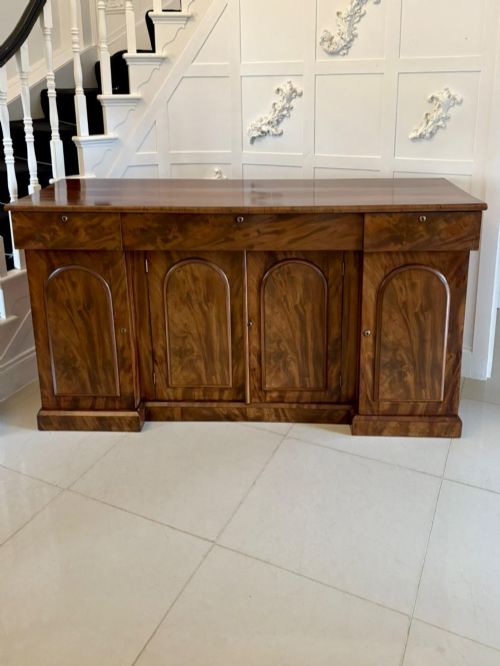
A wooden dining room credenza serves as a substantial storage piece and surface in a dining space, bringing period character and practical utility.
Wooden Dining Room Credenza
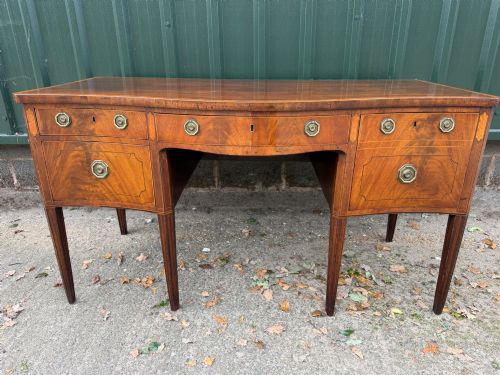
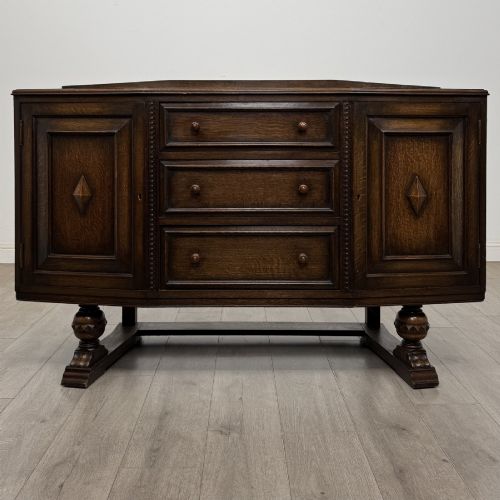
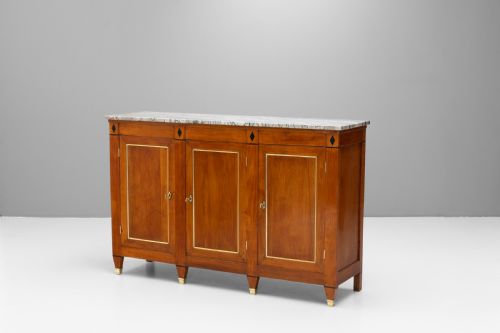
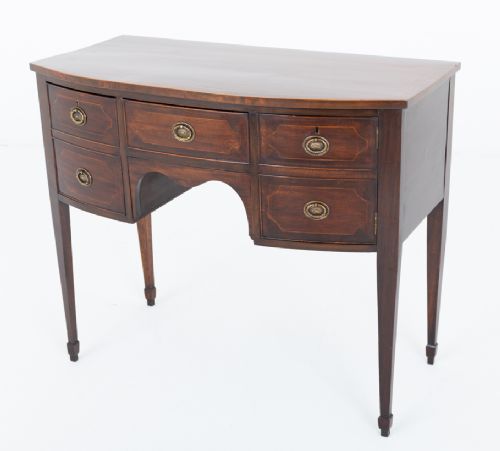
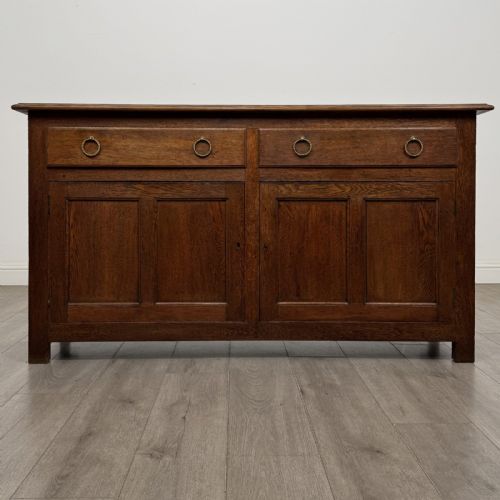
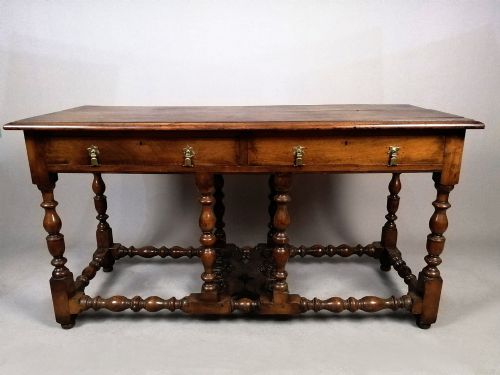
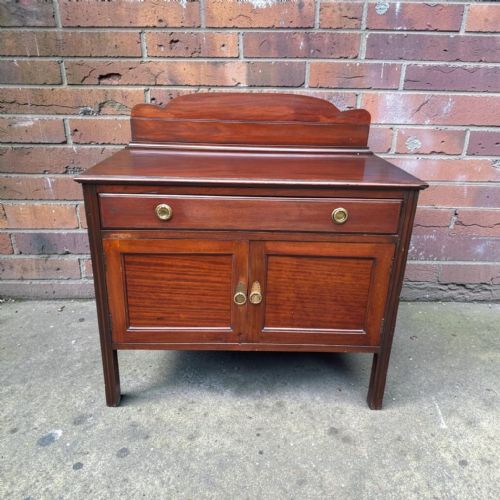
When searching for a wooden dining room credenza, buyers encounter a variety of forms including sideboards, chiffoniers, buffets, and cabinets. These pieces date across several eras, ranging from Georgian and Regency designs through to Victorian, Edwardian, and Art Deco periods.
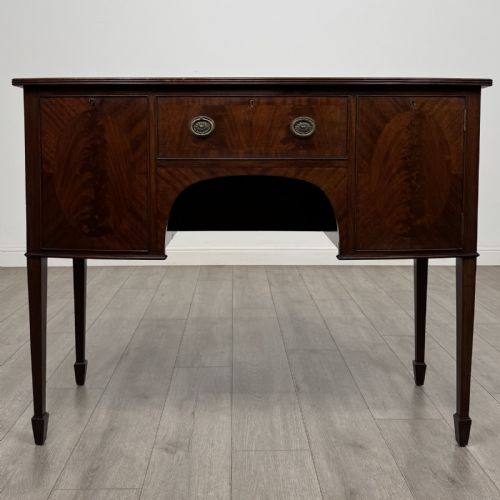
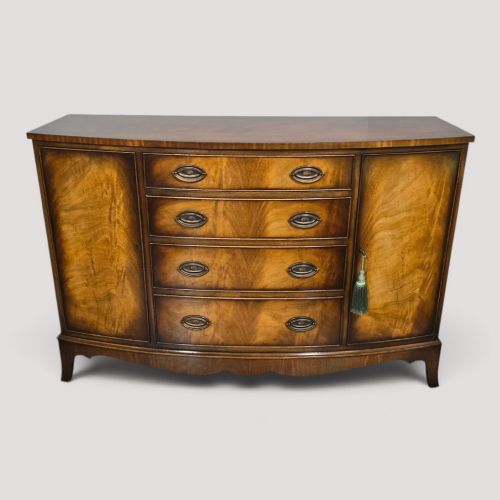
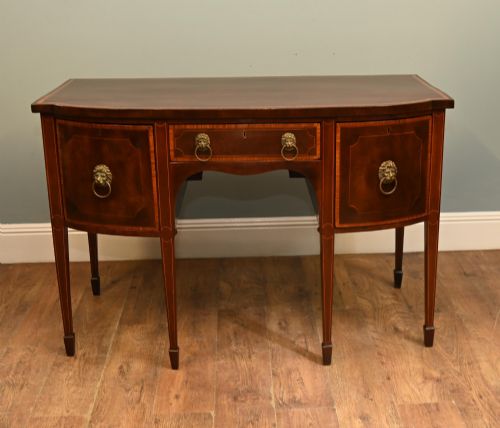
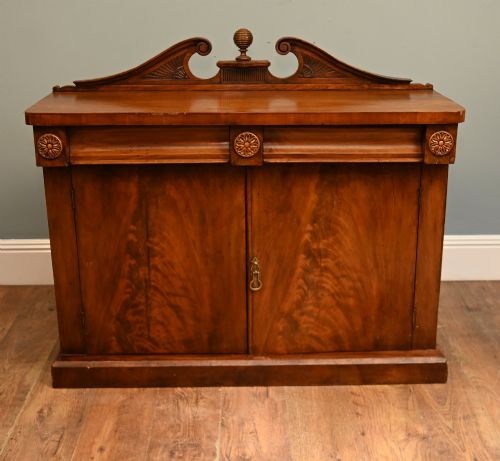
The most common examples on this page are mahogany sideboards from the nineteenth century and the Georgian period, often featuring bow fronts or inlay work. Oak and walnut pieces from the Edwardian era and the 1930s also appear frequently among the listings.
Makers and workshops represented in the selection include Heals of London, Maurice Adams, and M. D. Miller & Sons of Nottingham. Such pieces fulfil the role of dining room servers, housing cutlery, linen, and glassware while anchoring the room's decorative scheme.
Materials and construction methods
Timbers such as solid mahogany, flame mahogany veneer, oak, walnut, and burr walnut form the primary structure of these items. Cabinet makers utilised boxwood for stringing and fine inlay details, pairing the timber bodies with brass ring pulls and face handles.
Surfaces frequently incorporate glass elements in mirror backs or display doors, alongside marble tops seen on select Victorian examples. Construction techniques rely on traditional cabinet-making joints to support heavy pedestals, bow fronts, and breakfront layouts.
Wooden Dining Room Credenza Retail Price Guide 2026
Typical asking prices for wooden dining room credenza among the pieces listed under this phrase on Sellingantiques today, from the lower quarter to the upper quarter. They describe what is for sale here now, not the wider market.
Materials documented across the pieces include mahogany, flame mahogany veneer, oak, burr walnut, walnut, brass, glass, and boxwood.
Distinguishing quality across the range
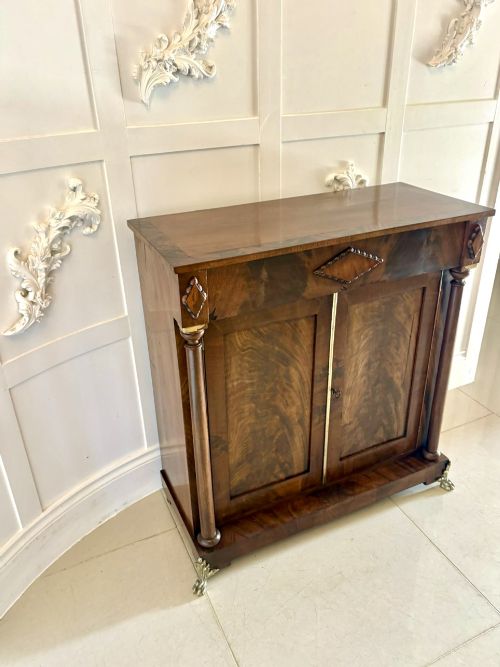
Quality reveals itself in the selection and matching of wood veneers, particularly flame mahogany and burr walnut, where symmetrical grain patterns enhance the visual depth of the doors and drawers. Superior examples display refined proportions, crisp inlay work, and original brass hardware.
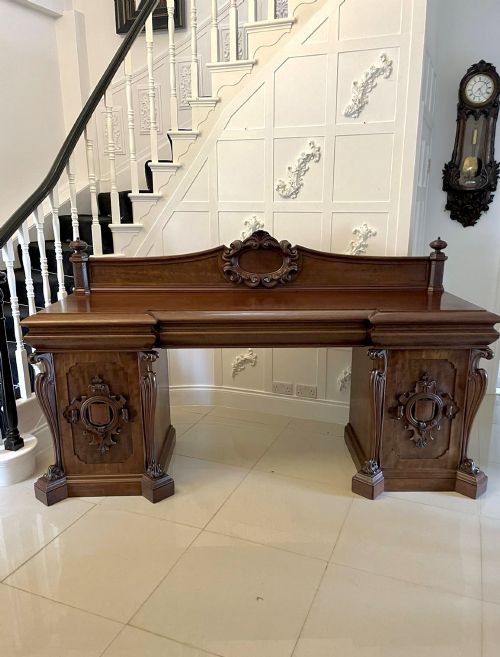
Design execution separates standard production items from exceptional commissions, such as labelled pieces by known makers or items featuring elaborate carved ornamentation. The integrity of the timber, the smoothness of drawer operation, and the retention of original finishes define the upper tier of the range.
Heals of London·Maurice Adams·M. D. Miller & Sons
The Wooden Dining Room Credenza Glossary
- Bow front
- A convex curved cabinet front that projects outward in a smooth arc. This shape became popular during the Georgian and Regency periods to soften linear room geometries.
- Chiffonier
- A compact sideboard or side cabinet featuring shelving and enclosed storage below. These pieces emerged in the nineteenth century for dining rooms and parlours.
- Serpentine
- A furniture front characterised by a double-concave curve flanking a central convex curve. This undulating profile requires advanced woodworking skill.
- Inlay
- A decorative technique where contrasting woods or materials like boxwood are set flush into the primary timber surface. It defines Sheraton and Georgian stylistic ornamentation.
- Pedestal sideboard
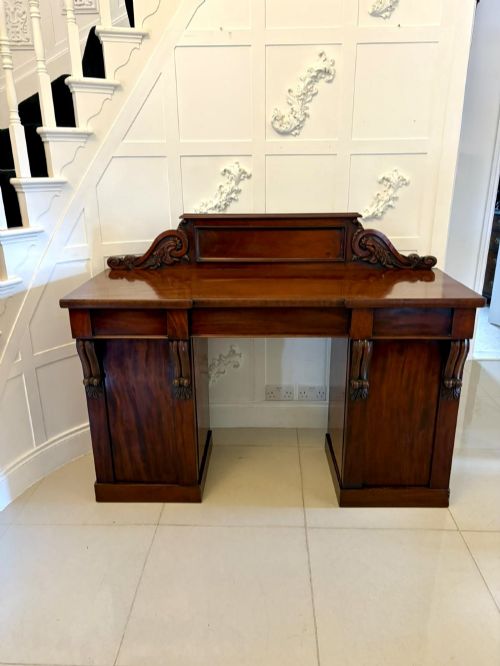
- A large dining room storage form comprising two end pedestals joined by a central table section or board. Regency and Victorian dining rooms frequently utilised this layout.
Wooden Dining Room Credenza: Frequently Asked Questions
What is a wooden dining room credenza?
A wooden dining room credenza is a heavy storage cabinet traditionally used to hold tableware, serving dishes, and cutlery during meals. These items function as both a practical sideboard surface and a decorative anchor within a dining space.
They span various periods from the eighteenth century to the 1930s, encompassing styles like Georgian, Victorian, and Art Deco. Their forms range from simple oak dresser bases to grand flame mahogany sideboards with mirror backs.
How do I date an antique sideboard?
Dating involves examining the primary timbers, construction methods, and stylistic cues present in the piece. Georgian and Regency pieces often showcase fine mahogany with boxwood inlay, whereas Victorian examples lean toward heavy carved details and marble tops.
Later pieces from the Edwardian era and the 1930s introduce lighter oak constructions, simpler lines, or Art Deco geometric forms. Maker labels or stamps, when present, provide a direct link to specific workshops and dates.
Where should I place a wooden dining room credenza?
These pieces traditionally sit against the main dining room wall, offering a convenient surface for serving food or displaying decorative objects. Their substantial length makes them well-suited to anchor a dining table and chairs of a proportionate scale.
Placement should account for the swing of cupboard doors and the depth of drawers. Placing the item away from direct heat sources helps protect antique veneers and solid timbers from warping.
How do I care for antique wood furniture?
Maintaining antique wood requires keeping the piece out of direct sunlight and away from rapid temperature changes that can dry out timber. Regular dusting with a soft, dry cloth prevents the accumulation of abrasive particles on the finish.
Applying appropriate wax polishes occasionally helps nourish the wood and maintain its natural lustre. Avoiding excess moisture and using mats under serving items protects the original polished surface.