



Wooden Desk Trough
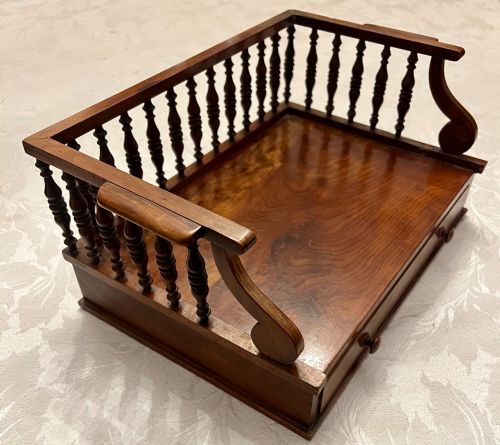
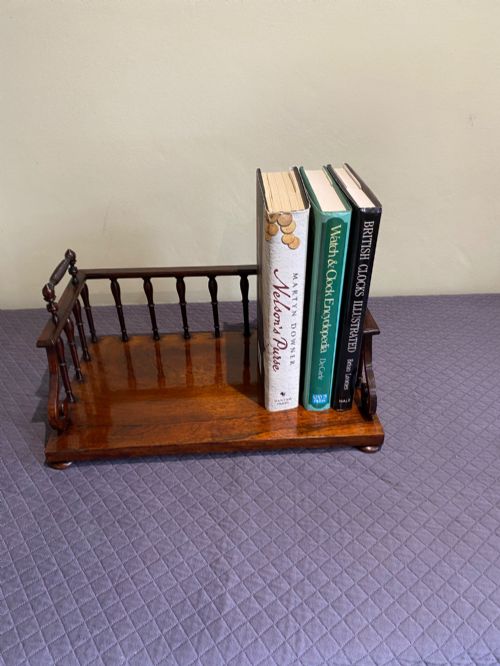
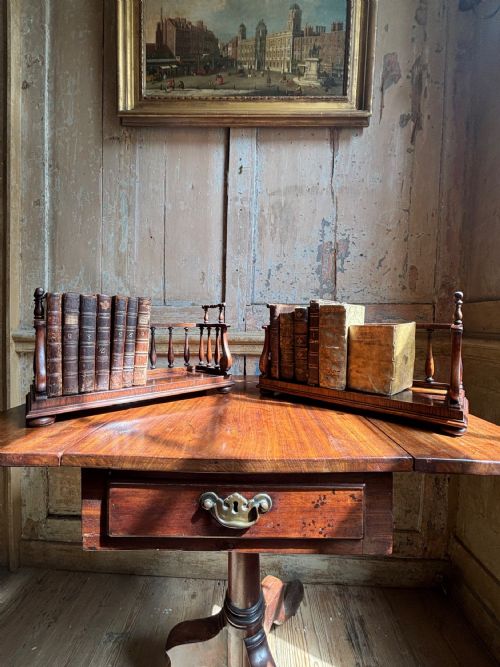
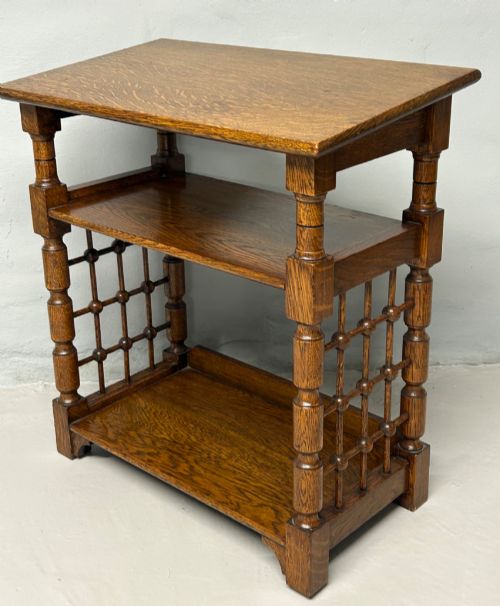
A wooden desk trough is a practical library accessory for holding volumes upright on a surface, crafted in woods from rosewood to oak.
Wooden Desk Trough
A wooden desk trough provides a neat channel for keeping working texts and reference volumes close to hand on a writing surface. Buyers seeking a wooden desk trough encounter various desk accessories designed to hold books upright.
The selections range from extending book slides and folding book rests to stationary troughs and sturdy book stands. Most examples hail from the nineteenth century, including Victorian and Edwardian periods.
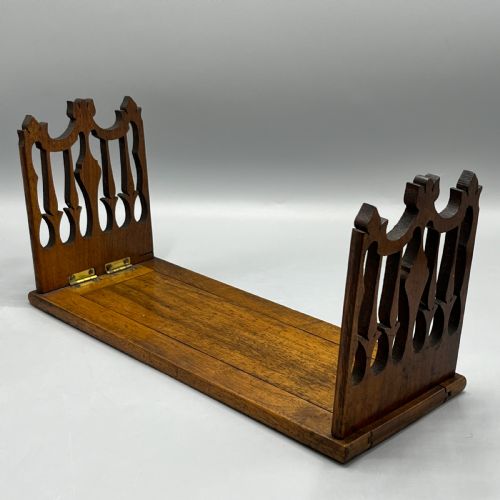
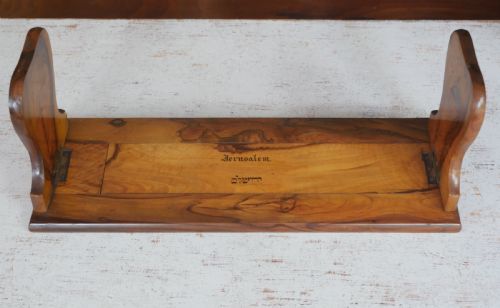
Forms vary from simple fixed troughs to extending versions with hinged ends and brass mountings. Makers utilised exotic timbers alongside native hardwoods to suit the libraries of the period.
Materials and construction methods
Makers fashioned these pieces from dense timbers such as rosewood, walnut, oak, and coromandel, often selecting figured veneers like burr walnut or exotic olive and teak woods. Boxwood stringing, bone inlay, and painted porcelain plaques frequently decorate the surfaces.
Extending mechanisms rely on sliding wooden bases or brass scissor actions hidden beneath the frame. Brass mounts, hinges, and corner plates provide structural reinforcement and decorative contrast to the dark woods.
Wooden Desk Trough Retail Price Guide 2026
Typical asking prices for wooden desk trough among the pieces listed under this phrase on Sellingantiques today, from the lower quarter to the upper quarter. They describe what is for sale here now, not the wider market.
Assessing craftsmanship and finish
Quality rests upon the selection of timber grain, the precision of the joinery, and the refinement of any applied decoration like Tunbridge ware or intricate carving. Superior pieces exhibit smooth, reliable sliding actions in their extending mechanisms without wobble or binding.
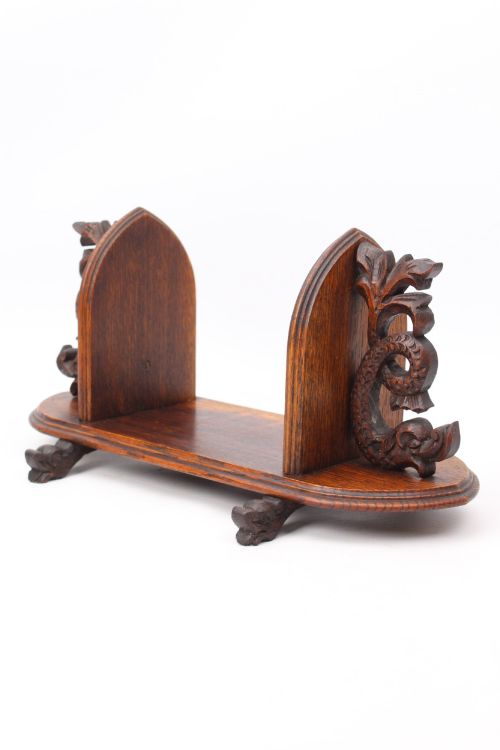
Finer examples integrate robust brass mounts and meticulous inlay work that remains flush with the surrounding wood. Plain utilitarian models contrast with highly decorative library pieces featuring detailed painted porcelain or intricate Anglo-Indian carving.
Arthur Simpson·Tiffany & Co·Gillows
The Wooden Desk Trough Glossary
- Book slide
- A desktop stand with extending sections to accommodate a varying number of volumes between upright ends. The mechanism allows the length to adjust on a sliding track.
- Tunbridge ware
- Woodwork decorated with tiny mosaic tesserae forming pictorial or geometric mosaic patterns. Craftsmen created these designs using thousands of differently coloured wood strips.
- Gothic Revival
- A nineteenth-century architectural and decorative style drawing on medieval forms. Pieces often feature pointed arches, quatrefoils, and heavy carved oak.
- Extending
- Describing an object designed with moving parts to alter its overall length. This mechanism permits the holder to expand as more books are added.
- Brass mounted
- Fitted with structural or decorative elements cast or sheet-wrought in brass. These additions protect corners and strengthen joints.
Wooden Desk Trough: Frequently Asked Questions
How do extending book slides work?
Extending book slides utilise a central wooden track where two matching ends pull outward to create a longer shelf space.
Many incorporate concealed wooden channels or brass sliding brackets that hold the upright ends steady at the chosen width.
What woods were used for desk troughs?
Cabinetmakers selected durable hardwoods such as rosewood, walnut, oak, and teak for daily desktop use.
Exotic timbers like coromandel, olive wood, and burr walnut veneers appeared on finer decorative examples intended for the principal library.
Where were these desk accessories placed?
They sat upon writing tables, library desks, and bureaus to keep current reference books upright and accessible.
Victorian scholars and writers used them to manage working volumes without cluttering the main writing surface.
How do I date a wooden book trough?
Dating relies on timber choices, construction methods, and stylistic cues like Gothic Revival motifs or Arts and Crafts simplicity.
Nineteenth-century pieces often feature hand-cut dovetails, brass mounts, and specific decorative techniques like Tunbridge mosaic.