





Vintage Tabletop Bookstand
A vintage tabletop bookstand keeps volumes upright and accessible, bringing character and practical organisation to a desk or side table.
Vintage Tabletop Bookstand
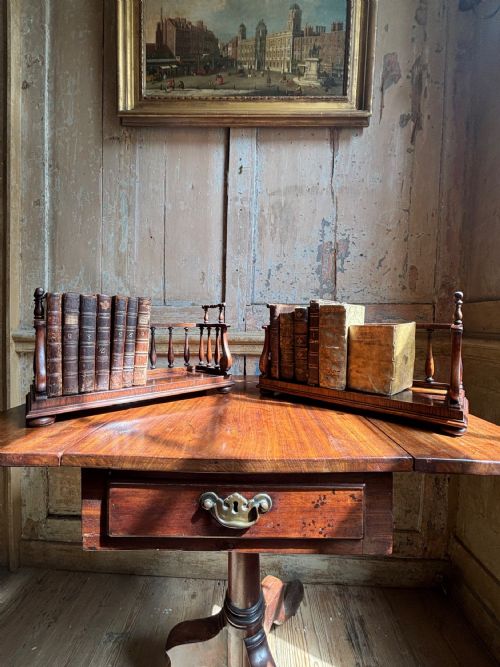
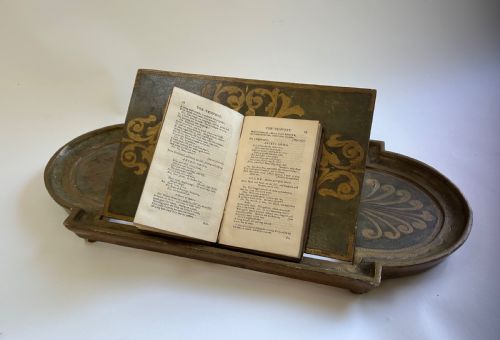
A vintage tabletop bookstand brings order to a desk or surface by holding books upright for reading or display. These pieces range from simple extending slides to revolving cases and folding rests.
The selections span the nineteenth century through the Edwardian era and into the early twentieth century. Buyers encounter styles from the Victorian period alongside Gothic Revival, Art Nouveau and Florentine examples.
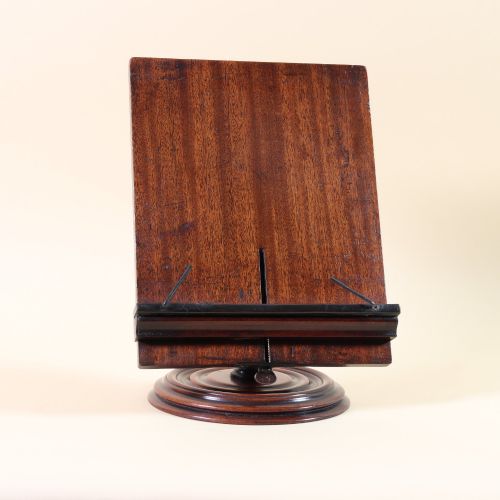
Forms include book slides, revolving bookcases, desk-top reading rests and folding stands. Walnut, mahogany and oak appear frequently alongside brass and painted wood.
Materials and construction
Cabinet makers utilised dense hardwoods such as mahogany, walnut and rosewood for durability and rich grain patterns. Oak provides sturdy construction for heavier revolving designs.
Brass fittings, hinges and mounts offer structural support and decorative contrast on folding stands and rotating models. Tunbridge woodware incorporates intricate inlaid mosaic decoration into the wooden surface.
Vintage Tabletop Bookstand Retail Price Guide 2026
Typical asking prices for vintage tabletop bookstand among the pieces listed under this phrase on Sellingantiques today, from the lower quarter to the upper quarter. They describe what is for sale here now, not the wider market.
Judging quality and character
Quality rests upon the selection of timber figures, the precision of joinery and the integrity of moving mechanisms like revolving bases or extending slides. Finer examples display meticulous attention to detail in their carving, inlay or brass mounts.
Condition and originality distinguish the best pieces, particularly where mechanical actions remain smooth and uncompromised by later repairs. The depth of the timber patina and the crispness of any decorative elements reveal the standard of original manufacture.
The Vintage Tabletop Bookstand Glossary
- Revolving bookcase
- A compact rotating case that sits upon a tabletop or desk, allowing easy access to a collection of volumes. It typically pivots on a concealed ball-bearing or spindle mechanism.
- Lectern
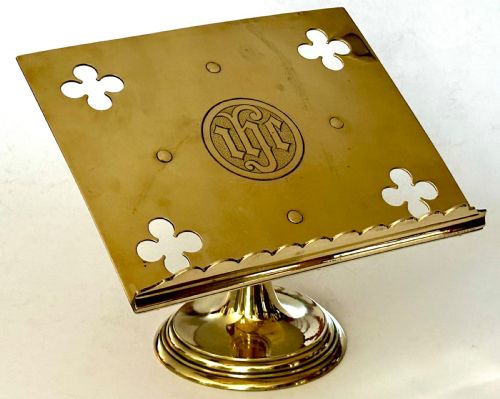
- A slanted reading stand designed to support an open book at a comfortable angle for the reader. They appear in brass as well as various hardwoods.
- Tunbridge ware
- A type of nineteenth-century decorative woodworking from Kent featuring intricate mosaic patterns made from tiny wood prisms. These create detailed pictorial or geometric designs on the surface.
Vintage Tabletop Bookstand: Frequently Asked Questions
How do I use a revolving bookstand?
Place it on a sturdy table or desk where you need regular access to a small collection of reference books or favourite volumes. The rotating base allows you to spin the case smoothly to select your reading without shifting the stand.
Ensure the weight of the books is distributed reasonably evenly across the compartments to maintain a balanced rotation.
How do I care for wooden tabletop bookstands?
Keep wooden pieces away from direct sunlight and heat sources such as radiators to prevent the timber from drying out and cracking. Dust them regularly with a soft, dry cloth to protect the polished finish.
Apply a light application of quality beeswax occasionally if the wood appears dry, buffing it gently to maintain the natural sheen.
How can I tell the period of a bookstand?
Examine the wood types, construction methods and stylistic clues such as carving or brass hardware. Victorian pieces often display heavier oak or mahogany construction, while Edwardian items may feature lighter satinwood inlay or simpler revolving mechanisms.
Art Nouveau and Gothic Revival examples show distinct decorative motifs characteristic of those specific design movements.