



Wooden Desk Inkstand
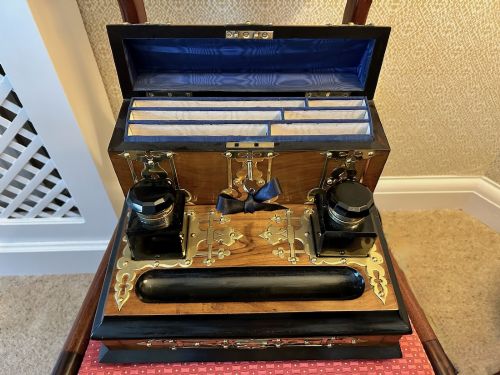
A wooden desk inkstand is a functional writing accessory for holding ink and pens, bringing tactile period character to a working desk.
Wooden Desk Inkstand
A wooden desk inkstand is a desk accessory designed to hold one or more inkwells alongside pen rests and stationery compartments. When searching for a wooden desk inkstand, buyers encounter pieces primarily originating from the nineteenth century, including the Victorian and Edwardian periods.
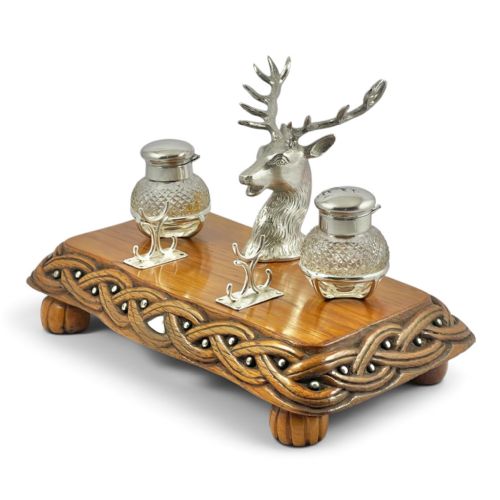
The selections span simple solid oak desk tidies and elaborate carved wooden stands fitted with brass or glass bottles. Many examples reflect specific regional or thematic carving traditions, such as Black Forest animal figures and Scottish oak designs.
Forms range from compact travelling inkwells to large desk stands featuring built-in letter boxes, drawers and silver-plated mounts. Walnut, coromandel and oak dominate the construction of these desktop pieces.
How they were made
Craftsmen utilised dense hardwoods such as oak, walnut, coromandel and ebony to construct the primary body of each desk stand. Lighter woods like linden wood were frequently selected for intricate hand-carved animal figures in Black Forest styles.
Fitted glass ink bottles, sometimes accompanied by hinged brass lids, ceramic inserts or silver-plated mountings, were integrated directly into the wooden chassis to hold the ink securely.
What varies in quality
The fineness of the hand carving dictates the distinction between standard production pieces and superior examples, particularly visible in the anatomical detail of Black Forest animal figures. High-quality stands exhibit crisp execution in decorative inlays, rosewood banding or mother-of-pearl ornamentation.
The integrity of the original fittings, including matching glass ink bottles, intact hinged brass collars and functioning drawer mechanisms, elevates the desirability of a desk stand.
Maison F. Mack
The Wooden Desk Inkstand Glossary
- Inkstand
- A desk stand designed to hold inkwells, pens and sometimes stationery. These portable or stationary accessories formed the centrepiece of nineteenth-century writing desks.
- Standish
- An alternative term for an inkstand, often denoting a more elaborate or elevated desk accessory fitted with multiple compartments and ink reservoirs.
- Black Forest
- A style of wood carving originating from the mountainous region of central Europe, renowned for realistic animal sculptures including bears, dogs and owls.
- Coromandel wood
- A dense, heavily figured exotic timber from Asia utilised by cabinetmakers for luxury nineteenth-century boxes and desk accessories.
- Tunbridgeware
- A form of British woodwork characterised by mosaic patterns assembled from thousands of tiny tinted wood blocks to form geometric or pictorial designs.
Wooden Desk Inkstand: Frequently Asked Questions
What is a wooden desk inkstand?
A wooden desk inkstand is a desktop accessory designed to hold ink bottles, pens and writing supplies in a secure, orderly arrangement.
These pieces typically combine carved or polished timber with glass and brass components to serve as a functional workstation centrepiece.
How were inkstands used?
Writers used them to keep liquid ink and dip pens readily accessible on top of a writing desk or table.
Compartments often stored stamps, sealing wax and nibs, keeping all writing necessities contained within a single portable or static wooden stand.
How do I identify Victorian inkstands?
Victorian inkstands are identified through characteristic nineteenth-century timber choices such as walnut, coromandel and oak, alongside Gothic, Scottish or rustic Revival styles.
Many bear hallmarks, specific brass hardware designs or registration marks associated with the reign of Queen Victoria.
Where should I place an inkstand?
An inkstand sits centrally on a writing desk, bureau or library table to display its carved wooden details and glass bottles.
It functions effectively as a decorative desk tidy for holding modern pens or small stationery items in a contemporary study.