






Wooden Davenport Desk
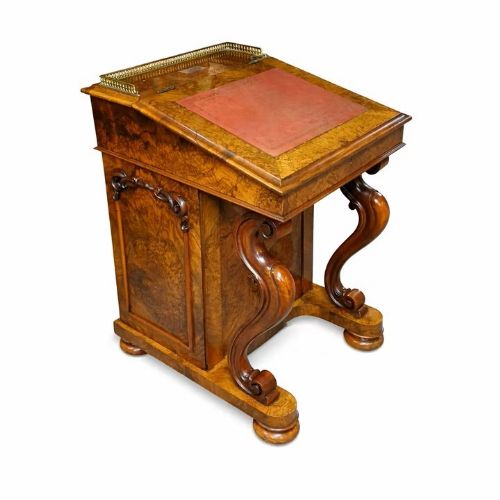
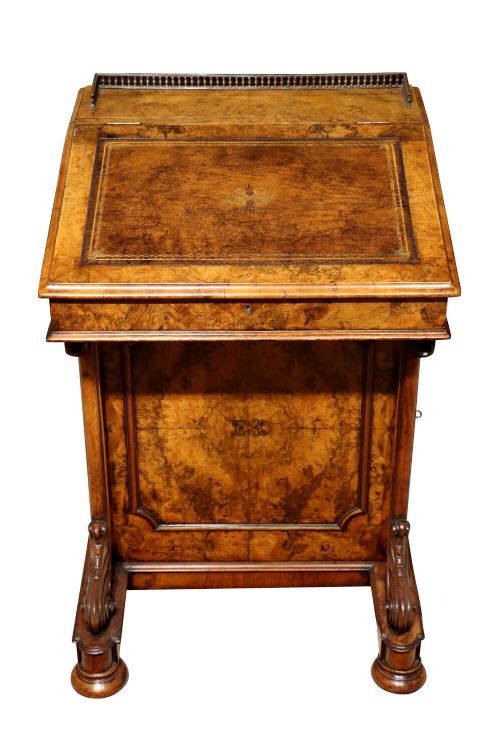
A wooden davenport desk offers compact writing storage with a sloping top, combining a small footprint with functional interior drawers.
Wooden Davenport Desk
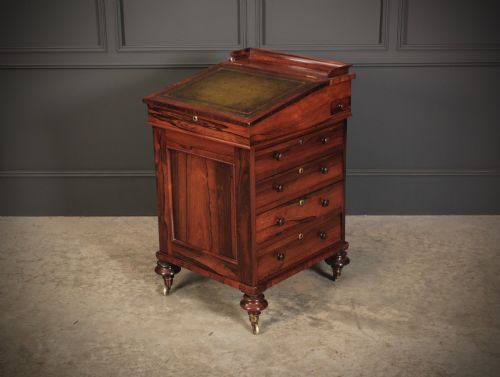
When you search for a wooden davenport desk, you encounter compact writing boxes fitted over a pedestal base, primarily originating from the Victorian and nineteenth-century periods. The form functions as a dedicated writing station equipped with a sloping surface, most commonly met in burr walnut and mahogany.
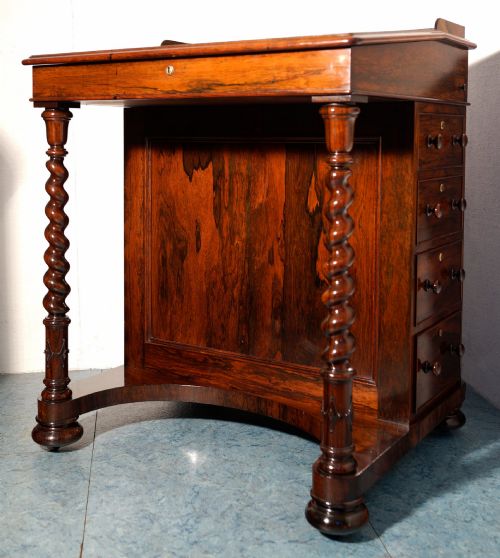
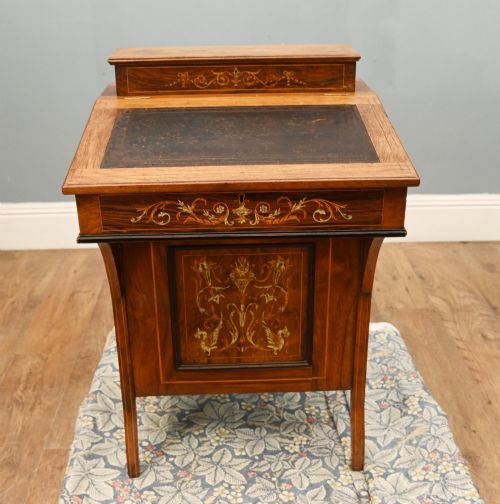
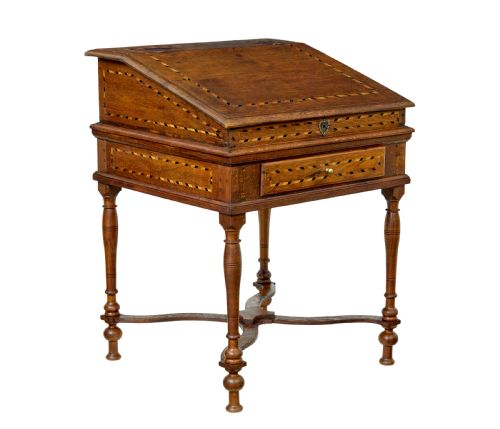
Examples on this page span several stylistic interpretations, ranging from standard Victorian burr walnut models to Regency pieces, oak writing slopes, rosewood variants, and specialised forms such as piano top or slide front desks. Makers utilised various timbers including oak, rosewood, amboyna, olivewood, and satinwood interiors to construct these pieces.
Regional and stylistic variations include carved Anglo-Indian designs, nineteenth-century Dutch inlaid oak slopes, and diminutive Regency proportions. These variations reflect the changing preferences of nineteenth-century writers who required neat, enclosed storage for correspondence.
How they were made
Cabinet makers constructed these desks using solid and veneered hardwoods, selecting burr walnut, mahogany, rosewood, and oak for the primary exterior surfaces. Finer versions incorporated satinwood for interior drawer compartments, paired with brass hardware and fitted leather writing surfaces.
Structural complexity varied from standard pedestal forms to slide front mechanisms and piano top pop-up configurations. Artisans applied carving, inlay, and detailed grain matching to enhance the visual appeal of the compact writing cabinets.
Wooden Davenport Desk Retail Price Guide 2026
Typical asking prices for wooden davenport desk among the pieces listed under this phrase on Sellingantiques today, from the lower quarter to the upper quarter. They describe what is for sale here now, not the wider market.
Listings feature woods including burr walnut, mahogany, rosewood, oak, amboyna, and olivewood, with interiors lined in satinwood.
What varies in quality
Quality in these desks depends upon the selection of timber veneers, such as richly figured burr walnut or figured mahogany, and the precision of the cabinetwork in the interior compartments. Superior examples display careful grain alignment across the sloping lid and pedestal drawers.
Gillows
The Wooden Davenport Desk Glossary
- Davenport
- A compact pedestal desk featuring an inclined writing slope that lifts or opens to storage, originating in the late eighteenth century and remaining popular through the Victorian era.
- Burr Walnut
- A highly figured timber veneer derived from the wart-like growths on walnut trees, prized for its swirling grain patterns on nineteenth-century desk surfaces.
- Writing Slope
- An inclined desk surface designed for comfortable handwriting, often hinged to reveal storage compartments and small drawers underneath.
- Pedestal Base
- The lower supporting structure of the desk, which in davenports typically incorporates a bank of drawers to one side while the other side remains paneled.
- Piano Top
- A specialised davenport variant featuring a roll-top or cylinder mechanism resembling a piano keyboard cover, often enclosing pop-up stationery fittings.
Wooden Davenport Desk: Frequently Asked Questions
What is a davenport desk?
A davenport desk is a compact nineteenth-century writing cabinet featuring a sloping top over a pedestal base with drawers. The form combines a small footprint with enclosed storage for writing materials and correspondence.
Most examples provide a slanted leather-lined writing surface that lifts to reveal storage, accompanied by side drawers accessed from a seated position.
How were davenport desks used?
These desks served as personal writing stations in nineteenth-century drawing rooms and private chambers. They allowed individuals to manage correspondence and store stationery within a confined piece of furniture.
The internal compartments and small side drawers accommodated paper, inkwells, and letters, keeping writing accessories organised and concealed when not in use.
Where do I put a davenport desk?
Because of their compact dimensions, davenports fit well in smaller reception rooms, studies, or home offices where floor space is limited. Their finished backs often allow them to sit away from walls within a room layout.
Placing the desk near natural light helps illuminate the sloping writing surface while providing comfortable access to the pedestal drawers.