



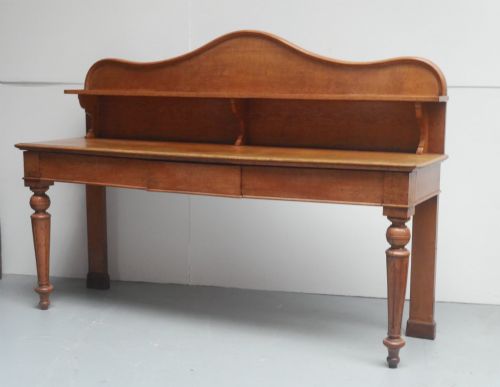


Wooden Counter Table
A wooden counter table brings hard-working utility and honest period character straight into a domestic room.
Wooden Counter Table
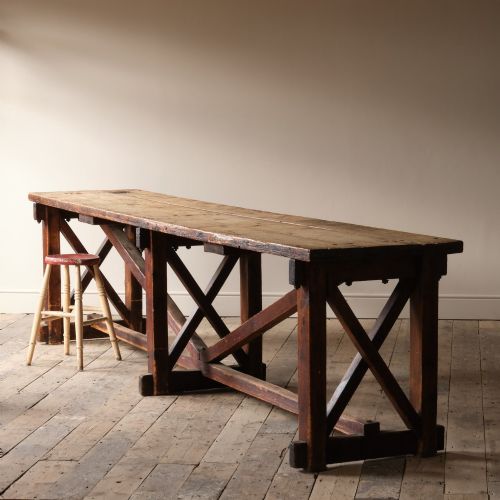
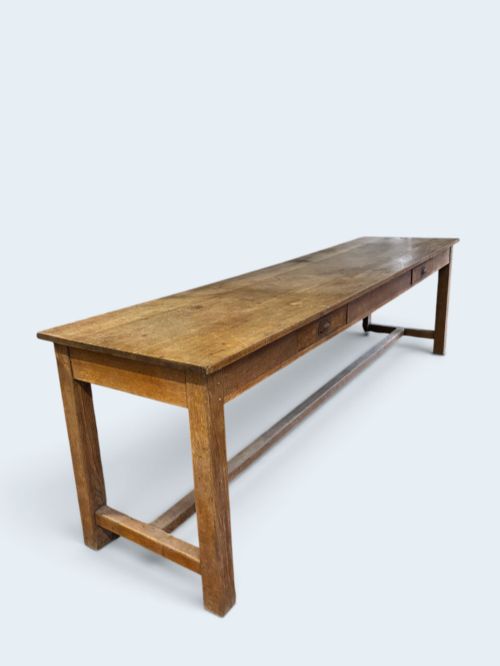
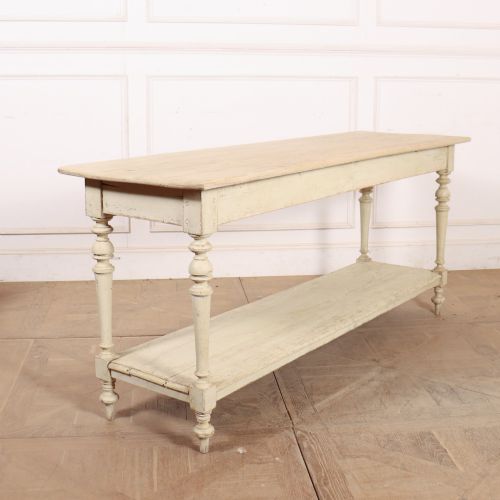
A wooden counter table serves as a sturdy focal point, drawing from functional origins such as drapers, bakers, and serving spaces. You will find forms ranging from long prep tables to console adaptations.
The pieces span the nineteenth century through the early twentieth century, carrying styles like rustic farmhouse, French provincial, and Victorian. Oak, pine, and mahogany dominate the construction of these items.
Makers utilised these surfaces for daily trade and domestic service, meaning every piece shows the honest wear of past labour. Their proportions make them suited for modern kitchens, hallways, and living spaces.
Construction and materials
Makers built these tables using solid timbers like oak, pine, and mahogany, often pairing heavy tops with robust turned or tapered legs. Iron and brass fittings appear on select pieces for structural reinforcement and functional hardware.
Surfaces show various finishes, from scrubbed bare wood to original paint and polished mahogany. Joinery methods relied on traditional pegged joints and sturdy framing to withstand heavy daily use.
Wooden Counter Table Retail Price Guide 2026
Typical asking prices for wooden counter table among the pieces listed under this phrase on Sellingantiques today, from the lower quarter to the upper quarter. They describe what is for sale here now, not the wider market.
Several tables retain the authentic flour dust and dye stains from decades spent serving bakers and drapers.
Assessing quality
Quality rests in the integrity of the timber and the honesty of the surface patination. Original painted finishes and untouched scrubbed tops hold more character than heavily restored surfaces.
Structural heft and timber selection separate standard utility pieces from finer examples. Solid oak and dense mahogany frames show greater endurance than lighter secondary woods.
The Wooden Counter Table Glossary
- Drapers table
- A long, narrow utility table originally used in fabric shops for measuring and displaying cloth. These pieces feature deep proportions and often include lower shelving.
- Prep table
- A heavy-duty working table utilised in kitchens or bakeries for food preparation. They typically display robust timber tops bearing the marks of daily use.
- Console table
- A table designed to stand against a wall, often featuring a shallow depth. They function well in hallways and reception rooms.
- Patina
- The surface sheen and colour developed through decades of handling, cleaning, and ageing. It provides a visual record of the piece's history.
Wooden Counter Table: Frequently Asked Questions
How do I use a wooden counter table at home?
These pieces function well as kitchen islands, hallway consoles, or serving surfaces in dining areas. Their generous proportions provide ample workspace and display room.
Ensure the height matches your intended use, whether for standing preparation or pairing with counter-height stools.
What woods were used for these tables?
Makers predominantly used solid oak, pine, and mahogany depending on the regional origin and intended commercial use. Hardwoods like oak and mahogany provided strength for heavy trade.
Pine frequently appears on French and country pieces, often finished with historic paint layers.
How do I care for an antique wooden top?
Maintain the wood by cleaning with a damp cloth and applying natural wax periodically to nourish the grain. Avoid excessive moisture on unsealed pine or scrubbed oak surfaces.
Allow the natural patination to show, as minor marks contribute to the historical character of the piece.
How can I tell the period of a table?
Dating relies on timber selection, nail types, joint construction, and overall stylistic details like Victorian turning or Gothic Revival carving. Pine and painted finishes often point toward French country or drapers origins from the nineteenth century.
Examining the underside and drawer construction reveals the hand-working methods of the period.