


Wooden Coat Hanger Wall
These wooden coat hanger wall pieces offer practical domestic organisation with distinct period character.
Wooden Coat Hanger Wall
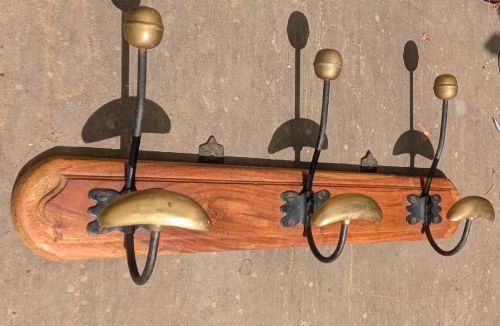
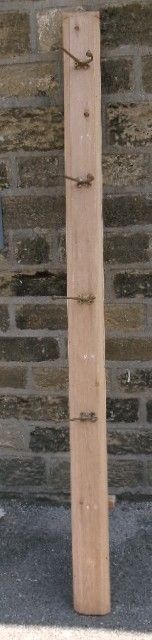
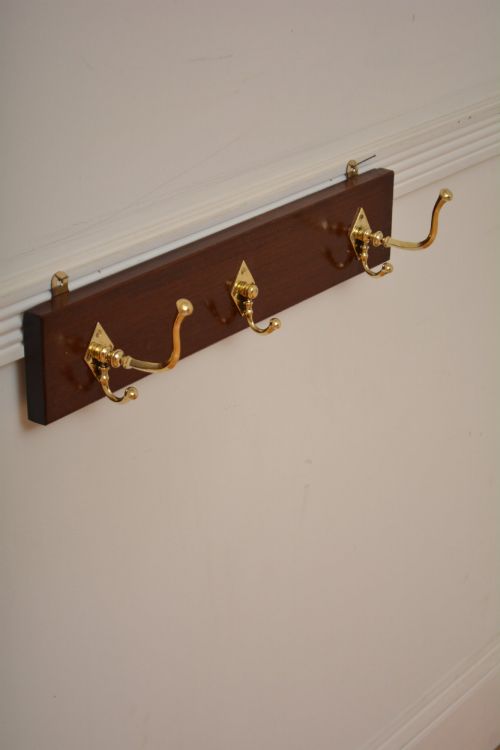
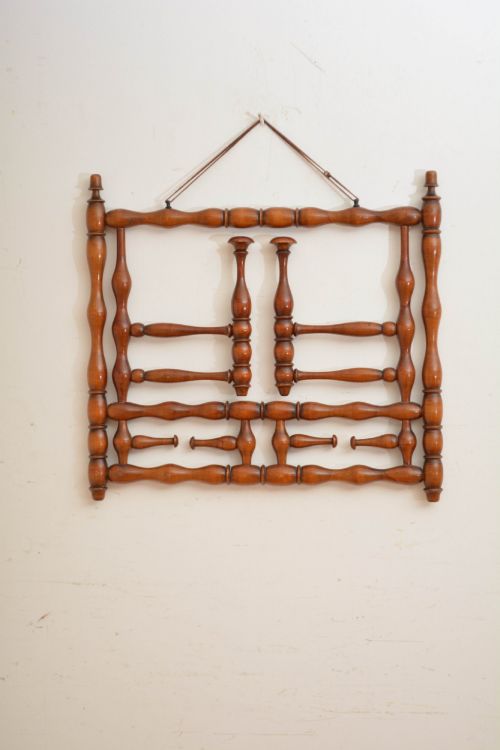
A wooden coat hanger wall unit serves as a practical fixture for domestic entryways and hallways, designed to hold outerwear and hats close to an entrance. These wall-mounted pieces combine backboards of various timbers with functional hooks cast from brass, iron, or fitted with ceramic elements.
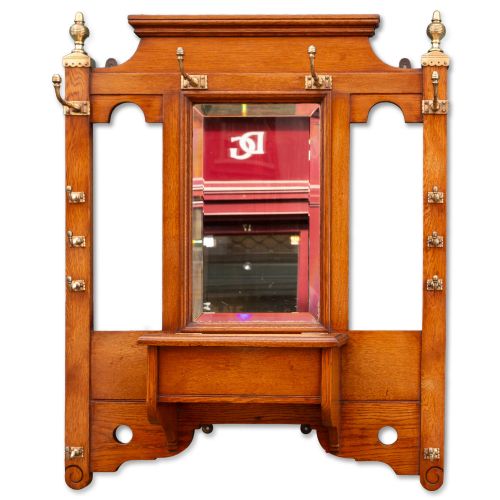
The selections available span periods from the nineteenth century through the early twentieth century, encompassing Victorian, Edwardian, and Art Deco eras alongside continental European examples. Forms range from simple timber backboards fitted with double brass hooks to elaborate arrangements featuring integrated hat shelves and taxidermy mounts.
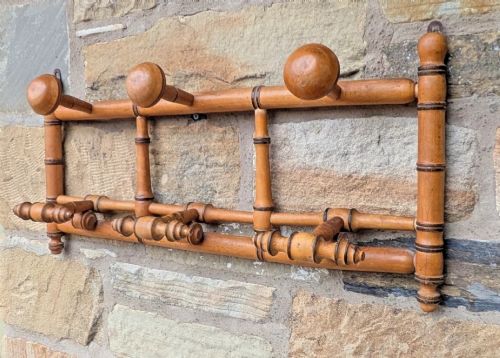
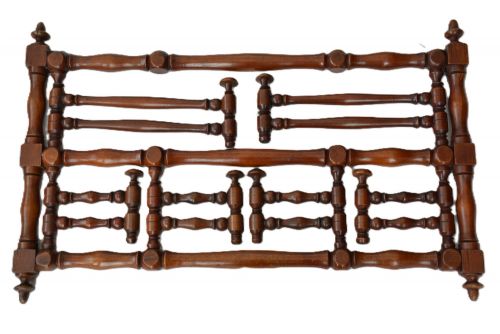
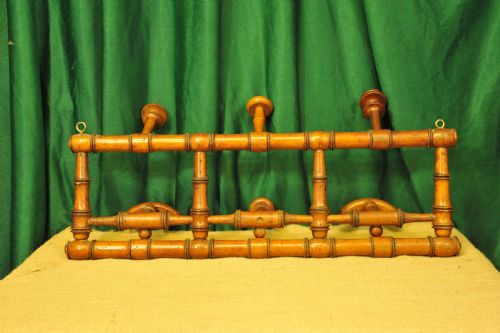
Buyers will encounter regional variations including French provincial faux bamboo styles and British golden oak or mahogany designs. These pieces function directly as wall racks and coat hooks, providing both utility and period decorative appeal.
How they were made
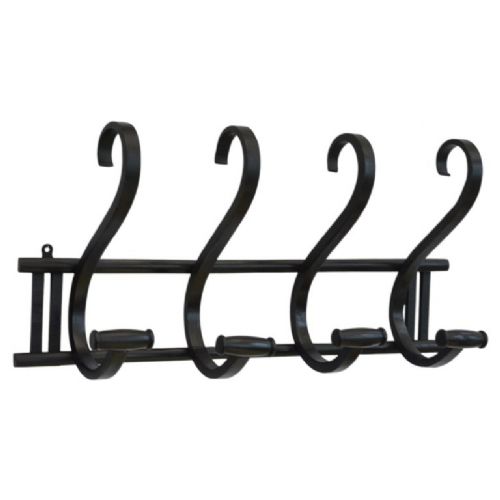
Construction relies upon durable timbers such as oak, pine, mahogany, beech, and ebonised bentwood, shaped into solid backboards or steamed into curved forms. Artisans also produced simulated bamboo finishes by carving wooden shafts to mimic natural cane joints.
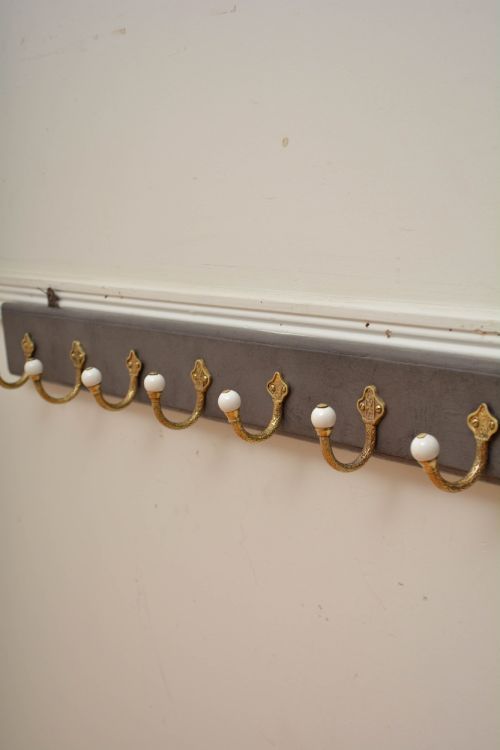
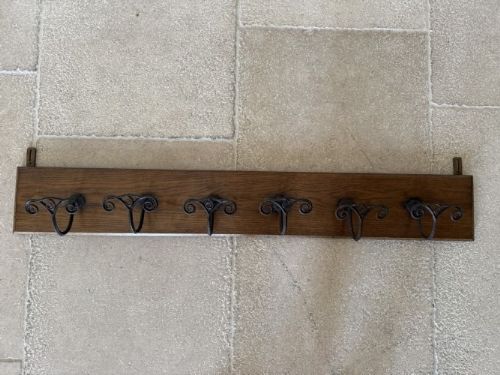
Metalworking techniques produced robust hooks from cast brass and wrought iron, frequently secured directly to the wooden foundations with screws. Selected pieces incorporate glazed ceramic inserts or glass details within the hook assemblies for added visual contrast.
Listings incorporate items spanning the nineteenth century through the Art Deco period, utilising oak, pine, mahogany, beech, and brass.
What varies in quality
Quality diverges significantly in the selection of timber and the substance of the mounting boards, moving from basic pine planks to richly grained golden oak and figured mahogany. Superior examples display careful joinery and substantial backboards capable of supporting heavy garments.
The refinement of the hardware distinguishes finer pieces, particularly where hooks are cast in heavy brass with intricate moulding or paired with ceramic terminals. Lesser items utilise simpler iron or thin brass stampings attached to plain wooden strips.
The Wooden Coat Hanger Wall Glossary
- Backboard
- The horizontal or vertical wooden plank that secures to the wall and anchors the individual coat hooks.
- Bentwood
- Wood that has been heated and bent into curved shapes, commonly utilised in early twentieth-century hall fixtures.
- Faux bamboo
- A decorative technique where wood is carved and painted to resemble natural bamboo stems, popular in late nineteenth and early twentieth-century French pieces.
- Hat and coat stand
- A wall-mounted rack that combines lower hooks for coats with an upper shelf or rack specifically designated for hats.
Wooden Coat Hanger Wall: Frequently Asked Questions
How do I mount a wooden coat rack securely?
These wall-mounted fixtures require direct attachment to wall studs or the use of appropriate cavity fixings to support the weight of heavy winter garments.
Ensuring the mounting screws match the weight capacity of the backboard prevents the fixture from pulling away from the wall under load.
What periods do these wall racks come from?
The listings encompass items produced during the Victorian and late Victorian eras, alongside twentieth-century examples up to the Art Deco period.
Stylistic cues such as golden oak construction or faux bamboo turning help indicate the specific period of manufacture.
Can these racks be used in small hallways?
Their wall-mounted design makes them well suited for narrow corridors and compact entryways where floor space is limited.
Selecting a rack with folding or fewer hooks helps manage bulk in restricted areas while still providing adequate hanging space.
What materials were used for the hooks?
Makers utilised cast brass, wrought iron, and occasionally ceramic or glass elements to form the functional hanging points.
These metals were screwed directly into the wooden backboards, providing durable anchor points for garments and hats.