


Hallway Hat Rack Mirror
A hallway hat rack mirror organises an entrance hall with a combination of glass, timber and hooks for daily use.
Hallway Hat Rack Mirror
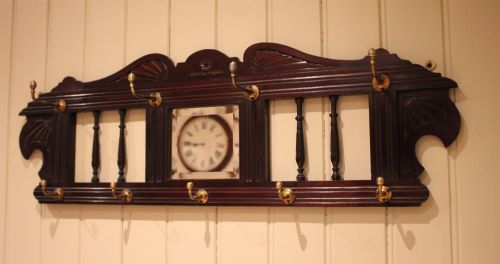
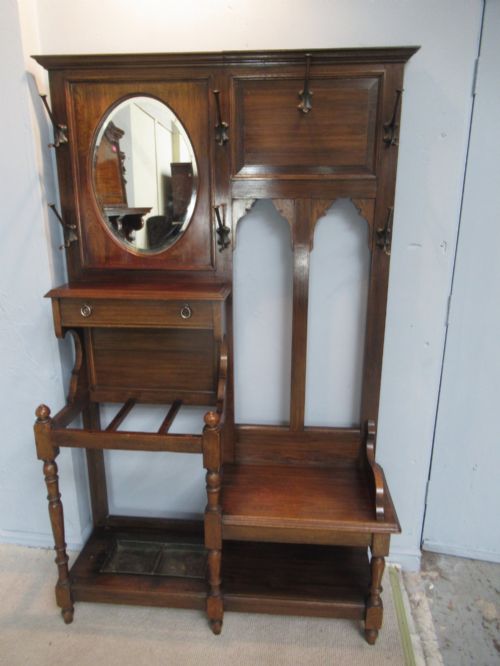
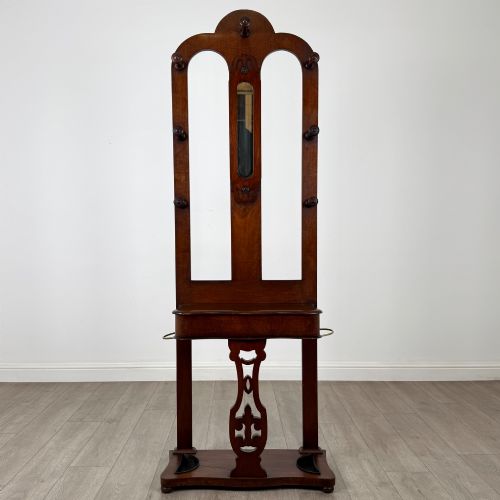
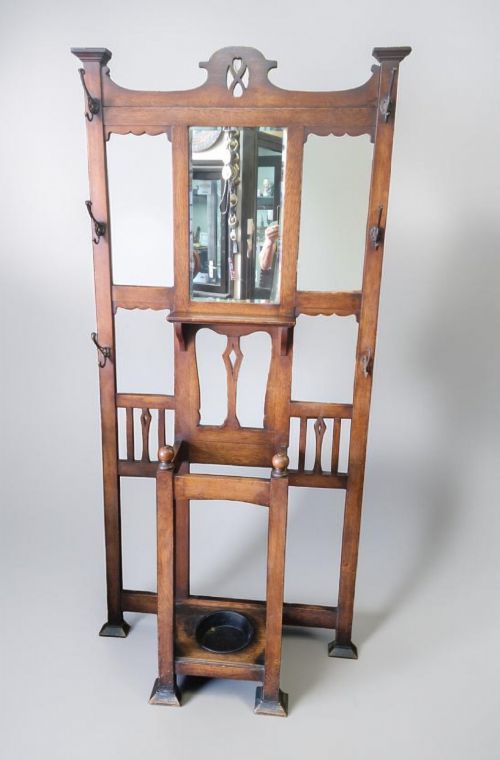
A hallway hat rack mirror combines a central looking glass with timber framework, brass or cast iron hooks, and compartments for hats and coats. You will frequently encounter large freestanding hall stands in oak or mahogany alongside compact wall-mounted mirrors fitted with coat hooks.
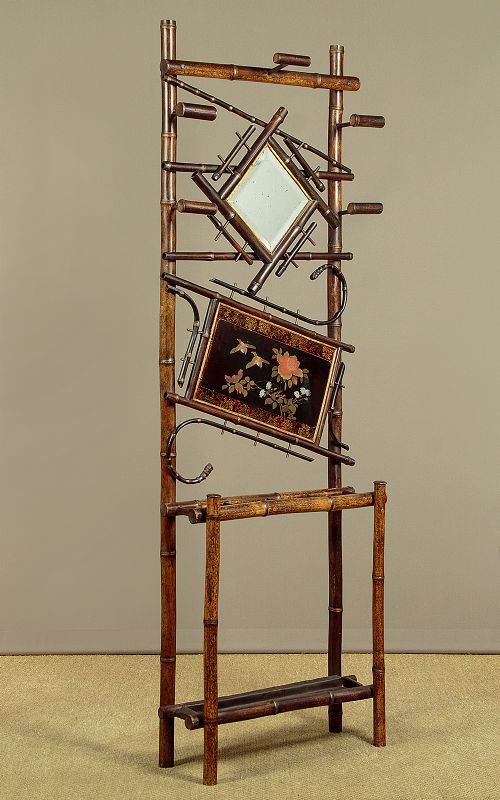
The pieces span the Victorian and Edwardian eras through to the 1920s, drawing upon stylistic influences such as Art Nouveau, the Aesthetic Movement, Arts and Crafts and Dutch Revival. Freestanding versions often incorporate umbrella wells, marble shelves and backplates carved with foliage or geometric motifs.
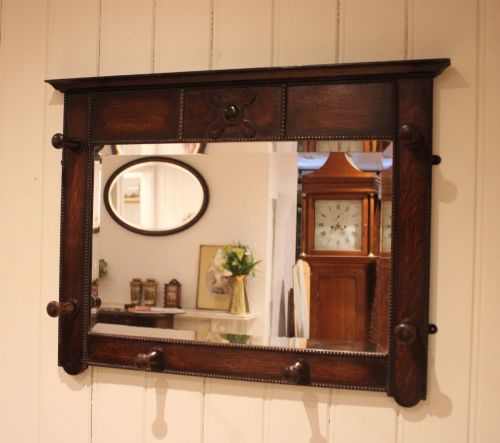
Wall-hung variations focus on a bevelled mirror plate flanked by metal hooks, offering a practical solution for narrower entryways. Smaller examples utilise bamboo or bentwood to achieve a lighter silhouette suited to domestic hallways.
Materials and construction methods
Construction relies heavily on durable hardwoods like oak and mahogany, shaped through traditional joinery and deep carving. Many examples incorporate cast iron or brass hooks screwed directly into the timber frame, alongside inset marble shelves designed to catch moisture from walking sticks and umbrellas.
Glass plates feature deep bevelling, reflecting light into dark entrance passages. Alternative materials such as bamboo, bentwood and wrought iron appear in specific designs, particularly within the later 1900 and Art Nouveau pieces.
Listings feature oak, mahogany, bamboo and cast iron across Victorian, Edwardian and Art Nouveau periods.
Distinctions in craftsmanship and design
Quality rests on the depth of the timber carving, the selection of figured mahogany or quarter-sawn oak, and the structural integrity of the frame. Superior examples display integrated marble shelves, heavy bevelled mirror plates, and robust brass or cast iron hardware rather than plated replacements.
Simpler wall-mounted coat racks and smaller bamboo or bentwood stands rely on the neatness of their joinery and the original condition of the glass and hooks to command attention.
Fischel
The Hallway Hat Rack Mirror Glossary
- Bevelled plate
- A mirror glass with an angled edge ground down around the perimeter. This catches light and adds depth to the reflection.
- Hall stand
- A composite piece of furniture for an entrance hall combining a mirror, coat hooks, a hat shelf, and often stick stands with a drip tray.
- Quarter-sawn oak
- Timber cut radially from the log, producing a distinctive grain pattern known as medullary rays. It resists warping in high-traffic hallways.
- Aesthetic Movement
- A late 19th-century design style focusing on visual beauty over narrative, often seen in bamboo and ebonised hallway furnishings.
- Bentwood
- Wood steamed until pliable and bent into curved shapes, used by makers like Fischel to create lightweight hallway frames.
Hallway Hat Rack Mirror: Frequently Asked Questions
What is a hallway hat rack mirror?
It is a functional entrance hall furnishing that combines a looking glass with hooks for hats and coats. Many versions also incorporate umbrella stands and small shelves.
These pieces were designed to greet visitors and provide a final place to check appearance before stepping outside.
How do I distinguish Victorian from Edwardian pieces?
Victorian examples generally feature heavier carved timber, darker mahogany or oak, and ornate architectural details. Edwardian pieces often appear lighter in scale, sometimes utilising simpler lines or inlaid decoration.
Both periods embraced practical hall furniture, but the turn of the century brought softer stylistic touches.
Where should I place a wall mirror with coat hooks?
These compact units suit narrow hallways or porches where floor space is limited. They provide a practical spot for everyday coats and a mirror for quick adjustments.
Ensure the wall fixings are secured firmly to support the weight of heavy winter garments.
What materials are common in these stands?
Oak and mahogany dominate the structural frames, often paired with brass or cast iron hooks. Marble shelves and drip trays appear on larger hall stands to handle damp weather.
Alternative materials like bamboo and bentwood also feature in lighter aesthetic and continental designs.