
Wooden Clothes Cabinet
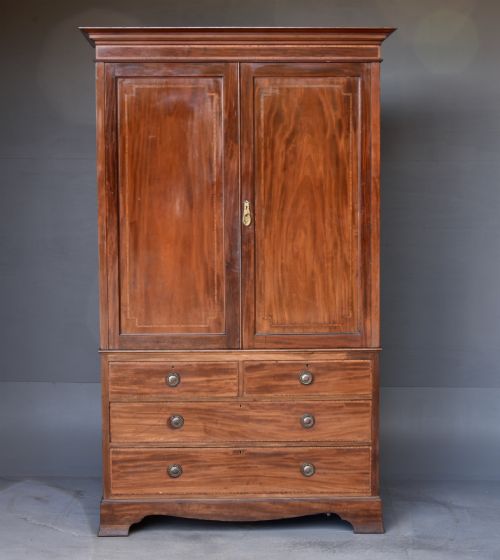
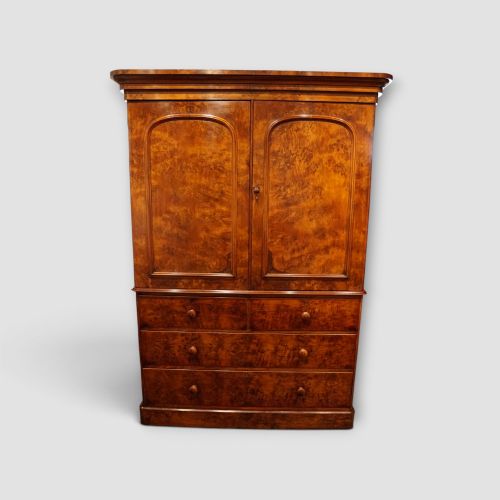
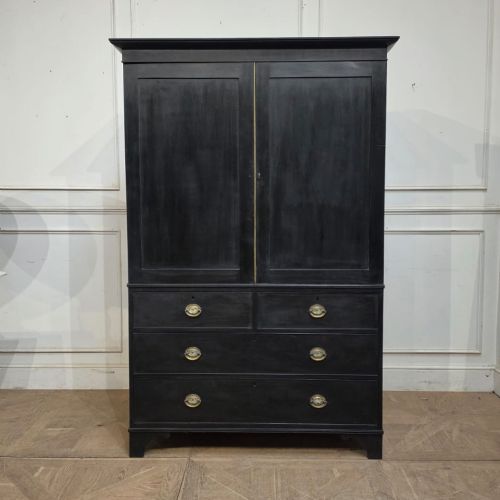
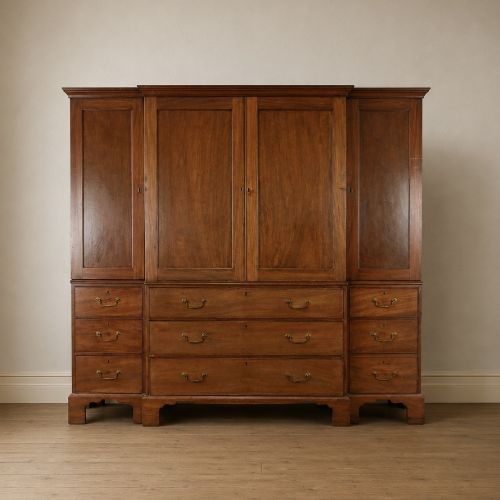
These wooden clothes cabinet listings bring together centuries of storage, from Georgian mahogany linen presses to Edwardian compactums.
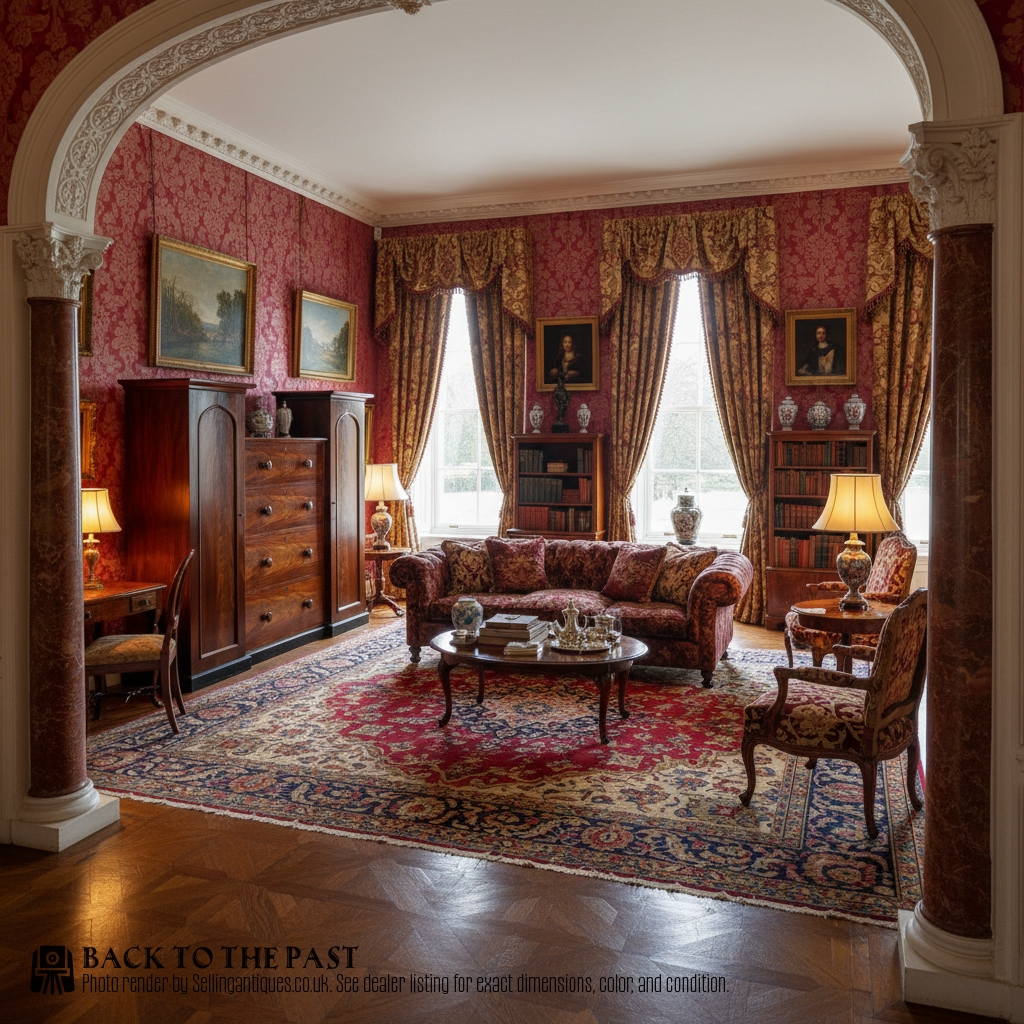
Wooden Clothes Cabinet
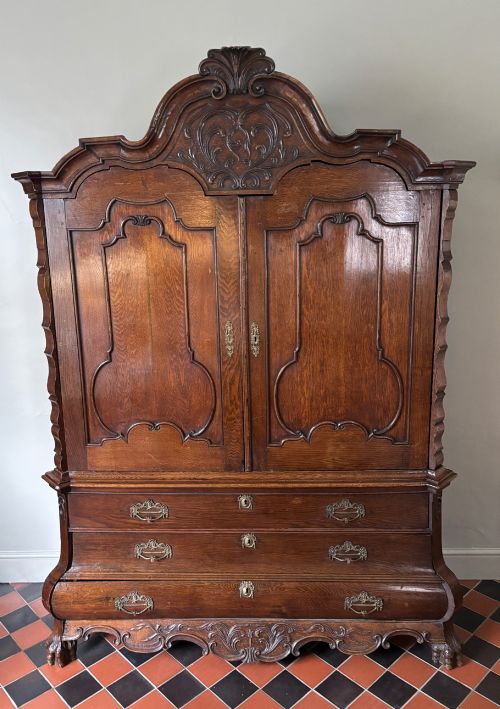
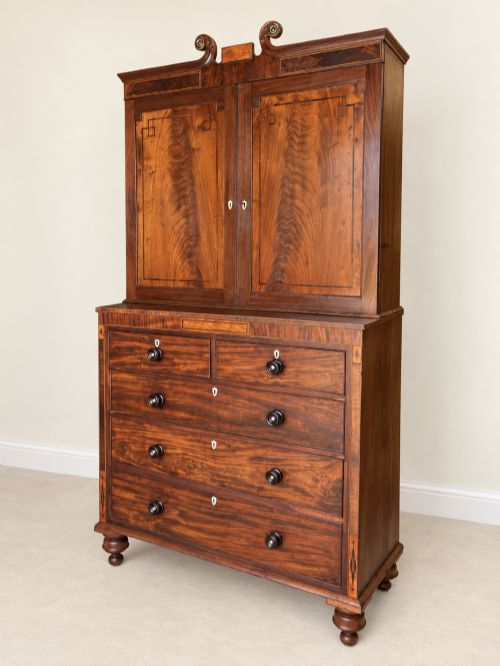
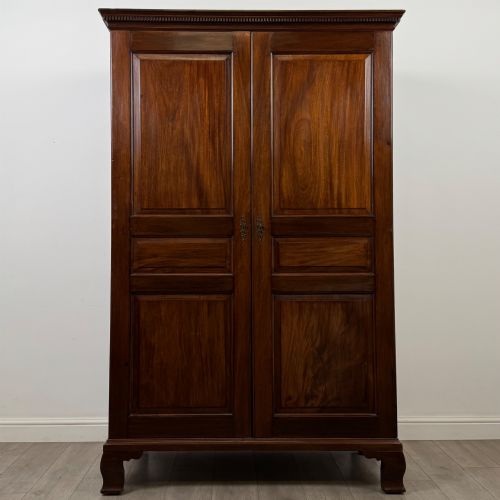
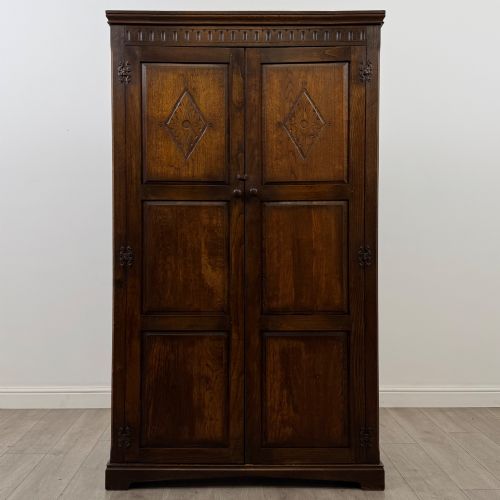
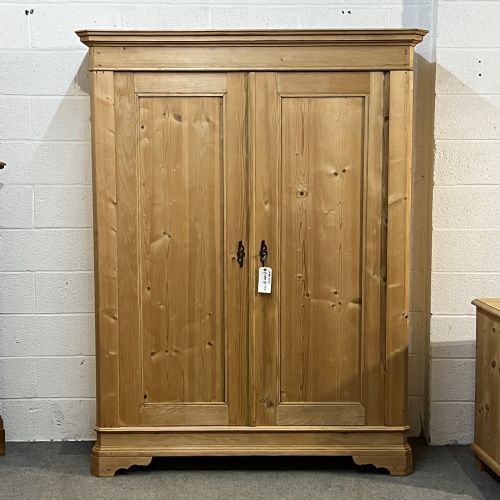
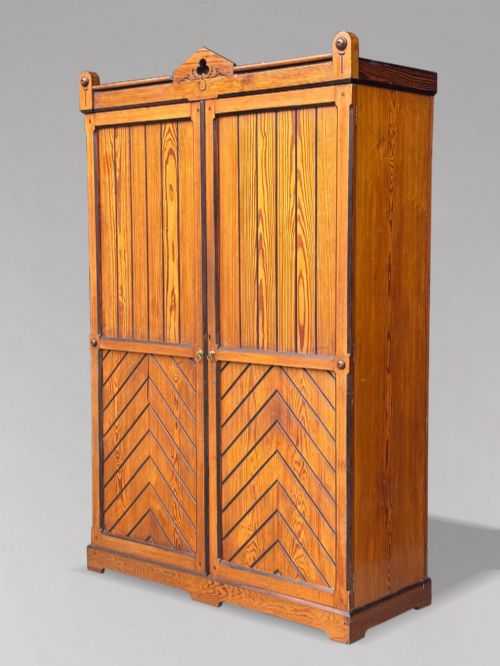
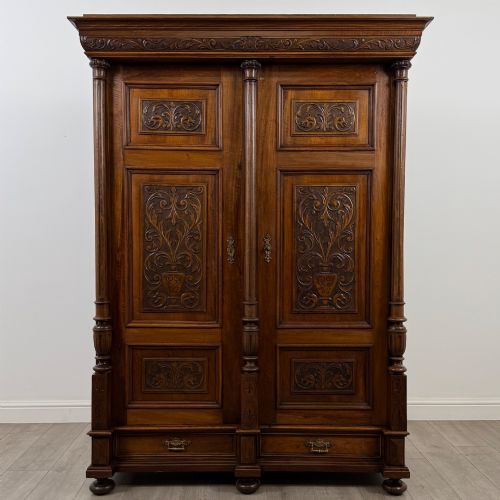
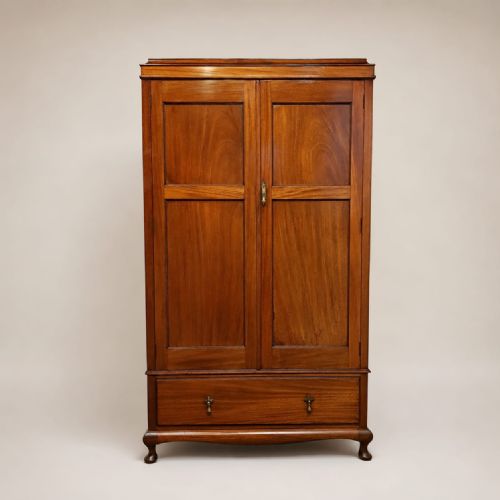
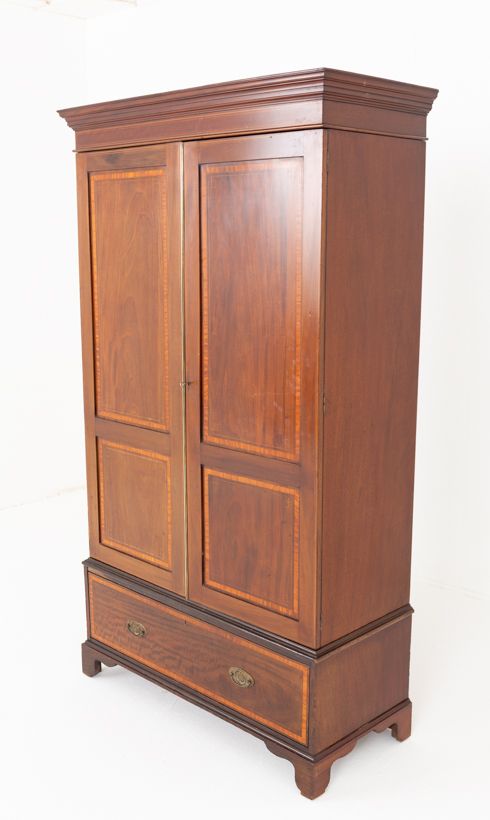
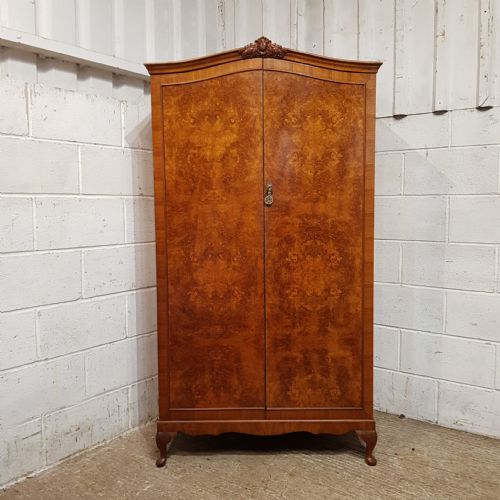
A wooden clothes cabinet serves to store garments and linens across bedrooms and halls. The pieces on this page span the 18th, 19th, and early 20th centuries, taking forms such as wardrobes, linen presses, armoires, and tallboys.
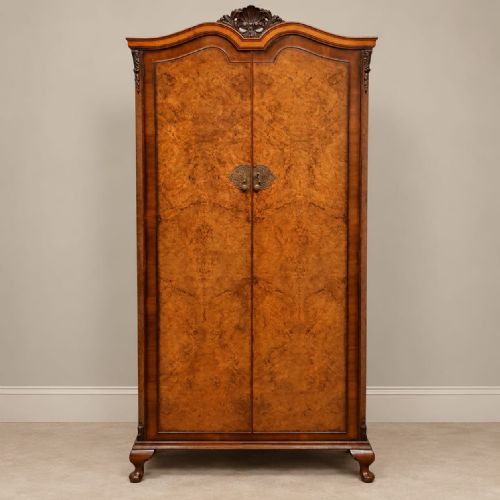
Mahogany and oak predominate, alongside walnut, burr walnut, pine, and satinwood. Buyers encounter regional British pieces alongside French provincial, continental, and Japanese examples.
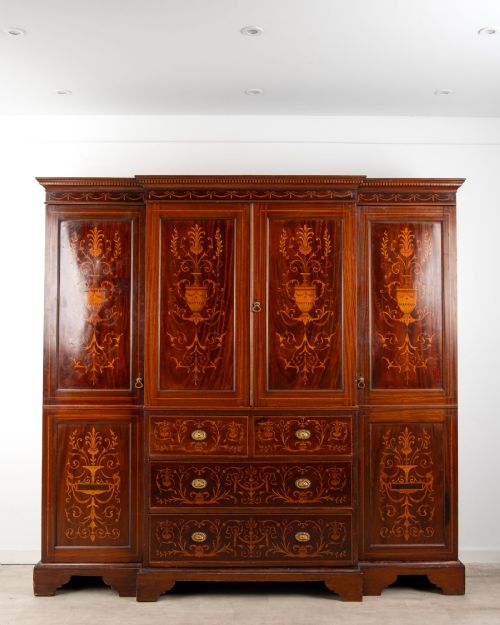
The selection ranges from large breakfront George III presses to Edwardian inlaid wardrobes and Art Deco double cabinets. Each variant reflects the domestic storage needs of its period.
Materials and Construction
Cabinet makers utilised dense hardwoods like mahogany, oak, and walnut, often applying burr walnut or satinwood veneers for decorative effect. Pine served frequently for carcases and larger provincial wardrobes.
Joinery methods combined traditional panel construction with hand-cut dovetails for internal drawers. Brass and iron hardware, including hinges, handles, and locks, secured doors and fitted interiors.
Some nineteenth century tallboys still smell faintly of lavender and cedar left behind by Georgian linen keepers.
Gradations in Quality
Quality depends upon the selection of timber and the precision of the cabinet work. Highly figured veneers, intricate marquetry inlay, and carved detail distinguish finer pieces from plain utility carcases.
The integrity of internal fittings, such as original sliding trays in linen presses or fitted compactum compartments, separates standard examples from superior survivals.
maples & co·Heals
The Wooden Clothes Cabinet Glossary
- Linen Press
- A dual-purpose storage piece comprising upper sliding trays enclosed by doors and lower drawers for folded garments.
- Compactum
- A fitted wardrobe divided internally to accommodate hanging spaces, drawers, and shelving within a single footprint.
- Tallboy
- A vertical storage cabinet stacking a chest of drawers upon a further chest or cupboard base.
- Armoire
- A large standing cupboard of continental European origin used primarily for hanging clothes.
- Marquetry
- Decorative veneer work forming pictorial or geometric patterns using diverse wood timbers.
Wooden Clothes Cabinet: Frequently Asked Questions
What is a linen press?
A linen press is a traditional storage unit featuring upper cupboard doors that enclose sliding wooden trays, originally used for flat linens. The lower section typically incorporates a chest of drawers for additional clothing.
These pieces evolved to bridge the gap between linen storage and wardrobe hanging space as domestic fashions changed.
How do I distinguish a compactum?
A compactum is a multi-functional wardrobe designed to maximise internal storage by combining hanging space, shelves, and drawers in one unit. They frequently date from the Edwardian period or the early twentieth century.
Opening the doors reveals a compartmentalised interior tailored for various garments rather than a single hanging rail.
What woods were commonly used?
Mahogany and oak form the backbone of these cabinets, particularly across the Georgian and Victorian eras. Walnut, burr walnut, and pine also appear frequently in regional and continental pieces.
Cabinet makers selected these timbers for durability and rich grain patterns, often enhancing them with contrasting inlay.
How should I care for timber cabinets?
Keep wooden cabinets away from direct heat sources and fluctuating humidity to prevent timber movement and veneer lifting. Regular dusting with a dry, soft cloth preserves the polished finish.
Occasional waxing maintains the moisture balance in antique hardwoods without building up heavy chemical residues.