

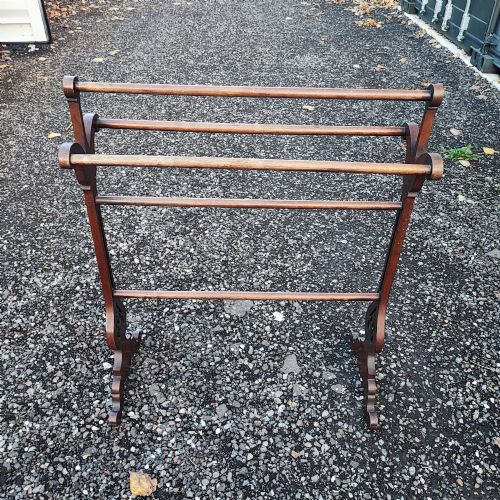
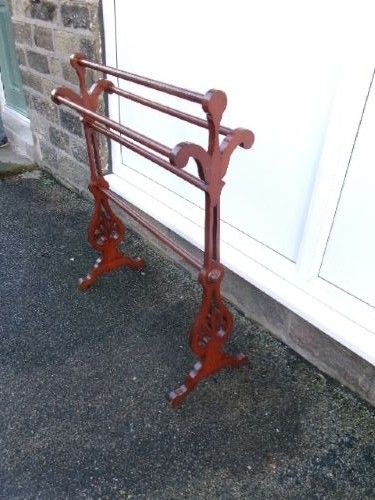
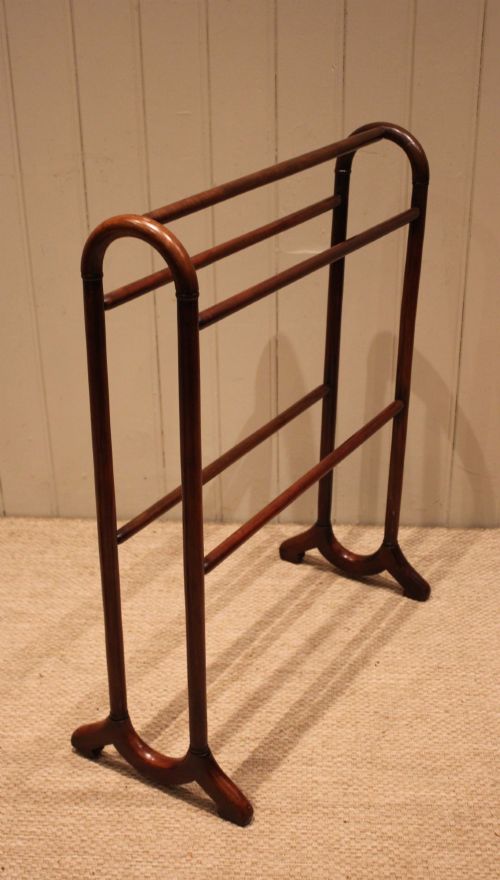
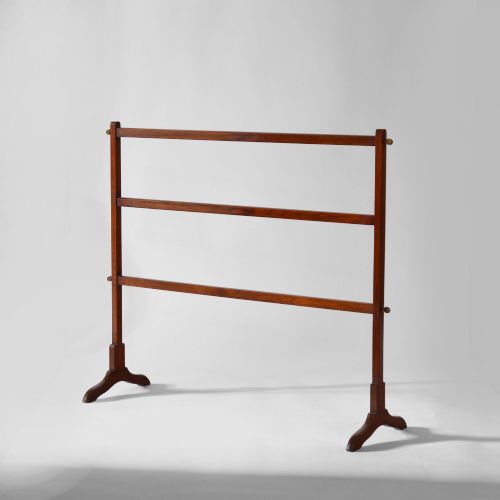
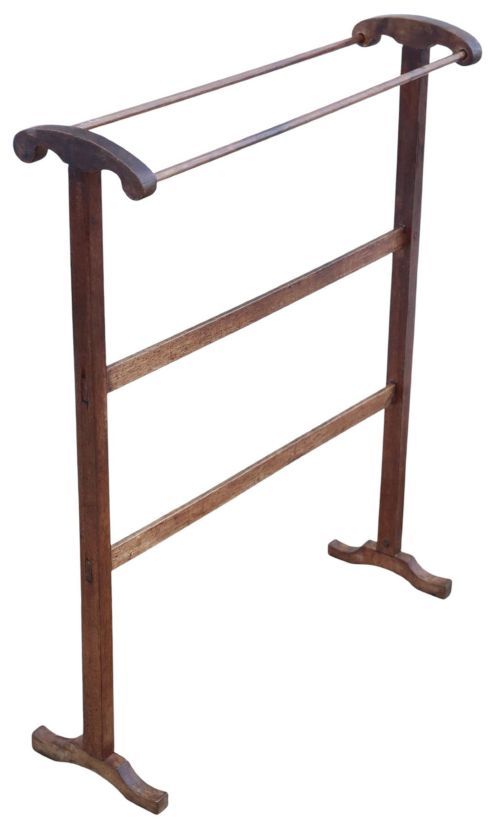
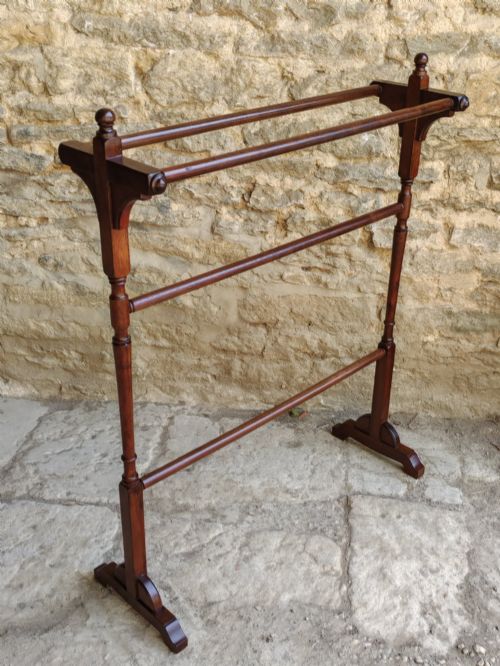
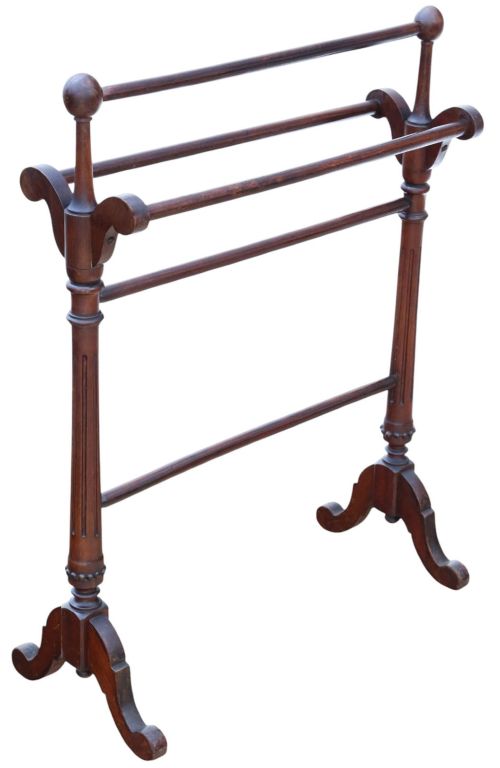
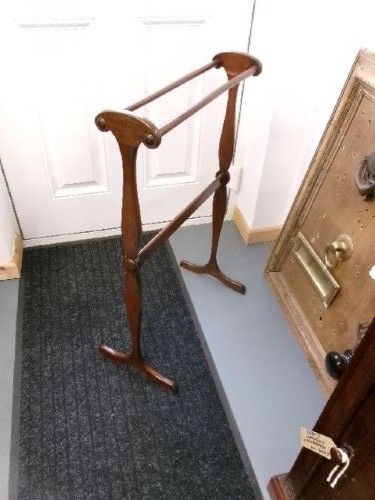

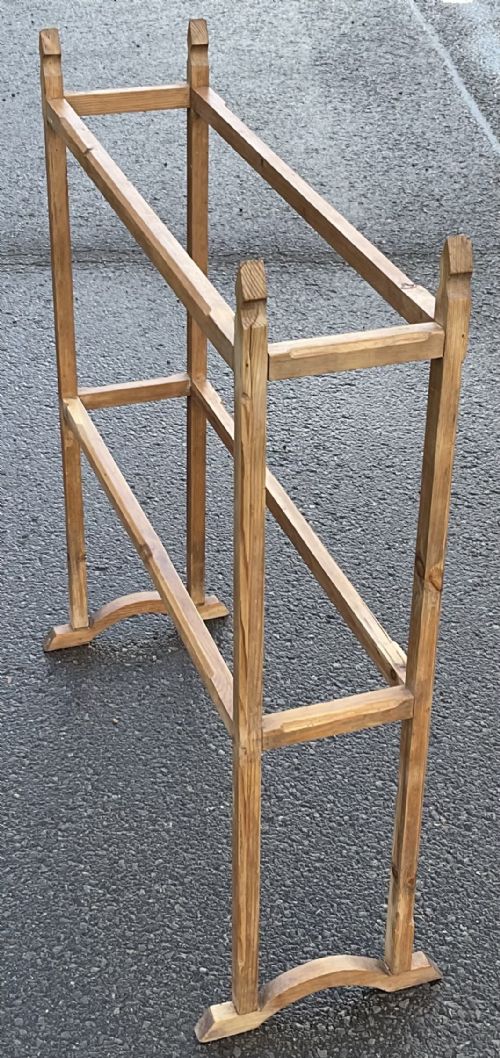


Wooden Clothes Airer
These wooden clothes airer pieces are functional laundry stands and rails built from mahogany, oak, and pine to dry textiles with period character.
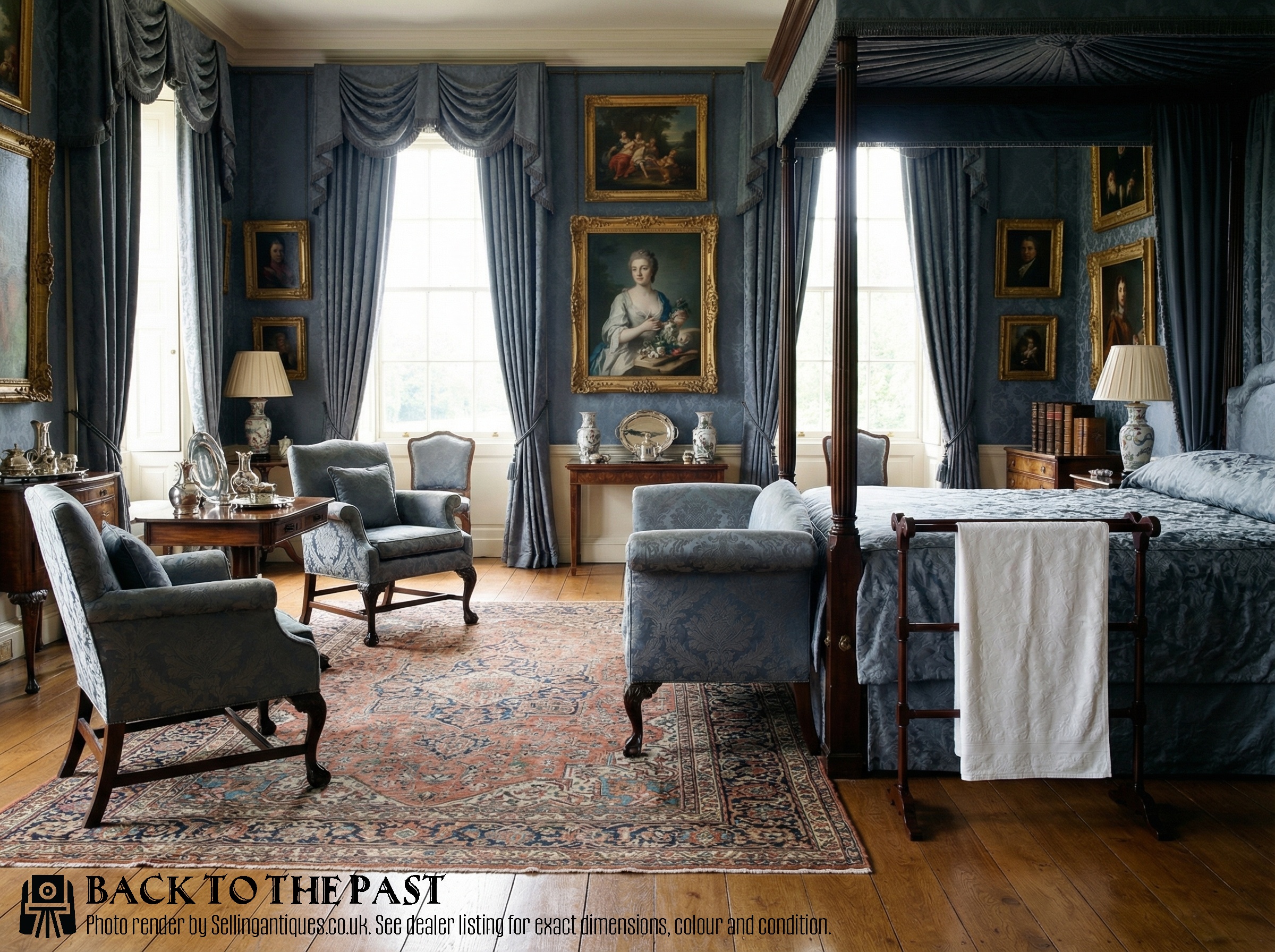
Wooden Clothes Airer
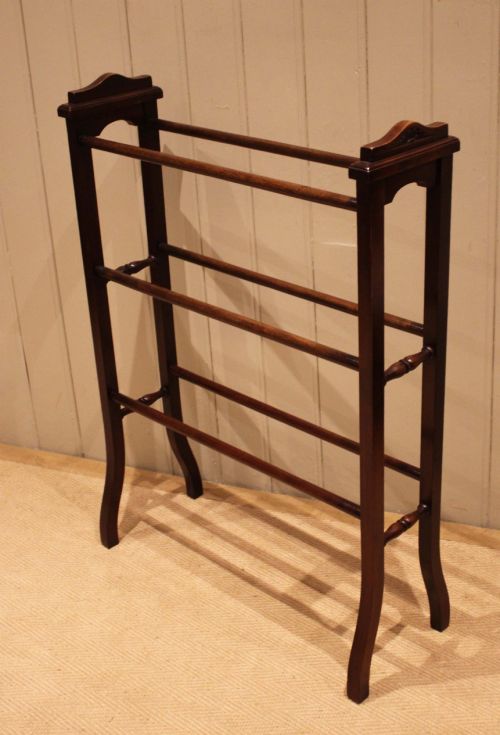
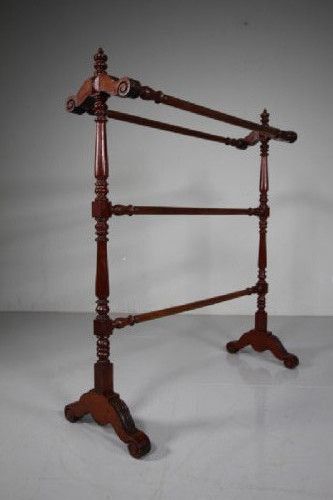
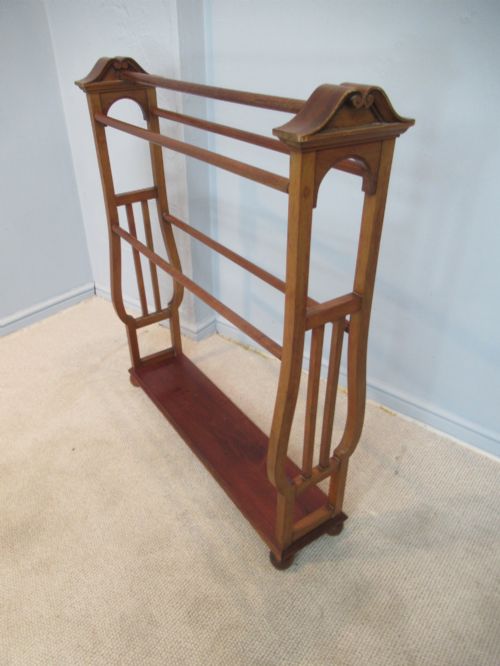
A wooden clothes airer primarily takes the form of a freestanding or wall-mounted towel rail stand designed for domestic utility. The selection spans the nineteenth century through the Edwardian period, incorporating Regency, Victorian, and Arts and Crafts examples alongside rustic farmhouse styles.
The most common version met on this page is the standing mahogany towel rail, often built with multiple rails or folding sections. Pieces range from large oversized William IV designs to small Victorian rails and wall-mounted airers, alongside occasional kitchen racks.
Materials and construction
Cabinetmakers utilised dense hardwoods like mahogany, walnut, and oak for durability, alongside pine for traditional country house furniture. Finer examples incorporate satinwood inlay, brass fittings, or ebonised wood finishes to elevate the appearance of the rack.
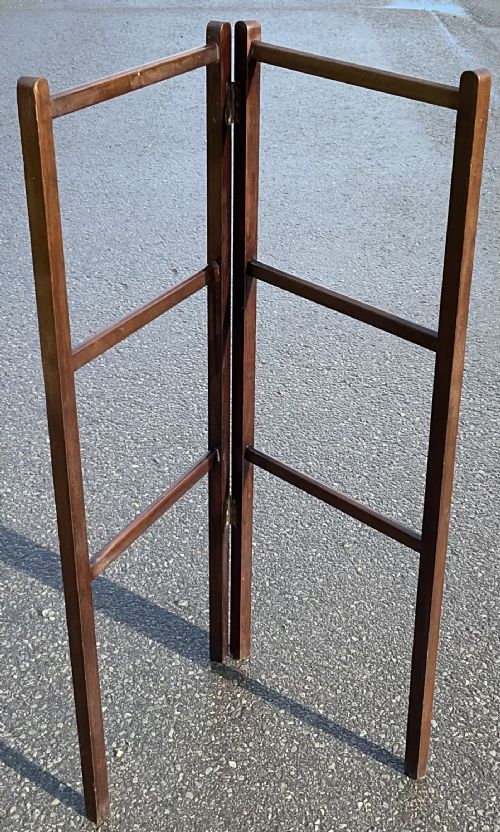
Construction methods include folding cheval frames and multi-bar configurations joined to support hanging textiles safely. Joinery reflects the period of manufacture, from Regency proportions to Edwardian standing and wall-mounted formats.
Wooden Clothes Airer Retail Price Guide 2026
Typical asking prices for wooden clothes airer among the pieces listed under this phrase on Sellingantiques today, from the lower quarter to the upper quarter. They describe what is for sale here now, not the wider market.
The listings span periods from Regency and William IV through Victorian, Arts and Crafts, and Edwardian eras.
Evaluating the craftsmanship
Quality rests in the selection of timber and the sophistication of the carpentry, such as inlaid satinwood details or robust five-bar frames. Generous proportions and substantial scale distinguish imposing pieces from standard domestic utilities.
Design ambition separates basic pine or hardwood stands from Gothic Revival or Arts and Crafts pieces with distinct regional or stylistic character. The integration of brass elements and ebonised surfaces further indicates a finer workshop origin.
The Wooden Clothes Airer Glossary
- Cheval rail
- A standing frame designed to swing or fold, allowing multiple rails to angle outward for drying laundry.
- Ebonised wood
- Timber treated to imitate ebony, creating a dark, uniform surface seen on late nineteenth-century stands.
- Satinwood inlay
- Contrasting decorative wood inserted into the primary mahogany or walnut body to form geometric or linear patterns.
- Regency
- A style period spanning the early nineteenth century, noted for architectural restraint and generous proportions.
Wooden Clothes Airer: Frequently Asked Questions
How were wooden clothes airers used?
These pieces served domestically for drying and airing laundry near a heat source or within utility spaces.
Their folding frames and multiple bars allowed garments and household linens to hang flat or drape efficiently.
Where should I place a wooden clothes airer?
Freestanding towel rails fit naturally into bathrooms, laundry rooms, or bedrooms as functional display furniture.
Wall-mounted airers suit compact kitchens or utility areas where floor space remains limited.
How do I date a wooden clothes airer?
Dating relies on timber choices, stylistic details, and construction methods characteristic of specific eras.
Mahogany and Regency proportions point to the early nineteenth century, while ebonised finishes and satinwood inlay align with Victorian and Edwardian periods.
Are these airers strong enough for daily use?
Solid hardwood construction in mahogany, oak, and walnut provides sturdy support for hanging textiles and garments.
Careful handling of older folding joints ensures these historical stands continue to function in a modern home.