






Wooden Church Chairs
These wooden church chairs bring solemn architecture and sturdy vernacular utility into domestic rooms.
Wooden Church Chairs
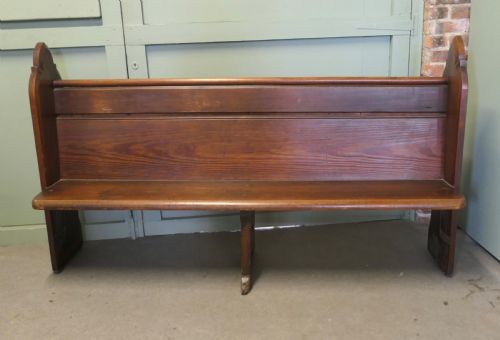
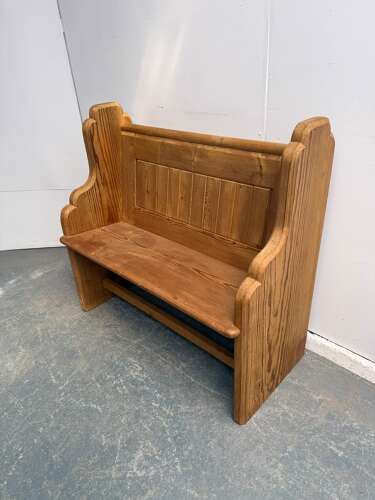
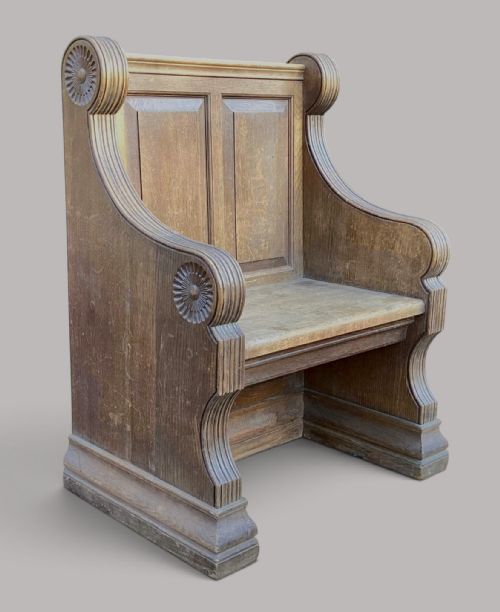
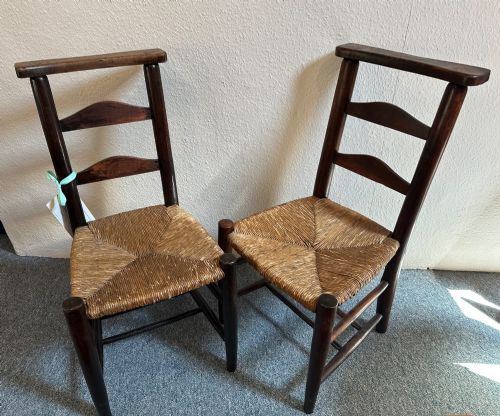
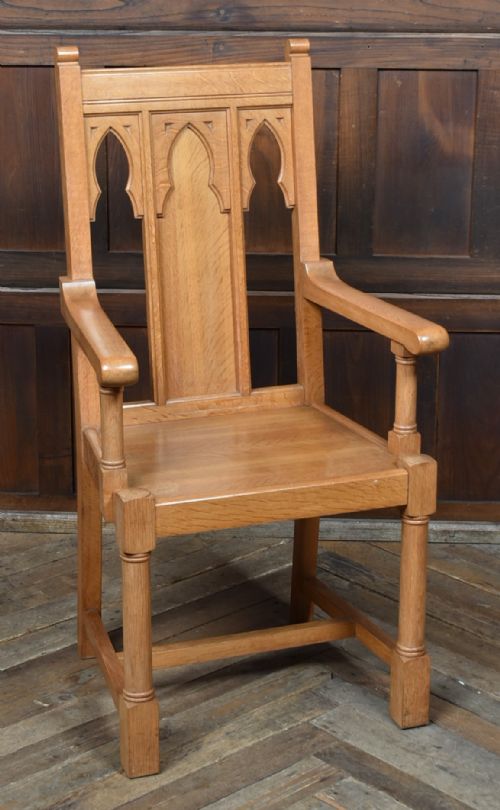
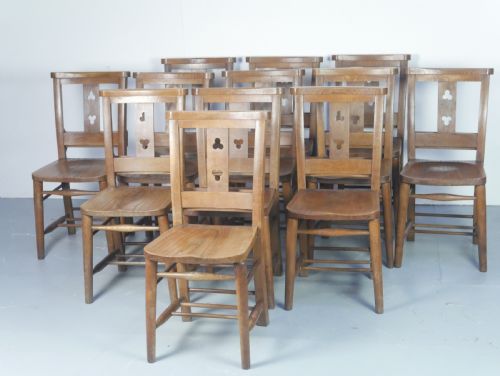
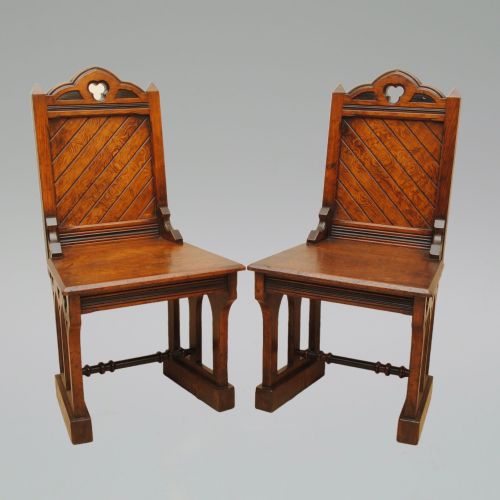
When you search for wooden church chairs, you encounter seating designed for ecclesiastical spaces, ranging from single prayer kneelers to substantial pews and throne armchairs. The pieces seen here span the nineteenth and early twentieth centuries, encompassing Victorian, Edwardian, and Arts and Crafts movements.
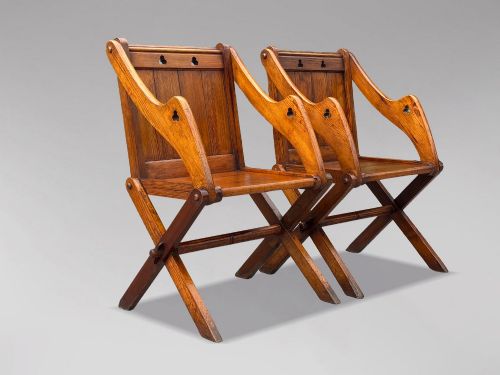
Most examples originate from religious contexts like chapels and cathedrals, often constructed with high backs and architectural silhouettes. Forms vary widely from side chairs and hall benches to specialised Glastonbury armchairs and box settles with storage.
Makers adapted Gothic Revival principles for communal worship, producing robust seating in oak, pitch pine, and elm. These designs translate easily into modern hallways, dining spaces, and studies where a severe, upright posture is desired.
How they were made
Makers relied primarily on dense timbers such as oak, pitch pine, and elm to withstand heavy ecclesiastical use. These woods were frequently finished with simple wax applications that highlighted the natural grain and structural joinery.
Construction techniques often mirrored architectural building methods, utilising pegged mortise and tenon joints for maximum stability. Secondary materials like brass and rush appear occasionally for hardware or seating pads.
Wooden Church Chairs Retail Price Guide 2026
Typical asking prices for wooden church chairs among the pieces listed under this phrase on Sellingantiques today, from the lower quarter to the upper quarter. They describe what is for sale here now, not the wider market.
The documented forms include Glastonbury armchairs, box settles with storage, Prie Dieu prayer chairs, and institutional pews.
What varies in quality
Quality rests upon the architectural ambition of the design, distinguishing standard utilitarian pews from bespoke throne chairs made for specific cathedrals. Examples bearing direct institutional provenance or marked ownership carry greater historical weight.
The choice of timber and the crispness of Gothic detailing separate ordinary production from superior workshop output. Well-figured oak and carefully patinated pitch pine display a richer surface presence than utilitarian softwood variants.
The Wooden Church Chairs Glossary
- Gothic Revival
- An architectural and decorative style drawing inspiration from medieval forms, featuring pointed arches and vertical emphasis. This aesthetic dominates nineteenth-century ecclesiastical furnishings.
- Glastonbury Chair
- A distinctive type of ecclesiastical armchair with an X-framed base and sloping arms, based on an ancient monastic relic. It is frequently encountered in oak or pitch pine.
- Prie Dieu
- A devotional prayer chair featuring a low seat and an upper shelf designed for kneeling and leaning during worship. They often retain velvet upholstery.
- Box Settle
- A high-backed wooden bench incorporating a concealed storage compartment beneath the seat. These practical forms suited drafty church porches and domestic hallways alike.
Wooden Church Chairs: Frequently Asked Questions
Where should I place a church chair?
These seats suit narrow hallways, boot rooms, and dining tables where their upright backs create a strong silhouette. Their architectural lines also anchor empty corners in living spaces.
Pairing a larger bench with a plain wooden table mimics monastic refectory arrangements while offering practical seating capacity.
How do I care for pitch pine?
Pitch pine responds well to occasional applications of traditional beeswax, which nourishes the timber and maintains a soft sheen. Avoid placing these pieces near direct heat sources to prevent the wood from splitting.
Regular dusting with a dry cloth keeps the wax finish intact without stripping the accumulated patina of decades.
Are these chairs comfortable for daily use?
Ecclesiastical seating was originally built for upright posture during services rather than lounging. Many examples feature solid wooden seats that benefit from loose squabs or cushions for prolonged sitting.
Armchairs and models with angled backs offer a slightly more relaxed seating position than rigid side chairs.
How can I tell Victorian from Edwardian pieces?
Victorian examples tend to display heavier proportions and robust Gothic Revival ornamentation with deep relief carving. Edwardian pieces often exhibit lighter scaling influenced by Arts and Crafts simplicity.
Examining the construction marks and timber colour helps clarify the approximate decade of production.