


Wooden Cherub Sculpture
A wooden cherub sculpture brings celestial warmth into a room through centuries of hand-carved expression.
Wooden Cherub Sculpture
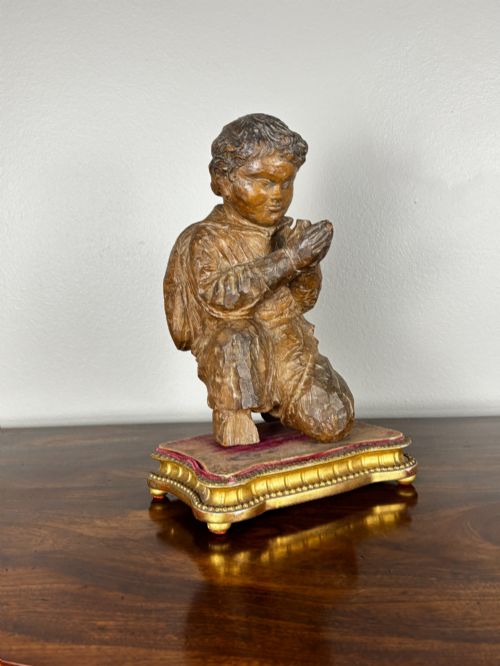
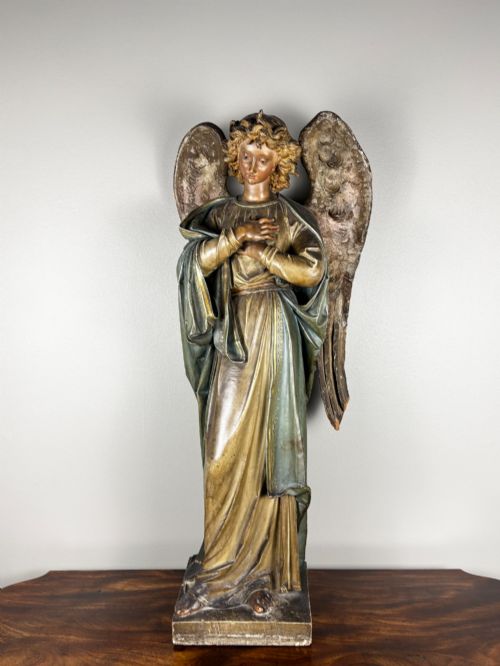
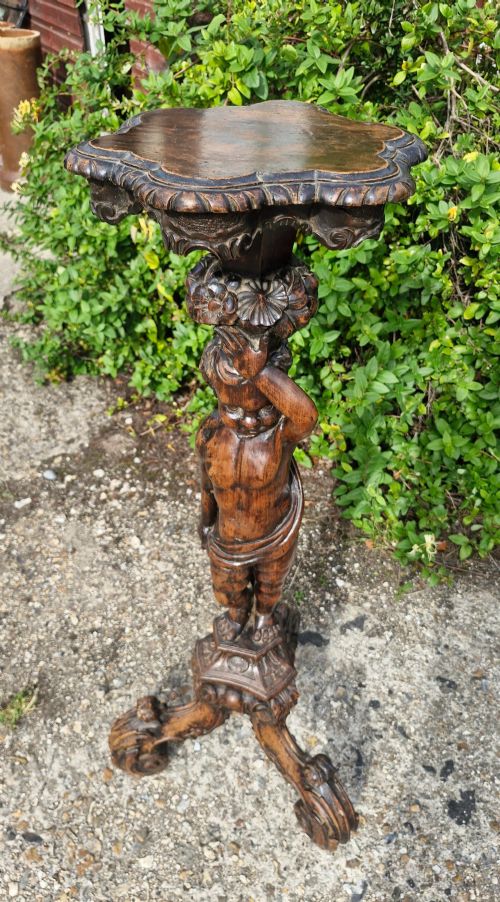
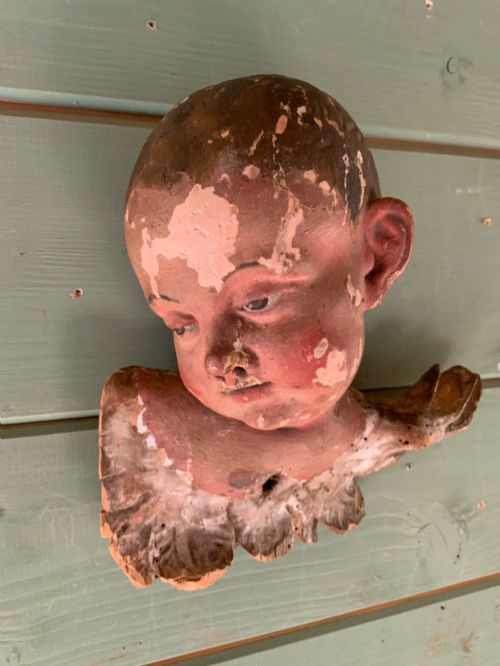
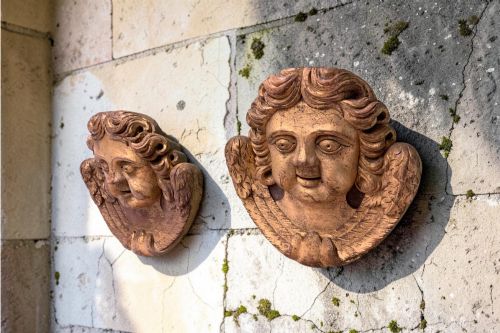
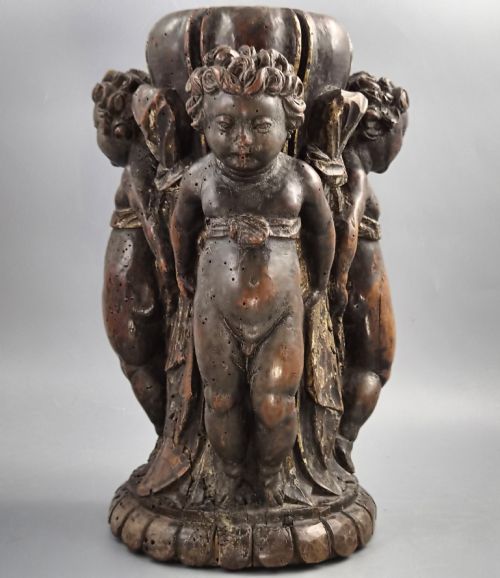
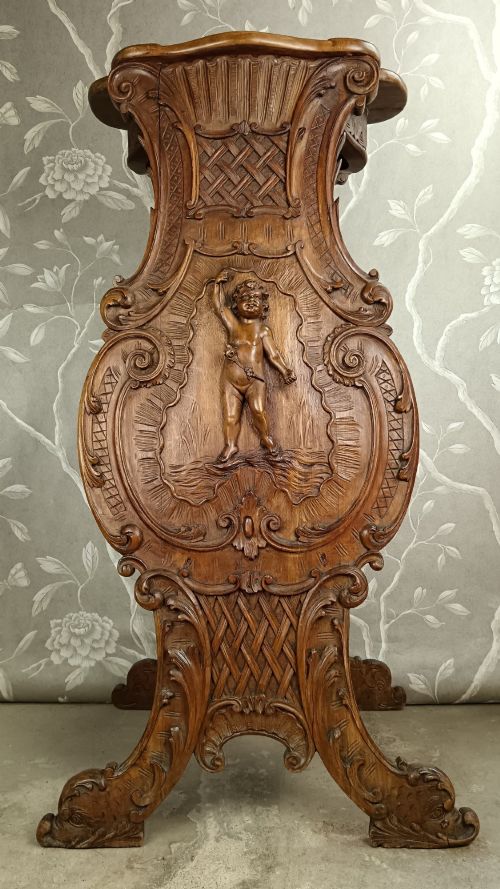
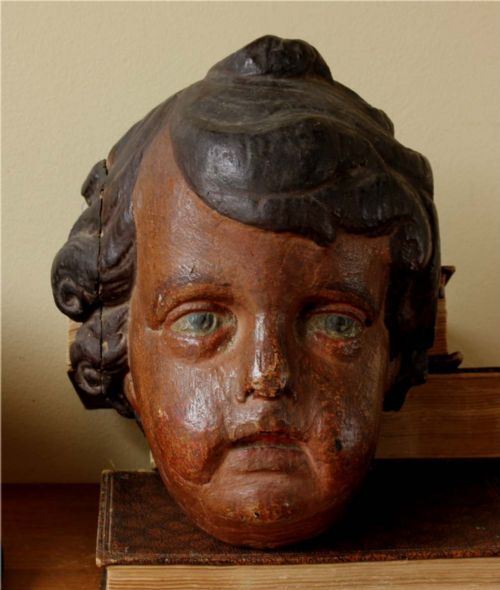
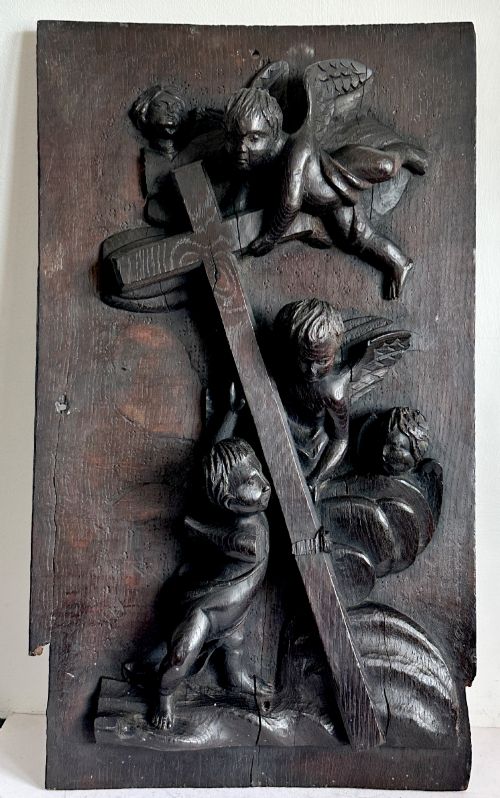
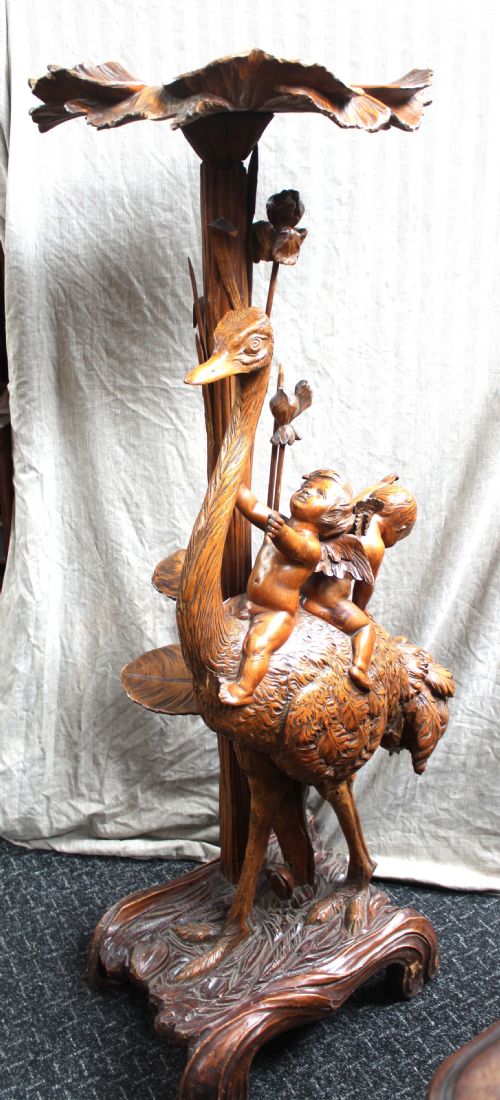
A wooden cherub sculpture represents carved figures of putti, angels, and cherubic heads originating mostly from the seventeenth, eighteenth, and nineteenth centuries. These pieces appear as standalone statues, wall panels, architectural salvage, and torchiere bases created across European workshops.
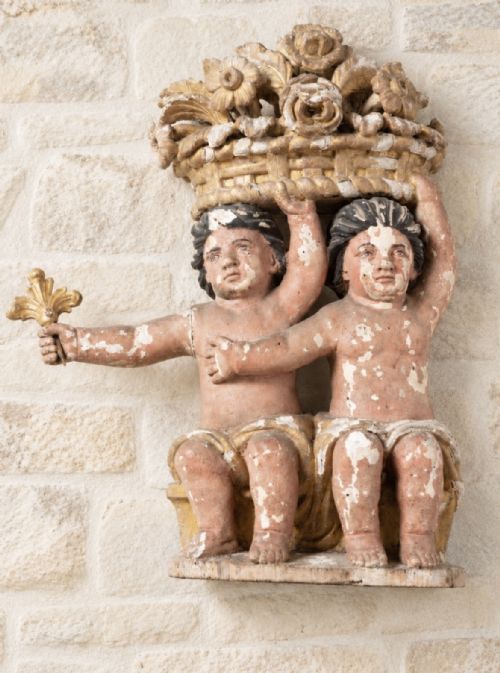
The version most commonly met on this page is the Italian or French Baroque carved walnut, limewood, or oak figure. Many take the form of wall reliefs or pairs of kneeling angels once intended for ecclesiastical settings.
Judgements of quality
Quality rests primarily on the anatomical confidence and fluidity of the carving, distinguishing master workshops from regional trades. Strong pieces show deep undercut wings and expressive movement rather than stiff, shallow relief.
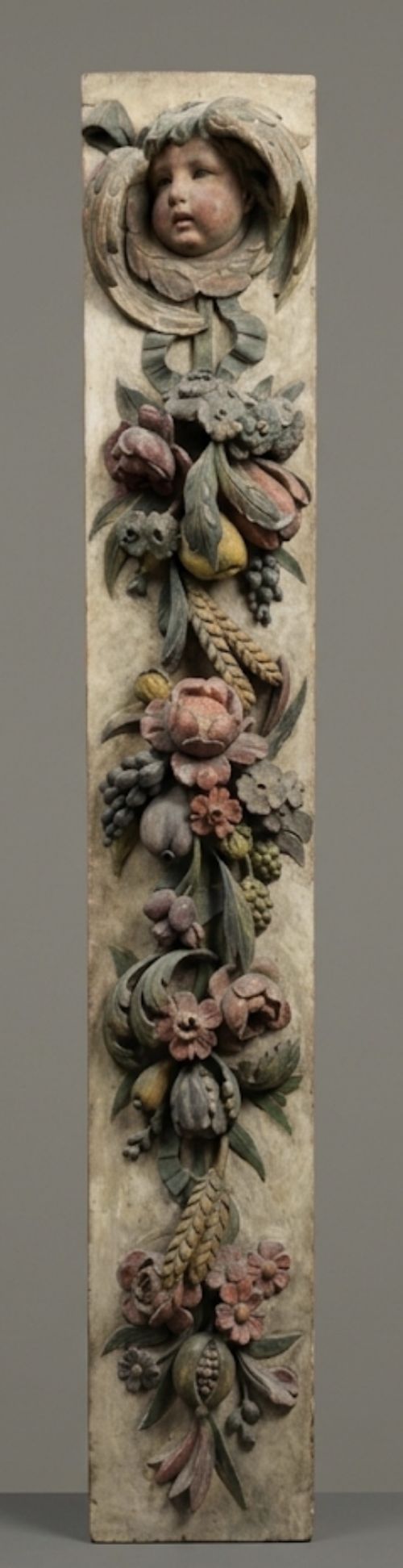
The integrity of the original surface finish defines the upper tier of examples. Retained historic polychrome or gold leaf layers that have mellowed naturally carry greater aesthetic weight than stripped or heavily repainted surfaces.
Several angels appear to gaze sideways as though distracted during eternal devotions.
Edward Pearce
The Wooden Cherub Sculpture Glossary
- Putto
- A plump, often winged male infant figure frequently found in classical and religious art. These figures populate Baroque sculpture and architectural ornamentation.
- Polychrome
- The practice of decorating architectural elements, sculpture, or pottery in a variety of colours. Historic pieces often use oil-based paints applied over a gesso ground.
- Gesso
- A white paint mixture consisting of a binder mixed with chalk, gypsum, or pigment. It provides a smooth preparation surface for gilding and painting on wood.
- Torchiere
- A tall ornamental stand designed to hold a light or candle. Bases frequently feature carved figures or putti supporting the central shaft.
- Architectural salvage
- Building elements rescued from demolition or alteration for reuse. These items range from overdoor panels to complete church carvings.
Wooden Cherub Sculpture: Frequently Asked Questions
Where were these sculptures originally displayed?
Many of these pieces originated in European churches, chapels, and grand domestic interiors. They decorated altarpieces, overdoors, torchiere stands, and wood-panelled walls.
Over time, architectural elements migrated into private collections and residential spaces. Today they function as mantelpiece ornaments, wall reliefs, or freestanding decorative objects.
How do I care for antique carved wood?
Keep carved wooden figures away from direct heat sources and strong sunlight to prevent the timber from drying and splitting. Maintain a stable indoor humidity where possible.
Dust the surface gently with a dry, soft brush rather than a cloth that might snag on delicate carved details or flaking paint.
How do I identify the period of a carving?
Examine the tool marks left by the carver, as hand-gouged surfaces differ from later machine-tooled work. Wood species such as early oak or walnut also offer clues to the era.
Stylistic markers, such as the dramatic movement of Baroque designs or the revival aesthetics of the nineteenth century, help narrow down the date of execution.