

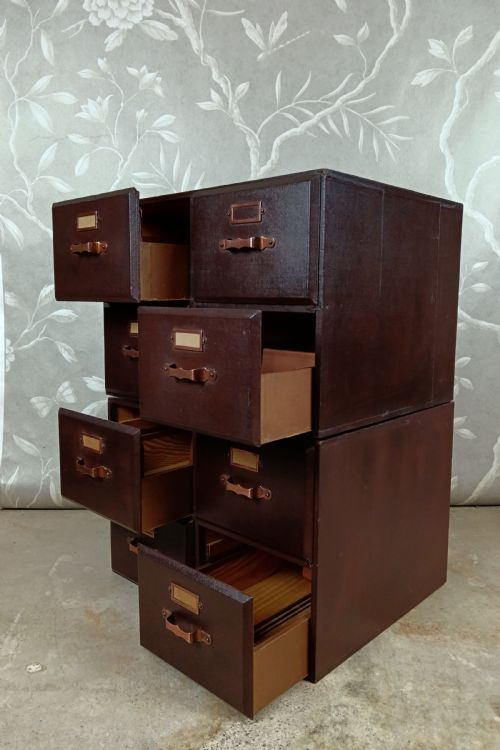


Wooden Card Index
A wooden card index organises past records with robust pull drawers designed for systematic filing.
Wooden Card Index
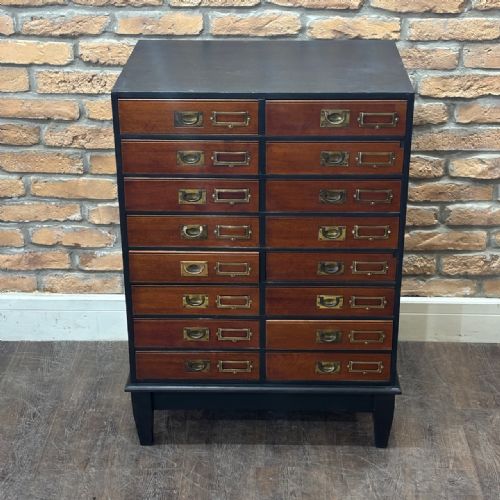
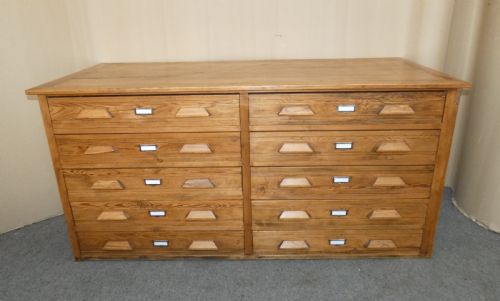
A wooden card index comprises multiple small drawers built to hold standard index cards or letters in commercial and office spaces. These practical units span filing cabinets, banks of drawers, and desktop filing drawers designed for systematic record-keeping.
You are most likely to meet oak and mahogany examples from the Edwardian period and early twentieth century. These pieces reflect commercial utility, featuring multi-drawer layouts intended for intense office use.
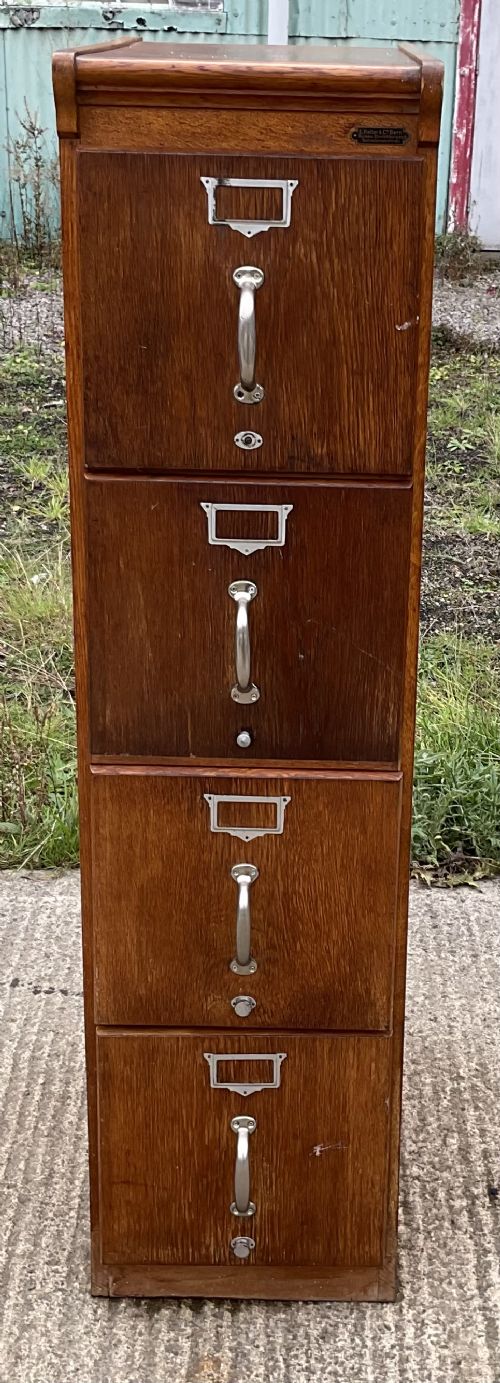
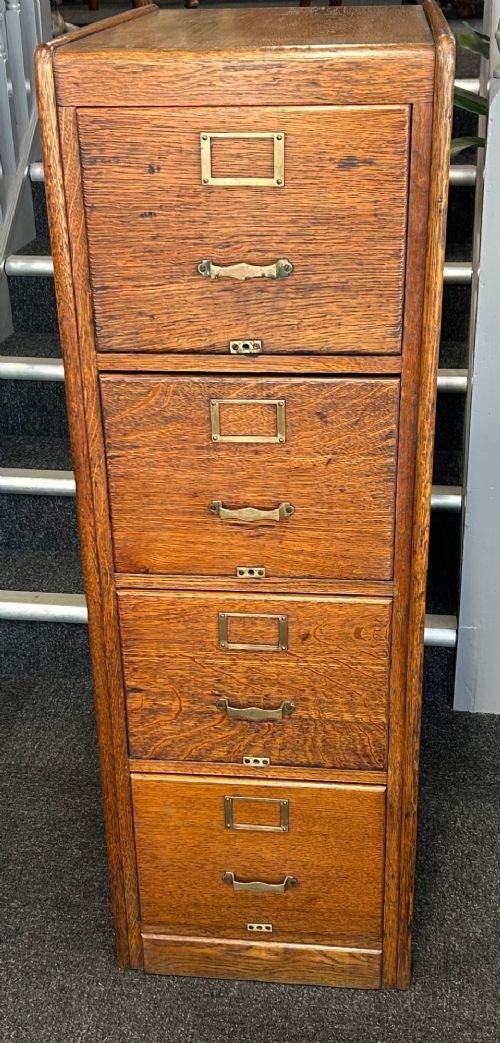
The selections include configurations such as vertical filing cabinets, library card filing sets, and patent letter files. Each piece demonstrates the functional design typical of early twentieth-century offices and archives.
Materials and construction
Construction relies heavily on timbers such as oak, mahogany, walnut, pine, and beech, chosen for durability in commercial settings. Cabinet makers paired these woods with brass hardware for handles, label holders, and locking mechanisms.
Techniques focus on sturdy joinery to withstand daily pulling and sliding of numerous small drawers. Pieces range from late Victorian examples to industrial utility designs from the mid-twentieth century.
Wooden Card Index Retail Price Guide 2026
Typical asking prices for wooden card index among the pieces listed under this phrase on Sellingantiques today, from the lower quarter to the upper quarter. They describe what is for sale here now, not the wider market.
One exceptional listing houses sixty-six drawers in a single office cabinet, providing an extraordinary puzzle of tiny compartments.
Judging quality in office furniture
Quality rests on the choice of hardwood and the complexity of the drawer configuration. Dense timbers like mahogany and oak generally indicate higher standard commercial production than plain pine.
Patent mechanisms, such as Amberg's systems, and original brass label holders elevate a piece above standard utility items. The scale of the bank, from compact desktop sets to massive sixty-six drawer cabinets, reflects the original commercial ambition.
Shannon·Amberg
The Wooden Card Index Glossary
- Vertical filing cabinet
- A tall piece of furniture designed to store documents upright in drawers rather than flat. These units maximise floor space in commercial offices.
- Patent letter file
- A specialised filing container incorporating a specific mechanical system for securing papers. Amberg produced notable examples of these patented designs.
- Bank of drawers
- A large assembly of numerous small drawers housed within a single wooden carcass. They provide extensive compartmentalised storage for cards or small items.
- Edwardian period
- The era spanning the reign of King Edward VII, noted in these listings for refined mahogany and oak office furniture. Pieces from this time often feature polished brass fixtures.
Wooden Card Index: Frequently Asked Questions
What is a wooden card index used for?
These cabinets were built to organise index cards, letters, and reference notes in offices, libraries, and commercial businesses. Their numerous small drawers allowed clerks to sort information alphabetically or numerically.
Today, they serve equally well for storing small craft items, jewellery, or stationery while adding industrial character to a room.
How do I date an antique wooden filing cabinet?
Dating relies on timber choice, hardware styles, and patent marks stamped into the brass fixtures. Edwardian pieces often utilise polished oak or mahogany with elaborate brass label pulls.
Later industrial utility pieces from the mid-twentieth century tend to use simpler pine or utilitarian metal and wood combinations without decorative moulding.
Are these cabinets suitable for modern paper sizes?
Many historical card indexes and library drawers were made for specific card dimensions rather than modern A4 paper. However, certain configurations like collectors' A4 cabinets accommodate standard contemporary sheets.
Buyers should check internal drawer dimensions carefully if intending to store modern office documents.
How do I care for a vintage wooden index?
Maintain the wood by applying natural beeswax periodically to nourish the grain and protect the surface from drying out. Avoid placing the cabinet in direct sunlight or near heat sources to prevent warping.
Keep brass hardware clean with a soft cloth without using harsh chemical abrasives that might damage the surrounding wood.