
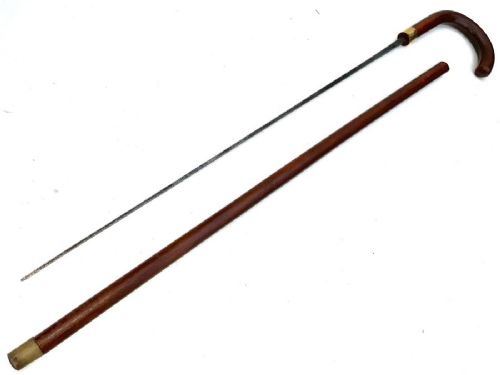
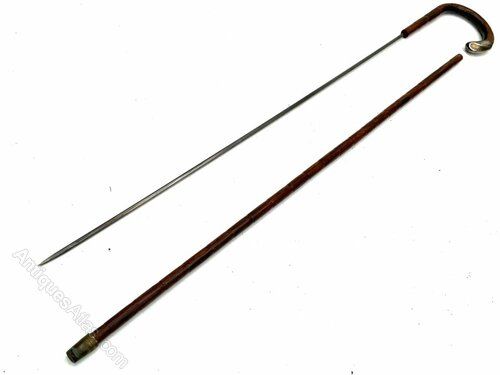
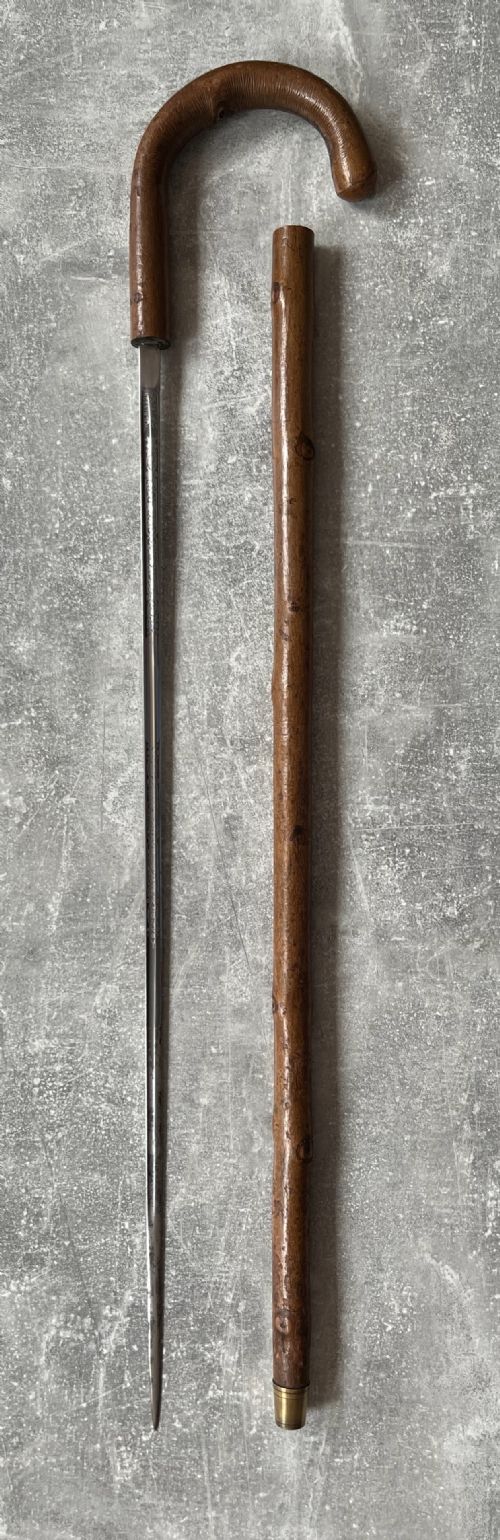
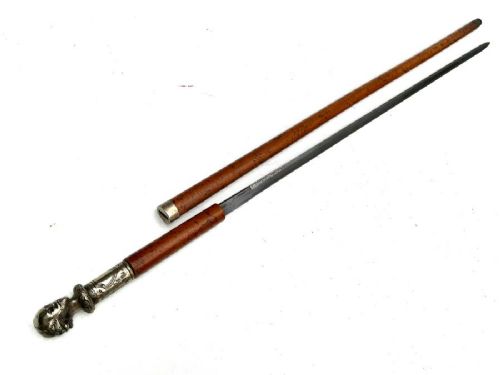
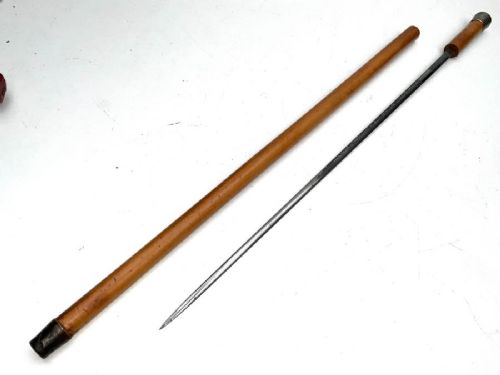
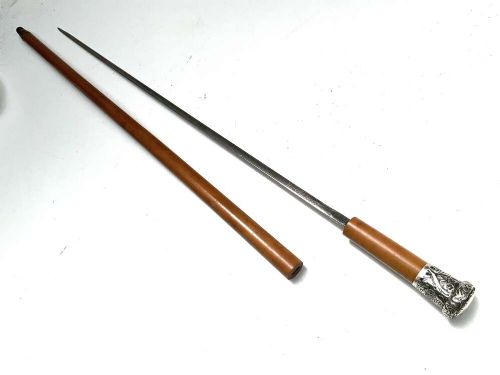
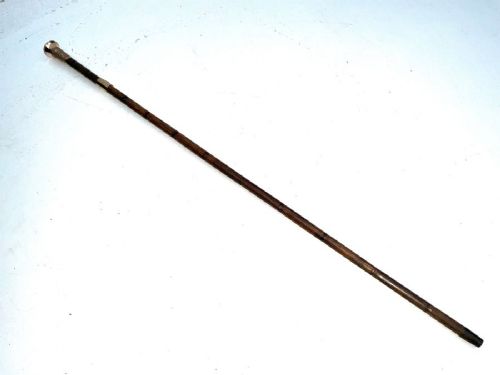


Wooden Cane with Blade
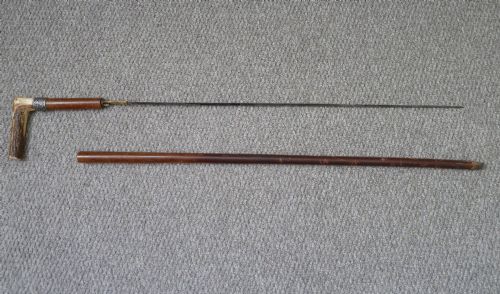
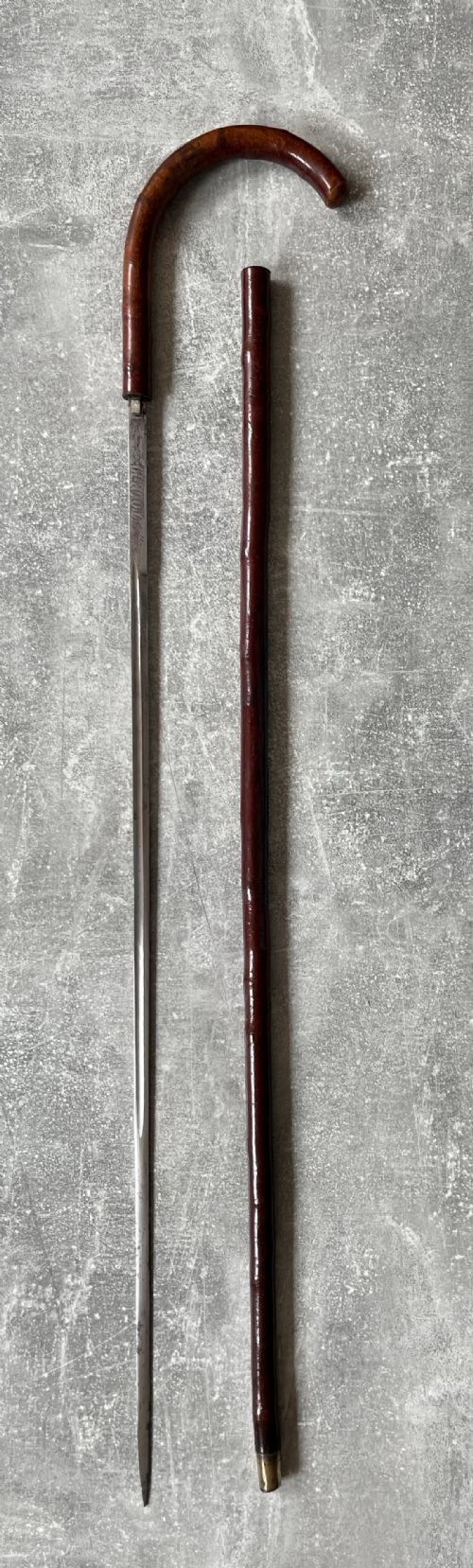
A wooden cane with blade combines a sturdy walking stick with a concealed steel weapon, offering discreet personal defence from the late Victorian and Edwardian eras.
Wooden Cane with Blade
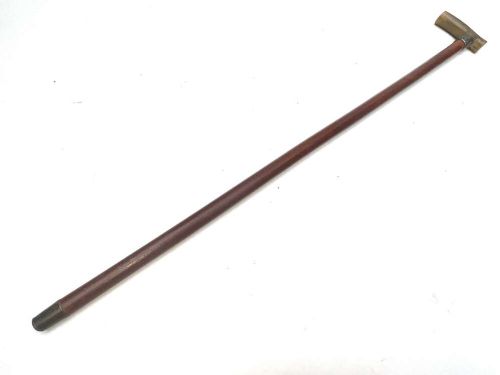
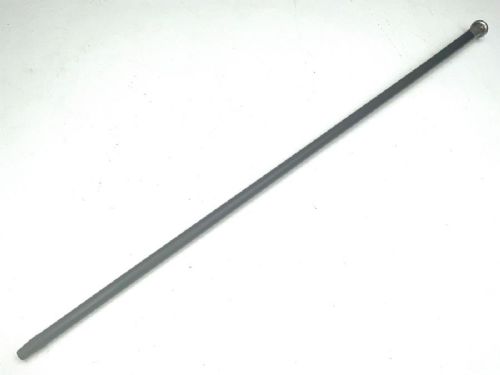
When you search for a wooden cane with blade, you are looking at gentleman's walking sticks fitted with concealed internal swords or daggers. These pieces served as practical accessories for urban and rural strolls during periods when personal protection was a sensible precaution.
The versions you are most likely to meet on this page date from the Victorian, Edwardian, and early twentieth-century eras. They appear in forms ranging from plain timber shafts to pieces with silver collars and crook handles.
Makers often disguised the weapon within natural woods, including cherrywood, partridge wood, hazel, malacca, and blackthorn. Some examples feature specific regional or fraternal identities, such as Irish blackthorn or Masonic walking sticks.
How they were made
Makers shaped natural timbers like cherrywood, partridge wood, hazel, and malacca to form the outer shaft and handle, sometimes adding silver or brass collars for reinforcement.
The internal blade, frequently sourced from renowned centres like Toledo or forged by makers such as Wilkinson, sits securely inside the wooden housing until released by a catch or screw mechanism.
Listings feature pieces spanning the Victorian and Edwardian eras, incorporating materials like steel, silver, brass, horn, cherrywood, and partridge wood.
What varies in quality
Quality rests upon the integrity of the timber housing and the precision of the fit between the shaft and the concealed blade. Superior pieces maintain a straight, seamless profile that hides the join entirely when closed.
The origin and signature of the steel blade itself distinguish standard production items from finer specimens bearing recognised names like Wilkinson or Toledo.
Wilkinson
The Wooden Cane with Blade Glossary
- Toledo blade
- A steel blade originating from the Spanish city renowned for historic sword-making traditions. These blades add notable pedigree to an antique walking stick.
- Collar
- A decorative or reinforcing band of silver, brass, or metal placed around the upper shaft. It often conceals the join where the handle meets the main body.
- Crook handle
- A curved handle shaped like a shepherd's crook, designed for comfortable arm carriage. It provides a secure grip for daily walking.
- Partridge wood
- A dense, heavily mottled tropical timber prized for its distinctive feather-like grain patterns. It offers exceptional durability for walking stick shafts.
Wooden Cane with Blade: Frequently Asked Questions
What is a wooden cane with blade?
A wooden cane with blade is a dual-purpose accessory featuring a concealed steel sword or dagger inside a timber walking stick shaft. Gentlemen carried them during the nineteenth and early twentieth centuries for everyday support and personal security.
These items look like ordinary walking sticks until the shaft is unscrewed or unlatched to reveal the hidden blade within.
How do you release the hidden blade?
Most concealed blade sticks use a simple screw thread, a push-button release, or a spring catch to secure the handle to the scabbard shaft. Twisting or pulling the handle breaks the seal and withdraws the steel blade.
Care is required with antique mechanisms to avoid damaging the internal wooden channels that house the steel.
What woods were used for the shafts?
Craftsmen utilised sturdy and characterful timbers such as cherrywood, partridge wood, hazel, malacca, and blackthorn. These woods provided the necessary strength for a walking stick while remaining workable for hollowing out.
Root ends and natural burls were also selected to form distinctive handles for individual pieces.
How do I date these walking sticks?
Dating relies on stylistic clues, metal hallmarks on silver collars, and the general construction methods of the Victorian and Edwardian periods. Pieces often carry specific era markers or maker signatures on the steel blades.
Comparing the handle style, collar engraving, and wood finish helps place the piece within the late nineteenth or early twentieth century.