

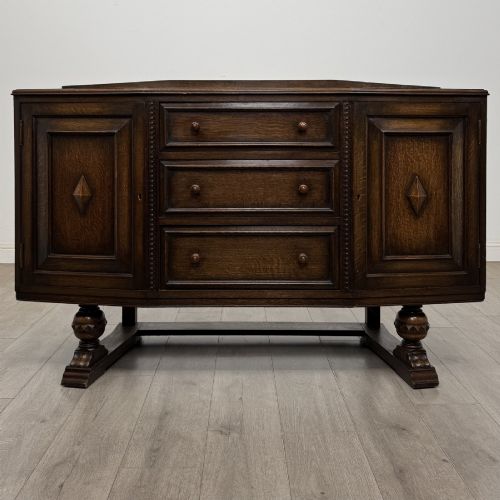
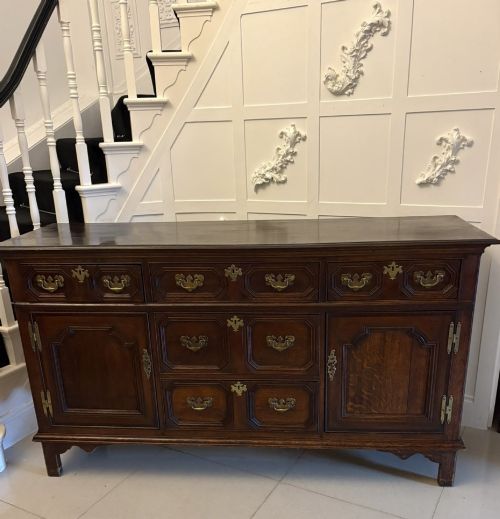
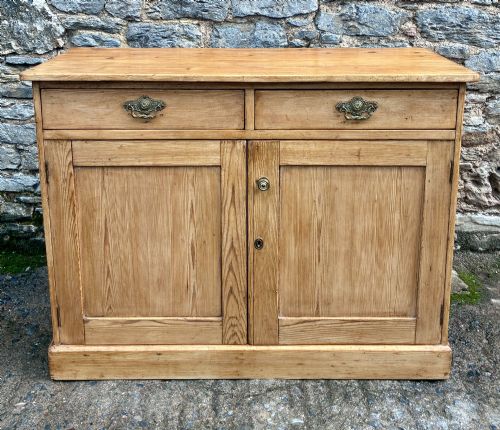
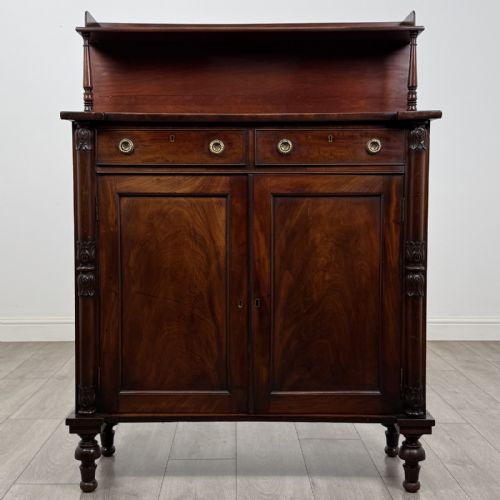
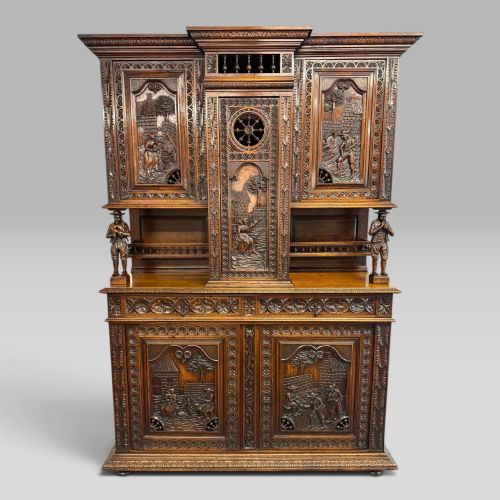
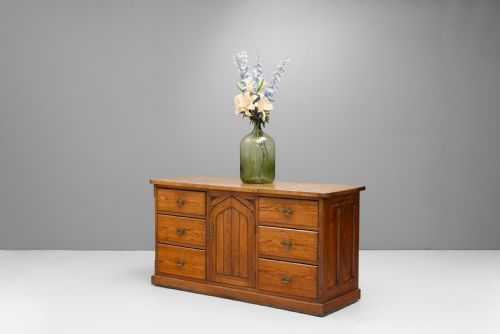
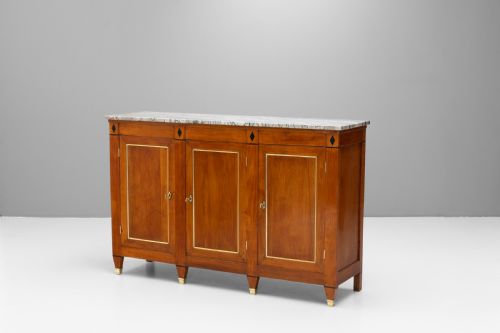
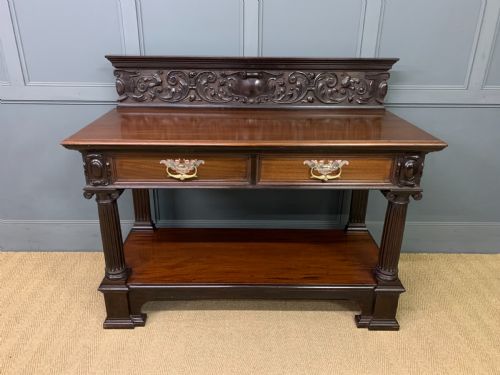
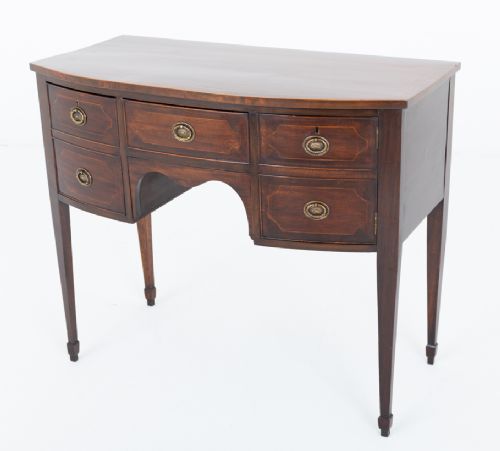
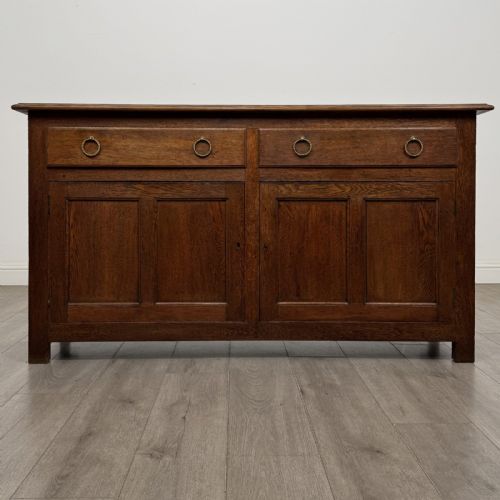
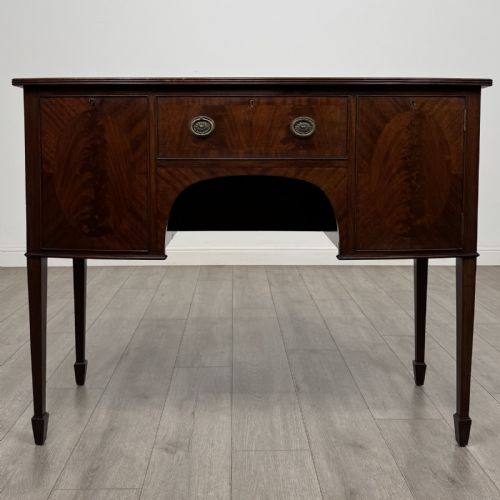
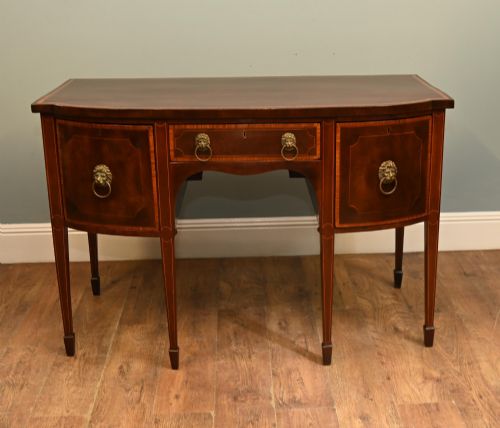
Wooden Buffet Sideboard
A wooden buffet sideboard serves as the central anchor of a dining room, combining functional storage with substantial period presence.
Wooden Buffet Sideboard
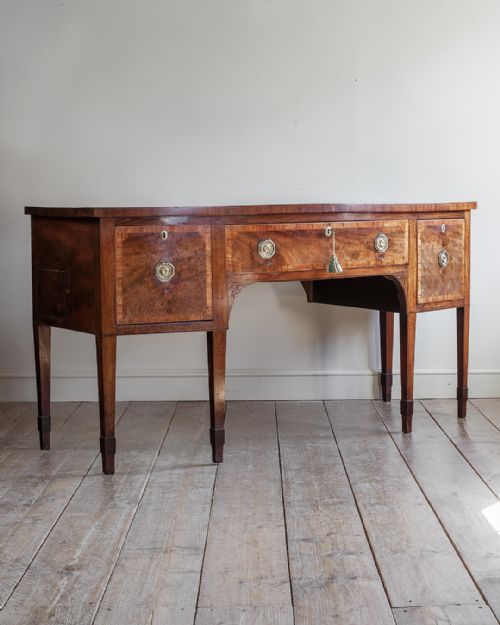
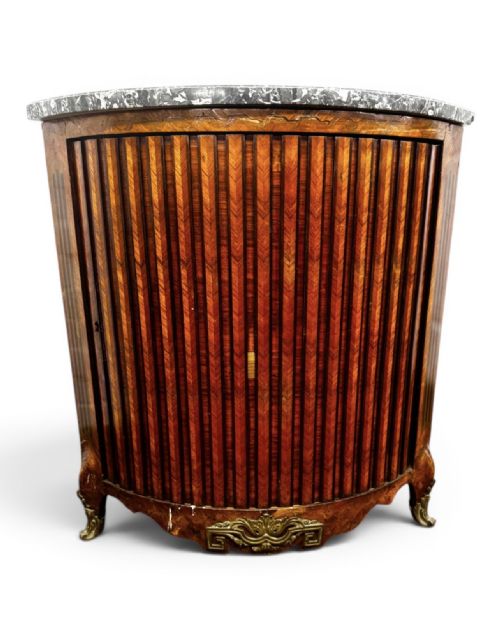
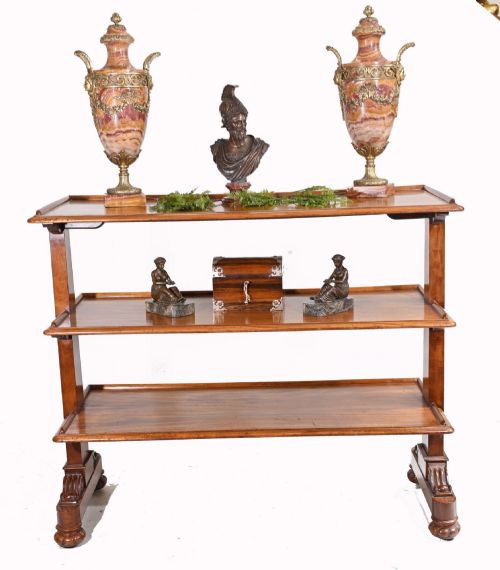
A wooden buffet sideboard bridges the gap between utilitarian storage and formal dining room display, appearing in variations from Georgian George III formats to Victorian credenzas and Edwardian cupboards. These pieces provide surface space for serving food alongside enclosed compartments for tableware, cutlery, and linens.
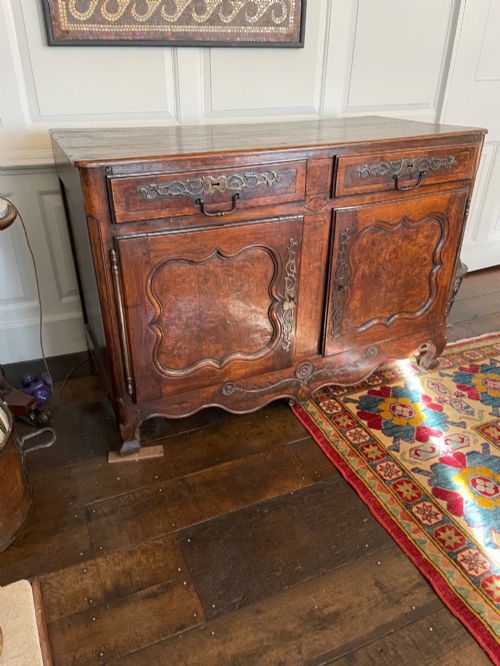
The version most frequently met on this page is the mahogany or oak sideboard dating from the nineteenth century, often featuring deep drawers, cupboards, and carved or veneered surfaces. Alongside these, buyers encounter pine farmhouse dresser bases, satinwood crossbanded formats, and later Art Deco interpretations.
Makers and workshops constructed these items to suit domestic spaces of differing scales, ranging from grand pedestal designs to compact bowfront pieces and low credenzas. Each regional interpretation, from English oak to Swedish and Danish design, brings distinct timber selections and structural proportions to the category.
Materials and Construction
Cabinet makers utilised dense hardwoods such as mahogany, oak, and walnut, often applying decorative veneers like burr walnut or flame mahogany to visible surfaces to create striking grain patterns. Solid pine frequently served for country and farmhouse pieces, while satinwood and brass hardware added contrasting detail on formal Edwardian and Georgian examples.
Construction relied on traditional joinery techniques, incorporating panelled doors, dovetailed drawers, and sturdy stretcher bases that supported heavy loads of dining ware. Carved elements, lion mask details, ebonised highlights, and inlaid crossbanding required specialist hand woodworking skills passed down through workshops.
Wooden Buffet Sideboard Retail Price Guide 2026
Typical asking prices for wooden buffet sideboard among the pieces listed under this phrase on Sellingantiques today, from the lower quarter to the upper quarter. They describe what is for sale here now, not the wider market.
Some Victorian dining cabinets hide deep internal cellarete drawers lined for chilling wine bottles with ice.
Assessing Quality and Execution
The standard of a wooden buffet sideboard rests upon the selection of timber, where figured mahogany, burr walnut, and finely quarter-sawn oak distinguish superior cabinet work from plain construction. Grain matching across drawer fronts and door panels demonstrates the care taken by the maker during assembly.
Structural integrity and the crispness of carved or inlaid details further separate standard pieces from exceptional examples. Original brass fittings, smoothly running drawers, and intact veneers indicate how well a piece was maintained and the original tier of its manufacture.
Rushworth's·Charles Dudouyt
The Wooden Buffet Sideboard Glossary
- Bowfront
- A curved front cabinet design that swells outward in the centre, common in Georgian and Regency mahogany sideboards.
- Credenza
- A low-profile side cabinet, often featuring glass or panelled doors and sometimes topped with marble, popular in Victorian interiors.
- Crossbanding
- A decorative border of veneer laid with the grain running perpendicular to the surrounding wood, frequently seen on Edwardian and Georgian furniture.
- Stretcher base
- A system of horizontal wooden bars connecting the lower legs of a sideboard or table to provide structural stability.
- Chiffonier
- A compact sideboard or side cabinet originating in the nineteenth century, typically fitted with a raised shelf or small cupboard on top.
Wooden Buffet Sideboard: Frequently Asked Questions
What is the difference between a sideboard and a buffet?
Sideboards traditionally feature cupboards and drawers designed specifically for storing dining room silver and linen. Buffets generally offer similar storage but emphasise a wide surface top utilised for serving meals.
Over time, the terms became interchangeable, and many antique listings combine them to describe low wooden dining room storage furniture.
How do I identify a Georgian sideboard?
Georgian sideboards typically feature elegant proportions, tapering legs, and premium timbers like figured mahogany with subtle stringing or inlay. They often utilise a bowfront or serpentine shape with deep end drawers.
Earlier examples from the eighteenth century lean toward robust oak dresser bases, while later George III pieces introduce refined neoclassical decorative motifs.
Where were these pieces used in the home?
These items belonged almost exclusively in the dining room or large country kitchen, functioning as a station for carving meats and serving dishes. They kept heavy tableware, ceramics, and cutlery close to the dining table.
In modern interiors, their generous surface area and deep internal storage make them adaptable for living rooms, hallways, or as media consoles.
How do I care for antique wood furniture?
Protect antique timber by keeping pieces away from direct heat sources and sudden changes in humidity that can cause wood to warp or veneers to lift. Dust regularly with a soft, dry cloth and avoid modern silicone polishes.
Applying a traditional beeswax feed periodically helps maintain the moisture and lustre of mahogany, oak, and walnut surfaces.