



Wooden Book Trough Slide
A wooden book trough slide keeps volumes upright on a desk with a clever expanding action that fits any shelf.
Wooden Book Trough Slide
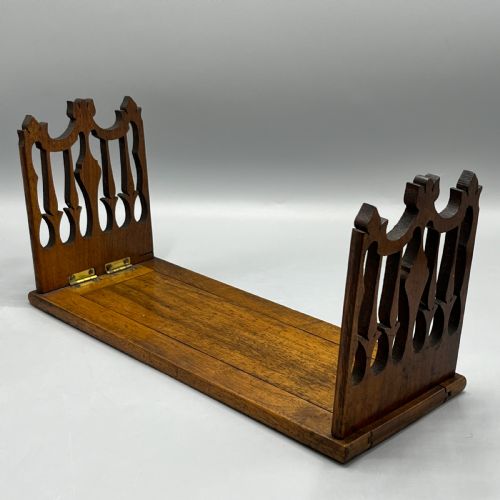
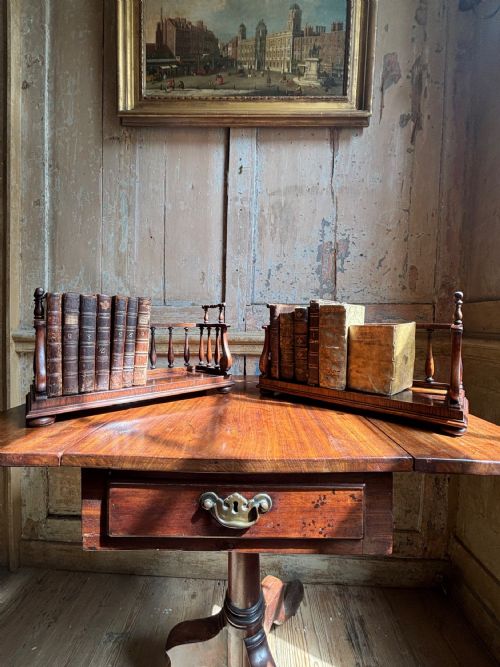
A wooden book trough slide sits on a desk or library table to hold a row of volumes securely between two upright ends. These pieces expand and contract thanks to a sliding mechanism, adapting neatly to the number of books you place inside.
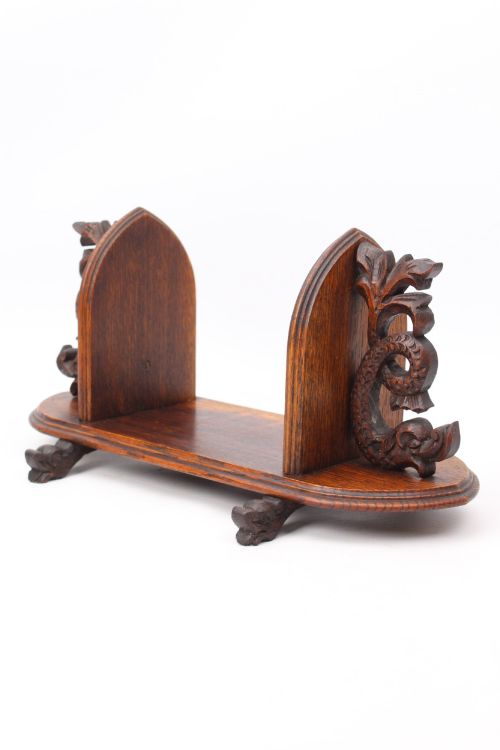
You will most commonly encounter Victorian and Edwardian examples on this page, spanning the mid nineteenth century into the early twentieth. Walnut, oak, and rosewood dominate the selection, often finished with brass mounts or inlaid details.
Makers produced these stands for home libraries and offices, ranging from simple robust oak troughs to ornate Gothic Revival designs. Whether configured as a folding rack or a rigid trough, each piece serves the practical demand of keeping reference books close at hand.
How they were made
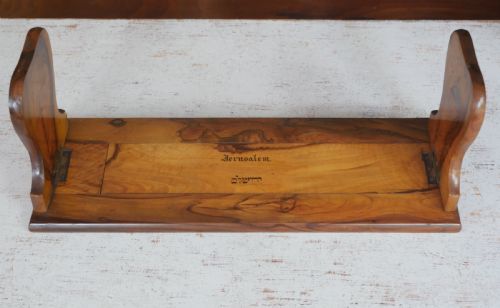
Craftsmen shaped dense timbers such as walnut, rosewood, oak, and coromandel into base boards and upright ends, frequently adding boxwood or bone inlay for contrast. Ebonised wood and olive wood also appear, showing a wide preference for contrasting dark and light grains.
Brass formed an essential component, utilised for hinges, sliding mechanisms, and decorative mounts that reinforced the expanding joints. Tunbridge Ware examples incorporate intricate mosaic woodwork, while others display carved teak or finely painted plaques mounted to the timber.
Wooden Book Trough Slide Retail Price Guide 2026
Typical asking prices for wooden book trough slide among the pieces listed under this phrase on Sellingantiques today, from the lower quarter to the upper quarter. They describe what is for sale here now, not the wider market.
Some nineteenth century inventors added novel folding rests so the book stand could double as a desk tidy.
What varies in quality
The sophistication of the extending mechanism distinguishes standard pieces from superior examples. Smooth action in the sliding tracks relies on precise joinery and well-fitted brass components that do not bind or wobble.
Material selection and decorative enrichment set the finer pieces apart. Finely figured burr walnut, elaborate Tunbridge Ware mosaic work, or high quality brass mounts indicate a workshop that spent significantly more time on surface detail and finish.
Gillows·Tiffany and Co
The Wooden Book Trough Slide Glossary
- Book slide
- A desk accessory with a sliding base that expands to hold a variable number of books upright. Most versions use a scissor action or overlapping wooden leaves.
- Tunbridge Ware
- Woodwork decorated with tiny mosaic tiles assembled from different coloured woods to form geometric or pictorial patterns. Originates from the town of Tunbridge Wells.
- Gothic Revival
- A nineteenth century architectural and decorative style inspired by medieval forms. Characterised by pointed arches, trefoils, and heavy carved oak.
- Ebonised wood
- Timber treated with a dark finish to imitate expensive ebony. Common in Victorian decorative objects.
- Coromandel
- A dense, heavy timber with dark brown and black streaks used for luxury nineteenth century boxes and book stands.
Wooden Book Trough Slide: Frequently Asked Questions
How does a wooden book trough slide work?
These pieces feature overlapping wooden sections or hinged arms that pull apart and push together. This action lets you lengthen or shorten the base to fit your exact selection of volumes.
Inside the mechanism, brass runners or wooden tongues guide the movement smoothly. You simply adjust the ends inward until the books are held firmly in place.
Where should I place a wooden book slide?
These stands suit desks, side tables, and mantelpieces where you keep a working selection of books. They sit well on flat wooden surfaces in studies or living rooms.
Keep them away from direct heat sources and strong sunlight to protect the polished timber and delicate inlay work. The expanding base needs a stable surface to operate correctly.
How do I date a Victorian book slide?
Examine the timber, construction methods, and decorative style to estimate the period. Mid nineteenth century pieces often use heavy rosewood or walnut with Gothic Revival motifs.
Later Victorian and Edwardian examples frequently employ lighter oak or ebonised finishes with simpler brass mounts. Look for clues in the specific hardware and the style of the carving.
What is the difference between a trough and a slide?
A book slide usually consists of a flat expanding base with two upright ends to hold books between them. The books remain visible along their spines from the sides.
A book trough includes enclosed wooden sides that form a channel or box for the volumes to sit inside. Many examples combine both forms by putting a trough design onto an extending base.