

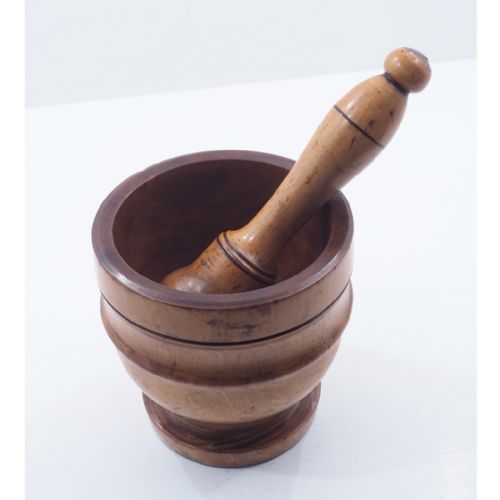


Wooden Apothecary Mortar
A wooden apothecary mortar is a dense, utilitarian vessel designed for grinding, offering tactile connection to centuries of medicinal and culinary preparation.
Wooden Apothecary Mortar
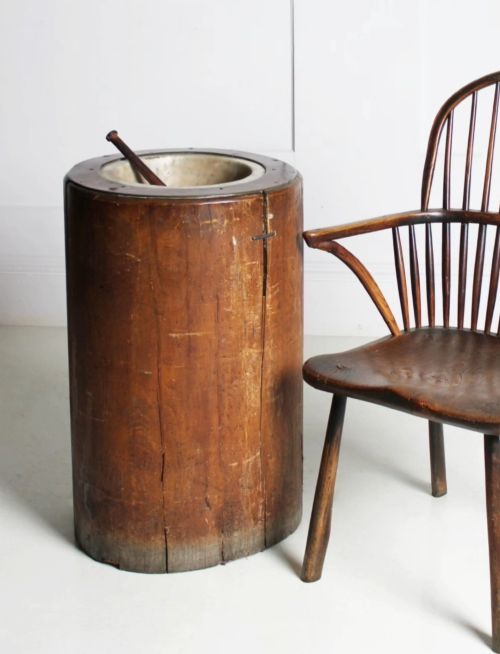
A wooden apothecary mortar represents a tangible link to historical medicinal and domestic practices, originating in periods ranging from the seventeenth century to the twentieth century. These vessels served the demanding task of crushing herbs, minerals, and chemicals in apothecaries, homes, and kitchens.
The pieces listed here appear in various forms, including treen snuff mortars, utilitarian chemists' vessels, and rustic European kitchenware. Collectors encounter examples spanning several centuries, capturing the evolution of functional turnery from early periods to later decades.
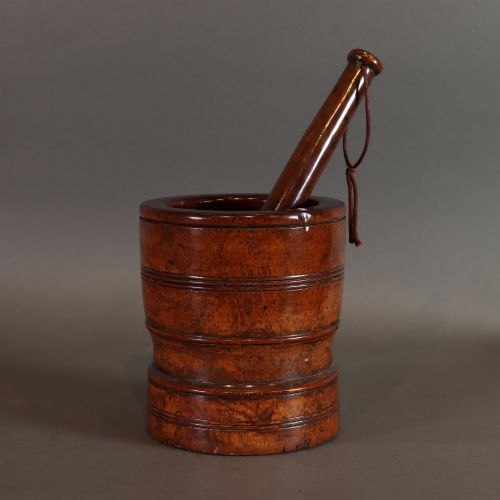
Most examples encountered on this page belong to the nineteenth century and the seventeenth century, alongside eighteenth-century variations. These items often retain their original matching pestles, completing the functional pairing required for grinding tasks.
Materials and construction methods
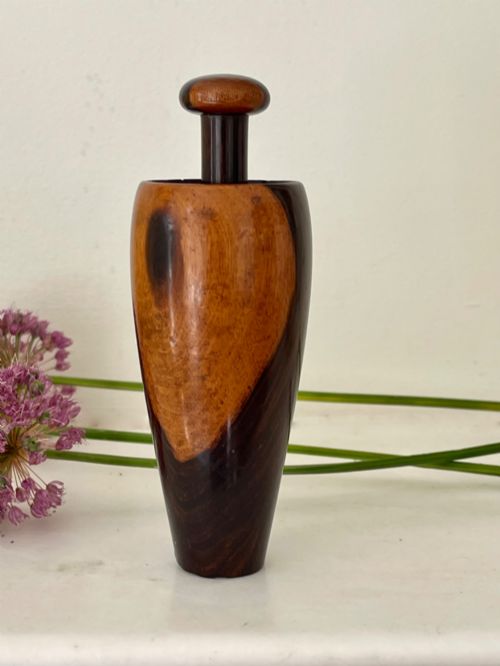
Makers utilised dense hardwoods to withstand the heavy impacts and grinding forces demanded by apothecary work. Lignum vitae appears frequently due to its exceptional weight and natural self-lubricating oils, alongside walnut, oak, fruitwood, and olive wood.
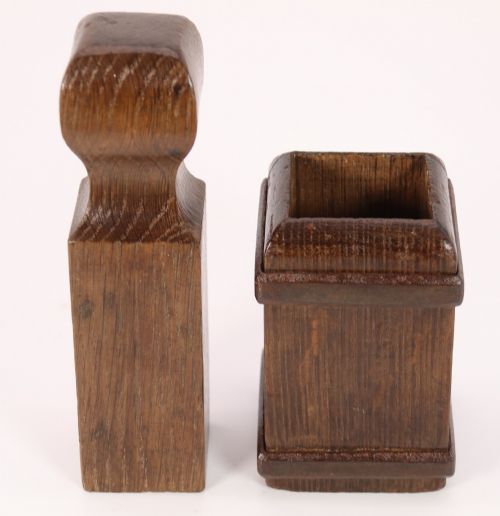
Turning on a lathe formed the primary method of shaping these cylindrical or flared vessels from solid blocks of timber. Blacksmiths occasionally added wrought iron mounts to reinforce structural integrity, particularly on heavy crushing vessels intended for rigorous use.
The current selection spans multiple centuries, featuring materials such as lignum vitae, oak, walnut, and olive wood.
Factors determining quality
The choice of timber heavily influences the character and durability of each piece, with dense exotic hardwoods generally commanding greater appreciation than softer domestic woods. Turning proficiency dictates the balance of proportions, wall thickness, and the crispness of decorative reeding or moulding.
Patina and surface wear tell the physical history of active service, where honest handling beats sterile preservation. Original surfaces untouched by modern refinishing retain the rich tonal depths developed through centuries of exposure.
The Wooden Apothecary Mortar Glossary
- Treen
- Small handmade wooden domestic objects produced prior to the modern era. This category embraces everything from small mortars to turned tableware.
- Lignum Vitae
- A remarkably dense and heavy tropical hardwood valued for its resistance to splitting and impact. It sinks in water and develops a dark, glossy finish with age.
- Pestle
- The heavy club-shaped tool used in conjunction with a mortar for pounding and grinding substances. Maturation of form usually pairs the pestle's timber directly to the mortar's material.
- Patina
- The deep surface sheen and coloration acquired by wood over long periods of handling, exposure, and waxing. It serves as a visual indicator of genuine age.
Wooden Apothecary Mortar: Frequently Asked Questions
What were wooden apothecary mortars used for?
These vessels served apothecaries, physicians, and households for crushing dry ingredients, resins, and herbs into powders or pastes. The paired pestle provided the grinding force necessary to break down stubborn medicinal components.
Over time, many transitioned into domestic kitchenware or remained on dispensary shelves as symbols of the healing arts.
How do I date a wooden mortar?
Dating relies on observing turning marks, tool signatures, timber choice, and the overall silhouette typical of specific eras. Seventeenth-century examples often display chunkier, primitive proportions and dense lignum vitae construction.
Later nineteenth-century pieces frequently show cleaner lathe work and standardised chemical supply forms.
Are pestles usually original to the mortar?
Many surviving sets retain their matching original pestles, sharing identical wood species, wear patterns, and patination. Finding a matched pair adds significantly to the historical integrity of the object.
Replacements do occur due to centuries of heavy use, making wood grain and wear comparison essential.
How should I care for antique wood?
Antique treen benefits from stable indoor humidity away from direct heat sources and strong sunlight. Occasional gentle applications of microcrystalline wax help nourish dry historic timber without altering the surface.
Water and harsh cleaning agents must be avoided entirely to preserve the fragile original patina.