




Wooden Accent Shelf
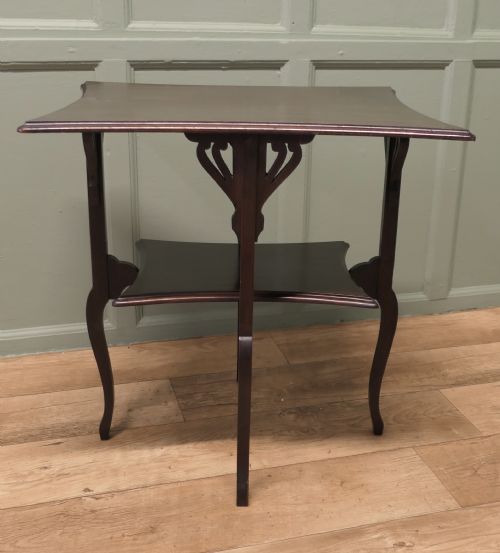
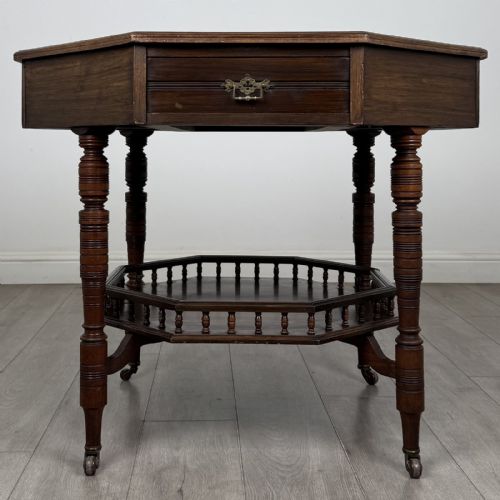
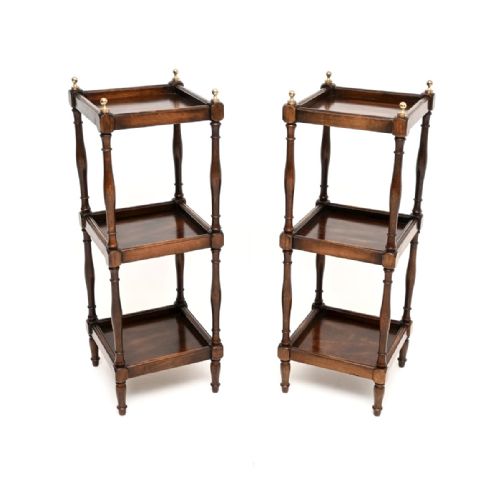
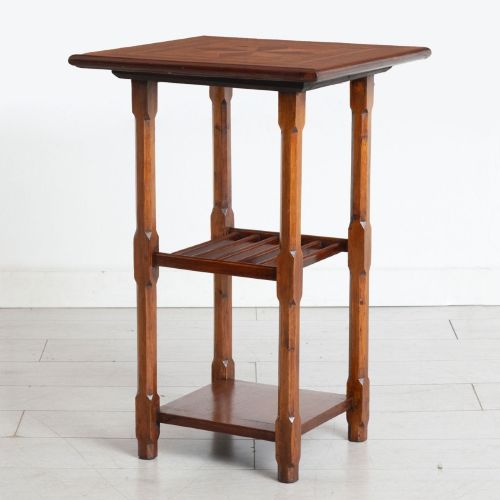
These wooden accent shelf pieces are practical small tables, étagères, and display stands chosen to add functional surface area and character to a room.
Wooden Accent Shelf
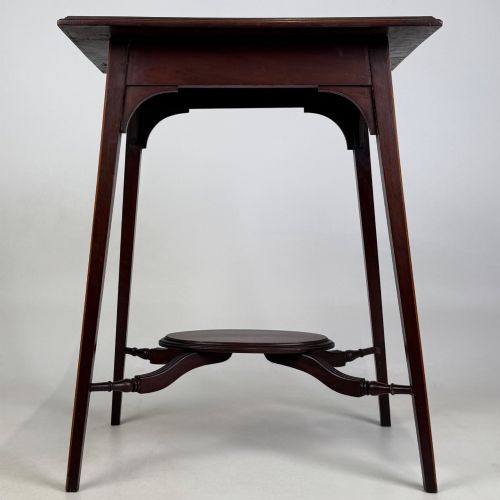
When you search for a wooden accent shelf, you are looking at a variety of small occasional tables, étagères, whatnots, and display stands designed to hold lamps, books, or decorative objects. The pieces appearing in this selection span several centuries, including Georgian, Victorian, and Edwardian periods.
The most common forms you will meet on this page are occasional and side tables featuring lower tiers or stretcher shelves, alongside multi-tiered whatnots and étagères. Materials range from traditional timbers like mahogany and oak to walnut, rosewood, and satinwood, often reflecting specific styles such as Arts and Crafts, Art Deco, or English Country Vernacular.
How they were made
Makers utilised solid timbers and veneers, predominantly mahogany, oak, and walnut, frequently incorporating brass fittings and boxwood or wood inlay to define surfaces and edges. Construction methods relied on traditional joinery suitable for supporting multiple tiers, shelves, and drop-leaf mechanisms.
Finishes were applied to highlight the natural grain of the wood, with some items featuring ebonised details, carving, or painted surfaces as seen in English Country Vernacular and Welsh vernacular pieces.
Wooden Accent Shelf Retail Price Guide 2026
Typical asking prices for wooden accent shelf among the pieces listed under this phrase on Sellingantiques today, from the lower quarter to the upper quarter. They describe what is for sale here now, not the wider market.
Object forms on this page cover occasional tables, side tables, whatnots, bookcases, display stands, and étagères.
What varies in quality
Quality in these pieces depends upon the selection of timber and the precision of the cabinetwork used to join uprights, legs, and multiple shelves. Refined grain patterns in veneers, delicate stringing, and well-executed carving or inlay distinguish more ambitious examples from simpler vernacular forms.
Proportion and structural stability also set pieces apart, as multi-tiered étagères and tall whatnots require careful balancing between open display space and sturdy frame construction.
The Wooden Accent Shelf Glossary
- Étagère
- A piece of furniture consisting of a set of open shelves for displaying small objects or ornaments. These typically stand on slender uprights and date from the nineteenth century onward.
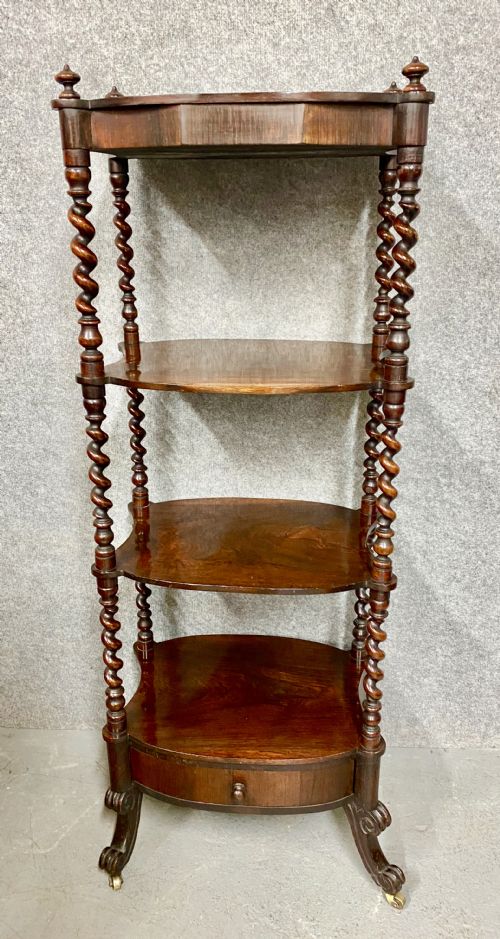
- Whatnot
- An open set of shelves used for storing or displaying books, ornaments, or curiosities. They often feature three or four tiers and can incorporate cupboard bases.
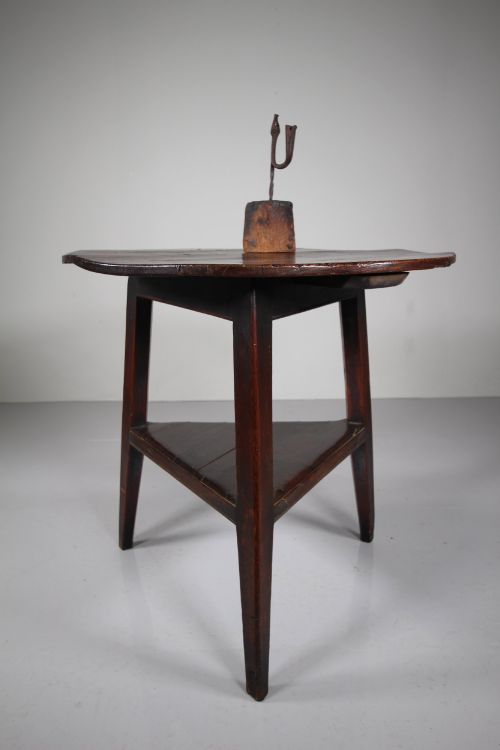
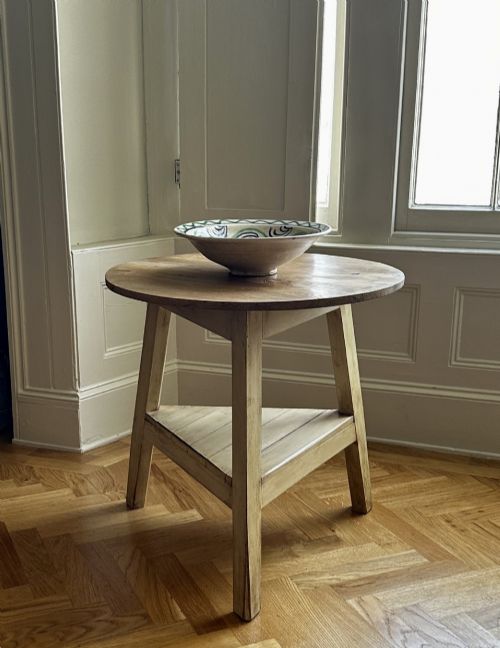
- Cricket table
- A small, lightweight occasional table typically featuring three legs and a round wooden top. These vernacular pieces often include a lower triangular shelf stretcher.
- Occasional table
- A small table designed for intermittent use in a living space or bedroom, such as a lamp or side table. They frequently incorporate under-tiers or shelves for extra storage.
Wooden Accent Shelf: Frequently Asked Questions
What is a wooden accent shelf used for?
These pieces serve as versatile display surfaces and small storage tables within a room. They hold lamps, books, and decorative items while occupying minimal floor space.
Multi-tiered versions like whatnots and étagères provide vertical display areas, making them practical for corners or beside seating.
How do I identify an Edwardian piece?
Edwardian items often feature lighter timbers such as mahogany and satinwood, frequently embellished with delicate wood inlay or boxwood stringing. The forms tend to draw on Sheraton or neoclassical revival styles.
Proportions are generally lighter and more slender compared to heavier Victorian or Jacobean Revival furniture.
What is the difference between a whatnot and an étagère?
Both terms describe multi-tiered shelving units used for display, though their origins and exact forms overlap in the antique market. Whatnots frequently include enclosed cupboard bases or practical drawer sections.
Étagères often emphasise open tiers supported by delicate uprights, functioning primarily as decorative display stands for ornaments.
Are cricket tables sturdy?
Cricket tables rely on a simple three-legged tripod construction that remains stable even on uneven floors due to the geometry of three points. The inclusion of a lower triangular shelf stretcher often adds further rigidity to the frame.
Originally designed for vernacular domestic use, their robust construction suits daily placement in modern rooms.