





Wood Whatnot Stand
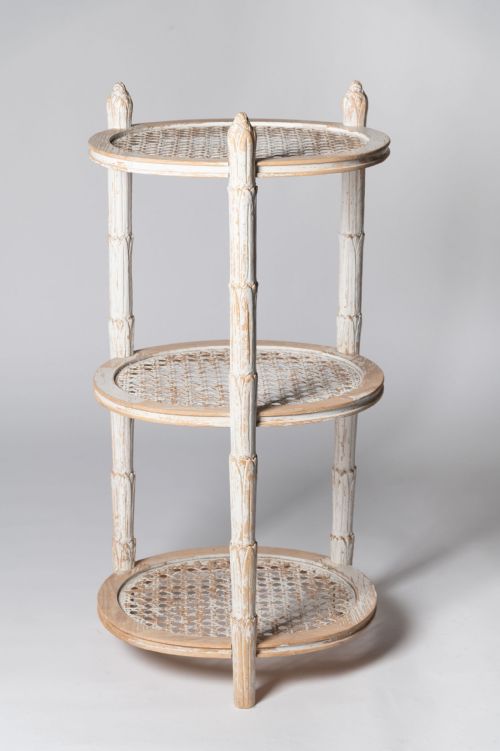
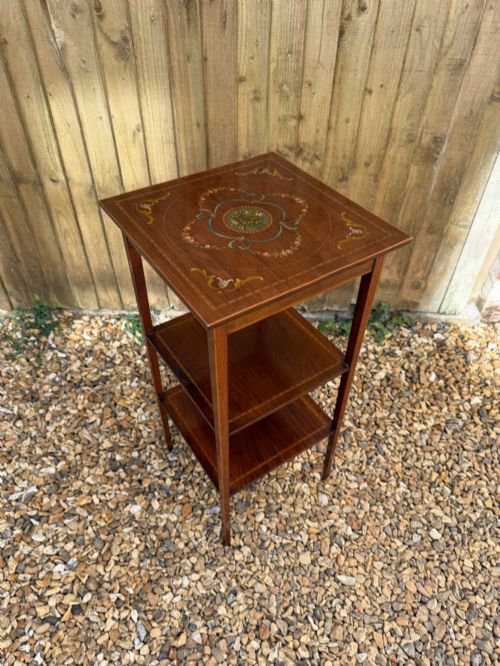
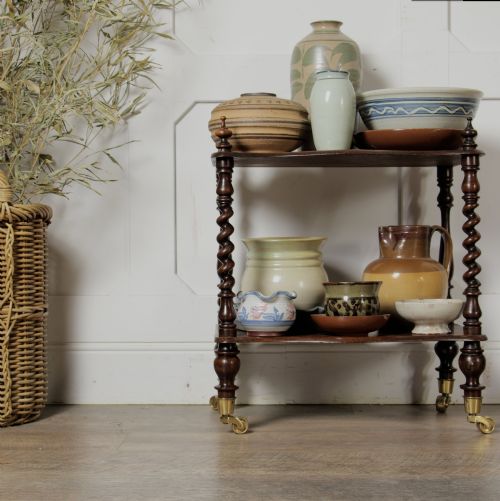
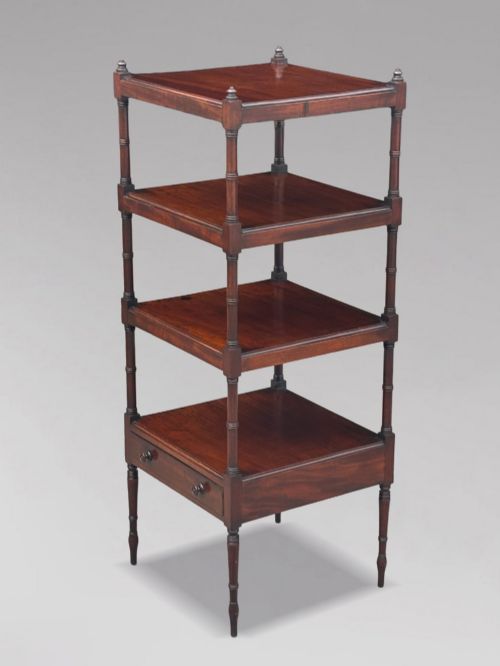
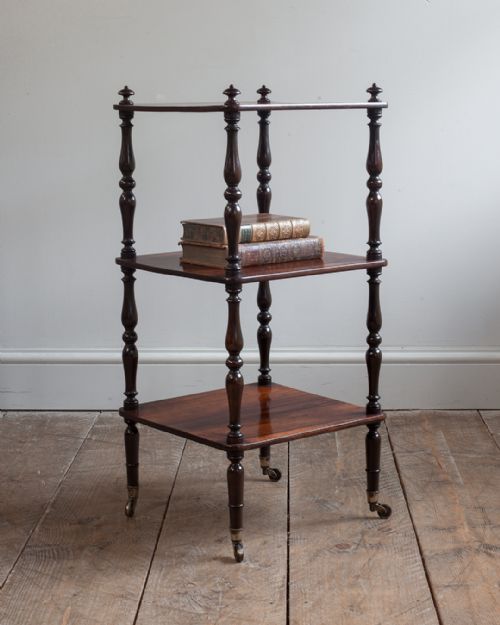
A wood whatnot stand is a tiered open shelving unit designed to display small ornaments and books.
Wood Whatnot Stand
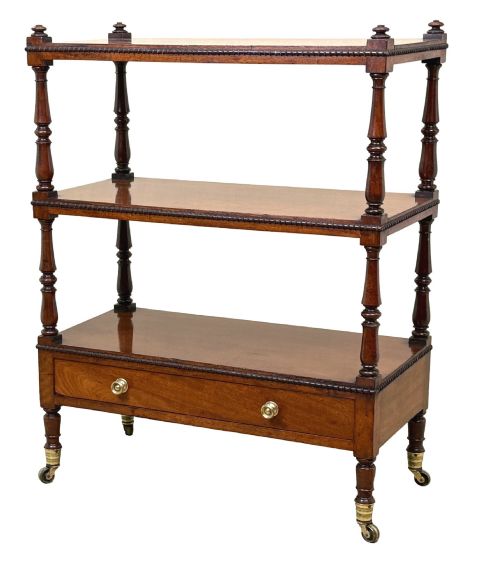
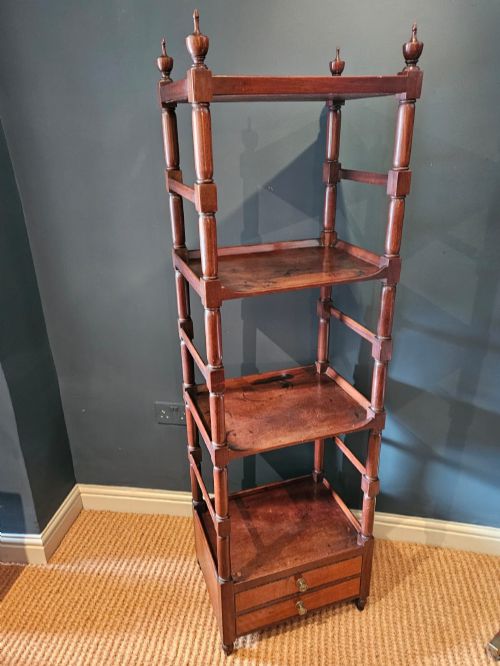
When you search for a wood whatnot stand, you are looking at multi-tiered display furniture built to hold books, sheet music, and decorative objects in principal rooms. The pieces gathered here belong predominantly to the nineteenth century, covering Georgian, Regency, William IV, and Victorian periods.
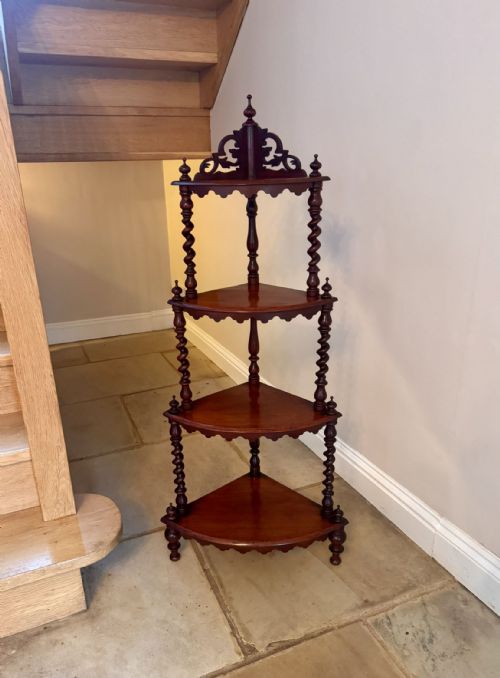
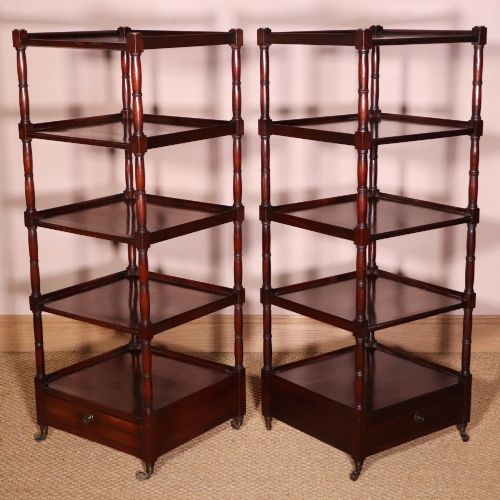
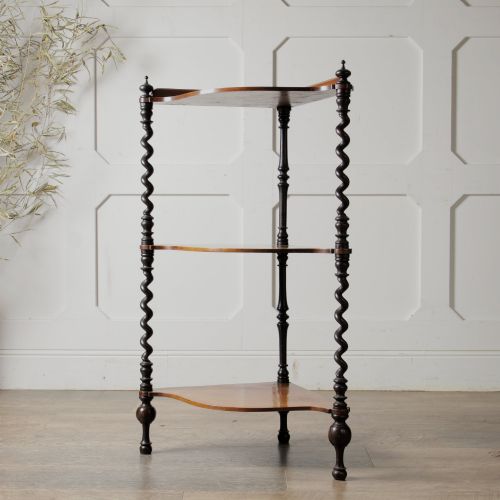
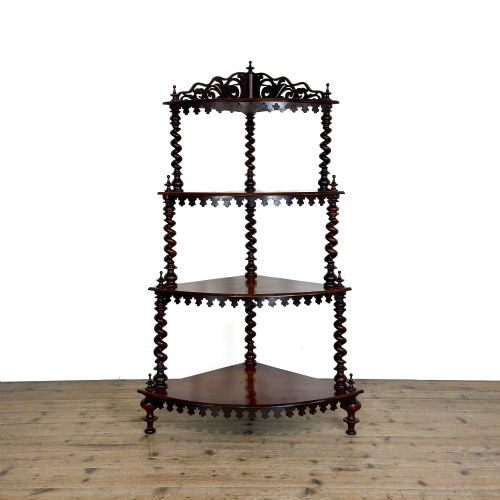
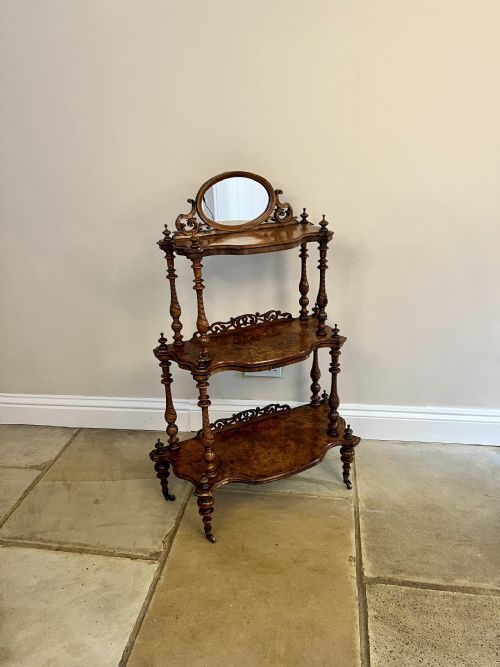
You will encounter towering four and six-tier freestanding bookcases alongside clever corner stands designed to utilise idle angles of a room. Formats range from simple mahogany shelving units to elaborate rosewood and burr walnut étagères featuring barley twist columns and pierced fretwork.
The collection also includes hybrid forms such as Canterbury stands with integrated work tops and specialised music stands. Origin styles span from British cabinet-making traditions to French influences and Anglo-Indian colonial pieces.
Woods and joinery methods
Cabinet-makers relied heavily on rich timbers such as mahogany, rosewood, and burr walnut, often selecting figured veneers to create striking grain patterns on the top tiers and shelves. Accents of boxwood inlay, brass details, and ebonised wood appear across various examples to add contrast.
Structural integrity relied on turned uprights, columns, and barley twist supports that carried the weight of the graduated shelves. More decorative iterations incorporated pierced fretwork galleries and parcel gilding executed by hand.
Wood Whatnot Stand Retail Price Guide 2026
Typical asking prices for wood whatnot stand among the pieces listed under this phrase on Sellingantiques today, from the lower quarter to the upper quarter. They describe what is for sale here now, not the wider market.
Current listings feature pieces spanning the Georgian, Regency, William IV, and Victorian periods, constructed primarily in mahogany, rosewood, and burr walnut.
Distinctions in construction and design
The standard of a wood whatnot stand is evident in the choice of timber and the precision of the turning on the upright supports. Superior examples display finely figured mahogany or burr walnut with crisp fretwork and tightly jointed tiers that remain stable under weight.
Proportion and decorative restraint dictate the upper tier of quality. Pieces that balance delicate brass fittings or intricate boxwood inlay without appearing cluttered demonstrate superior design judgment by the original cabinet-maker.
Samson and Son London
The Wood Whatnot Stand Glossary
- Whatnot
- An open multi-tiered piece of furniture used for displaying ornaments or holding books and small items.
- Étagère
- A French term for a piece of furniture consisting of a set of open shelves for displaying small articles.
- Canterbury
- A low stand with partitioned vertical sections primarily used for holding sheet music, folios, or books.
- Fretwork
- Ornamental perforated woodwork created by cutting patterns through thin boards.
- Barley twist
- A type of turning shaped like a spiral resembling a twist of barley sugar, common on nineteenth-century supports.
Wood Whatnot Stand: Frequently Asked Questions
What is a wood whatnot stand used for?
These tiered shelving units were originally used in nineteenth-century drawing rooms to display decorative ceramics, hold books, or store sheet music close to an instrument.
Today, they function well in living spaces or hallways as vertical display surfaces that occupy minimal floor space while offering multiple tiers for ornaments.
How do I identify a Regency period piece?
Regency stands often feature clean classical lines, darker mahogany or rosewood timbers, and restrained brass detailing or turned columns.
They reflect the early nineteenth-century taste for archaeological revival and refined architectural proportions.
Where should I place a corner whatnot?
Corner whatnot stands are specifically engineered with right-angled shelves to fit snugly into room corners that might otherwise remain empty.
They provide practical display space in smaller rooms without obstructing pathways or dominating the central floor area.
What is the difference between a whatnot and an étagère?
While both terms describe multi-tiered open shelving, étagère originates from French design traditions and often leans towards lighter, more decorative display.
Whatnot is the traditional British term used interchangeably for both utilitarian book storage and decorative display stands.