



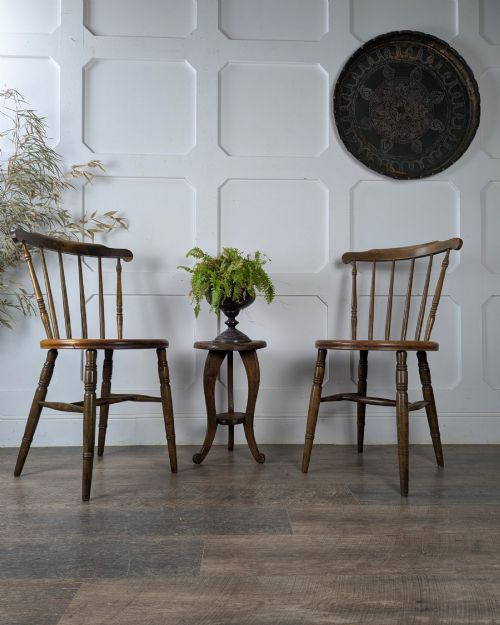
Wood Turned Leg Chair
A wood turned leg chair brings honest domestic utility into a room, combining sturdy vernacular timbers with the satisfying rhythm of lathe work.
Wood Turned Leg Chair
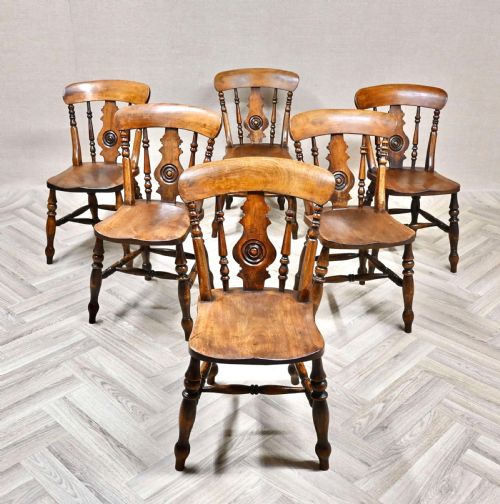
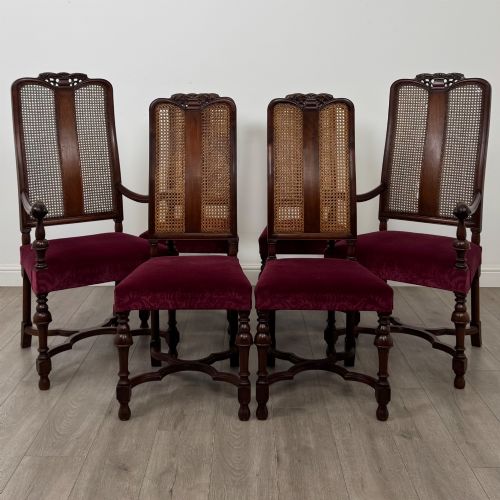
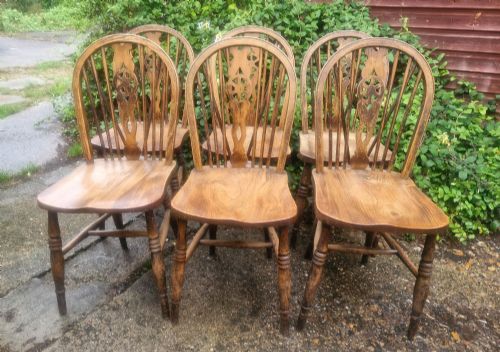
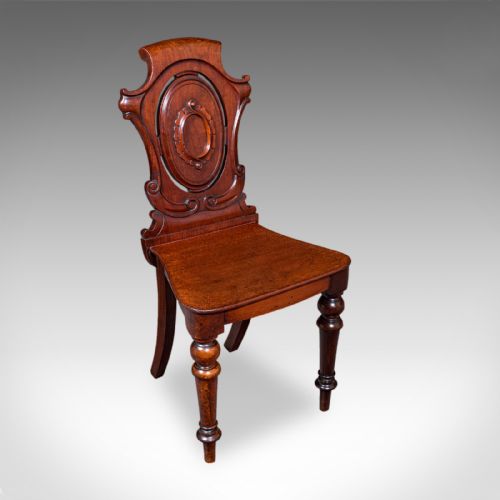
A wood turned leg chair connects the buyer to centuries of domestic seating, from kitchen Windsors to formal dining sets. The form relies on turned supports beneath seats shaped from solid timber.
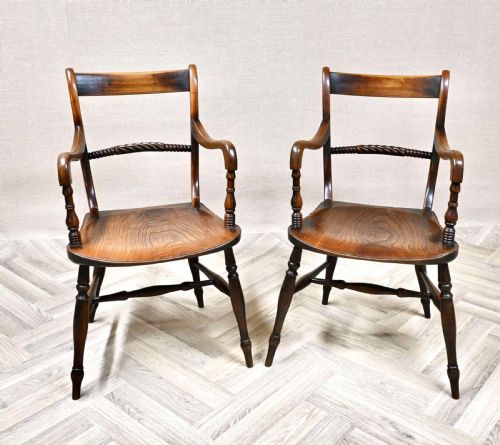
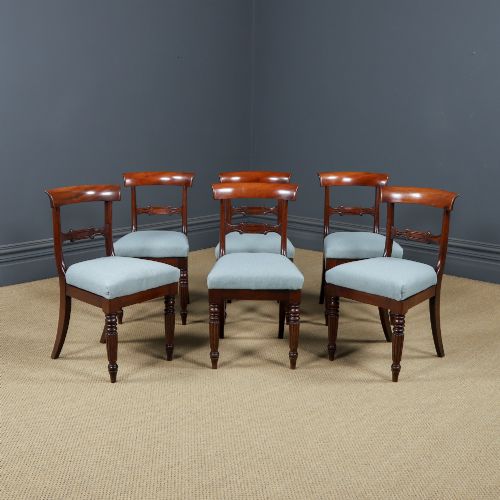
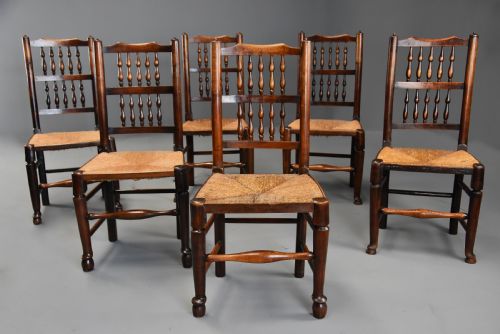
The versions most often met on this page span the nineteenth century, including Victorian farmhouse examples and Regency dining seats. Elm and ash appear frequently in these vernacular seating forms.
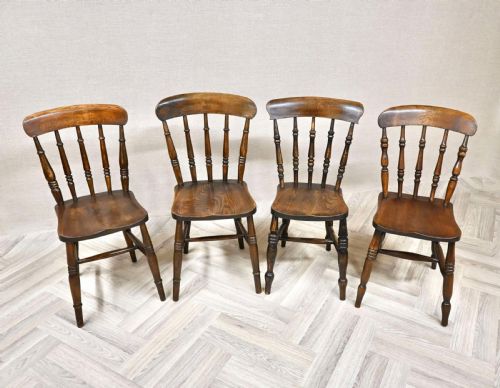
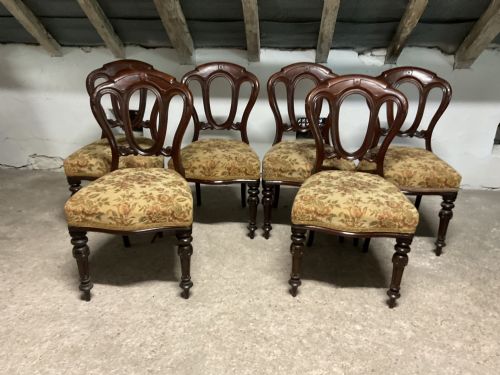
Makers shaped these chairs for daily service in kitchens, parlours and halls. Dining chairs and armchairs dominate the selection, often found in matched sets or pairs.
How they were made
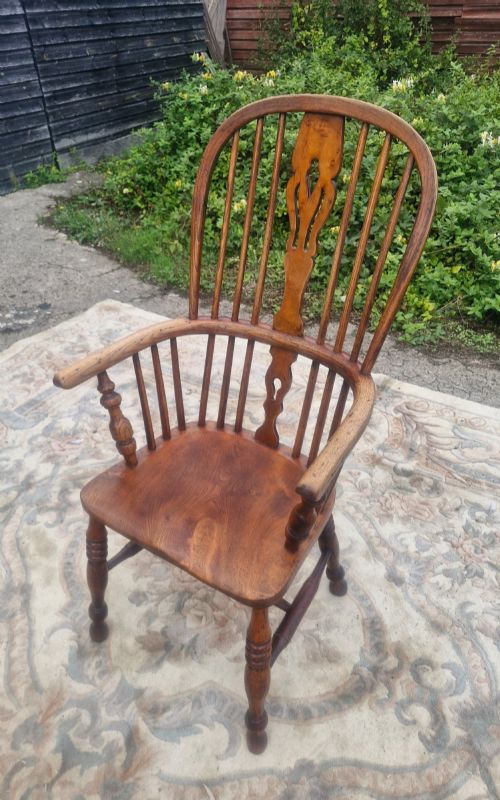
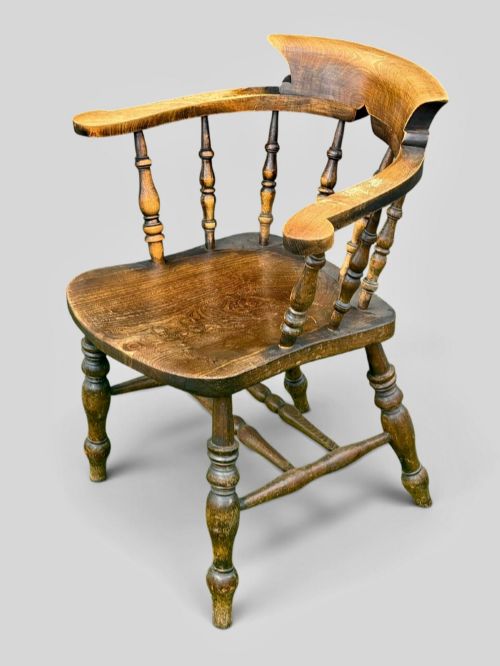
Craftsmen shaped frames from native hardwoods, pairing elm seats with ash, beech or yew spindles and legs. Turning lathes formed the uprights and stretchers, while hand tools hollowed out the saddle seats for comfort.
Makers utilised mortise and tenon joints to secure the turned components together without metal fasteners. Grain direction mattered greatly, ensuring the turned legs could bear downward weight without splitting.
Common native timbers across these chair forms include elm, beech, oak, ash, yew and mahogany.
What varies in quality
Quality rests in the selection of timbers and the crispness of the lathe turning. A dense, well-figured elm seat combined with cleanly struck bobbin or ring turnings elevates a piece above standard utility work.
Proportion and stance separate ordinary examples from superior ones. Balanced rake in the legs and careful thinning of back spindles show the maker's eye for form.
J Spencer·Mellier and Co
The Wood Turned Leg Chair Glossary
- Windsor
- A chair built with a solid wooden saddle seat into which the back and legs are dowelled directly. This construction method creates a resilient seat used extensively in country houses and farmhouses.
- Bobbin turned
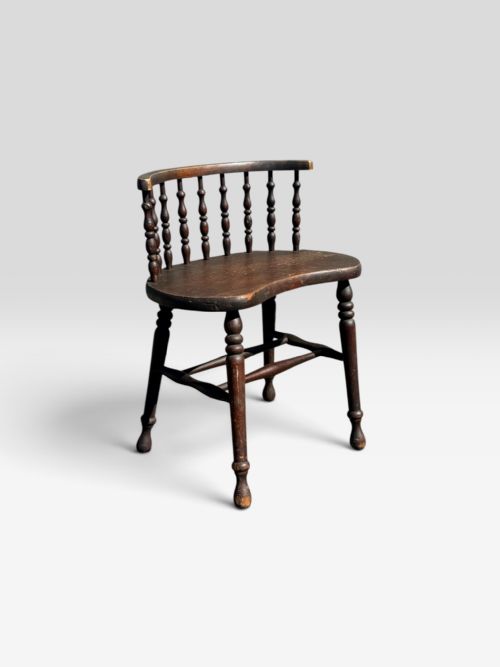
- A style of woodturning resembling a string of beads or bobbins created on a lathe. It appears frequently on seventeenth and nineteenth-century furniture legs and stretchers.
- Spindle back
- A chair back filled with numerous slender turned wooden rods. These uprights support the sitter while keeping the furniture light in appearance.
- Wheel back
- A Windsor chair variation featuring a pierced splat shaped like a cartwheel. This decorative motif gained popularity in nineteenth-century kitchens and dining rooms.
- Carver
- An armchair designed to match a set of dining side chairs, usually placed at the head of a table. These pieces share the stylistic details of the wider dining set.
Wood Turned Leg Chair: Frequently Asked Questions
What is a wood turned leg chair?
A wood turned leg chair is a seat supported by legs shaped on a lathe, ranging from country Windsors to formal dining chairs.
These pieces rely on turned wooden components for structural strength and visual detail.
How were these chairs used historically?
They served daily domestic functions in kitchens, dining rooms, reception halls and parlours.
Armchairs provided comfort by the hearth while sets of side chairs gathered around dining and hall tables.
How do I identify the period?
Periods are identified through timber choices, turning styles and overall construction methods.
Earlier nineteenth-century examples often combine ash and elm, whereas later pieces show distinct Victorian or Edwardian stylistic traits.
How do I care for antique wood chairs?
Keep the wood conditioned with appropriate wax and protect the timber from direct sunlight and sudden temperature shifts.
Avoid placing chairs near heat sources that might dry out the old timbers and cause joints to loosen.