


Wood Tabletop Chest
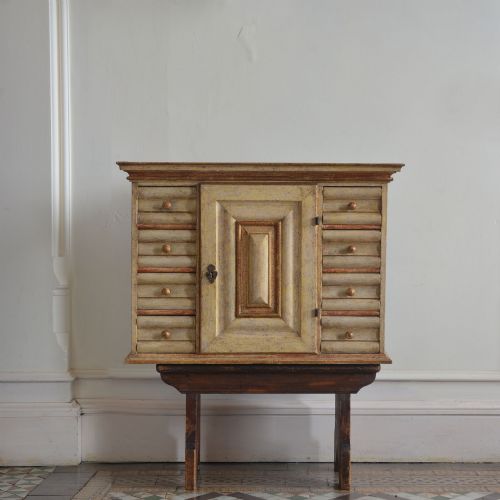
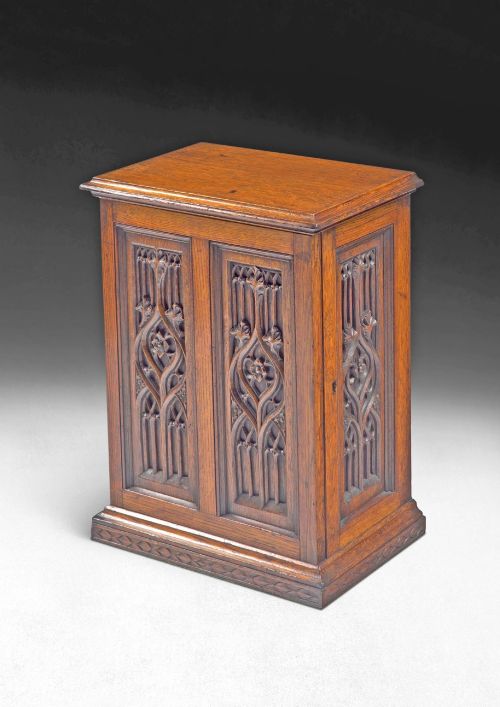
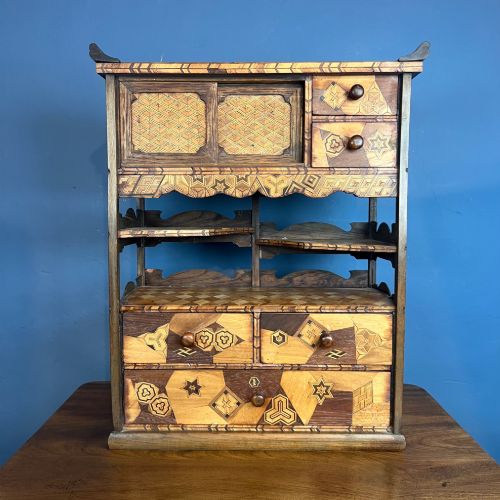
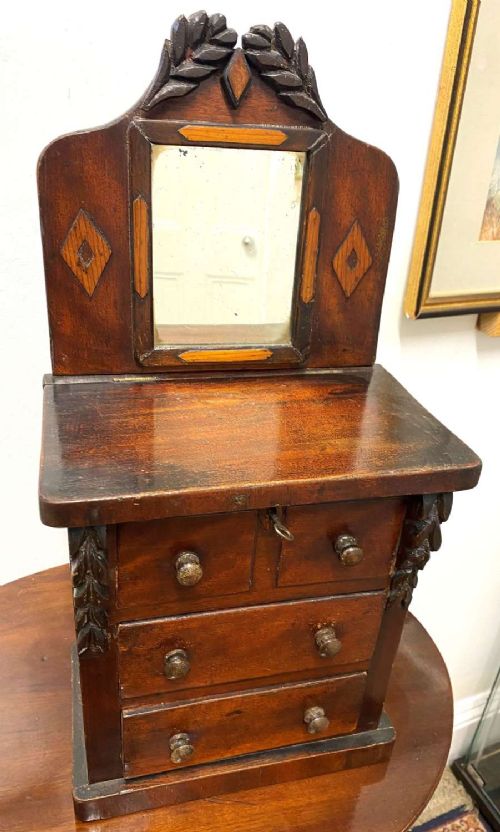
A wood tabletop chest packs the scale and detail of full-size furniture into a compact desktop format, offering practical storage for small treasures.
Wood Tabletop Chest
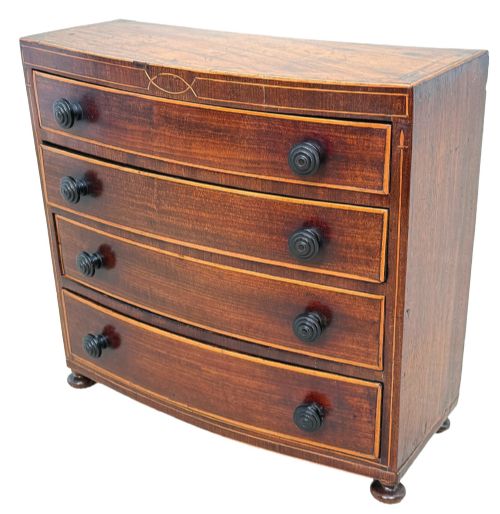
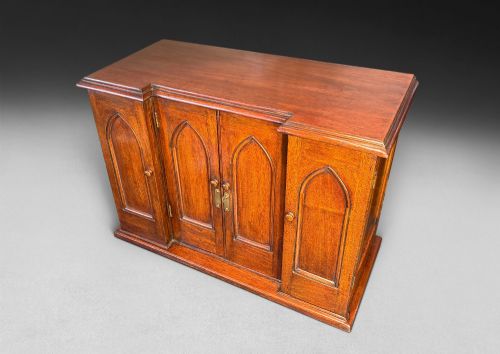
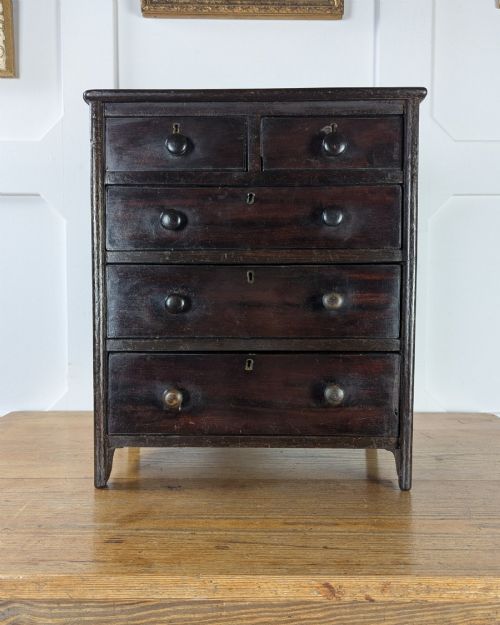
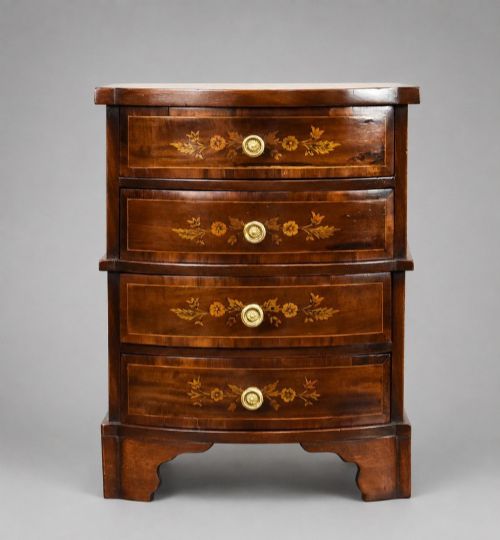
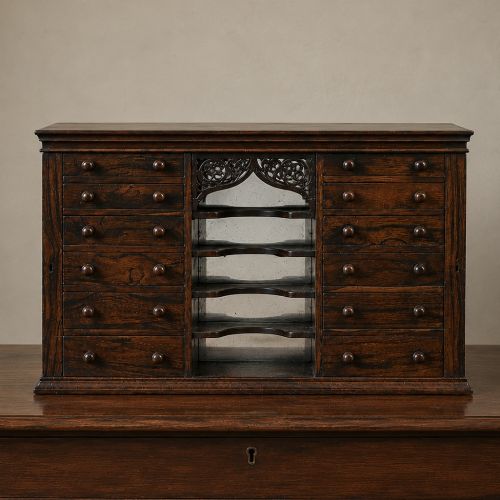
A wood tabletop chest brings domestic storage to a reduced scale, encompassing miniature chests of drawers, collectors cabinets, and specimen boxes designed to sit upon desks or tables. These pieces span Georgian, Victorian, and Regency periods, reflecting the domestic and professional storage needs of past centuries.
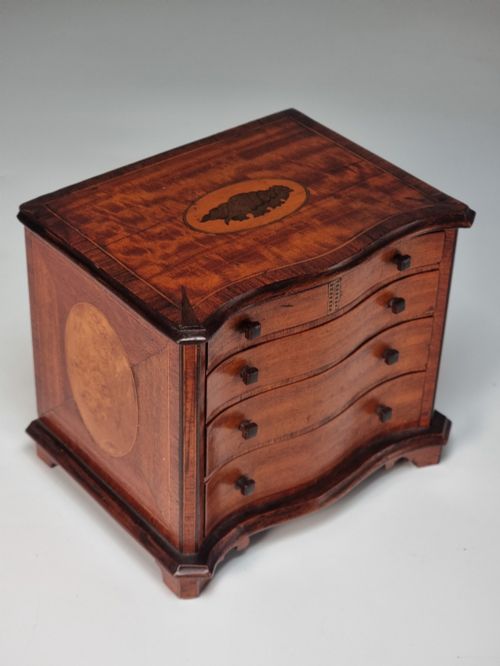
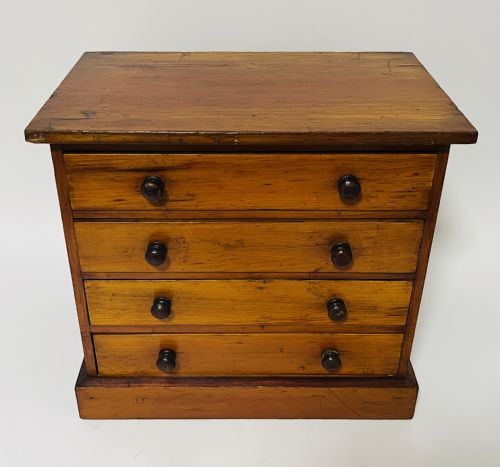
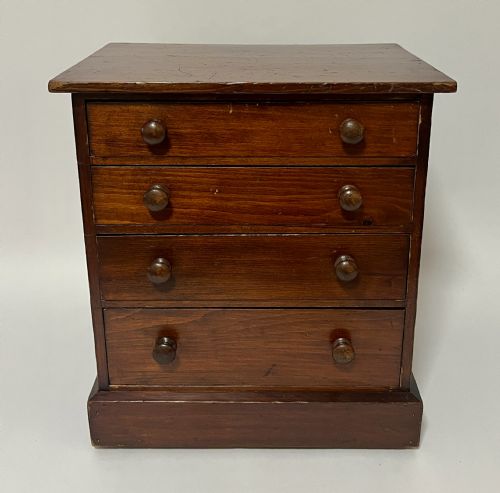
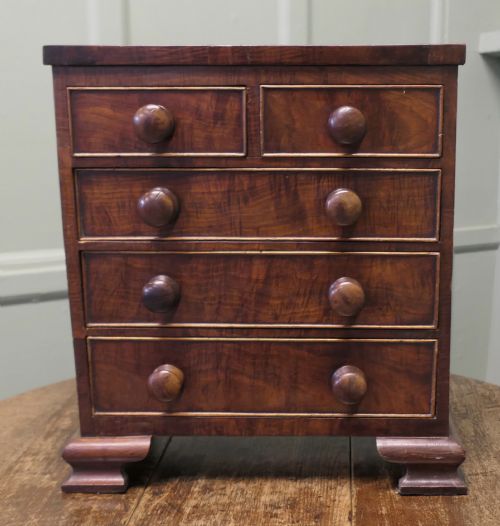
The most common examples encountered in this selection are mahogany and pine miniature chests of drawers, often referred to as apprentice pieces, alongside specialised cabinets intended for coins, minerals, or jewellery.
Makers produced these smaller items with the same care applied to large furniture, utilising fine timbers and precise joinery to create functional storage on a miniature scale.
Materials and construction techniques
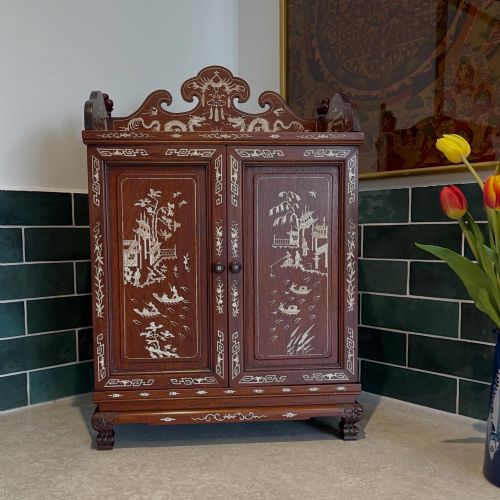
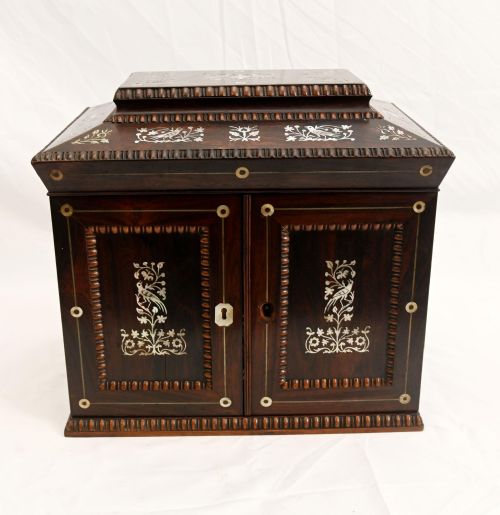
Cabinet makers built wood tabletop chests using dense hardwoods like mahogany, rosewood, and walnut, frequently selecting figured veneers such as burr yew or satinwood for the primary surfaces. Secondary structural elements often utilised pine or deal, while delicate details incorporated brass handles, glass doors, and mother of pearl inlay.
Construction relied on traditional joinery methods, including dovetail joints for drawer boxes and mortise and tenon frames for cabinet structures. Surfaces received careful polishing with wax or shellac to bring out the natural grain and colour of the timber without obscuring its texture.
Wood Tabletop Chest Retail Price Guide 2026
Typical asking prices for wood tabletop chest among the pieces listed under this phrase on Sellingantiques today, from the lower quarter to the upper quarter. They describe what is for sale here now, not the wider market.
The listings show wood tabletop chests spanning the eighteenth, nineteenth, and early twentieth centuries, created in mahogany, rosewood, oak, and pine.
Indicators of quality and craftsmanship
Quality in a wood tabletop chest rests on the precision of the scaling and the fidelity with which full-size furniture techniques are translated down. Superior examples maintain correct architectural proportions and feature finely cut dovetails that remain tight after centuries of use.
The choice of timber and the execution of secondary details, such as matched drawer linings and original brass hardware, separate standard workshop output from exceptional cabinet work.
A. F. Lloyd
The Wood Tabletop Chest Glossary
- Apprentice piece
- A small item of furniture demonstrated to a guild to prove the maker's skill before achieving master status. These pieces mirror full-scale designs with exact proportion.
- Specimen cabinet
- A specialised storage unit containing multiple shallow drawers intended for botanical, geological, or entomological samples. They often feature tight-fitting doors to protect delicate contents.
- Bowfront
- A curved front facade that swells outward in the centre, commonly seen on Georgian and Regency drawer chests. This shape requires specialised bending and shaping of the timber.
- Serpentine
- A horizontally undulating front line that curves inward at the centre and outward at the ends. It demands advanced woodworking skill to execute cleanly on a small scale.
- Wellington chest
- A tall, narrow cabinet secured by a locking side flap that fastens over the drawer edges. This form originated in the nineteenth century for secure personal documentation.
Wood Tabletop Chest: Frequently Asked Questions
How were apprentice pieces used?
Apprentice pieces served as practical tests of skill for woodworkers mastering their trade. Once completed, they functioned as portable storage for personal items or valuable documents.
Today, they survive as domestic decorative objects that provide insight into historical furniture construction methods.
How do I date a wood chest?
Dating relies on observing the timber species, construction methods, and hardware styles. Georgian pieces often feature solid mahogany with hand-cut dovetails, while Victorian examples may incorporate applied veneers and brass drop handles.
Secondary woods inside the drawers also help determine the regional origin and age of the piece.
How do I care for antique wood?
Keep wooden chests away from direct sunlight and steady heat sources to prevent the timber from drying out and splitting. Apply a microcrystalline wax periodically to nourish the surface and maintain the natural patina.
Avoid liquid polishes containing silicone, which can penetrate porous historical finishes and damage the wood grain over time.