

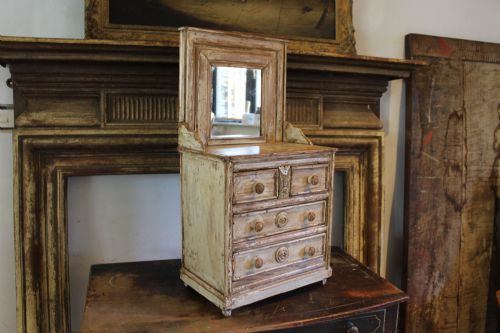


Wood Table Mirror Drawers
Wood table mirror drawers bring together practical reflection and small-scale storage, offering a compact piece of furniture that sits neatly on a surface.
Wood Table Mirror Drawers
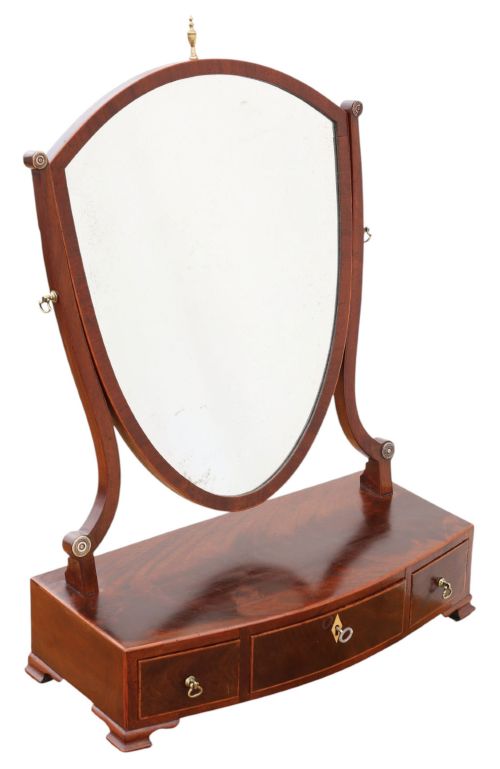
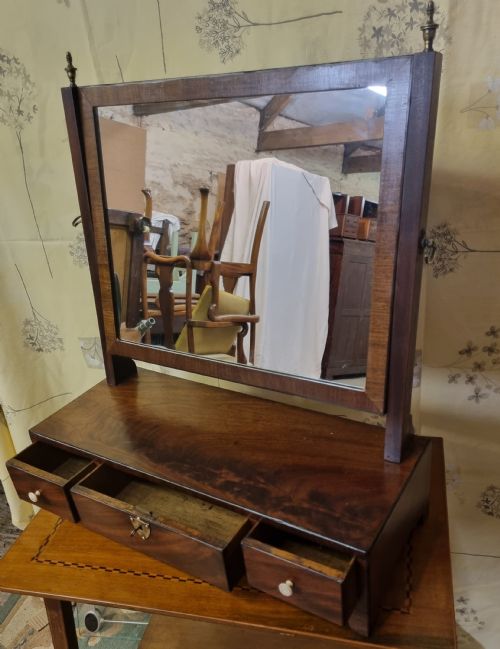
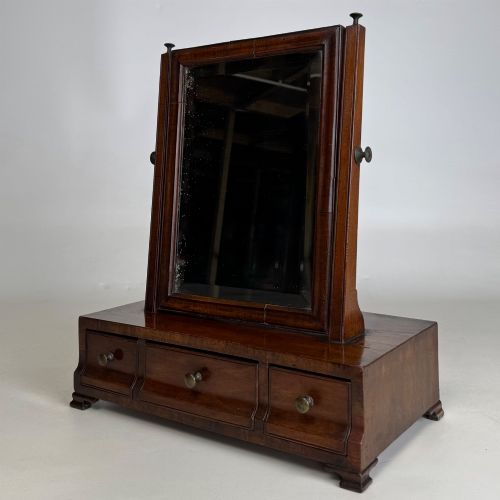
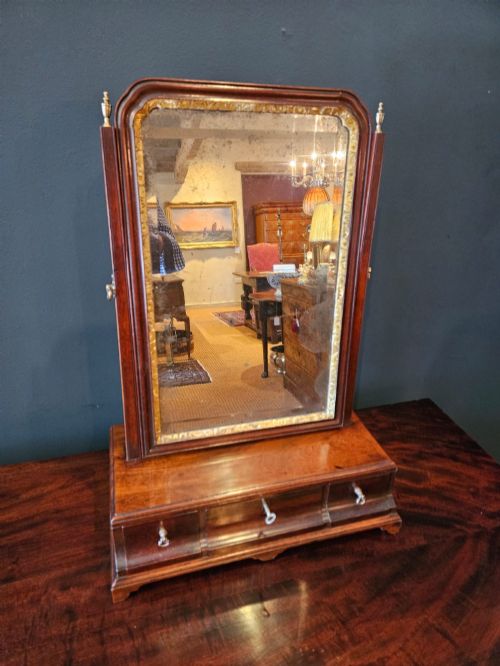
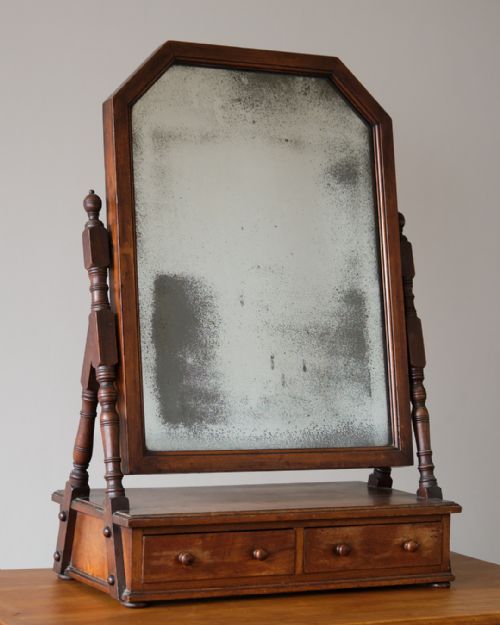
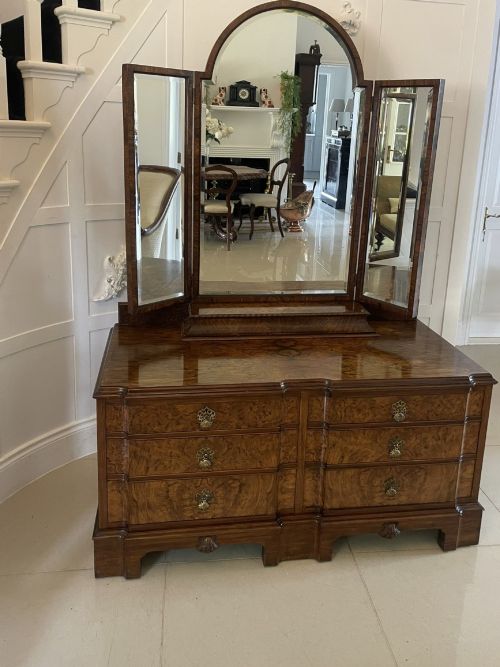
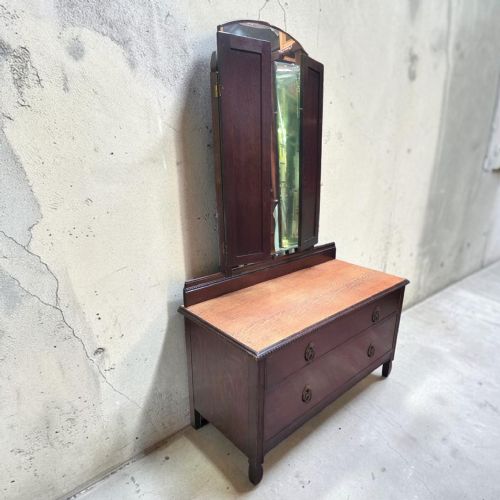
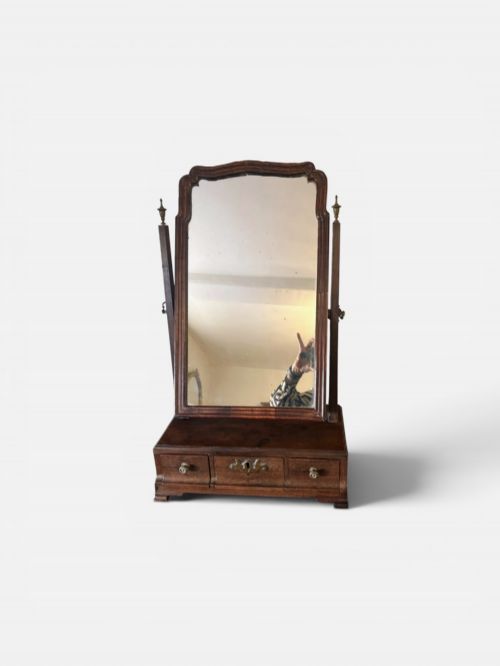
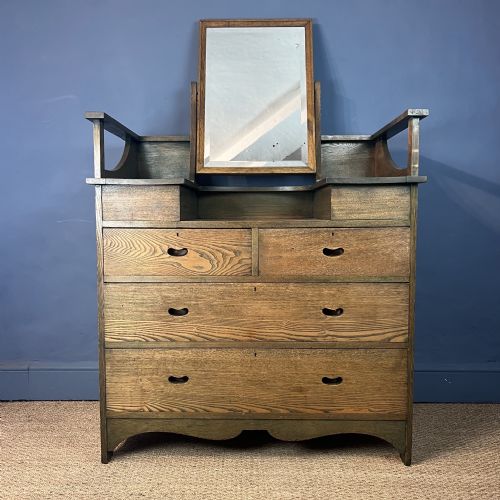
When you search for wood table mirror drawers, you encounter dressing mirrors, toilet mirrors, and swing mirrors designed to sit on top of a larger piece of furniture. These items combine an adjustable looking glass with a small base containing functional storage compartments.
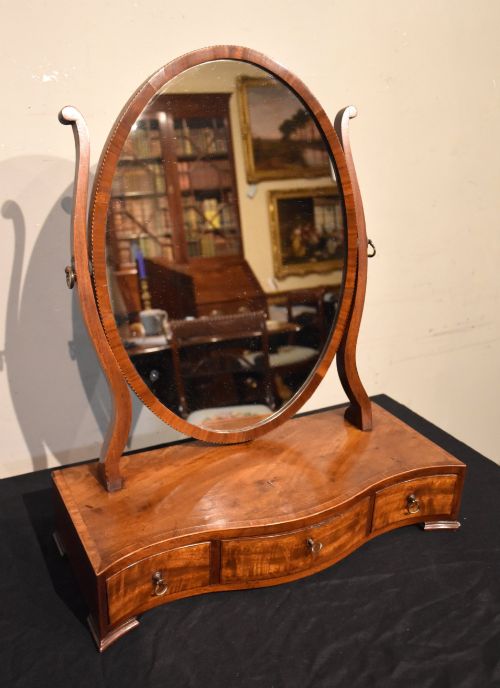
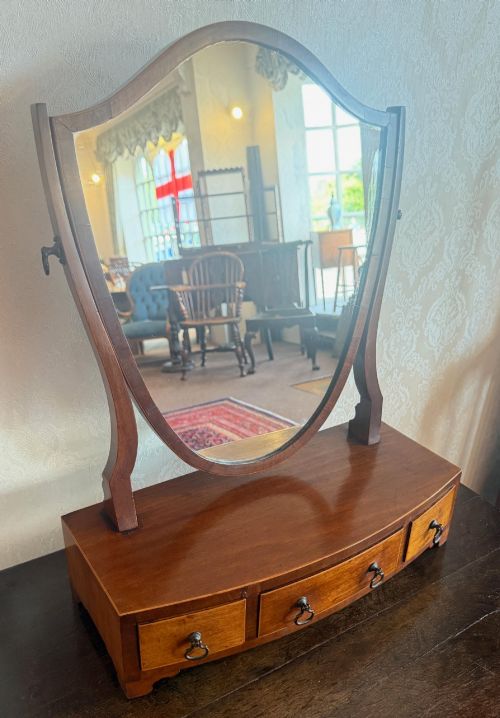
The versions you are most likely to meet on this page date predominantly from the eighteenth and nineteenth centuries, spanning Georgian and Victorian periods. Examples range from simple rectangular toilet mirrors to serpentine fronted designs with multiple small drawers.
Makers and workshops constructed these pieces primarily for personal grooming and morning routines in bedchambers. Surviving examples demonstrate how cabinetry and glass were united to serve a domestic purpose.
Materials and construction
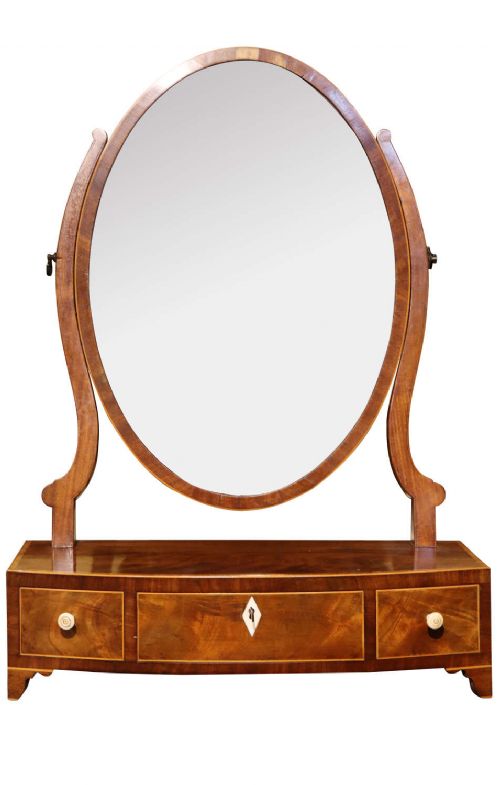
Cabinetmakers built these mirrors using dense hardwoods such as mahogany, walnut, and oak, often applying crossbanding, boxwood stringing, or marquetry inlay to enhance the primary surfaces. Brass fittings, including pivoting screw knobs and small drawer pulls, provide the necessary mechanical movement and decorative contrast.
The glass plate itself sits within a shaped wooden frame, which connects to upright arms by means of brass pivots that allow the user to tilt the angle of reflection. The lower box section employs traditional dovetail joinery to house the drawers securely beneath the mirror plate.
Gentlemen required dedicated shaving stands with adjustable mirrors, proving that historical vanity was by no means restricted to dressing tables.
What separates the finest examples
The standard of timber selection largely dictates the distinction between standard examples and superior pieces, with figured veneers like burr walnut or carefully matched mahogany grain marking out better workshops. Finely proportioned frames and subtle serpentine or shield outlines demonstrate a higher level of design ambition from the cabinetmaker.
The integrity of the original mirror glass, the crispness of inlaid stringing or crossbanding, and the retention of matching brass hardware contribute significantly to the overall cohesion of a piece. Minor details such as hand-cut dovetails inside the drawer boxes reveal the underlying care taken during manufacture.
Heal & Sons·George Walton·Maple & Co.
The Wood Table Mirror Drawers Glossary
- Toilet mirror
- A small mirror designed to stand on a dressing table or chest, typically fitted with a base containing small drawers. These were essential items in eighteenth and nineteenth-century bedchambers.
- Swing mirror
- A looking glass mounted on vertical pivots between two upright posts, allowing the user to tilt the angle of reflection. This mechanism is central to the design of table mirrors.
- Serpentine
- A front contour that curves outward in the centre and inward at the sides, creating a flowing, wavy line. This profile often appears on the drawer fronts of better Georgian examples.
- Crossbanding
- A narrow strip of veneer applied to the border of a panel or drawer front, laid so the wood grain runs at right angles to the central field. It frames the primary timber and adds visual structure.
- Marquetry
- The art of forming decorative patterns using fitted pieces of various coloured woods and veneers. Dutch examples frequently display floral and foliage marquetry across the entire base.
Wood Table Mirror Drawers: Frequently Asked Questions
What is the difference between a toilet mirror and a dressing mirror?
In historical terms, toilet mirrors and dressing mirrors refer to the same functional object used for personal grooming and styling. Both types combine a movable glass plate with a small wooden base containing drawers.
While the names were used interchangeably by makers and buyers, surviving examples show variations in proportion rather than function, ranging from simple rectangular frames to elaborate serpentine forms.
How do I date a mahogany table mirror?
Dating relies on examining the timber species, construction methods, and overall outline of the frame and base. Eighteenth-century versions often feature slender uprights and finely figured mahogany veneers.
Nineteenth-century pieces tend to incorporate heavier mouldings and different secondary woods inside the drawer boxes. Comparing the dovetail joints and hardware styles helps narrow down the period of production.
Are the mirror plates usually original?
Many surviving pieces have had their mirror glass replaced over the centuries due to damage or silver degradation. Original glass often exhibits slight imperfections, foxing, or thinness characteristic of older manufacturing techniques.
Replacement glass is common and does not necessarily diminish the utility of the piece, though collectors often look for original plates when assessing untouched condition.
How do I place a table mirror in a modern room?
These mirrors work well placed on top of modern chests of drawers, sideboards, or dressing consoles to add vertical height and reflective light to a room. Their compact footprints mean they require minimal surface space while providing useful enclosed storage.
Ensure the supporting surface is stable and deep enough to accommodate the full width of the base and the swing clearance of the mirror frame.