
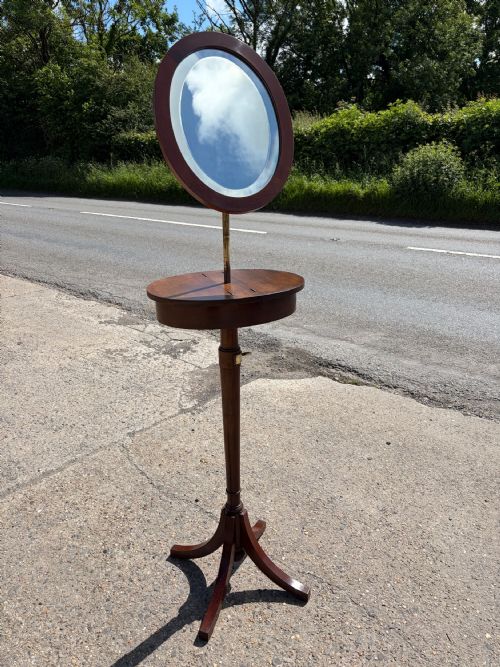


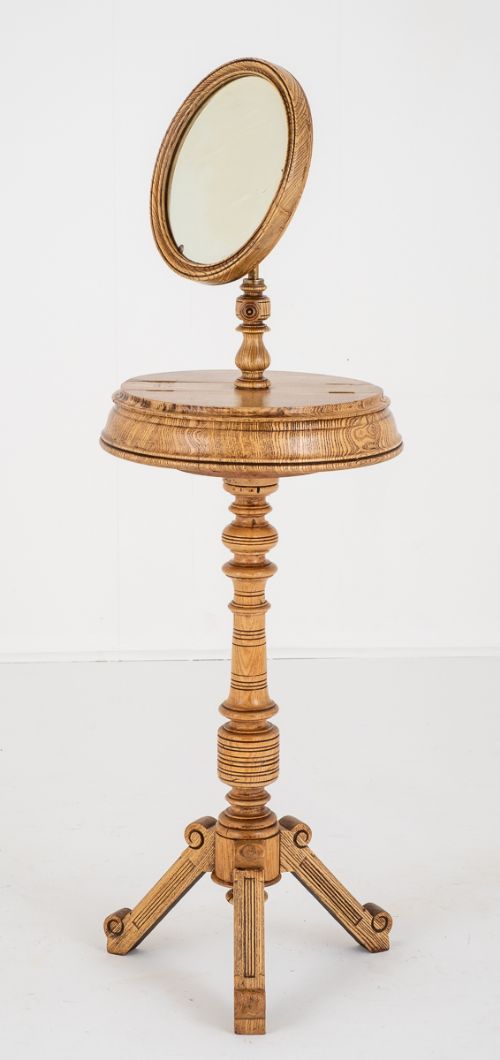


Wood Shaving Stand
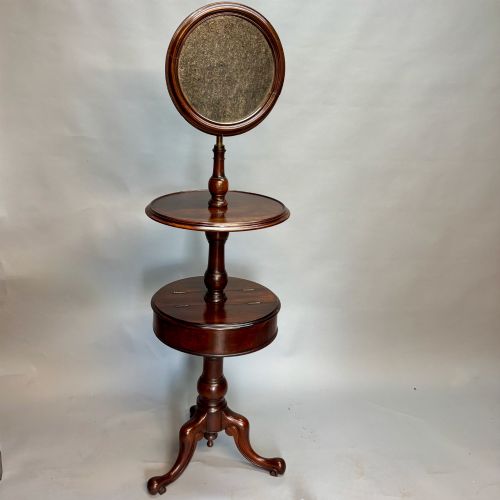
A wood shaving stand is a purposeful piece of antique furniture designed for morning grooming, combining adjustable mirrors and storage for the daily routine.

Wood Shaving Stand
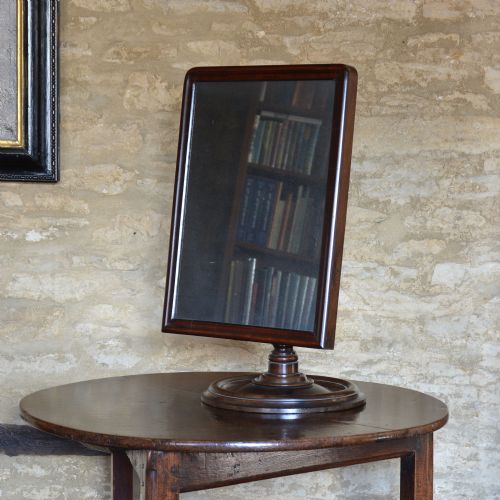
When you search for a wood shaving stand, you encounter a specialised form of antique furniture that evolved through several distinct periods of design. These pieces range from modest tabletop mirrors to elaborate standing furniture featuring adjustable mechanisms and integrated storage.
The versions you are most likely to meet on this page date from the Georgian, Victorian, and Edwardian eras. They appear in forms such as tripod mirrors, telescopic floor stands, and combined vanity tables.
Makers of these items utilised native and imported timbers to suit the domestic fashions of their respective centuries. Examples span from seventeenth-century walnut constructions to Edwardian inlaid mahogany models.
Materials and construction
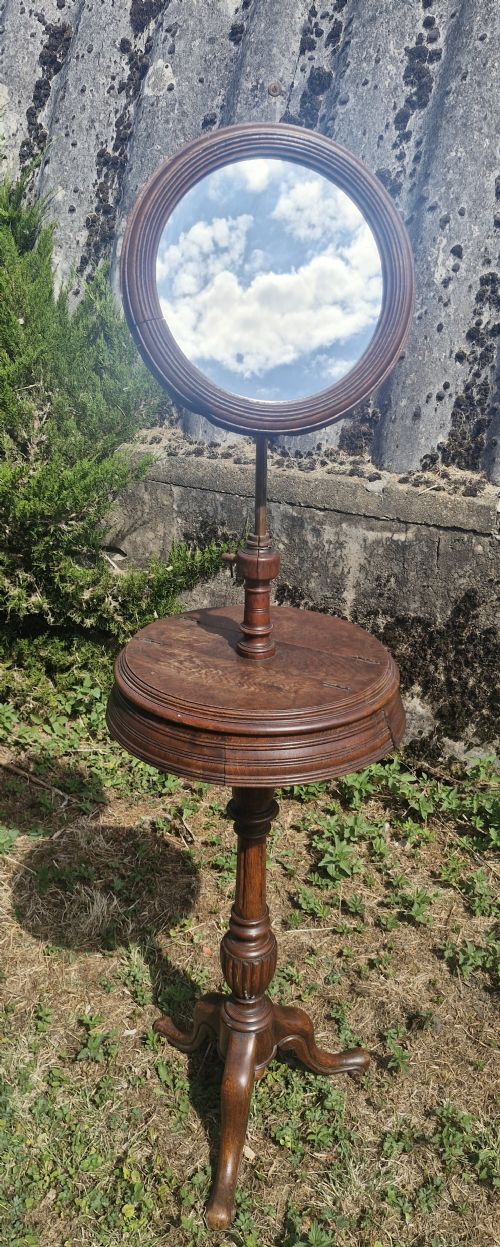
Cabinet makers constructed these stands using substantial hardwoods including mahogany, oak, walnut, ash, and satinwood. Boxwood often provided contrasting stringing and inlay details on finer surfaces.
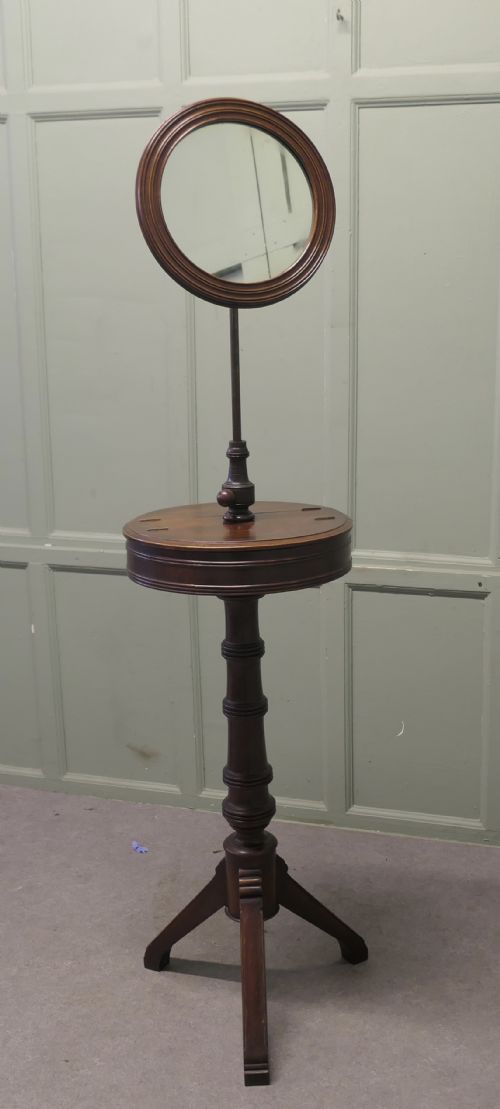
Functional metal components such as brass brackets, pivots, and telescopic columns allowed users to adjust the height and angle of the glass. Mirror glass itself, sometimes bevelled, was mounted within rotating frames supported by stands or tripod bases.
The site's listings feature mahogany, oak, walnut, ash, and satinwood across Victorian, Edwardian, and Georgian periods.
Judging the standard of workmanship
Quality in these stands resides in the precision of the adjusting mechanisms and the stability of the support structure. Smooth telescopic movement and firm joints indicate superior original construction by skilled cabinet makers.
The choice of timber grain, the delicacy of the inlay work, and the integration of storage compartments distinguish utilitarian examples from higher-status dressing furniture.
James Shoolbred
The Wood Shaving Stand Glossary
- Telescopic
- Descriptive of a stand with an inner column that raises and lowers to adjust the height of the mirror. This mechanism often relies on a brass key or thumb screw to secure the position.
- Tripod base
- A three-legged support system providing stability for freestanding mirrors on uneven floors. These bases frequently terminate in pad or scroll feet.
- Toilet mirror
- A smaller mirror designed to sit upon a dressing table or chest of drawers rather than stand independently on the floor.
- Stringing
- Thin lines of contrasting wood inlay used to outline drawers, panels, or table edges for decorative effect. This technique is common in Georgian and Edwardian cabinet work.
- Serpentine
- A curved shape featuring a convex centre flanked by concave sides, often seen on the front edges of Georgian toilet mirrors and drawer units.
Wood Shaving Stand: Frequently Asked Questions
What is a wood shaving stand?
A wood shaving stand is a dedicated piece of grooming furniture equipped with an adjustable mirror and sometimes a small shelf, cupboard, or drawer for shaving tackle.
These items were essential fixtures in gentlemen's dressing rooms and bedrooms before the widespread use of fitted bathroom cabinetry.
How do I date a shaving stand?
Dating relies on identifying the prevailing timber, construction joints, and stylistic details such as brass fittings or inlay patterns. Georgian pieces typically show restrained classical lines, while Victorian examples often feature telescopic brass columns and heavier tripod bases.
Edwardian pieces introduce lighter satinwood or mahogany frames with delicate stringing and inlaid motifs characteristic of the early twentieth century.
Were these stands only used for shaving?
While primarily built to facilitate shaving and personal grooming, many of these stands functioned as general vanity tables or washstands. Some Edwardian variants incorporate a jug and bowl alongside the mirror.
Their adjustable mirrors also made them useful for detailed dressing and hair styling in the bedroom.
How do I maintain the adjustable mirror?
Keep the brass pivots and telescopic mechanisms clean and free of dust, allowing them to move without applying excessive force to the wood. Avoid using harsh chemical polishes on antique timber surfaces.
Place the stand away from direct heat sources and strong sunlight to protect the wood polish and the backing of the mirror glass.