
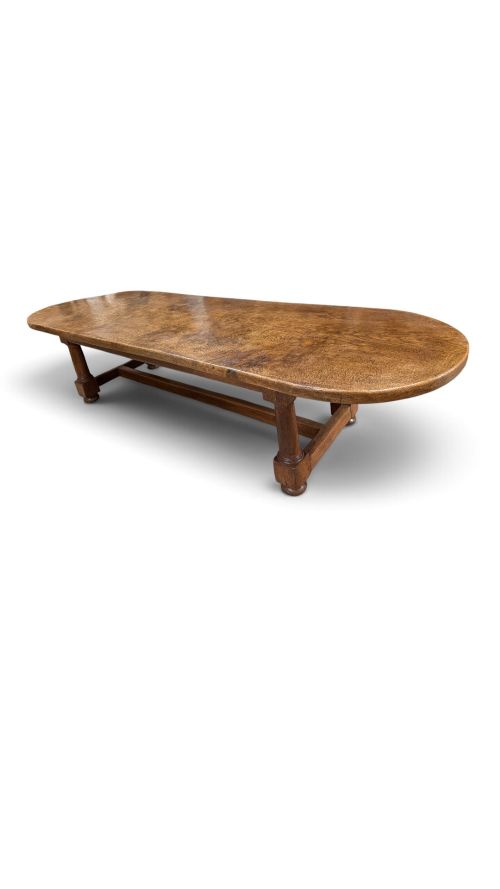
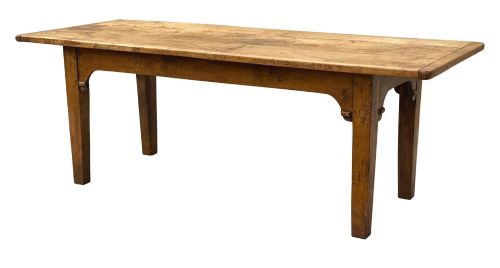
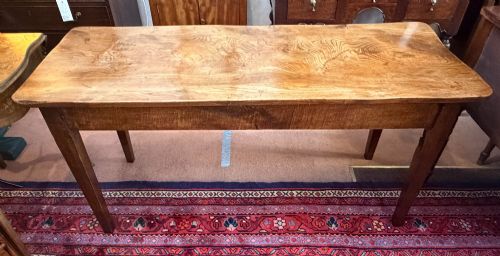
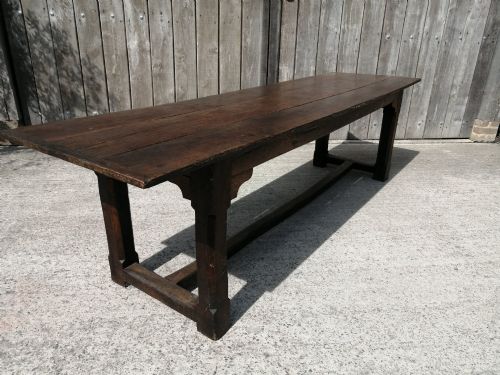
Wood Plank Top Table
A wood plank top table brings honest timber and simple construction into daily use, offering the enduring character of country kitchens and taverns.
Wood Plank Top Table
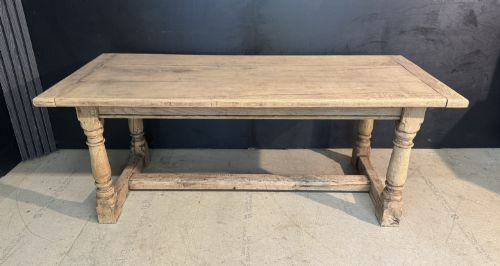
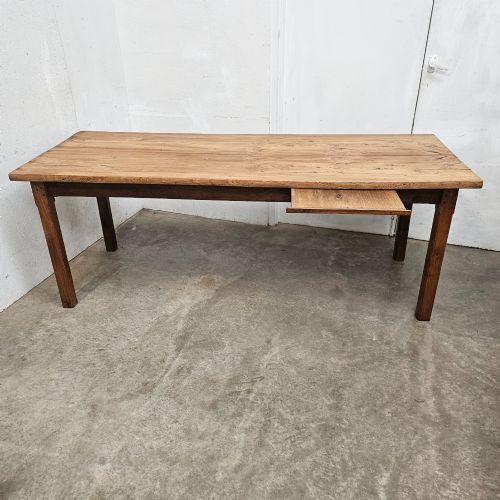
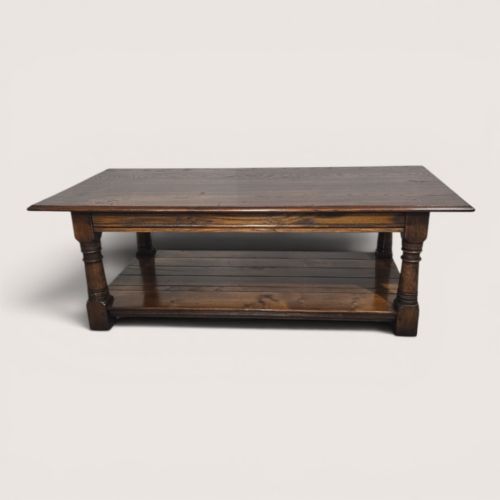
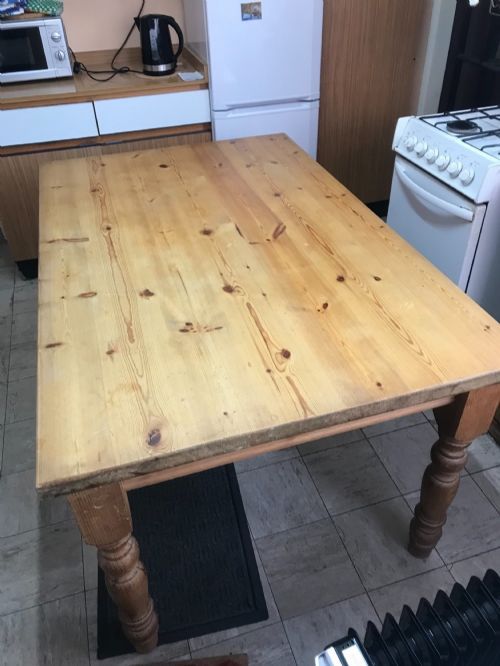
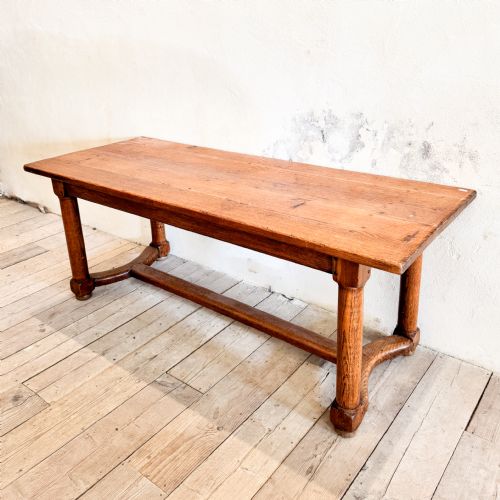
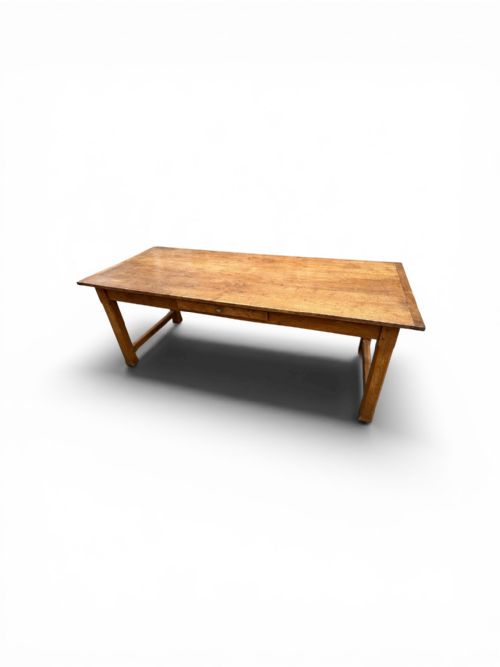
A wood plank top table is a practical surface defined by boards joined or laid side by side to form the top, reflecting centuries of utilitarian furniture making. When searching for a wood plank top table, buyers encounter forms ranging from large dining boards to compact coffee and side tables.
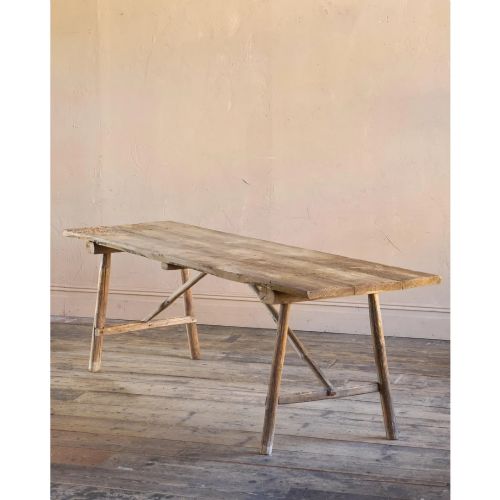
The pieces appearing here span from the 17th century through the Georgian era and into the 20th century, drawing on rural English and French provincial traditions. Dining and refectory formats dominate, alongside occasional, trestle, and cricket tables built for domestic work and dining.
Makers utilised local hardwoods and softwoods to build these sturdy pieces, resulting in surfaces that show the grain clearly. Regional variations emerge in the joinery and base structures, from turned baluster legs to simple trestle supports.
Factors that define quality
Quality rests in the selection of the timber and the integrity of the board arrangement, where single plank tops or tightly fitted multi-board surfaces demonstrate superior original planning. The thickness of the timber and the weight of the base provide an immediate sense of structural proportion.
The balance between the top boards and the supporting frame dictates the overall integrity of the piece. Tables that retain their original timber colour and surface texture without excessive modern intervention represent the higher end of the range.
Listings feature oak, pine, elm, and fruitwood across dining, coffee, and trestle formats.
The Wood Plank Top Table Glossary
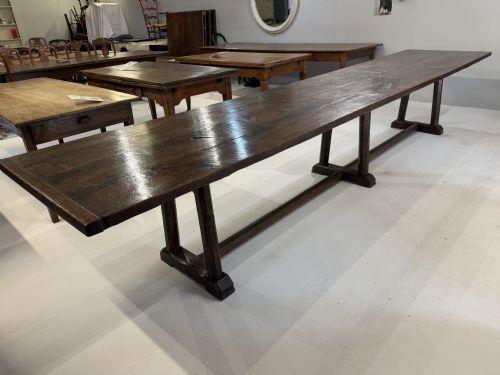
- Refectory table
- A long dining table traditionally used in monastic refectories and later adopted in domestic country houses. These examples feature long timber tops supported by stretcher bases.
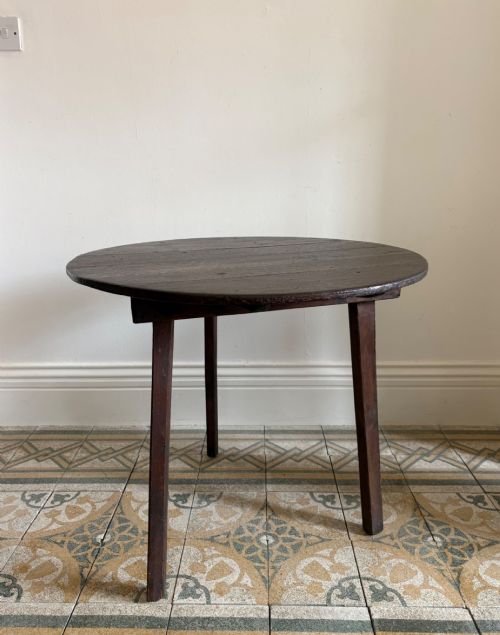
- Cricket table
- A small, lightweight table typically standing on three splayed legs with a round top. This regional English form was designed to stand steady on uneven flagstone floors.
- Trestle table
- A table comprising a horizontal board supported by two vertical frame pieces or trestles. This ancient design allows for maximum legroom along the length of the board.
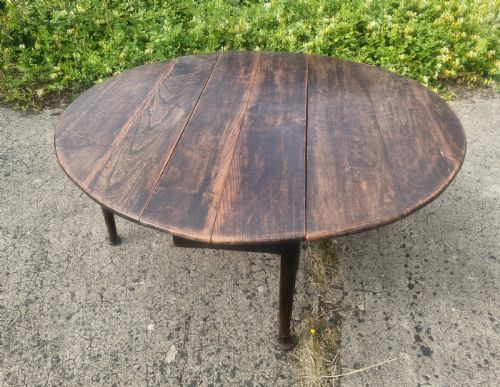
- Gateleg table
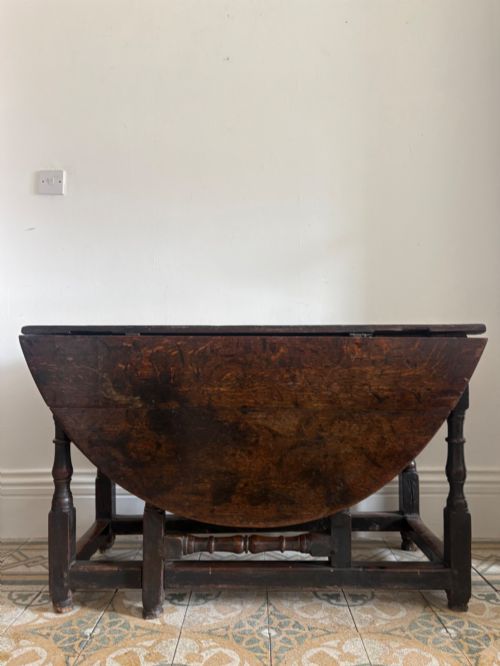
- A table with hinged leaves that are supported by swing-out legs resembling a swinging gate. This clever mechanism allows the surface area to expand or contract.
- Fruitwood
- A collective term for timber harvested from fruit-bearing trees such as cherry or pear. Cabinet makers valued these woods for their fine grain and warm tone.
Wood Plank Top Table: Frequently Asked Questions
What is a plank top table?
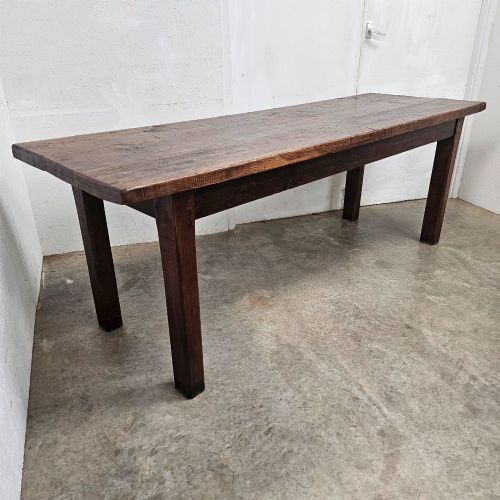
A plank top table is built from solid wooden boards joined together or used individually to form the surface. These tops rest upon sturdy wooden frames designed for everyday utility.
Such tables formed the centre of domestic life in farmhouses and provincial homes, providing a reliable space for food preparation and communal dining.
How do I care for a wooden tabletop?
Maintenance involves keeping the timber clean with a dry or slightly damp cloth and avoiding harsh chemical polishes. Natural oils help preserve the dry surface character of older timbers.
Placing the table away from direct heat sources prevents the wooden boards from splitting or warping over time.
What wood types are most common?
Oak and pine appear frequently across these listings, alongside regional timbers like elm, sycamore, and fruitwood. Each material imparts a distinct weight and colour to the finished surface.
English and French makers utilised whatever sturdy local timber was readily available in their immediate surroundings.
Are these tables suitable for modern dining?
These tables adapt readily to contemporary dining spaces due to their generous proportions and durable timber construction. Their straightforward designs complement both traditional and modern interiors.
Generations of prior use mean the wood already carries the marks of daily life, making them forgiving surfaces for regular dining.