

Wood Nest of Tables
When choosing a wood nest of tables, you select a set of graduated pieces designed to stack together neatly when floor space is at a premium.
Wood Nest of Tables
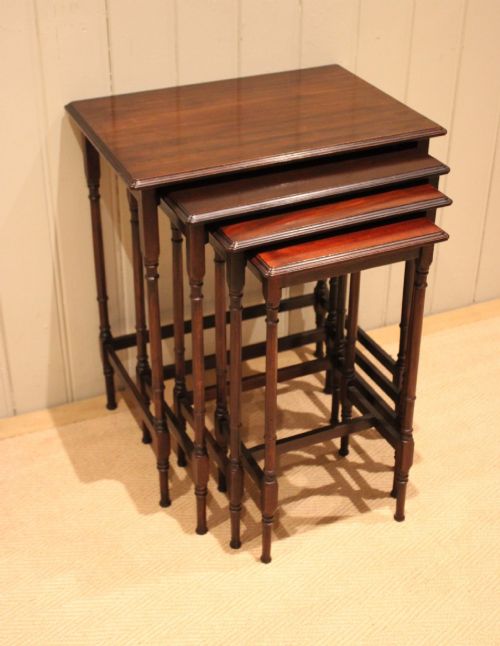
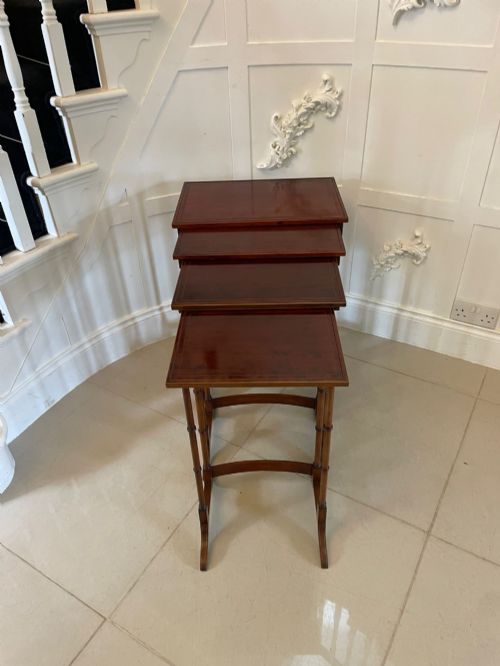
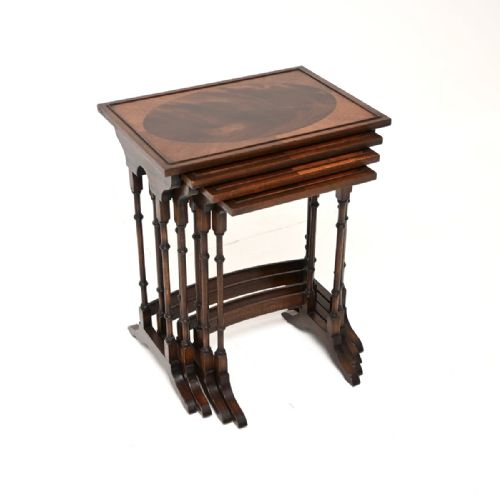
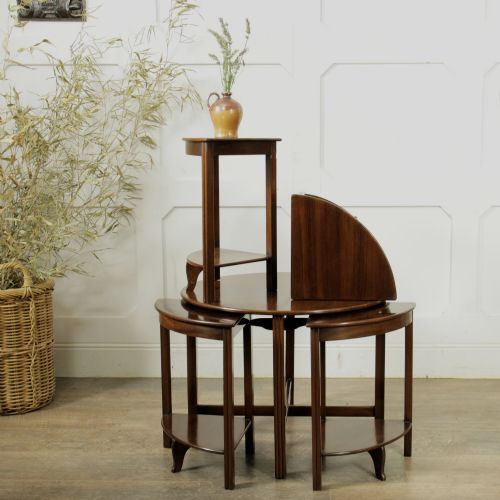
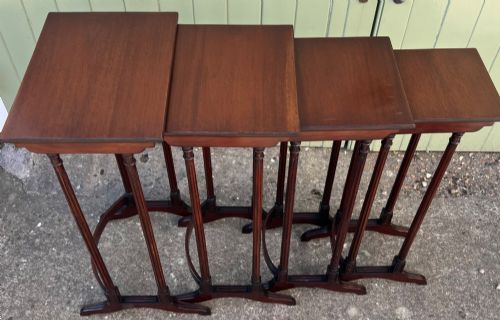
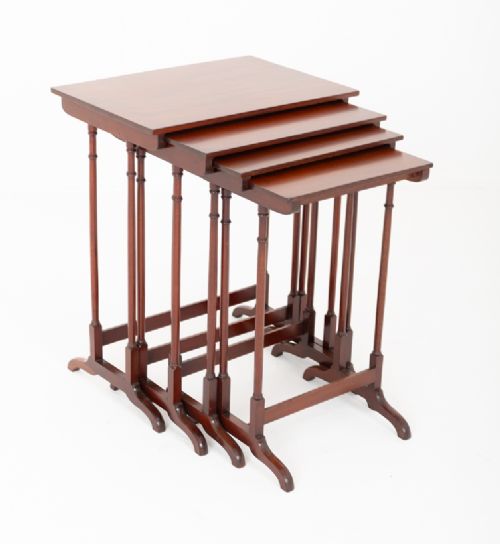
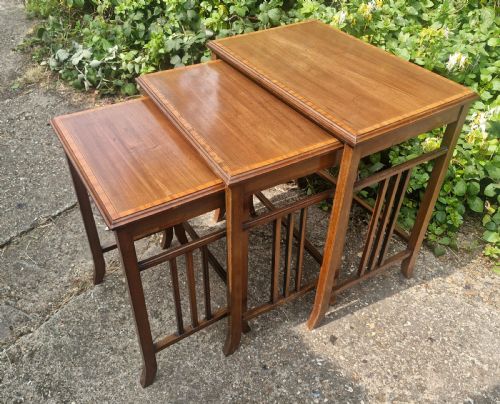
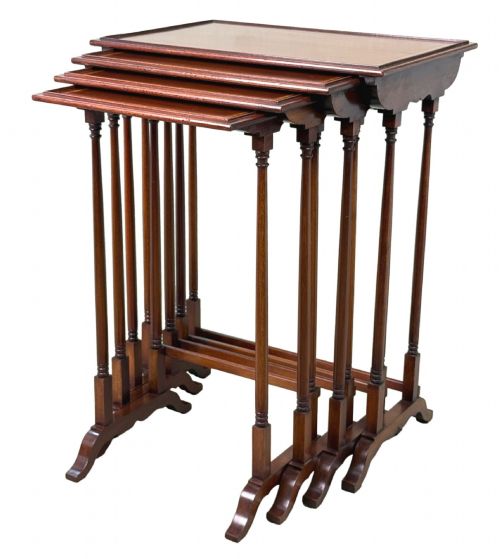
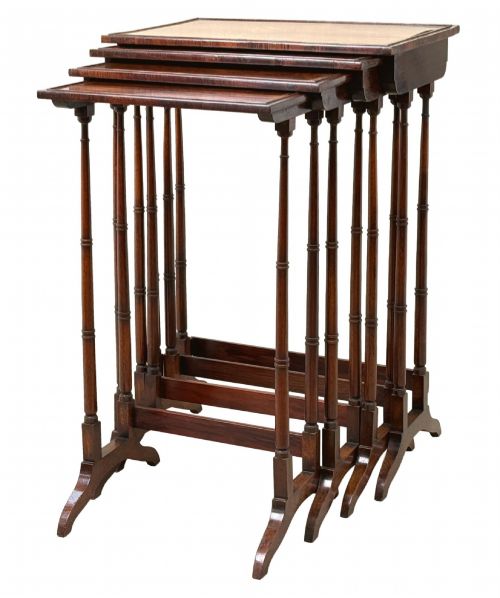
A wood nest of tables comprises a set of graduating occasional tables that slide neatly inside one another for compact storage. These practical items serve tea, hold books, or display decorative objects before separating across a room when guests arrive.
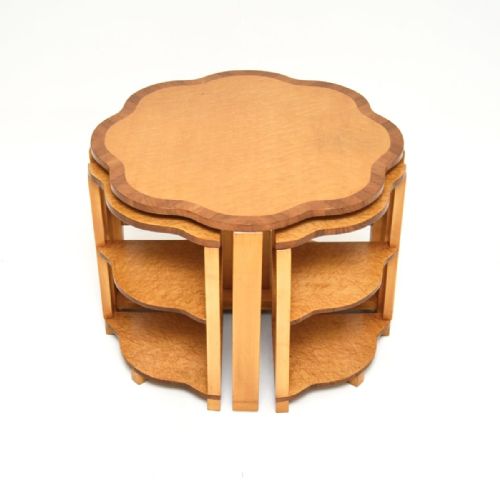
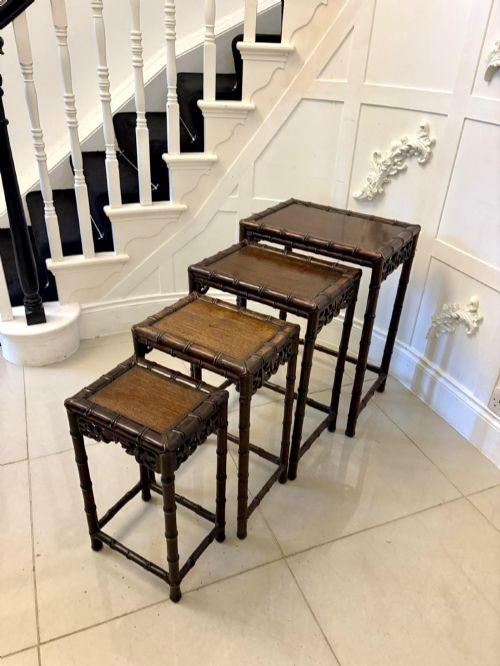
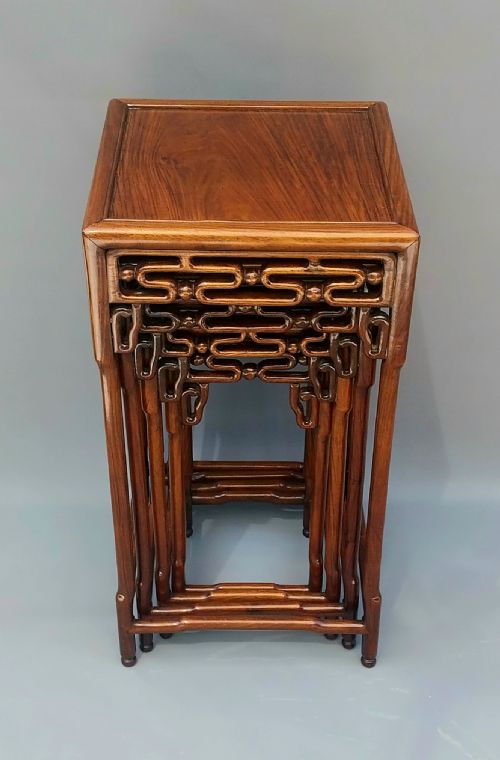
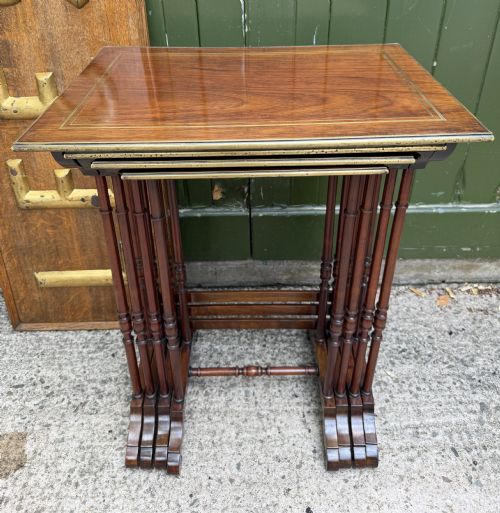
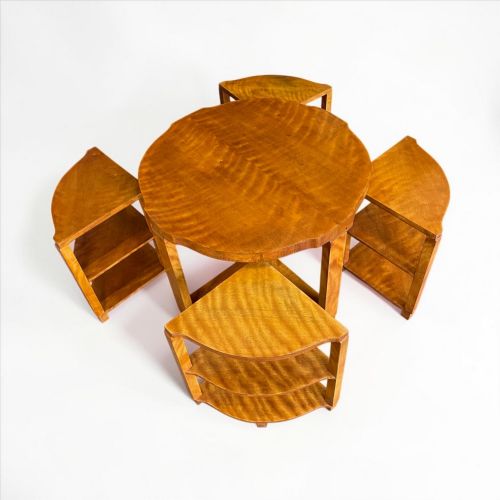
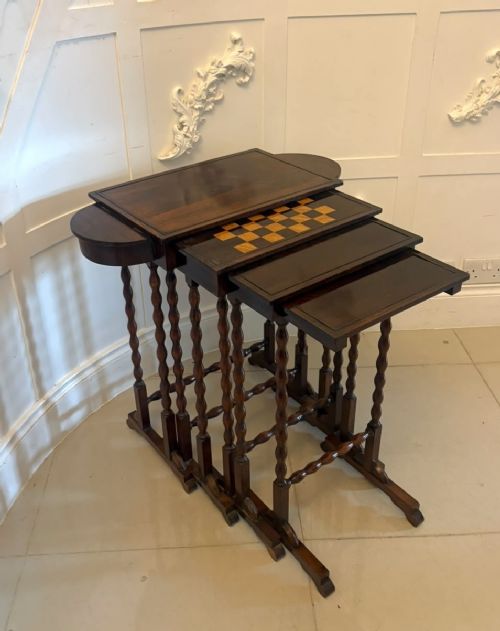
Origins vary widely across the selection, including English cabinetmakers, French ateliers, and Chinese workshops producing hardwood sets. Formats range from simple rectangular tops to circular arrangements, serpentine satinwood surfaces, and occasional specialist designs incorporating integrated chess boards.
Materials and Construction Techniques
Cabinetmakers constructed these sets using dense tropical hardwoods and native timbers, notably mahogany, rosewood, satinwood, and walnut. Workshops often applied fine veneers over secondary woods to create decorative surfaces while maintaining structural stability across the graduating frames.
Decorative embellishments frequently include boxwood inlay, brass stringing, hand-painted motifs, and intricate carved details such as faux bamboo or Oriental motifs. Joinery techniques ensured that each smaller table slid smoothly into the frame of the next without binding or scratching the polished surfaces.
Some Edwardian sets included hidden sliding surfaces just large enough to hold a single teacup and a biscuit.
Factors Defining Quality
The distinction between standard examples and the finest pieces lies in the selection of timber figures, such as highly figured rosewood, birds-eye maple, or intricately patterned satinwood veneers. Superior sets exhibit meticulous attention to the grain alignment across all graduating surfaces.
Construction rigour separates exceptional items from everyday utility pieces, specifically in the precision of the leg clearances and the crispness of inlaid stringing or hand-carved mouldings. Maker attribution and integrated functions, such as built-in chess boards, elevate the standing of individual sets.
Émile Gallé·The Hille Furniture Company·Heal's
The Wood Nest of Tables Glossary
- Quartetto
- A set of four graduating tables designed to nest together. This traditional term appears frequently in nineteenth-century and Edwardian catalogue descriptions.
- Stringing
- A narrow inlay of contrasting wood or light-coloured material set into the surface. It forms delicate decorative borders around table tops.
- Veneer
- A thin layer of figured wood applied over a stable secondary timber. This technique displays rich grain patterns without risking the warping associated with solid exotic boards.
- Hongmu
- A traditional Chinese term for dense hardwoods used in furniture making. These heavy timbers display deep reddish-brown tones and natural lustre.
- Serpentine
- A furniture form featuring a undulating, wave-like curved front edge. It requires skilled woodworking to shape the wooden frame accurately.
Wood Nest of Tables: Frequently Asked Questions
What is a quartetto nest of tables?
A quartetto set specifically consists of four graduating tables designed to slide neatly into one another. The term derives from musical terminology indicating a group of four.
Cabinetmakers during the Regency and Edwardian periods produced these sets extensively for drawing rooms where space-saving versatility was required.
How were these tables used historically?
These tables remained stacked against a wall or beside a chair until needed for serving tea or holding small items. Hostesses separated the tables around the room to accommodate multiple guests.
Once entertaining concluded, the tables nested back together into a single compact footprint.
How do I distinguish Edwardian sets from Regency ones?
Regency sets often feature rich rosewood, heavy brass inlay, and saber legs reflecting classical revival influences. Edwardian examples tend to utilise lighter mahogany or satinwood with delicate boxwood stringing and Sheraton revival styling.
Construction details and secondary wood choices also help verify the manufacturing period.
Can I use nesting tables on modern wooden floors?
Yes, though you should check the condition of the table feet and consider small protective pads if the bases are bare wood or metal. Regular movement across hard floors can cause minor friction wear on the bottom edges.
Lifting rather than sliding the tables prevents unnecessary scuffing.