


Wood Marquetry Desk
A wood marquetry desk brings patterned veneers and pictorial panels into a workspace, offering a surface for correspondence set within decorative timbers.
Wood Marquetry Desk
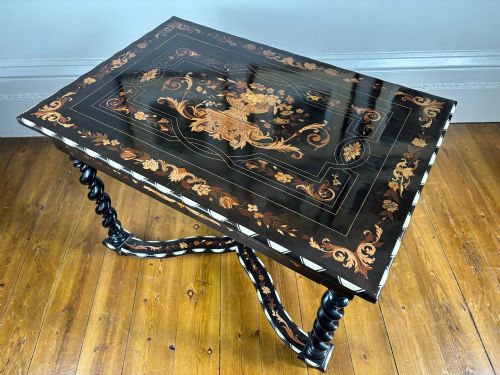
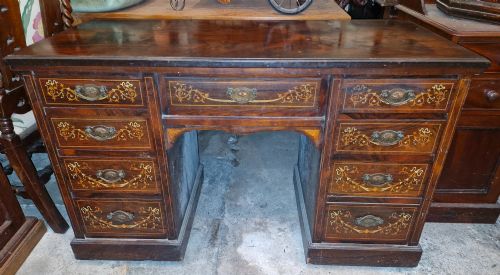
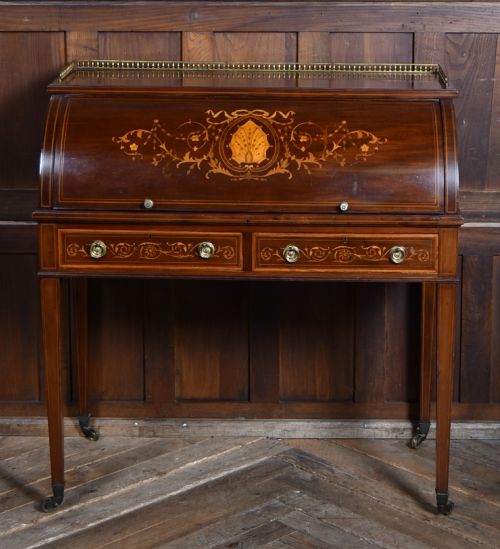
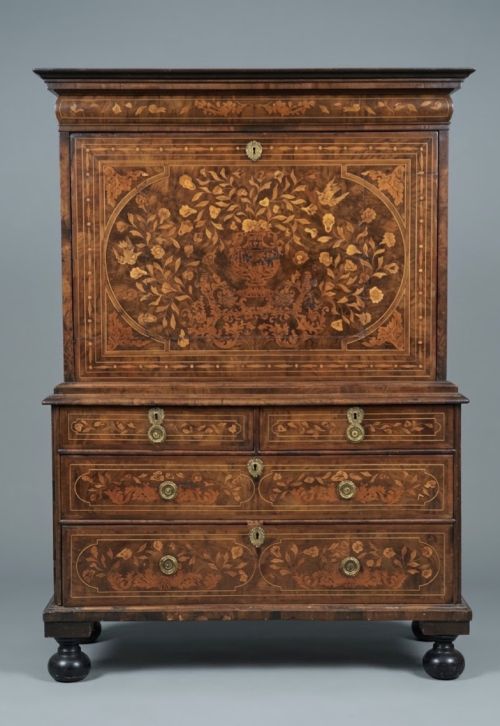
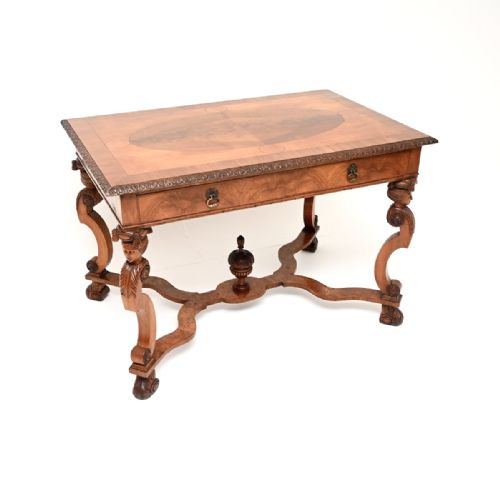
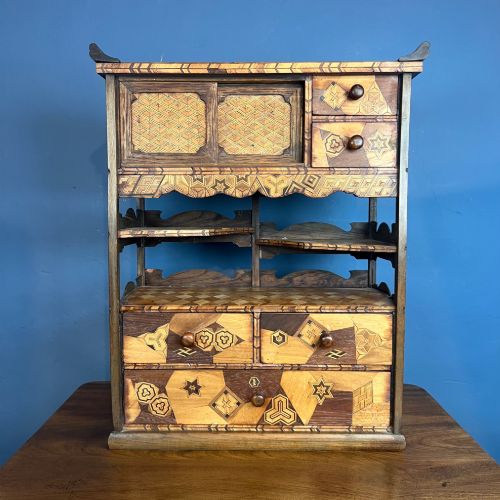
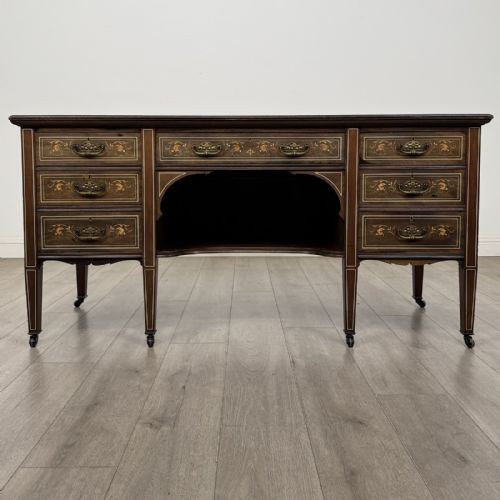
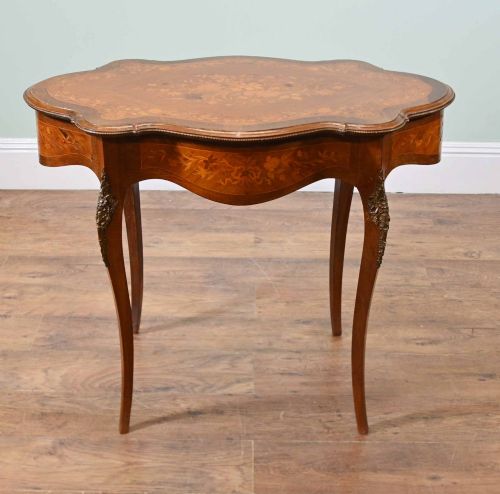
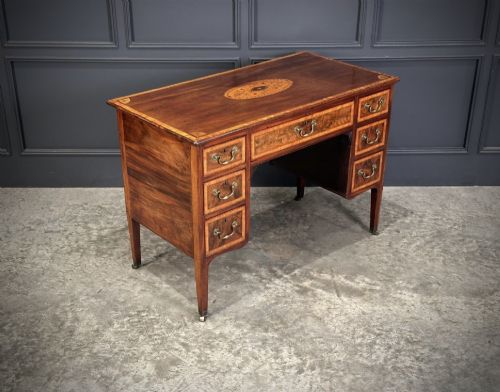
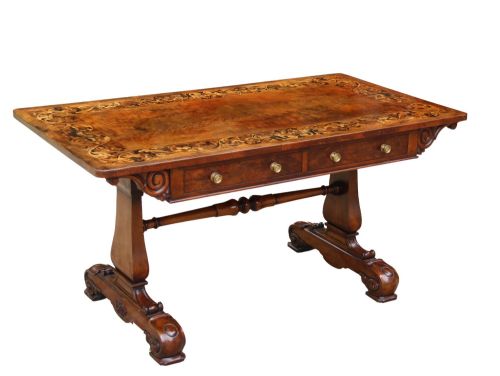
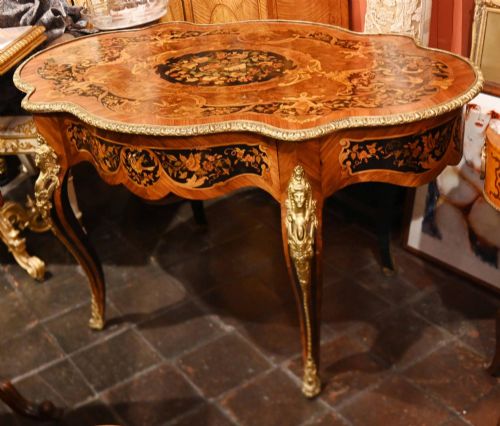
A wood marquetry desk comprises writing surfaces ornamented with fitted wood veneers forming floral, geometric, or pictorial scenes. These pieces emerge primarily from the eighteenth and nineteenth centuries, spanning Georgian, Regency, Victorian, and Edwardian periods.
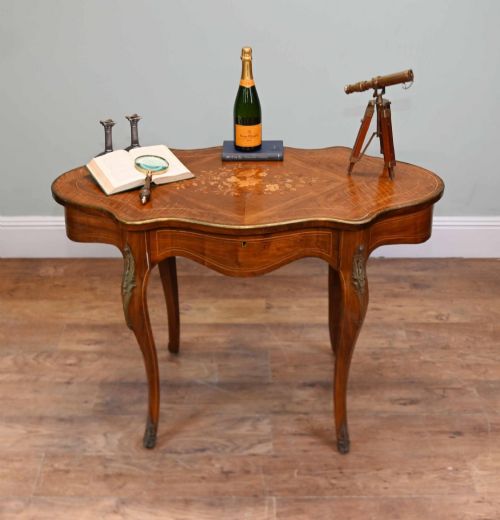
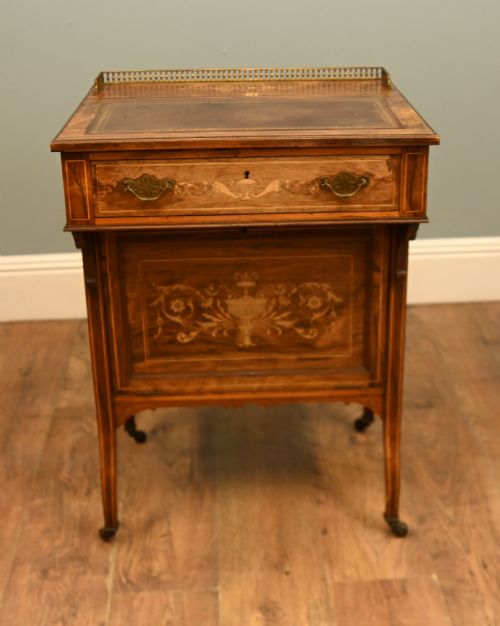
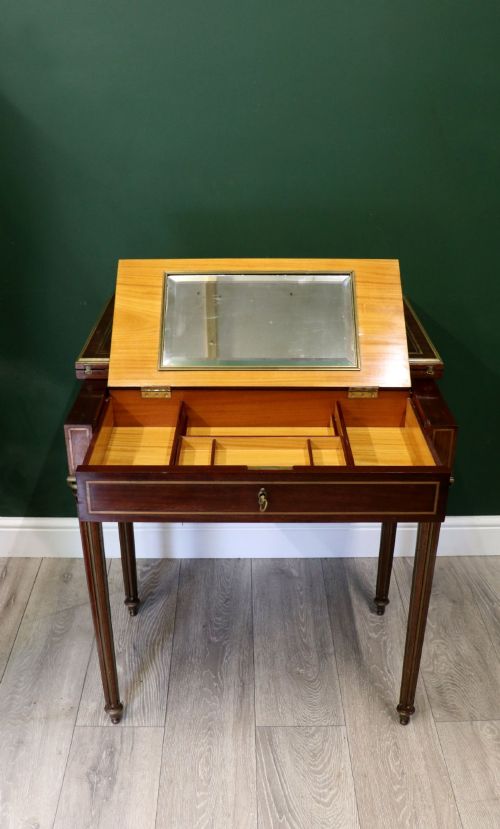
Buyers encounter various specific forms on this page, including bureau de dame writing cabinets, pedestal davenports, kidney-shaped tables, and slant-front writing desks. French and Dutch workshops dominate the stylistic range alongside English cabinet makers.
Makers utilise foundational carcase timbers such as mahogany, walnut, rosewood, satinwood, and kingwood. The decorative surface employs contrasting woods cut and laid into intricate patterns across the writing flap, top, and drawer fronts.
How they were made
Cabinet makers constructed the primary carcase using solid woods like mahogany, walnut, or oak, providing a stable frame for the decorative exterior. Veneers of contrasting timbers were then sliced thin for the surface work.
Artisans cut pictorial or geometric designs into the veneer using hand saws, fitting different wood species together like a puzzle before gluing the entire sheet to the carcase. Details such as bone, brass, or ormolu mounts were added to accent the wooden panels.
Wood Marquetry Desk Retail Price Guide 2026
Typical asking prices for wood marquetry desk among the pieces listed under this phrase on Sellingantiques today, from the lower quarter to the upper quarter. They describe what is for sale here now, not the wider market.
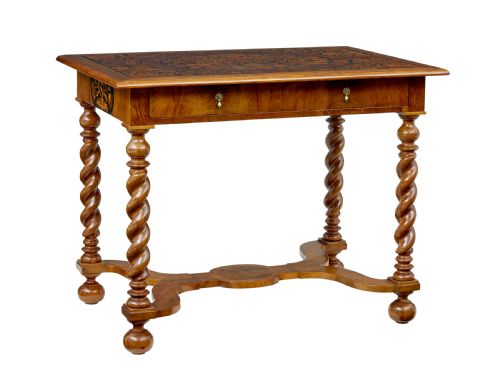
Listings feature writing desks, side tables, and armchairs from the eighteenth, nineteenth, and early twentieth centuries, constructed in mahogany, walnut, rosewood, and satinwood.
What varies in quality
The sophistication of the veneer work separates standard pieces from exceptional examples, with finer items displaying complex pictorial depth and tightly fitted joints. The choice of secondary and primary timbers, such as figured satinwood or kingwood, also dictates the calibre of the piece.
Hardware integration and interior secondary fittings define the standard of execution. High-grade desks feature robust ormolu mounts, well-fitted pigeonholes, and stamped maker attribution, reflecting the workshop's original standing.
Gill and Reigate·Edwards and Roberts·James Shoolbred
The Wood Marquetry Desk Glossary
- Marquetry
- The art of applying fitted pieces of wood veneer to a carcase to create pictorial or geometric designs. This technique distinguishes decorative writing tables from plain veneered furniture.
- Bonheur du jour
- A small, light lady's writing desk featuring a raised cabinet section with shelves or drawers above the main writing surface. Originating in France, these desks became popular during the nineteenth century.
- Ormolu
- Gilded bronze mounts applied to furniture edges and legs for decorative effect. Workshops frequently combined these metal accents with exotic wood veneers.
- Satinwood
- A lustrous, yellow-brown timber utilised extensively for contrasting details and primary veneers in eighteenth and nineteenth-century cabinet making. Its bright grain reflects light across writing surfaces.
Wood Marquetry Desk: Frequently Asked Questions
How do I care for antique marquetry?
Maintain wood marquetry desks by keeping them away from direct sunlight and sudden temperature changes, which can dry out the old veneers. Use a soft cloth for dusting and apply microcrystalline wax sparingly to nourish the timber.
Avoid liquid polishes and damp environments, as moisture compromises the old animal glues holding the delicate wood veneers to the carcase.
Are these desks suitable for daily use?
These desks accommodate laptop use and writing when treated with care, though historic writing surfaces benefit from protective blotters. The structural integrity is typically robust, having survived a century or more of domestic service.
Consider the height and kneehole clearance of nineteenth-century writing tables, as older dimensions occasionally differ from modern ergonomic standards.
How do I identify the wood species?
Identify woods by examining the grain patterns, colour tones, and density visible across the table top and drawer fronts. Mahogany presents a reddish-brown hue, walnut shows deeper swirling grains, and satinwood offers a golden sheen.
Many pieces combine multiple timbers to create contrast within the marquetry panels, using exotic woods alongside native British hardwoods.