
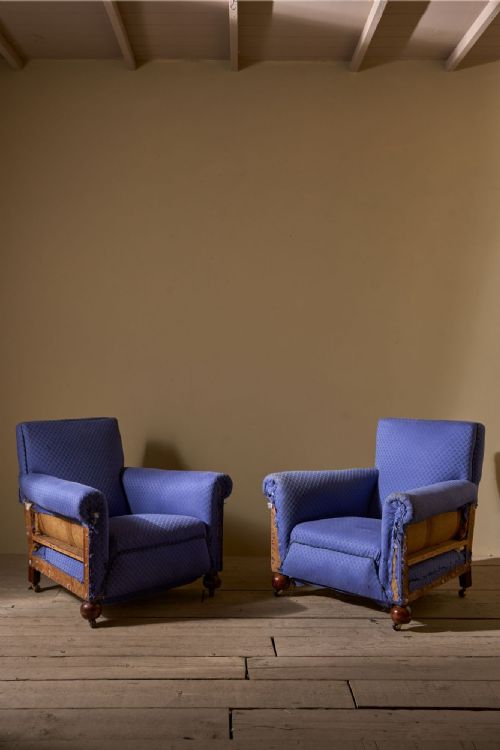
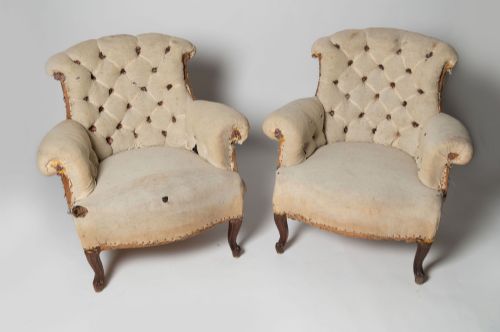
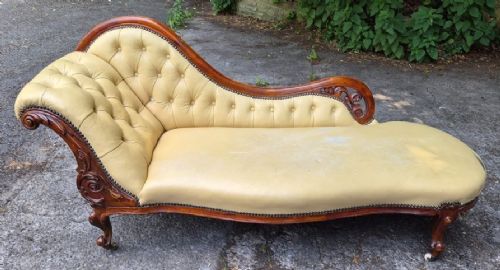
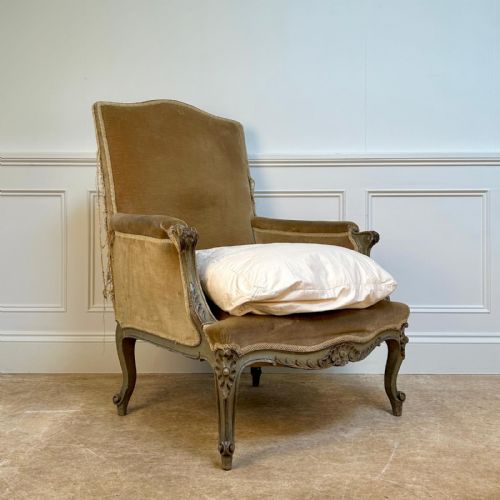
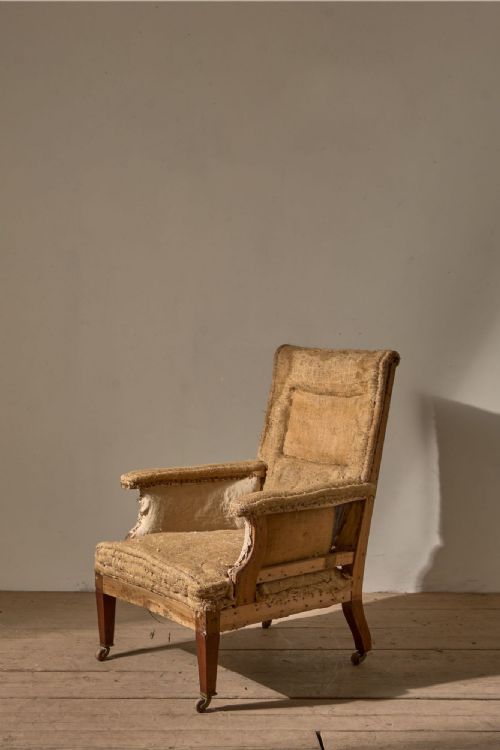
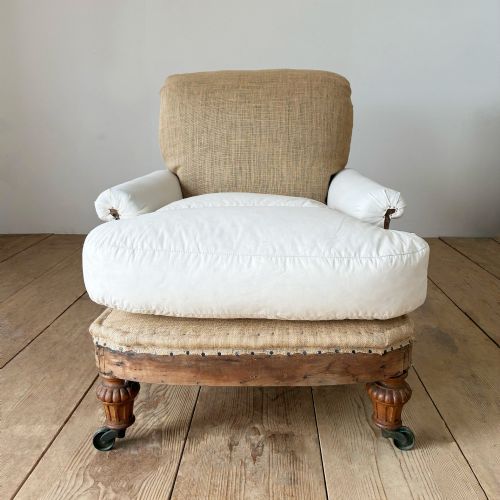


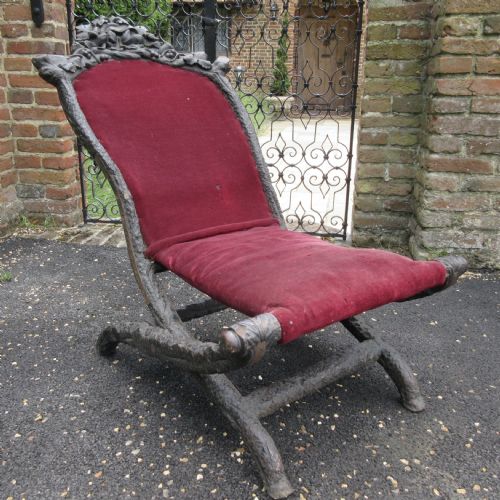
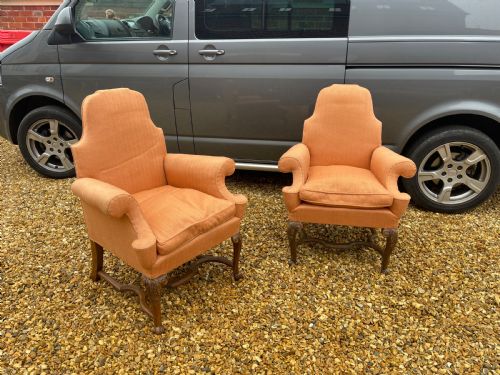
Wood Frame Lounge Chairs
Wood frame lounge chairs bring tactile warmth and enduring structure to a room, offering seats designed for long hours of ease.
Wood Frame Lounge Chairs
Wood frame lounge chairs encompass an array of seating from the nineteenth century onward, including Victorian carved models, Edwardian bergères, and Art Deco club chairs. These pieces bridge the gap between formal parlour seating and deep relaxation, relying on exposed timber frames to anchor their design.
The selections available here lean heavily toward nineteenth century and early twentieth century origins, featuring substantial mahogany, walnut, and beech structures. Buyers will encounter French painted frames alongside English country house pieces and occasional revival styles such as Regency and Louis XV.
Forms extend beyond standard armchairs to incorporate chaise longues, day beds, and folding chairs with exposed wooden skeletons. Each piece displays the particular domestic habits of its period, prioritising upholstered comfort held within a sturdy wooden build.
Materials and construction
Makers built these frames using dense hardwoods like mahogany, walnut, and beech, which accepted deep carving and sustained structural weight. Woodworkers shaped rails and legs through a combination of steam bending, lathe turning, and hand chiselling.
Upholstery techniques involved traditional stuffing applied over webbing or springs, enclosed in fabrics such as velvet, patterned textiles, or cane panels. Giltwood and painted finishes added decorative polish to select French and revival frames.
The listings on this page span the Victorian, Edwardian, and Art Deco eras, constructed from mahogany, walnut, beech, and giltwood.
Judging the standard of manufacture
Quality rests in the crispness of the timber carving and the architectural integrity of the frame joints. Superior examples display thoughtful proportions where the grain of the mahogany or walnut enhances the silhouette.
The integration of the upholstery with the wooden skeleton distinguishes finer work from standard production. Well executed pieces maintain tight joinery and sympathetic surface finishes that respect the age of the timber.
Gillows·Syrie Maugham
The Wood Frame Lounge Chairs Glossary
- Bergère
- An enclosed upholstered armchair with wooden sides and a back, often incorporating cane work. This French form gained popularity for domestic comfort.
- Chaise Longue
- An elongated upholstered chair designed for reclining, combining a seat with a built-in footstool. These pieces often feature carved wooden frames.
- Giltwood
- Timber coated with a thin layer of gold leaf or gesso. This decorative finish appears frequently on French revival frames.
- Mahogany
- A durable, reddish-brown tropical hardwood favoured by cabinetmakers for its strength and fine grain. It forms the structure of many nineteenth-century seating pieces.
- Regency Revival
- A design movement looking back to the early nineteenth century style. Pieces from this grouping adapt classical English lines for later Victorian and Edwardian interiors.
Wood Frame Lounge Chairs: Frequently Asked Questions
How do I date a wood frame lounge chair?
Dating relies on observing the timber species, tool marks, and stylistic indicators such as carved motifs or leg shapes. Nineteenth century pieces often show hand-cut joinery and denser hardwoods.
Changes in upholstery methods and revival trends also help narrow down the decade of production. Comparing the frame silhouette against documented period designs provides further clarity.
Are these chairs suitable for daily use?
Most of these chairs were built for domestic sitting rooms and retain sturdy timber frames capable of regular use. Checking the stability of the joints ensures they handle daily weight comfortably.
Modern users often update internal webbing or padding while keeping the historic wooden frame intact. This approach preserves the character of the seating for everyday living.
How do I care for antique wood frames?
Maintain the timber by keeping pieces away from direct heat sources and drastic humidity changes. Gentle dusting with a dry cloth protects the polished surface.
Avoid heavy commercial polishes that can build up over old finishes. Occasional applications of appropriate wax help nourish exposed mahogany or walnut.