



Wood Frame Diorama
A wood frame diorama brings miniature worlds behind glass into a room, offering a tactile piece of maritime and folk history.
Wood Frame Diorama
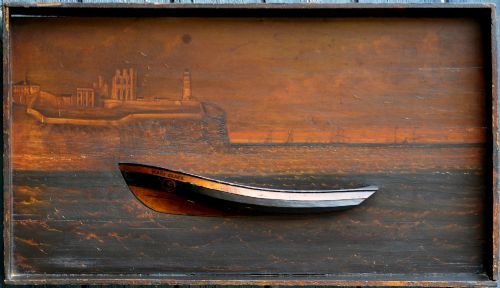
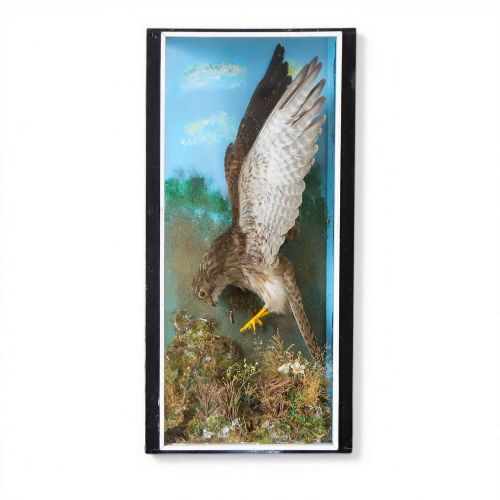
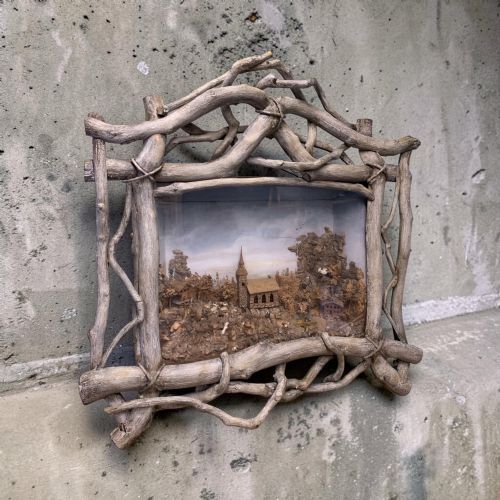
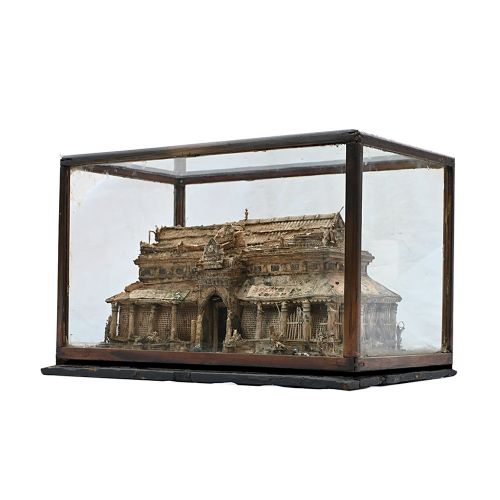
A wood frame diorama encloses small-scale scenes in a box, often built as maritime displays, taxidermy mounts, or folk art townscapes. These pieces range from Victorian maritime models to early twentieth-century natural history cases.
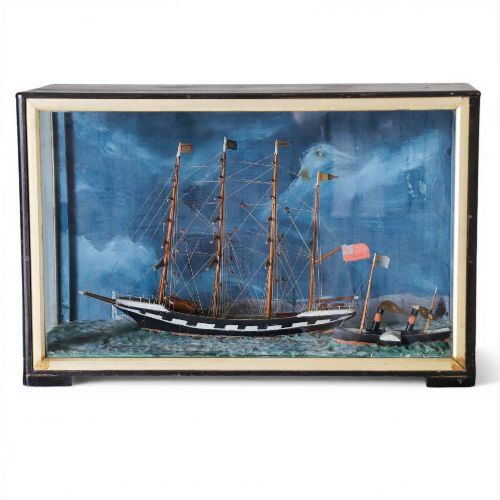
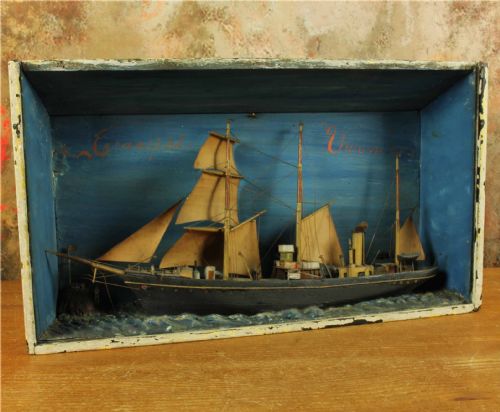
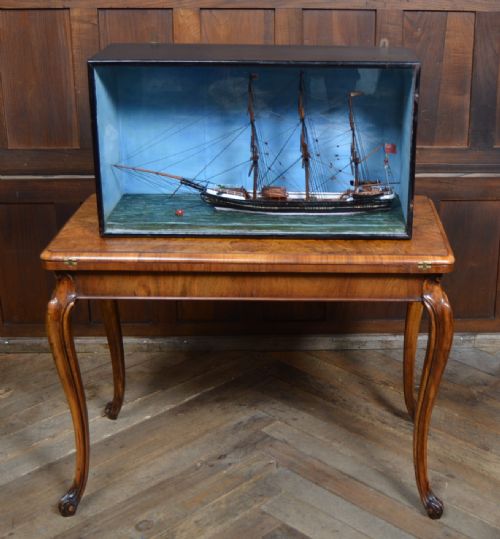
The most common examples on this page are nineteenth-century sailing ship dioramas and Victorian taxidermy displays. Makers constructed these shadow boxes to hang on walls or sit upon surfaces as curiosity cabinet decor.
Subjects stretch from four-masted sailing ships and clipper models to waxwings in snow scenes and grocery store models. Each piece captures a distinct slice of maritime heritage or domestic folk art.
Materials and Construction
Makers utilised wood for the outer frames and boxes, enclosing the scenes behind protective glass panes. Internal landscapes frequently incorporated painted canvas, plaster, paper, and fabric to build up depth.
Folk art examples often relied on unconventional found elements like cork, twigs, feathers, and shells. Ship models inside these cases were scratch-built by hand, featuring intricate rigging and painted seascapes.
Assessing Quality and Execution
Quality rests in the precision of the scratch-built modelwork and the preservation of the delicate internal materials. Finer examples show careful attention to perspective in the painted backdrops and realistic detail in taxidermy or shipping rigging.
The integration of the frame with the internal scene marks the distinction between standard work and superior pieces. Original glass and undisturbed internal elements preserve the integrity of the diorama over time.
The Wood Frame Diorama Glossary
- Shadow box
- A deep, glass-fronted frame designed to display objects in three dimensions. This enclosure protects fragile materials like feathers and paper from dust.
- Taxidermy display
- The preservation and mounting of animal specimens within a constructed habitat. These cases recreate natural winter scenes or resting environments.
- Scratch-built
- An object constructed entirely from raw materials rather than from a commercial kit. In these listings, this term applies to handmade ship models.
- Folk art
- Artistic work created within a traditional culture by self-taught makers. These pieces utilise accessible local materials to depict everyday subjects or maritime history.
Wood Frame Diorama: Frequently Asked Questions
How were these dioramas used?
Original owners hung these shadow boxes on walls or placed them on furniture to display detailed miniature scenes. They functioned as conversation pieces in homes and studies.
Maritime examples often commemorated specific vessels, while natural history displays brought outdoor specimens indoors.
How do I care for a diorama?
Keep these pieces away from direct sunlight and damp environments to protect fragile internal components like paper, canvas, and feathers. Stable indoor temperatures preserve the wooden frames and the glass seals.
Clean the exterior glass gently with standard glass cleaner, avoiding any moisture near the wooden seams.
How can I tell the period?
Dating relies on the materials, construction methods, and stylistic cues of the frame and internal contents. Nineteenth-century pieces often feature hand-painted Turneresque seascapes and traditional maritime folk art techniques.
Early twentieth-century examples incorporate distinct framing styles and specific natural history mounting practices.