

Wood Country Carver Chairs
Wood country carver chairs combine robust vernacular construction with generous proportions, offering sturdy seating grounded in centuries of British rural craftsmanship.
Wood Country Carver Chairs
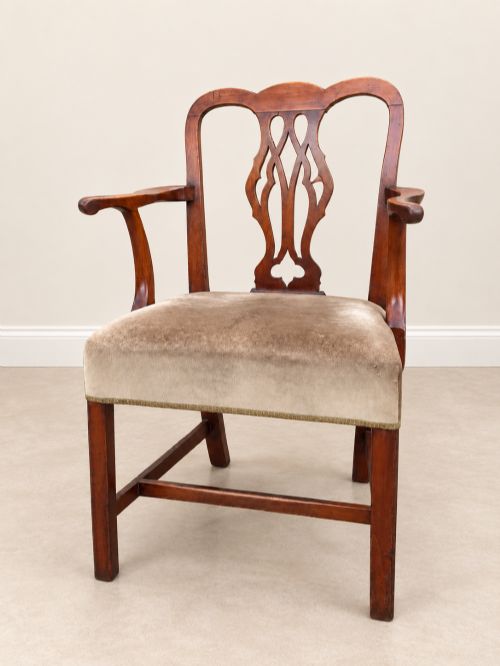
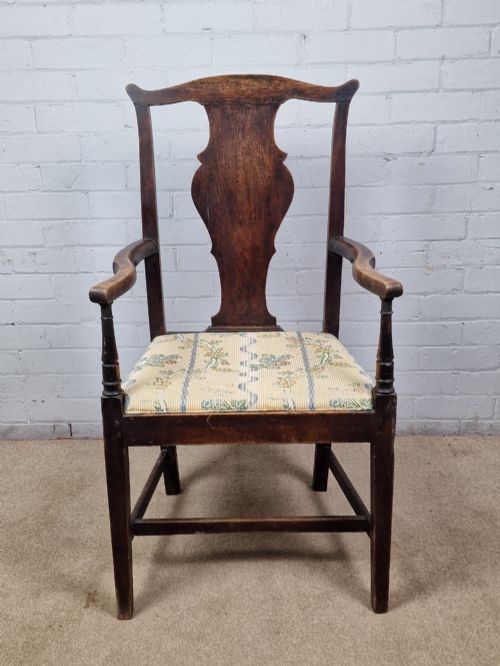
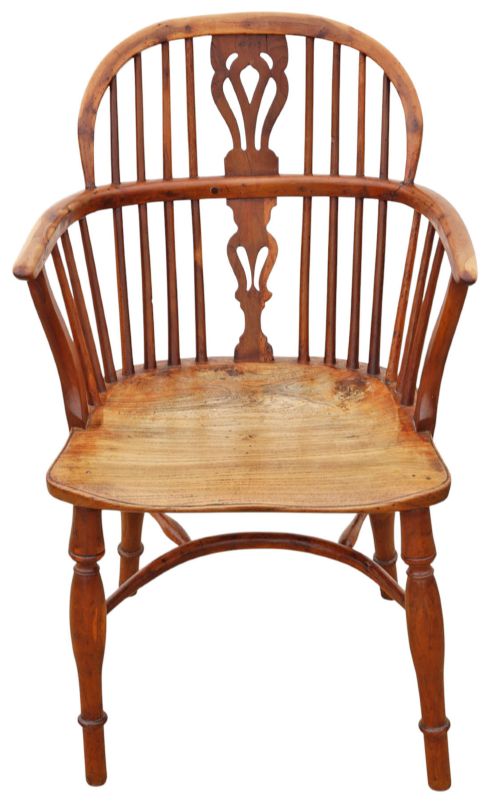
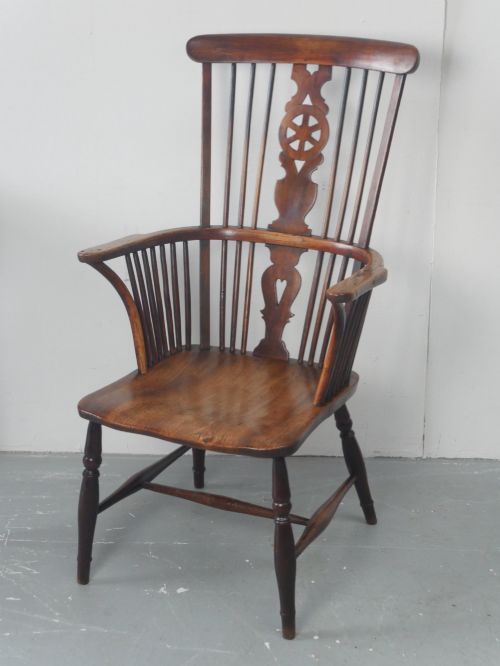
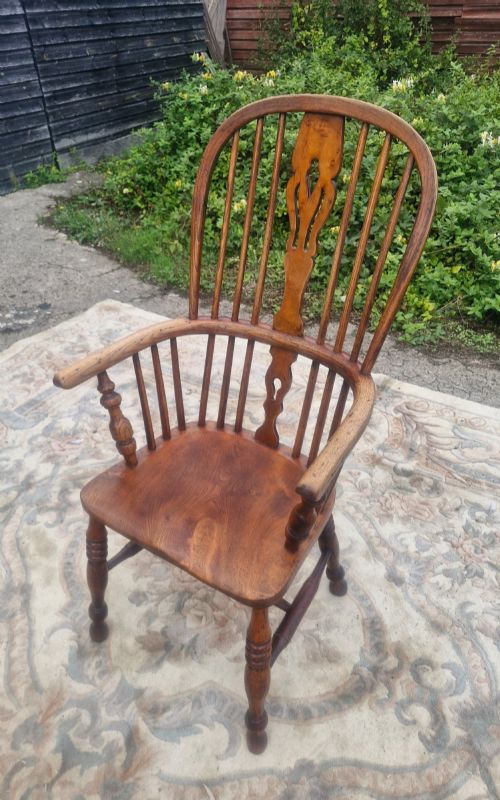
Wood country carver chairs encompass robust seating forms originating from rural workshops across Britain, spanning the eighteenth, nineteenth, and early twentieth centuries. These sturdy armchairs and carver chairs typically served domestic and farmhouses, prioritising utility alongside comfortable proportions.
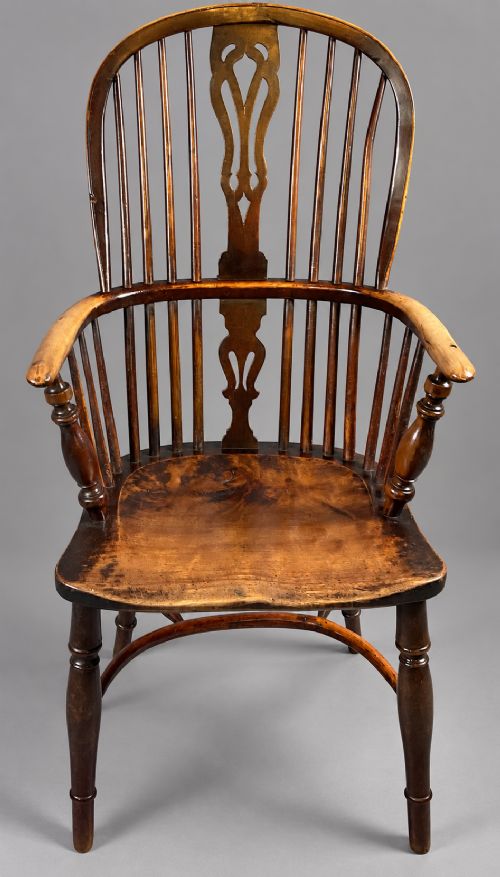
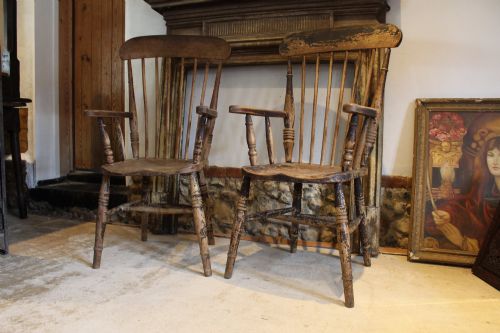
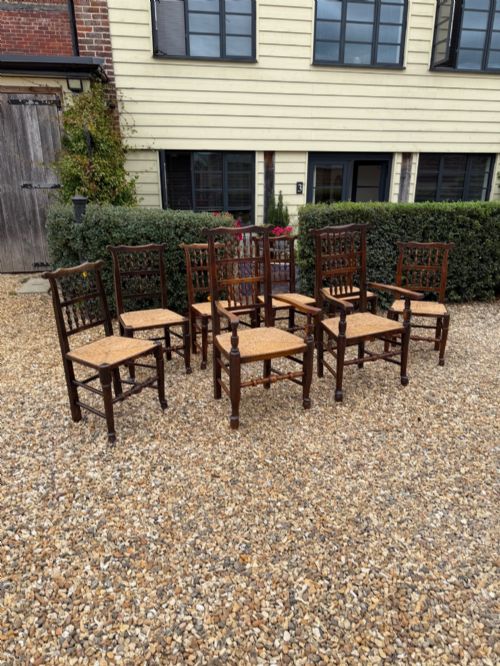
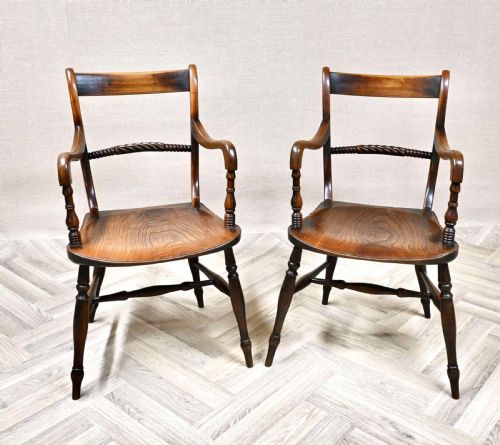
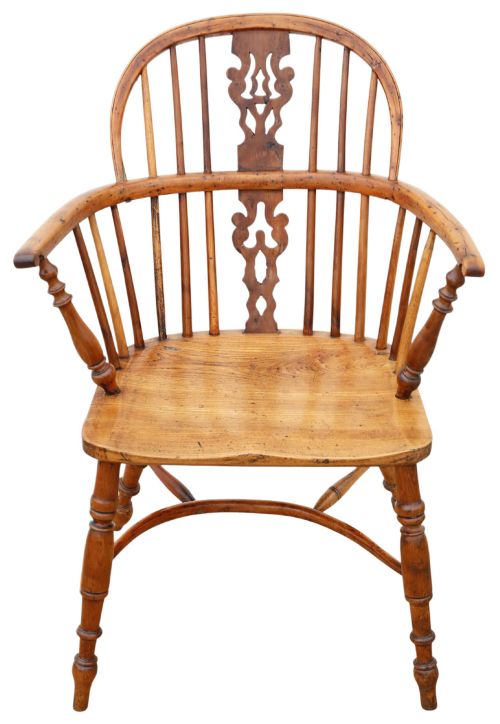
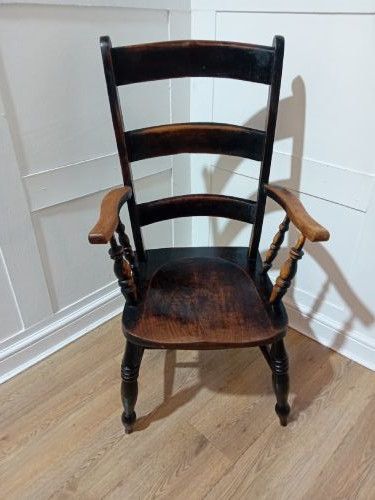
The selections available here lean heavily towards traditional Windsor chairs, ladder-backs, and spindle-backs set within English country vernacular styles. Buyers regularly encounter pieces originating from the Georgian, Victorian, and Edwardian periods, often constructed with distinctive high backs or bar backs.
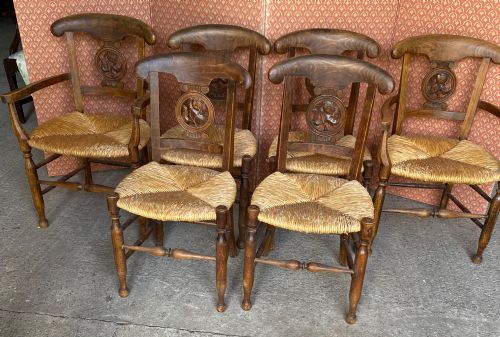
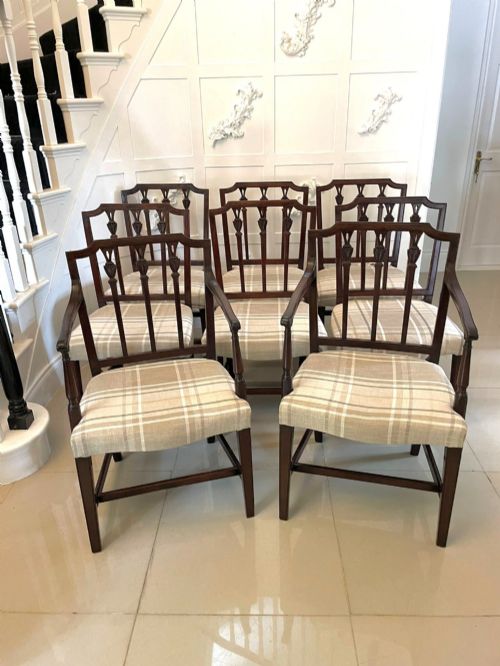
Makers frequently produced these pieces in matched pairs or small sets for domestic dining and parlour use. Regional variations remain visible, including Thames Valley and West Country characteristics expressed through specific hoop and comb back designs.
Materials and Construction Techniques
Constructors relied on native hardwoods selected for specific structural roles, pairing flexible bentwood components with rigid turned legs. Elm frequently provided stable, split-resistant seating planks, while ash, beech, and fruitwood formed spindles, arms, and legs.
Makers utilised green woodworking methods to steam-bend timber for hoops and bows, allowing the wood to dry securely around templates. Traditional joinery such as wedged tenons and saddle seats secured the uprights firmly into the main seat plank without metal fasteners.
Current listings feature nineteenth-century, Georgian, and Victorian periods utilising elm, ash, yew, oak, and beech across Windsor and vernacular forms.
Evaluating Quality and Character
Quality rests primarily in the harmony of the timber selection and the retention of original surface finishes, such as early paint or patinated wax. Pieces demonstrating crisp turning on spindles and well-sculpted saddle seats indicate superior craftsmanship from skilled rural joiners.
Structural integrity depends upon the tightness of joints and the survival of original crinoline stretchers or undercarriages. Greater desirability attaches to examples exhibiting strong regional characteristics, balanced proportions, and minimal replacement timbers.
Philip Clissett·E W Godwin·Wheelers of Arncroach
The Wood Country Carver Chairs Glossary
- Windsor chair
- A wooden chair built with a heavy solid plank seat into which the legs and back spindles are separately bored and wedged. This design dominates rural English seating traditions.
- Carver chair
- An armchair traditionally placed at the head of a dining table or utilised as a substantial parlour seat. These pieces match larger sets of dining chairs.
- Crinoline stretcher
- A curved under-stretcher linking the legs of a chair to provide lateral stability. It often takes a horseshoe shape beneath Windsor designs.
- Vernacular
- Objects built by local artisans using regional traditions and native materials rather than adhering to rigid urban academic styles. This approach defines much of the countryside furniture on this page.
- Comb back
- A Windsor chair variation where the top rail resembles the teeth of a comb, featuring vertical spindles rising through a horizontal headboard.
Wood Country Carver Chairs: Frequently Asked Questions
What defines a country carver chair?
These chairs combine open armrests with traditional regional woodworking methods, such as turned spindles and solid plank seats. They reflect the practical domestic needs of rural households over successive centuries.
Craftsmen built them using local British hardwoods without relying on metropolitan workshop conventions, resulting in sturdy and individual forms.
How do I care for antique wood furniture?
Keep wooden seating away from direct heat sources and sudden humidity fluctuations to prevent the timber from splitting or joints from loosening. Regular dusting with a dry cloth and occasional application of traditional wax preserves the finish.
Avoid modern silicone polishes, as they penetrate the grain and damage the historic patina developed over generations.
How can I date an old Windsor chair?
Dating relies on examining tool marks, timber combinations, and the specific evolution of the back design, such as early comb backs or later bar backs. Eighteenth-century examples often feature heavier elm seats and deep saddle depressions.
Later nineteenth-century iterations frequently incorporate steam-bent components and machine-turned spindles alongside different regional undercarriages.
Were these chairs used for dining?
Carver chairs served principally as primary seating at the ends of dining tables or as comfortable armchairs beside parlour hearths. Their generous proportions provided enhanced comfort compared to standard side chairs.
Households often paired single carvers with matching sets of ladder-back or spindle-back dining chairs for everyday domestic life.