

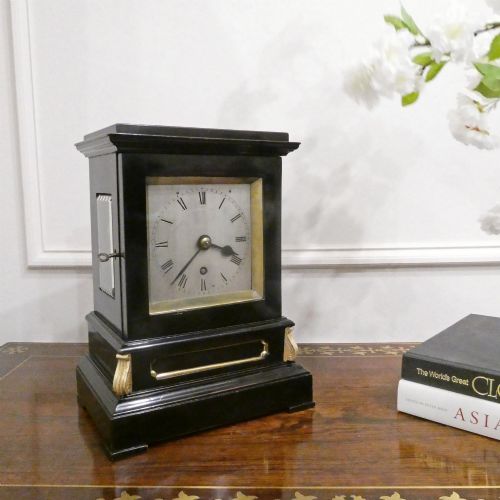


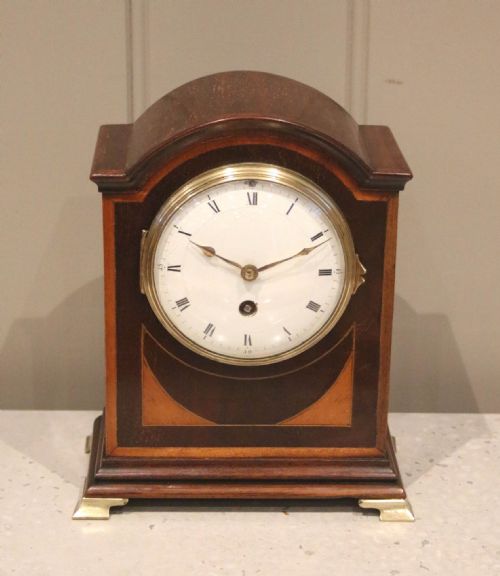


Wood Case Table Clock
A wood case table clock brings mechanical precision and rich timber warmth to a desk, shelf or mantelpiece.
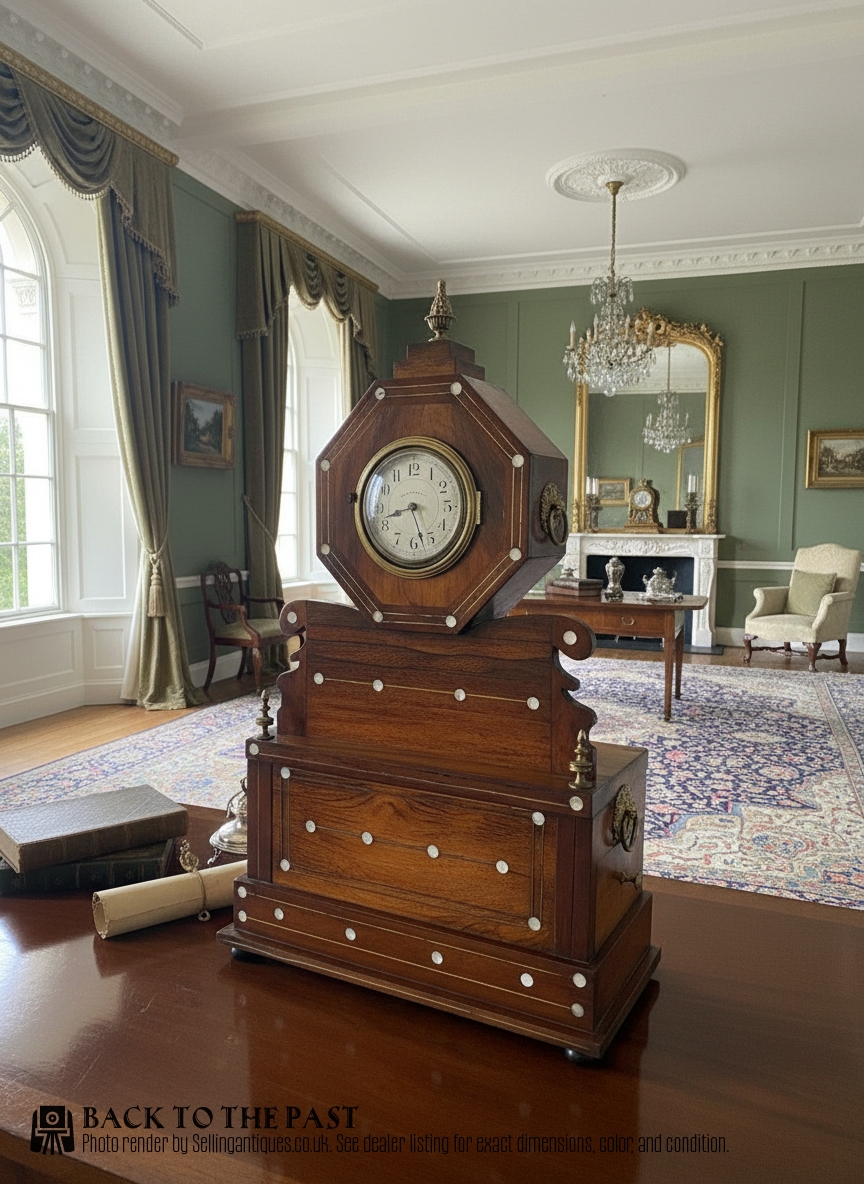
Wood Case Table Clock
When you search for a wood case table clock, you find timepieces housed in sturdy timber enclosures designed for desks, tables and mantelpieces rather than hanging on a wall or standing on the floor. These pieces span mantel clocks, library clocks, desk clocks and bracket clocks produced across the nineteenth and early twentieth centuries.
The versions you meet most frequently on this page sit in mahogany, rosewood or ebonised wood cases, often styled in Victorian, Edwardian or Regency tastes. They range from small, portable timepieces to large fusee movements designed to sit securely on a bracket or surface.
How they were made
Clockmakers housed these movements in dense hardwoods such as mahogany, rosewood, burr walnut, pollard oak and ebonised wood, which provided the structural stability required to protect delicate gear trains. Cabinetmakers shaped break-arch, arched, balloon, bell-top and chamfer-top cases, sometimes adding brass inlay, satinwood stringing or glass panels to reveal the dial and movement.
Internal mechanisms relied on brass plates, wheels and escapements, driven by fusee or spring-driven movements, with dials featuring enamel or silvered metal numerals. Makers fitted glass bezels and brass bezels to shield the face while allowing clear visibility of the hands.
Wood Case Table Clock Retail Price Guide 2026
Typical asking prices for wood case table clock among the pieces listed under this phrase on Sellingantiques today, from the lower quarter to the upper quarter. They describe what is for sale here now, not the wider market.
Mahogany and rosewood dominate the timber cases on this site, accompanied by brass inlay and enamel dials.
What varies in quality
The distinction between ordinary and exceptional examples rests in the harmony between the cabinetmaking and the mechanical movement. Finer pieces feature meticulously figured timber veneers, precise brass inlay and robust fusee movements signed by reputable makers rather than mass-produced spring platforms.
Proportion and detailing dictate the character of the object, from the crispness of the gadrooned edges and carved brackets to the legibility of the silvered metal or enamel dial. A superior clock demonstrates integrated design where the timber case complements the complexity of the internal striking or timing mechanism.
Walker·Paul Garnier·Joseph Jump·Pennington of Camberwell·Walker and Hall·John Taylor·Baldwin of Loughborough·Fatton Eleve de Breguet·Thomas Gammage·Brockbank and Atkins·Junghans
The Wood Case Table Clock Glossary
- Fusee
- A conical pulley used in spring-driven clocks to ensure uniform tension as the mainspring unwinds. This mechanism helps the clock maintain consistent timekeeping throughout its running cycle.
- Bracket clock
- A portable table clock originally designed to sit on a wall bracket to aid resonance and visibility. Many later examples sat directly on desks or mantelpieces while retaining the traditional name.
- Library clock
- A sturdy table timepiece typically housed in a plain or architectural wood case with glass panels. These were designed for quiet rooms where legibility and reliable timekeeping were paramount.
- Ebonised wood
- Timber treated with a dark stain or finish to imitate ebony. This technique was popular in Victorian cabinetmaking for creating high-contrast black surfaces.
- Break-arch case
- A clock case featuring an arched top interrupted by distinct corners or angles. This architectural silhouette appeared frequently on Regency and nineteenth-century bracket clocks.
Wood Case Table Clock: Frequently Asked Questions
What is a fusee movement?
A fusee is a conical gear connected to the mainspring by a fine chain or cord. It equalises the declining power of the spring as it unwinds.
This ensures the clock receives steady force from full wind to empty, improving the accuracy of the timekeeping.
Where should I place a table clock?
These clocks belong on stable surfaces like desks, mantelpieces, sideboards or dedicated wall brackets. Avoid placing them near direct heat sources or in damp areas.
A level surface is essential for the pendulum or balance wheel to beat evenly and keep correct time.
How do I wind my clock?
Use the appropriate key on the winding squares located on the dial face. Turn gently until you feel resistance, taking care not to overwind.
Some clocks require separate winding for the timekeeping train and the striking train.
How do I identify a Regency clock?
Regency clocks typically date from the early nineteenth century and feature architectural symmetry, brass inlay and dark mahogany or rosewood cases. Look for classic motifs like gadrooning and brass feet.
They often house high-quality fusee movements made by prominent London workshops.